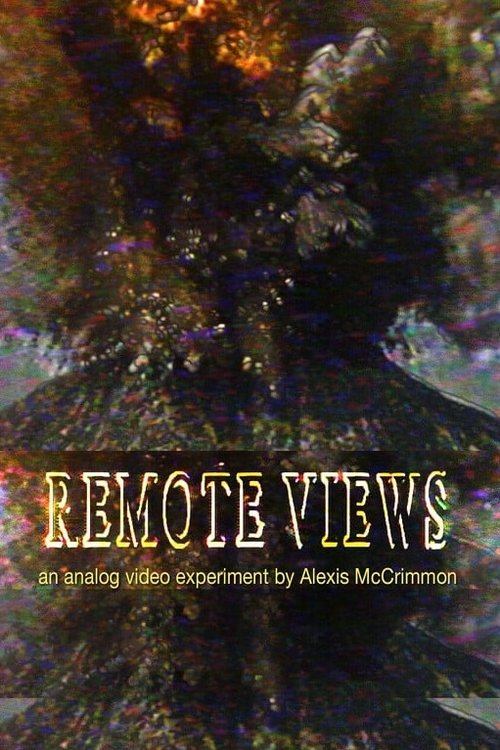
Remote Views - Review
Remote Views: A Kaleidoscope of Black Voices in the 1980s
Imagine a time capsule unearthed, not filled with dusty artifacts, but brimming with flickering images, fragmented sounds, and the raw, unfiltered energy of a community finding its voice. That's the essence of Remote Views, a documentary released on August 10th, 2025, that isn't just a film; it's an experience, a journey into the heart of Black media's explosion in the 1980s. Director Ava Dubois has crafted something truly unique: a televisual stream of consciousness that challenges our notions of documentary filmmaking and compels us to confront a vital period in American history.
A Symphony of Fragmentation: Plot and Structure
Remote Views doesn't adhere to a traditional narrative structure. There's no central protagonist, no clear beginning, middle, or end. Instead, it operates as a mosaic, a meticulously curated collection of short vignettes that weave together to form a larger, more profound picture. These vignettes are drawn from a vast archive of 1980s footage, encompassing everything from public access television shows and personal video diaries to snippets of mainstream commercials and citizen journalism reports.
The film’s strength lies in its deliberate fragmentation. Each segment, lasting anywhere from a few seconds to a few minutes, offers a glimpse into a different facet of Black life during the decade. We see electrifying musical performances from emerging artists, powerful spoken word poetry that resonates with themes of social justice and resistance, and unflinching documentation of state violence and police brutality. These moments are juxtaposed with scenes of everyday life: families gathered around televisions, children playing in the streets, and expressions of Black love and community that are both intimate and universal.
This non-linear approach might initially feel disorienting, but it's precisely what makes Remote Views so compelling. It mirrors the chaotic, multifaceted nature of lived experience, particularly the experience of being Black in America during a period of intense social and political upheaval. Dubois trusts her audience to piece together the fragments, to draw their own conclusions, and to find meaning in the connections between seemingly disparate moments.
Absence of Central Figures: The Power of Collective Voice
Because of its archival nature, Remote Views doesn't feature traditional characters. Instead, the film is populated by a diverse cast of everyday people: artists, activists, community leaders, and ordinary citizens who are captured on camera sharing their stories, their struggles, and their hopes for the future. This absence of central figures is not a weakness, but a conscious choice that underscores the film's central theme: the power of collective voice.
The people we see on screen are not actors playing roles; they are real individuals speaking their truth, unfiltered and unscripted. Their voices, often marginalized or ignored by mainstream media, are amplified in Remote Views, creating a chorus of perspectives that is both moving and empowering. We see the resilience of Black communities in the face of adversity, the creativity and innovation that flourished despite systemic oppression, and the unwavering determination to fight for equality and justice.
While there aren't characters in the traditional sense, certain figures do recur throughout the film, acting as touchstones and anchors for the narrative. A young poet performing at a local open mic night, a community activist organizing a protest against police brutality, and a family sharing a meal together – these recurring images create a sense of continuity and connection, reminding us that even in a fragmented world, there is a shared history and a common humanity.
Dubois' Vision: Direction and Editing as Storytelling
Ava Dubois' direction is nothing short of masterful. She doesn't simply present archival footage; she curates it, shapes it, and transforms it into a powerful and evocative cinematic experience. Her use of editing is particularly striking. The rapid-fire montage sequences, the abrupt cuts between contrasting images, and the seamless blending of different media formats create a sense of urgency and immediacy that keeps the viewer constantly engaged.
Dubois's vision is evident in every aspect of the film, from the carefully selected soundtrack to the subtle visual cues that guide the viewer through the narrative. She understands that archival footage is not just a collection of images; it's a living document that can be reinterpreted and recontextualized to reveal new meanings and insights. She treats this material with respect and reverence, but she also isn't afraid to challenge our assumptions and to push the boundaries of documentary filmmaking.
One of the most innovative aspects of Dubois's direction is her use of sound. The film's soundtrack is a rich tapestry of music, spoken word, and ambient sounds that perfectly complements the visuals. She seamlessly blends classic soul and funk tracks with contemporary hip-hop and electronic music, creating a sonic landscape that is both nostalgic and forward-looking. The strategic use of silence is also particularly effective, allowing the images to speak for themselves and creating moments of quiet reflection amidst the chaos.
A Time Capsule of Visual Culture: Cinematography and Visual Style
Given that Remote Views is comprised entirely of archival footage, the cinematography is necessarily varied and uneven. The quality of the images ranges from grainy, low-resolution video to crisp, professionally shot film. However, this inconsistency is not a flaw, but a strength. It reflects the diversity of the sources from which the footage was drawn, and it adds to the film's sense of authenticity and immediacy.
The film's visual style is defined by its raw, unfiltered aesthetic. There are no glossy images or carefully staged shots. Instead, we see the world as it was captured by the cameras of the time: imperfect, messy, and often unsettling. This unflinching realism is what makes Remote Views so powerful. It doesn't shy away from the difficult truths of the past, and it doesn't attempt to sanitize or romanticize the Black experience.
The film's use of color is also noteworthy. The vibrant colors of the 1980s – the neon hues, the bold patterns, and the saturated tones – are on full display, creating a visual feast that is both nostalgic and captivating. These colors are juxtaposed with the stark black-and-white images of news footage and surveillance videos, highlighting the contrast between the vibrancy of Black culture and the harsh realities of systemic oppression.
Unscripted Truths: The Power of Authentic Performance
Since Remote Views is constructed from archival footage, the "performances" are not staged or scripted. Instead, they are authentic expressions of emotion, thought, and experience. The people on screen are not acting; they are simply being themselves, sharing their stories, and speaking their truth. This raw authenticity is what makes the film so moving and impactful.
The film showcases a wide range of performances, from the electrifying energy of musical performances to the quiet vulnerability of personal video diaries. We see activists passionately advocating for social justice, artists fearlessly expressing their creativity, and ordinary people simply trying to make sense of the world around them. These performances are not polished or refined, but they are all the more powerful for their imperfections.
One of the most striking aspects of the film is the way it captures the nuances of Black vernacular and body language. The way people speak, move, and interact with each other is a testament to the richness and diversity of Black culture. These subtle details, often overlooked or misrepresented by mainstream media, are celebrated in Remote Views, creating a portrait of a community that is both complex and compelling.
Themes and Messages: A Legacy of Resistance and Resilience
Remote Views explores a multitude of themes, but at its core, it's a film about resistance, resilience, and the power of collective voice. It examines the ways in which Black communities have historically responded to oppression and injustice, and it celebrates the creativity, innovation, and unwavering determination that have allowed them to survive and thrive in the face of adversity.
The film also addresses themes of identity, representation, and the importance of self-expression. It highlights the ways in which Black artists and activists have used media to challenge dominant narratives, to reclaim their own stories, and to create spaces for authentic self-representation. It underscores the importance of controlling one's own image and voice, particularly in a society that often seeks to silence or marginalize Black perspectives.
Another key theme of Remote Views is the enduring legacy of the 1980s. The film argues that the issues and struggles of that decade – police brutality, economic inequality, and the AIDS epidemic – are still relevant today. It suggests that by understanding the past, we can better understand the present and work towards a more just and equitable future.
Contextualizing Dubois' Vision: Comparisons and Influences
Ava Dubois's work in Remote Views finds echoes in other documentary films that utilize archival footage to explore social and political themes. Consider "I Am Not Your Negro" (2016), which uses James Baldwin's unfinished manuscript to examine race in America, or "Whose Streets?" (2017), which documents the Ferguson uprising through the eyes of activists. Like these films, Remote Views employs a subjective and immersive approach, allowing the voices of the past to speak directly to the present.
Dubois's previous work, particularly her short film "Echoes of the Block" (2020), which explored the gentrification of a historically Black neighborhood, foreshadowed her interest in using archival footage to tell stories about community and displacement. Remote Views expands upon these themes, offering a more comprehensive and nuanced portrait of Black life in the 1980s.
The film also draws inspiration from the visual and musical culture of the 1980s. The influence of artists like Jean-Michel Basquiat, Spike Lee, and Public Enemy is evident in the film's aesthetic and thematic concerns. Dubois pays homage to these cultural icons while also forging her own unique vision.
Strengths and Weaknesses: A Balanced Perspective
Remote Views is a powerful and thought-provoking film that is sure to resonate with audiences long after the credits roll. Its strengths lie in its innovative use of archival footage, its compelling exploration of complex themes, and its unwavering commitment to amplifying Black voices. Dubois's direction is masterful, and the film's visual and sonic style is both captivating and immersive.
However, the film is not without its weaknesses. Its non-linear structure may be challenging for some viewers, and its fragmented nature can sometimes feel overwhelming. The lack of traditional characters may also make it difficult for some to connect with the film on an emotional level. Additionally, the film's reliance on archival footage means that the visual quality is sometimes inconsistent, which may be distracting for some viewers.
Despite these minor flaws, Remote Views is a remarkable achievement. It is a film that deserves to be seen and discussed, and it is a testament to the power of documentary filmmaking to illuminate the past and to inspire change in the present.
Conclusion: A Must-See Documentary
Remote Views is more than just a documentary; it's a time capsule, a cultural artifact, and a powerful testament to the resilience and creativity of Black communities in the 1980s. Ava Dubois has created a film that is both challenging and rewarding, a film that will stay with you long after the credits roll. Its fragmented structure, while potentially disorienting for some, ultimately serves to amplify the diverse voices and experiences captured within its archival footage. Despite its minor shortcomings, Remote Views is a must-see for anyone interested in Black history, media studies, or the art of documentary filmmaking.
Rating: 9.5/10