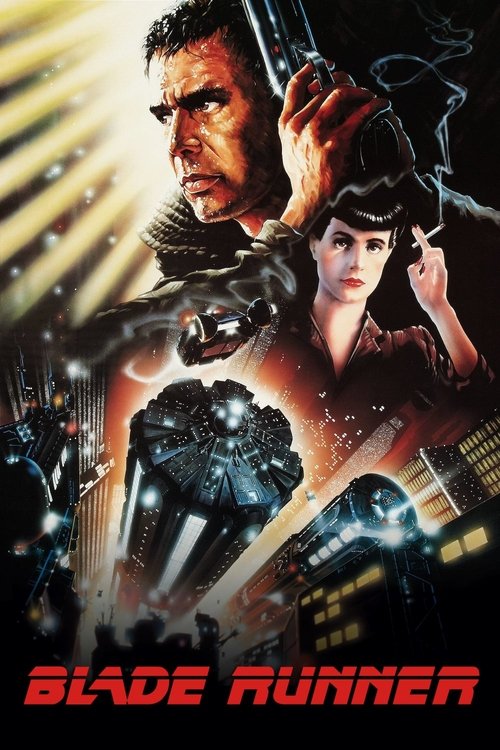
Blade Runner - Review
Blade Runner: A Dystopian Masterpiece That Still Cuts Deep
Ridley Scott's Blade Runner, released in 1982, isn't just a science fiction film; it's a cinematic experience. It's a philosophical inquiry disguised as a neo-noir thriller, a visual feast that redefined the aesthetics of dystopian futures, and a film that continues to spark debate and inspire awe decades after its release. More than just hunting rogue androids, Blade Runner forces us to confront what it means to be human, blurring the lines between creator and creation, hunter and hunted. Prepare to enter a rain-soaked, neon-drenched Los Angeles where the artificial feels undeniably real, and the questions linger long after the credits roll.
Plot: A Hunt Through the Labyrinthine City
The plot, at its core, is relatively simple: Rick Deckard (Harrison Ford), a burnt-out blade runner, is reluctantly pulled back into service to "retire" (euphemism for kill) four Nexus-6 replicants who have escaped from an off-world colony. These replicants, led by the charismatic and physically imposing Roy Batty (Rutger Hauer), are not mindless machines. They possess advanced intelligence, physical prowess, and a desperate desire to extend their artificially shortened lifespans. Their quest leads them to Earth, specifically Los Angeles, in search of their creator, Dr. Eldon Tyrell (Joe Turkel), hoping he can provide a solution.
Deckard's investigation takes him through the underbelly of a decaying metropolis, forcing him to confront the ethical implications of his job. He encounters a diverse cast of characters, each contributing to the film's rich tapestry. From the weary police captain Bryant (M. Emmet Walsh) who pressures Deckard into taking the assignment, to the enigmatic Tyrell and his equally intriguing creation, Rachael (Sean Young), the film is populated with figures who challenge Deckard's perceptions and the audience's assumptions.
The film's structure is a masterclass in slow-burn suspense. The pace is deliberate, allowing the audience to soak in the atmosphere and contemplate the weighty themes. The plot unfolds through a series of interrogations, chase sequences, and philosophical dialogues, creating a narrative that is both thrilling and thought-provoking. While some may find the pacing slow by today's standards, it's precisely this deliberate rhythm that allows the film to build its unique and unforgettable atmosphere.
Characters: Beyond Flesh and Blood
The characters in Blade Runner are far more than just plot devices; they are complex, nuanced individuals struggling with existential questions. Deckard, initially presented as a world-weary and cynical bounty hunter, undergoes a significant transformation throughout the film. His interactions with Rachael, a replicant who believes she is human, force him to confront the moral ambiguity of his profession. He begins to question the very definition of humanity and the validity of his role in the replicants' termination.
Roy Batty, the leader of the replicant group, is arguably one of cinema's most compelling villains. He is not a purely evil antagonist; he is driven by a primal desire to survive and a profound sense of injustice. He is intelligent, articulate, and possesses a surprising degree of empathy. His final monologue, often referred to as the "Tears in Rain" speech, is a poignant reflection on the beauty and fleeting nature of life, delivered with breathtaking intensity by Rutger Hauer. This scene alone elevates Batty from a mere antagonist to a tragic figure, forever etched in cinematic history.
Rachael is another pivotal character. Her initial naiveté and unwavering belief in her humanity are shattered when Deckard reveals her true nature. Her journey of self-discovery and her burgeoning relationship with Deckard form the emotional core of the film. Sean Young's performance is subtle yet powerful, conveying Rachael's vulnerability and resilience with remarkable grace.
Other supporting characters, such as J.F. Sebastian (William Sanderson), a lonely genetic engineer who befriends Roy Batty, and Pris (Daryl Hannah), a physically agile and fiercely loyal replicant, add further depth and complexity to the narrative. Each character, regardless of their screen time, contributes to the film's exploration of humanity, artificiality, and the search for meaning.
Direction: Ridley Scott's Visionary World-Building
Ridley Scott's direction is nothing short of masterful. He creates a fully realized and immersive dystopian world that feels both futuristic and strangely familiar. The film's visual style is heavily influenced by film noir, with its use of shadows, rain, and claustrophobic urban landscapes. However, Scott elevates the genre by incorporating elements of cyberpunk and science fiction, creating a unique and visually stunning aesthetic.
Scott's attention to detail is remarkable. Every aspect of the film, from the architecture and technology to the costumes and makeup, contributes to the overall atmosphere of decay and technological advancement. The cityscape of Los Angeles is a character in itself, a sprawling metropolis choked by pollution and teeming with life, both human and artificial.
Scott's direction is also evident in his handling of the actors. He elicits powerful performances from his cast, allowing them to fully embody their characters and bring depth and nuance to their roles. His use of close-ups and slow-motion sequences emphasizes the emotional intensity of key moments, drawing the audience deeper into the characters' experiences.
However, it's important to acknowledge the various versions of Blade Runner that exist. Scott's original theatrical cut was subject to studio interference, resulting in a compromised version that included a voice-over narration and a "happy ending" that felt out of place. Subsequent versions, including the Director's Cut and the Final Cut, restored Scott's original vision, removing the narration and the tacked-on ending, and allowing the film's themes to resonate more powerfully. The Final Cut is generally considered the definitive version of the film.
Cinematography: A Visual Symphony of Light and Shadow
The cinematography, by Jordan Cronenweth, is a crucial element in creating Blade Runner's distinctive visual style. Cronenweth's use of light and shadow is masterful, creating a world that is both beautiful and unsettling. The film is filled with striking images, from the neon-lit cityscapes to the intimate close-ups of the characters' faces.
The constant rain is a recurring motif, symbolizing the decay and moral ambiguity of the world. It also serves to enhance the film's noir atmosphere, creating a sense of claustrophobia and unease. The use of smoke and fog further contributes to the film's hazy, dreamlike quality.
Cronenweth's innovative use of lighting techniques, such as "hard light" and "soft light," creates a stark contrast between the artificial and the natural. The neon lights of the city are juxtaposed with the dim, flickering lights of the interiors, highlighting the tension between technology and humanity.
The visual effects, while groundbreaking for their time, still hold up remarkably well today. The film's use of miniatures, matte paintings, and practical effects creates a sense of realism that is often lacking in modern CGI-heavy films. The iconic opening shot of the Los Angeles skyline, with its towering skyscrapers and flying cars, remains one of the most memorable images in science fiction cinema.
Performances: A Stellar Cast at Their Finest
The performances in Blade Runner are uniformly excellent. Harrison Ford delivers a nuanced and understated performance as Rick Deckard, portraying a character who is both cynical and vulnerable. Ford's portrayal of Deckard is a departure from his more heroic roles in films like Star Wars and Indiana Jones, showcasing his versatility as an actor.
Rutger Hauer's performance as Roy Batty is nothing short of iconic. He imbues the character with a sense of intelligence, charisma, and tragic grandeur. Hauer's delivery of the "Tears in Rain" monologue is a masterclass in acting, conveying the replicant's profound understanding of life and death. He manages to make Batty both terrifying and sympathetic, a testament to his skill as an actor.
Sean Young is equally impressive as Rachael, capturing the character's vulnerability and resilience with remarkable grace. Her chemistry with Ford is palpable, creating a believable and emotionally resonant relationship. Young's performance is subtle yet powerful, making Rachael a compelling and unforgettable character.
The supporting cast also delivers strong performances. M. Emmet Walsh is perfectly cast as the weary police captain Bryant, providing a cynical and world-weary counterpoint to Deckard's growing moral doubts. Joe Turkel is chillingly effective as Dr. Eldon Tyrell, the enigmatic creator of the replicants. William Sanderson is sympathetic as J.F. Sebastian, the lonely genetic engineer who befriends Roy Batty. And Daryl Hannah is fierce and memorable as Pris, the physically agile replicant.
Themes and Messages: What Does It Mean to Be Human?
Blade Runner is a film that grapples with profound philosophical questions about the nature of humanity, the ethics of technology, and the search for meaning in a seemingly meaningless world. The film explores the blurred lines between humans and replicants, challenging the audience to consider what truly defines humanity.
The replicants, despite being artificial creations, possess many of the qualities that we associate with humanity, such as intelligence, emotions, and a desire to survive. They experience love, loss, and fear, and they struggle with the same existential questions as humans. The film asks us to consider whether these qualities are enough to qualify them as human, or whether there is something more that sets humans apart.
The film also explores the dangers of unchecked technological advancement. The Tyrell Corporation, the company responsible for creating the replicants, is portrayed as a powerful and morally ambiguous entity, driven by profit and scientific ambition. The film suggests that the pursuit of technological progress without ethical considerations can lead to disastrous consequences.
Another key theme is the search for meaning in a decaying and dehumanized world. The characters in Blade Runner are all searching for something to give their lives purpose, whether it's survival, love, or a connection to something greater than themselves. The film suggests that even in the darkest of times, the human spirit can endure and find meaning in the face of adversity.
The film also touches upon themes of memory and identity. Rachael's implanted memories make her believe she is human, blurring the lines between reality and artificiality. The question of whether implanted memories can create a genuine sense of identity is a central theme, prompting viewers to consider the nature of selfhood and the role of memory in shaping our understanding of who we are.
Comparison to Other Films and Works
Blade Runner has had a profound influence on science fiction cinema and culture. Its visual style and thematic concerns have been widely imitated, and it has inspired countless films, books, and video games. The film can be compared to other dystopian science fiction films such as Metropolis (1927), 1984 (1984), and Brazil (1985), all of which explore the themes of technological control, social alienation, and the loss of individual freedom.
In terms of Ridley Scott's other works, Blade Runner shares some thematic similarities with Alien (1979), particularly in its depiction of a bleak and unforgiving future. Both films feature strong female characters and explore the dangers of corporate greed. However, Blade Runner is a more philosophical and introspective film than Alien, focusing on the inner lives of its characters and grappling with complex moral questions.
Harrison Ford's performance in Blade Runner can be contrasted with his more heroic roles in films like Star Wars and Indiana Jones. In Blade Runner, Ford plays a flawed and morally ambiguous character who is forced to confront the dark side of humanity. This role allowed Ford to showcase his range as an actor and demonstrate his ability to portray complex and nuanced characters.
The neo-noir elements of Blade Runner also draw comparisons to classic film noir films such as The Maltese Falcon (1941) and The Big Sleep (1946). The film's use of shadows, rain, and a cynical detective protagonist are all hallmarks of the noir genre. However, Blade Runner transcends the limitations of the genre by incorporating science fiction elements and exploring deeper philosophical themes.
Positive Aspects
Blade Runner excels in numerous aspects. Its visual style is groundbreaking and unforgettable, creating a fully realized and immersive dystopian world. The performances are uniformly excellent, with Harrison Ford, Rutger Hauer, and Sean Young delivering career-defining performances. The film's themes are profound and thought-provoking, prompting viewers to consider the nature of humanity and the ethics of technology. The direction is masterful, with Ridley Scott creating a film that is both visually stunning and intellectually stimulating. The soundtrack, composed by Vangelis, is haunting and atmospheric, perfectly complementing the film's visuals and themes. The film's enduring legacy is a testament to its quality and enduring relevance.
Constructive Criticism
While Blade Runner is widely considered a masterpiece, it is not without its flaws. Some viewers may find the pacing slow, particularly in the first half of the film. The plot, while complex and thought-provoking, can be difficult to follow at times. The voice-over narration in the original theatrical cut was widely criticized for being unnecessary and detracting from the film's atmosphere. The "happy ending" in the original cut also felt out of place and undermined the film's themes. However, these criticisms are largely addressed in the Director's Cut and the Final Cut, which are generally considered the definitive versions of the film. The ambiguity surrounding Deckard's own status as a replicant, while adding to the film's mystique, can also be frustrating for some viewers seeking a definitive answer.
Conclusion and Rating
Blade Runner is a cinematic triumph, a film that continues to resonate with audiences decades after its release. It's a visually stunning, intellectually stimulating, and emotionally resonant masterpiece that explores profound philosophical questions about the nature of humanity and the ethics of technology. While it may not be for everyone, those who appreciate its slow-burn pacing and complex themes will find it to be a rewarding and unforgettable cinematic experience. Blade Runner is not just a science fiction film; it's a work of art that deserves to be seen and appreciated for its beauty, its intelligence, and its enduring relevance.
Rating: 10/10