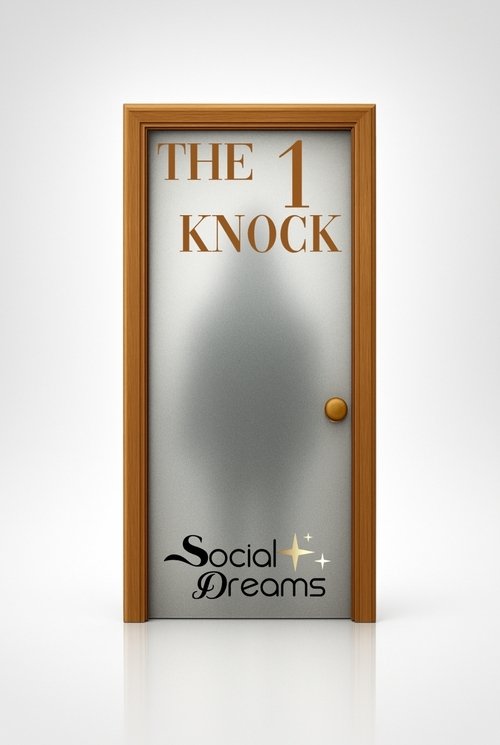
The Knock 1 - Review
The Knock 1: Delving into the Darkness of the Unseen (A Review)
In the realm of horror, where jump scares and gore often reign supreme, Mohamed Myers' "The Knock 1," the inaugural installment of his "Social Dreams" series, dares to tread a different path. Released on August 4th, 2025, this psychological short film eschews cheap thrills in favor of building a palpable sense of dread and unease, leaving a lasting impression that lingers long after the credits roll. "The Knock 1" isn't just about what you see; it's about what you think you see, and the terrifying implications that arise from the depths of the human psyche. But does it succeed in its ambition? Let's delve into the shadowy world Myers has crafted and uncover the secrets hidden behind that ominous knock.
Plot: A Symphony of Suspense
The narrative of "The Knock 1" is deceptively simple: a young boy, presumably home alone, is awakened late at night by a persistent knocking at his door. This seemingly innocuous event sets in motion a chain of increasingly unsettling occurrences, blurring the lines between reality and nightmare. Myers masterfully avoids providing concrete answers, instead opting to heighten the ambiguity and leave the audience questioning the nature of the threat. Is it a burglar? A malevolent spirit? Or is it something far more insidious, born from the boy's own anxieties and fears?
The brilliance of the plot lies in its gradual escalation of tension. The initial knocking is met with apprehension, followed by cautious investigation. As the night progresses, the knocking becomes more insistent, accompanied by subtle visual and auditory cues that suggest a presence just beyond the threshold. The boy's growing paranoia is mirrored in the audience, creating a shared sense of vulnerability and dread. The film avoids any overt displays of violence, relying instead on the power of suggestion and the unsettling atmosphere to create a truly chilling experience.
However, the film’s brevity also serves as a potential drawback. The short runtime (approximately 15 minutes) means that certain plot points, while effectively building suspense, could have benefited from further exploration. For instance, the boy’s relationship with his parents, or the specifics of his fears, remain largely undefined, which could have added another layer of depth to the narrative.
Characters: A Study in Vulnerability
The film primarily focuses on a single character: the young boy, played with remarkable nuance by newcomer Ethan Riley. Riley's performance is crucial to the film's success, as he effectively conveys the boy's growing fear and desperation without resorting to histrionics. His wide-eyed innocence and palpable vulnerability make him instantly relatable, drawing the audience into his nightmarish ordeal. He isn’t just acting afraid; he embodies the primal fear that resides within us all when confronted with the unknown.
While the boy is the only character we see, the implied presence behind the door acts as a phantom antagonist, its motivations and identity shrouded in mystery. This ambiguity is key to the film's effectiveness, as it allows the audience to project their own fears and anxieties onto the unseen entity. The knocking itself becomes a character, a relentless and unnerving force that drives the narrative forward.
One could argue that the lack of other characters limits the film's emotional range. The absence of parental figures, for example, could be interpreted as a missed opportunity to explore the theme of childhood abandonment or the breakdown of familial support in the face of overwhelming fear. However, this deliberate isolation also serves to amplify the boy's vulnerability and heighten the sense of dread.
Direction: A Masterclass in Atmospheric Horror
Mohamed Myers' direction in "The Knock 1" is nothing short of masterful. He demonstrates a keen understanding of the psychological horror genre, employing a variety of techniques to create a sustained atmosphere of tension and unease. The film's pacing is deliberately slow and methodical, allowing the suspense to build gradually and organically. Myers avoids relying on jump scares, instead favoring subtle visual cues, unsettling sound design, and a pervasive sense of dread to unsettle the audience.
His use of shadows and light is particularly effective, creating a chiaroscuro effect that enhances the film's visual appeal and amplifies the sense of mystery. The boy's house becomes a labyrinth of dark corners and ominous silhouettes, transforming a familiar space into a claustrophobic and threatening environment. Myers also utilizes long takes and slow camera movements to further heighten the tension, allowing the audience to linger on unsettling details and immerse themselves in the boy's perspective.
While Myers' direction is generally excellent, there are moments where the pacing feels slightly too deliberate. A few scenes could have benefited from tighter editing to maintain the momentum and prevent the tension from flagging. However, these are minor quibbles in an otherwise exceptionally well-directed short film.
Cinematography: Painting with Darkness
The cinematography in "The Knock 1," helmed by veteran DP Anya Petrova, is a crucial element in establishing the film's unsettling atmosphere. Petrova's use of a muted color palette, dominated by shades of gray, blue, and black, creates a visually bleak and oppressive environment. The film's lighting is equally effective, with strategically placed shadows that conceal and reveal, playing on the audience's perception and heightening the sense of unease.
Petrova's camera work is also noteworthy, particularly her use of close-ups to capture the boy's emotional state. These intimate shots allow the audience to connect with the character on a deeper level, amplifying their empathy and intensifying the sense of dread. The use of Dutch angles and skewed perspectives further contributes to the film's unsettling atmosphere, creating a sense of disorientation and unease.
One minor criticism could be leveled at the film's reliance on darkness. While the shadows are undoubtedly effective in creating a sense of mystery, there are moments where the image becomes almost too dark, making it difficult to discern details. However, this may have been a deliberate artistic choice, intended to further disorient the audience and heighten their sense of vulnerability.
Performances: Grounded in Reality
As previously mentioned, Ethan Riley delivers a standout performance as the young boy. His portrayal is nuanced and believable, capturing the character's vulnerability and growing fear with remarkable authenticity. He avoids overacting, instead relying on subtle facial expressions and body language to convey the boy's emotional state. His performance is all the more impressive considering his lack of prior acting experience.
While the film primarily focuses on Riley's performance, the sound design also plays a crucial role in creating a sense of unease. The knocking itself is a character, its rhythmic persistence becoming increasingly unsettling as the night progresses. The use of ambient sounds, such as creaking floorboards and rustling leaves, further contributes to the film's atmosphere of dread. The absence of music in certain scenes also serves to amplify the tension, allowing the silence to speak volumes.
It is important to note that the film hinges almost entirely on Riley's ability to carry the narrative. Any misstep in his performance could have undermined the film's effectiveness. However, Riley rises to the challenge, delivering a performance that is both captivating and deeply unsettling.
Themes and Messages: Fear of the Unknown
"The Knock 1" explores several universal themes, including fear of the unknown, childhood vulnerability, and the power of the imagination. The film taps into our primal anxieties about the things that lurk in the shadows, the unseen forces that can disrupt our sense of security and control.
The film also examines the psychological impact of isolation and the breakdown of communication. The boy's isolation amplifies his vulnerability, making him more susceptible to fear and paranoia. The absence of parental figures suggests a lack of support and guidance, leaving him to confront his fears alone. This theme resonates particularly strongly in a society increasingly characterized by social isolation and digital distraction.
Furthermore, "The Knock 1" can be interpreted as a commentary on the power of the imagination, both for good and for ill. The film suggests that our fears can be just as real and damaging as any external threat. The boy's imagination runs wild, transforming a simple knocking at the door into a nightmarish ordeal. This theme speaks to the importance of confronting our anxieties and distinguishing between reality and fantasy.
The film's ambiguity also allows for multiple interpretations. Some viewers may see it as a straightforward ghost story, while others may interpret it as a metaphor for the challenges of growing up or the anxieties of modern life. This ambiguity is a strength of the film, as it encourages viewers to engage with the material on a deeper level and draw their own conclusions.
Comparisons: Echoes of Past Masters
"The Knock 1" draws inspiration from a variety of classic horror films, including "The Babadook," "It Follows," and "The Sixth Sense." Like "The Babadook," it explores the psychological impact of fear on a child and the blurring of lines between reality and nightmare. Like "It Follows," it utilizes a slow-burn approach to build tension and create a pervasive sense of dread. And like "The Sixth Sense," it relies on atmosphere and suggestion rather than overt displays of violence to unsettle the audience.
However, "The Knock 1" also stands on its own as a unique and original work. Myers' distinct directorial style and Petrova's evocative cinematography set it apart from its predecessors. The film's focus on the power of the imagination and the psychological impact of isolation also distinguishes it from more conventional horror fare.
It's also worth considering Myers' previous work, a series of experimental short films that explored themes of social alienation and technological anxiety. "The Knock 1" represents a significant step forward in his filmmaking career, demonstrating his ability to craft a compelling and suspenseful narrative while maintaining his signature focus on psychological depth.
Positive Aspects: A Triumph of Atmosphere
The strengths of "The Knock 1" are numerous. The film's atmosphere is expertly crafted, creating a sustained sense of tension and unease that lingers long after the credits roll. Ethan Riley's performance is exceptional, capturing the boy's vulnerability and growing fear with remarkable authenticity. Mohamed Myers' direction is masterful, demonstrating a keen understanding of the psychological horror genre. And Anya Petrova's cinematography is evocative, creating a visually bleak and oppressive environment that perfectly complements the film's themes.
The film's ambiguity is also a strength, allowing for multiple interpretations and encouraging viewers to engage with the material on a deeper level. The absence of jump scares is a refreshing change from more conventional horror films, allowing the suspense to build gradually and organically. And the film's brevity is a virtue, preventing it from overstaying its welcome and maintaining a tight focus on its core themes.
Constructive Criticism: Areas for Improvement
While "The Knock 1" is a highly effective short film, there are a few areas where it could be improved. The film's brevity means that certain plot points, while effectively building suspense, could have benefited from further exploration. The boy's relationship with his parents, or the specifics of his fears, remain largely undefined, which could have added another layer of depth to the narrative.
The film's reliance on darkness, while generally effective, occasionally makes it difficult to discern details. A few scenes could have benefited from slightly brighter lighting to enhance visual clarity. And while the film's slow pacing is generally a strength, there are moments where it feels slightly too deliberate, causing the tension to flag.
Finally, the film's ending, while ambiguous, could have been slightly more impactful. A more definitive resolution, even if still open to interpretation, could have provided a greater sense of closure and left a more lasting impression on the viewer.
Conclusion: A Hauntingly Effective Short
Despite its minor flaws, "The Knock 1" is a triumph of atmospheric horror. Mohamed Myers has crafted a chilling and thought-provoking short film that lingers in the mind long after the credits roll. Ethan Riley's performance is exceptional, and Anya Petrova's cinematography is evocative. The film's exploration of fear, vulnerability, and the power of the imagination is both timely and relevant.
"The Knock 1" is a must-see for fans of psychological horror and a promising start to Mohamed Myers' "Social Dreams" series. It's a testament to the power of suggestion and the ability of cinema to tap into our deepest fears. This isn't just a film to watch; it's an experience to be felt.
Rating: 8.5/10