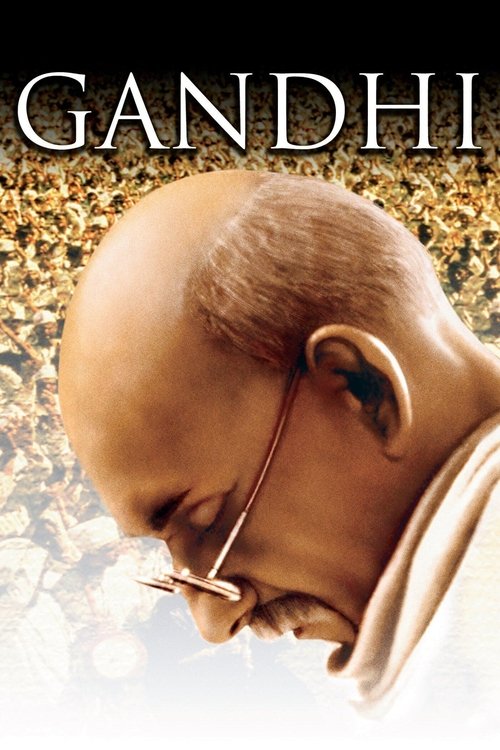
Gandhi - Review
Gandhi: A Timeless Epic of Peace and Resistance
Richard Attenborough's Gandhi, released in 1982, is more than just a biopic; it's a cinematic pilgrimage, a profound exploration of the human spirit's capacity for compassion, and a powerful testament to the transformative force of non-violent resistance. A sweeping historical drama that spans decades and continents, Gandhi meticulously chronicles the life of Mohandas Karamchand Gandhi, from his early activism in South Africa to his pivotal role in India's independence movement. The film is a visual feast, a masterclass in storytelling, and a deeply moving experience that resonates long after the credits roll. But is it a perfect portrayal? Does it fully capture the complexities of the man and the movement? This review delves into the nuances of Attenborough's masterpiece, exploring its strengths, acknowledging its limitations, and ultimately assessing its enduring legacy.
Plot: A Journey of Transformation and Triumph
The narrative structure of Gandhi is ambitious, covering a significant portion of Gandhi's life. The film opens with the shocking assassination of Gandhi in 1948, immediately establishing the stakes and the profound loss felt by the Indian people. From there, the story flashes back to Gandhi's early experiences in South Africa, where he faces blatant racial discrimination. This initial injustice sparks his political awakening and leads him to develop his philosophy of Satyagraha, or "truth force," a form of non-violent resistance.
The film then follows Gandhi's return to India and his gradual rise to prominence as a leader of the independence movement. We witness his tireless efforts to unite Hindus and Muslims, his powerful speeches that inspire millions, and his unwavering commitment to non-violent protest, even in the face of brutal oppression by the British authorities. Landmark events such as the Amritsar massacre, the Salt March, and the partition of India are depicted with meticulous detail and emotional impact. The film doesn't shy away from the complexities and internal conflicts within the independence movement, showcasing the challenges Gandhi faced in maintaining unity and adhering to his principles.
The pacing of the film is deliberate, allowing the audience to fully immerse themselves in the historical context and the emotional landscape of the characters. While some might find the length (over three hours) daunting, it is necessary to convey the scope and depth of Gandhi's life and work. The film avoids sensationalism, instead opting for a more measured and contemplative approach, which ultimately enhances its credibility and impact.
Characters: A Portrait of a Man and a Nation
At the heart of Gandhi is, of course, the portrayal of Mohandas Karamchand Gandhi himself. Ben Kingsley's performance is nothing short of iconic. He embodies Gandhi with remarkable physical and emotional accuracy, capturing his quiet strength, his unwavering conviction, and his deep compassion for humanity. Kingsley doesn't simply imitate Gandhi; he inhabits him, conveying the inner turmoil and the unwavering resolve that defined this extraordinary man. His performance is a masterclass in subtle acting, relying on nuanced gestures, expressive eyes, and a calm, authoritative voice to convey Gandhi's charisma and moral authority.
The supporting characters, while not as deeply developed as Gandhi, are nonetheless crucial to the film's narrative. We see the complex relationship between Gandhi and Jawaharlal Nehru (Robert Hardy), the future Prime Minister of India, and Muhammad Ali Jinnah (Alyque Padamsee), the leader of the Muslim League, whose differing visions for India's future ultimately led to partition. These characters represent the diverse factions within the independence movement and highlight the challenges Gandhi faced in uniting them under a common cause.
The British characters, while often depicted as antagonists, are not presented as one-dimensional villains. Lord Irwin (John Gielgud), the Viceroy of India, is portrayed as a man grappling with the moral implications of British rule and ultimately respecting Gandhi's principles. This nuanced portrayal of the British characters adds depth and complexity to the film, acknowledging the different perspectives and motivations involved in the conflict.
Direction: A Vision of Epic Proportions
Richard Attenborough's direction is masterful, demonstrating a clear vision and a meticulous attention to detail. He orchestrates the massive crowd scenes with remarkable precision, creating a sense of scale and grandeur that is truly breathtaking. The Amritsar massacre scene, in particular, is a harrowing example of Attenborough's ability to create suspense and evoke powerful emotions without resorting to graphic violence. He relies instead on skillful editing, evocative sound design, and the expressive performances of the actors to convey the horror of the event.
Attenborough's direction is also notable for its restraint. He avoids sentimentality and melodrama, allowing the story to unfold organically and the characters to speak for themselves. He trusts the audience to connect with the emotional core of the film without resorting to manipulative techniques. This understated approach lends the film a sense of authenticity and gravitas.
The film's pacing, as mentioned earlier, is deliberate. Attenborough takes his time to establish the historical context and develop the characters, allowing the audience to fully immerse themselves in the story. While some might find the length challenging, it is ultimately necessary to convey the scope and depth of Gandhi's life and work.
Cinematography: Painting a Portrait of India
Billy Williams and Ronnie Taylor's cinematography is stunning, capturing the beauty and diversity of India with remarkable visual flair. The film is filled with breathtaking landscapes, vibrant colors, and meticulously crafted compositions. The use of natural light adds a sense of realism and authenticity to the film, while the careful framing of shots helps to emphasize the emotional impact of key moments.
The cinematography also plays a crucial role in conveying the contrast between the opulence of British colonial rule and the poverty and suffering of the Indian people. The stark visuals of the slums and villages stand in stark contrast to the grandeur of the British palaces and government buildings, highlighting the inequalities that fueled the independence movement.
The use of color is also significant. The vibrant colors of the Indian clothing and festivals are juxtaposed with the drab uniforms of the British soldiers, creating a visual representation of the cultural clash between the two nations. The cinematography is not merely decorative; it is an integral part of the storytelling, enhancing the emotional impact and conveying the historical context of the film.
Performances: A Triumph of Ensemble Acting
As previously mentioned, Ben Kingsley's performance as Gandhi is the cornerstone of the film. His transformation into the Mahatma is truly remarkable, and he embodies the character with a depth of understanding and empathy that is rarely seen on screen. His performance is not just an imitation; it is a true embodiment of the spirit of Gandhi.
The supporting cast is equally impressive. Rohini Hattangadi delivers a powerful performance as Kasturbai Gandhi, Gandhi's wife, portraying her strength, resilience, and unwavering support for her husband. Roshan Seth is excellent as Jawaharlal Nehru, capturing his intelligence, idealism, and his complex relationship with Gandhi. Alyque Padamsee is chilling as Muhammad Ali Jinnah, conveying his ambition, his political acumen, and his ultimately tragic role in the partition of India.
The British actors also deliver strong performances. John Gielgud is compelling as Lord Irwin, the Viceroy of India, portraying him as a man struggling with his conscience. Trevor Howard is memorable as Judge Broomfield, the judge who presides over Gandhi's trial, displaying a sense of fairness and respect for the defendant, despite their opposing political views.
The film is a testament to the power of ensemble acting, with each performer contributing to the overall impact and authenticity of the story.
Themes and Messages: Peace, Resistance, and Unity
Gandhi is a film that explores a multitude of themes, but perhaps the most prominent is the power of non-violent resistance. The film demonstrates how Gandhi's philosophy of Satyagraha, or "truth force," can be used to overcome even the most powerful oppressors. It shows how peaceful protests, civil disobedience, and moral persuasion can be more effective than violence in achieving political change.
Another key theme is the importance of unity and tolerance. Gandhi's tireless efforts to unite Hindus and Muslims are a central focus of the film, highlighting the challenges of overcoming religious and cultural divisions. The film underscores the importance of understanding, empathy, and mutual respect in building a just and peaceful society.
The film also explores the themes of colonialism, oppression, and the struggle for independence. It provides a powerful indictment of British rule in India, exposing the injustices and inequalities that fueled the independence movement. It celebrates the courage and resilience of the Indian people in their fight for freedom.
Ultimately, Gandhi is a film about the power of the human spirit to overcome adversity and to create a better world. It is a message of hope, inspiration, and the enduring relevance of Gandhi's teachings in the 21st century.
Comparison to Other Films: A Legacy of Biopics
Gandhi can be compared to other historical biopics that explore the lives of influential figures. Films like Lawrence of Arabia (1962), Malcolm X (1992), and Schindler's List (1993) share a similar scope and ambition, attempting to capture the essence of complex individuals and their impact on history. However, Gandhi stands apart in its focus on non-violent resistance and its message of peace and unity.
In terms of Attenborough's own filmography, Gandhi is arguably his most ambitious and accomplished work. While he directed other historical dramas, such as A Bridge Too Far (1977), none achieved the same level of critical acclaim or cultural impact. Gandhi represents the culmination of Attenborough's career, a project he had been trying to bring to the screen for over two decades.
Ben Kingsley's performance as Gandhi can also be compared to other iconic portrayals of historical figures. His performance is often ranked alongside Marlon Brando's portrayal of Vito Corleone in The Godfather (1972) and Daniel Day-Lewis's portrayal of Abraham Lincoln in Lincoln (2012) as one of the greatest performances in cinematic history.
Positive Aspects: A Cinematic Triumph
Gandhi is a cinematic triumph on many levels. Ben Kingsley's performance is simply extraordinary, capturing the essence of Gandhi with remarkable accuracy and empathy. Richard Attenborough's direction is masterful, orchestrating the massive crowd scenes with precision and conveying the emotional impact of the story with restraint and sensitivity. The cinematography is stunning, capturing the beauty and diversity of India with visual flair. The film's themes of peace, resistance, and unity are timeless and universally relevant.
The film's historical accuracy is also commendable, although some liberties were taken for dramatic effect. The film provides a comprehensive overview of Gandhi's life and work, introducing him to a global audience and inspiring countless individuals to embrace his philosophy of non-violent resistance.
Gandhi is a film that stays with you long after the credits roll, prompting reflection on the power of the human spirit and the importance of fighting for justice and equality.
Constructive Criticism: Areas for Improvement
While Gandhi is a remarkable film, it is not without its flaws. Some critics have argued that the film presents a somewhat sanitized and idealized version of Gandhi, glossing over some of his more controversial views and actions. For example, his complex views on caste and his sometimes paternalistic attitude towards women are not fully explored.
The film's length can also be a barrier for some viewers. While the deliberate pacing allows for a deeper immersion in the story, some might find the three-hour runtime excessive. Certain scenes could have been trimmed without sacrificing the overall impact of the film.
Additionally, some argue that the film focuses too heavily on Gandhi's personal journey and doesn't adequately acknowledge the contributions of other key figures in the Indian independence movement. While Gandhi was undoubtedly a pivotal leader, the movement was a collective effort, and the film could have given more prominence to the contributions of other activists and thinkers.
Finally, the film's portrayal of the partition of India, while historically accurate, is somewhat simplified. The complexities of the political negotiations and the devastating consequences of the partition could have been explored in greater depth.
Conclusion and Rating
Despite its minor flaws, Gandhi remains a cinematic masterpiece, a powerful and moving tribute to one of the most influential figures of the 20th century. Ben Kingsley's performance is iconic, Richard Attenborough's direction is masterful, and the film's themes of peace, resistance, and unity are timeless and universally relevant. Gandhi is a film that inspires, challenges, and ultimately leaves the viewer with a renewed sense of hope for the future.
Rating: 9.5/10