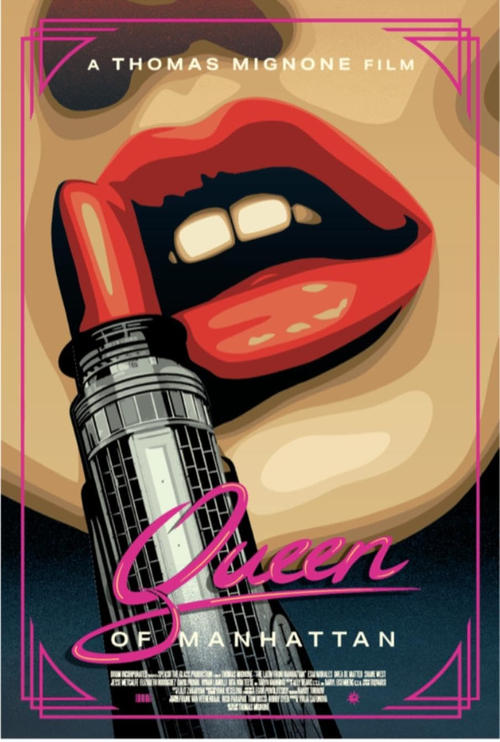
Queen of Manhattan - Review
Queen of Manhattan: A Riveting Portrait of Vanessa Del Rio's Reign
Forget the sanitized biopics. Director Anya Petrova's "Queen of Manhattan," released on September 12th, 2025, isn't afraid to delve into the grit, the glamour, and the sheer audacity of Vanessa Del Rio's life. This isn't just a story about a woman who starred in adult films; it's a meticulously crafted drama about survival, ambition, and the complex moral landscape of 1970s and 80s Times Square. Petrova paints a vivid, unflinching portrait of Del Rio, played with breathtaking ferocity by rising star Isabella Rossi, navigating a world controlled by organized crime, societal judgment, and her own unwavering desire for control.
Plot: A Descent into, and Ascent from, the Underworld
The film opens with a young Vanessa, newly arrived in New York City, brimming with dreams and a desperate need to escape her impoverished past. Rossi immediately captures Del Rio's raw vulnerability and fiery spirit. We see her initial struggles, the casual sexism and exploitation she faces in various low-paying jobs. It’s a slow burn, building the foundation for her eventual embrace of the adult film industry. The script, penned by Lena Hanson and David Miller, avoids sensationalism in these early scenes, instead focusing on the economic and social pressures that pushed Del Rio towards a life that many would deem scandalous.
The narrative picks up pace as Vanessa enters the world of adult entertainment. The film doesn't shy away from depicting the graphic nature of the industry, but it does so with a surprising degree of sensitivity. Petrova smartly uses these scenes to highlight Del Rio's agency and control. We see her negotiating contracts, demanding respect from male directors and producers, and fiercely protecting her image. The film portrays her not as a victim, but as a shrewd businesswoman who understood the power she wielded in a male-dominated world.
The looming presence of organized crime is a constant undercurrent. The film subtly showcases how the mob controlled various aspects of Times Square, from peep shows to film production. Del Rio's interactions with these figures are tense and fraught with danger. While never explicitly detailing gruesome acts, the film masterfully implies the violence and threats that pervaded the era. This constant threat adds a layer of suspense and keeps the audience on edge.
The latter half of the film explores Del Rio's personal life, her relationships (both romantic and familial), and the toll that her choices took on her. Her struggles with addiction, the judgment from her community, and the constant media scrutiny are all handled with nuance and empathy. The film avoids easy answers or simplistic moralizing, instead presenting a complex and multifaceted portrayal of a woman grappling with the consequences of her choices.
The ending, while not entirely happy, is ultimately hopeful. It shows Del Rio finding a measure of peace and acceptance, having carved out her own space in a world that often tried to silence her. It’s a testament to her resilience and her unwavering spirit.
Characters: Flawed, Compelling, and Unforgettable
Vanessa Del Rio (Isabella Rossi): Rossi's performance is nothing short of revelatory. She embodies Del Rio's charisma, her vulnerability, and her steely determination. She captures the nuances of Del Rio's personality, from her playful flirtatiousness to her fierce protectiveness. This is a star-making performance that will undoubtedly garner Rossi significant awards attention. She doesn’t simply imitate Del Rio; she inhabits her, making her struggles and triumphs feel profoundly real.
Tony "The Hammer" Moretti (Vincent Gallo): Gallo, known for his intense and unpredictable performances, plays the role of a mob boss with chilling effectiveness. He's not a cartoonish villain; he's a complex character who believes he's simply maintaining order in a chaotic world. Gallo brings a quiet menace to the role, making him all the more terrifying.
Gloria (Sofia Vergara): Vergara delivers a surprisingly understated performance as Del Rio's loyal friend and confidante. Gloria provides a grounding presence in Vanessa's turbulent life, offering unwavering support and tough love when needed. Their friendship is one of the most heartwarming aspects of the film.
Director Marco (Alessandro Nivola): Nivola plays a director who works with Del Rio. He portrays him as a man caught between his artistic ambitions and the demands of the industry. His character arc is interesting, as he initially seems exploitative but gradually develops a genuine respect for Del Rio's talent and agency.
Direction: Petrova's Masterful Control
Anya Petrova's direction is masterful. She creates a visually stunning and emotionally resonant film that avoids the pitfalls of sensationalism and exploitation. She has a keen eye for detail, recreating the gritty atmosphere of 1970s and 80s Times Square with remarkable accuracy. The pacing is deliberate, allowing the story to unfold gradually and organically. Petrova's ability to elicit such powerful performances from her actors is a testament to her skill as a director.
Petrova’s prior work, particularly her indie darling "Concrete Dreams" (2020), showcased her talent for portraying marginalized communities with authenticity and empathy. "Queen of Manhattan" feels like a natural progression, expanding on those themes on a larger scale. She handles the sensitive subject matter with remarkable grace and maturity.
Cinematography: A Visual Feast
The cinematography, by veteran Darius Khondji, is breathtaking. He uses a combination of natural light and stylized camerawork to create a visually arresting film. The scenes set in the adult film studios are particularly striking, capturing the raw energy and the artificiality of the environment. Khondji’s use of color is also noteworthy, employing a palette that is both vibrant and melancholic, reflecting the dual nature of Del Rio's life. The visual language reinforces the themes of the film, highlighting both the glamour and the darkness of the era.
Themes and Messages: Power, Control, and the Price of Fame
"Queen of Manhattan" explores several complex themes. One of the most prominent is the theme of power and control. Del Rio's decision to enter the adult film industry is ultimately driven by her desire to take control of her own life and her own image. The film examines the ways in which women are often denied agency in a patriarchal society and the lengths to which they will go to assert their power.
The film also explores the theme of exploitation. While Del Rio is portrayed as a strong and independent woman, the film doesn't shy away from depicting the exploitative aspects of the adult film industry. It raises important questions about consent, agency, and the ethical responsibilities of those who profit from the exploitation of others.
The price of fame is another key theme. The film shows the toll that Del Rio's celebrity takes on her personal life, her relationships, and her mental health. It highlights the pressures of living in the public eye and the challenges of maintaining a sense of identity in a world that often seeks to define you.
Ultimately, "Queen of Manhattan" is a story about survival. It's about a woman who faced immense challenges and overcame them with courage, resilience, and an unwavering belief in herself. It's a story that is both inspiring and heartbreaking, and it will stay with you long after the credits roll.
Comparisons: Echoes of the Past, a New Voice
It's difficult to discuss "Queen of Manhattan" without drawing comparisons to other biopics about controversial figures, such as "The People vs. Larry Flynt" (1996) or "The Wolf of Wall Street" (2013). However, Petrova's film distinguishes itself through its nuanced portrayal of its subject and its focus on the female perspective. Unlike those films, which often revel in the excess and the spectacle of their subjects' lives, "Queen of Manhattan" offers a more intimate and introspective look at Del Rio's journey.
In terms of Petrova's own filmography, "Queen of Manhattan" represents a significant step forward. While her previous films were smaller in scale, they all shared her signature style: a focus on character development, a willingness to tackle difficult subjects, and a commitment to authenticity. "Queen of Manhattan" demonstrates her ability to handle a larger budget and a more complex narrative without sacrificing her artistic vision.
Positive Aspects: A Triumph of Storytelling
There are numerous aspects of "Queen of Manhattan" that deserve praise. The performances are uniformly excellent, particularly Rossi's portrayal of Del Rio. The direction is masterful, creating a visually stunning and emotionally resonant film. The script is intelligent and nuanced, avoiding easy answers and simplistic moralizing. The cinematography is breathtaking, capturing the gritty atmosphere of 1970s and 80s Times Square with remarkable accuracy.
The film's greatest strength is its ability to humanize Del Rio. It doesn't shy away from depicting her flaws and her mistakes, but it also celebrates her strengths and her triumphs. It presents her as a complex and multifaceted individual, a woman who defied expectations and carved out her own space in a world that often tried to silence her.
Constructive Criticism: Minor Imperfections
While "Queen of Manhattan" is a remarkable film, it is not without its flaws. The pacing, while deliberate, can feel a bit slow at times. Some viewers may find the film's length (nearly three hours) to be a bit daunting. Additionally, while the film does a good job of depicting the exploitative aspects of the adult film industry, it could have delved deeper into the systemic issues that enabled such exploitation to occur.
One minor criticism is the film's reliance on certain biopic tropes, such as the "rise and fall" narrative structure. While these tropes are effective, they can also feel somewhat predictable. However, Petrova manages to subvert these tropes in subtle ways, adding her own unique perspective to the genre.
Conclusion: A Must-See for Film Enthusiasts
"Queen of Manhattan" is a powerful and unforgettable film that will stay with you long after the credits roll. It's a meticulously crafted drama about survival, ambition, and the complex moral landscape of 1970s and 80s Times Square. Isabella Rossi delivers a star-making performance as Vanessa Del Rio, and Anya Petrova proves herself to be one of the most talented directors working today. Despite a few minor imperfections, this is a must-see for film enthusiasts and anyone interested in the life of one of the most controversial and fascinating figures in American popular culture.
Rating: 9.5/10