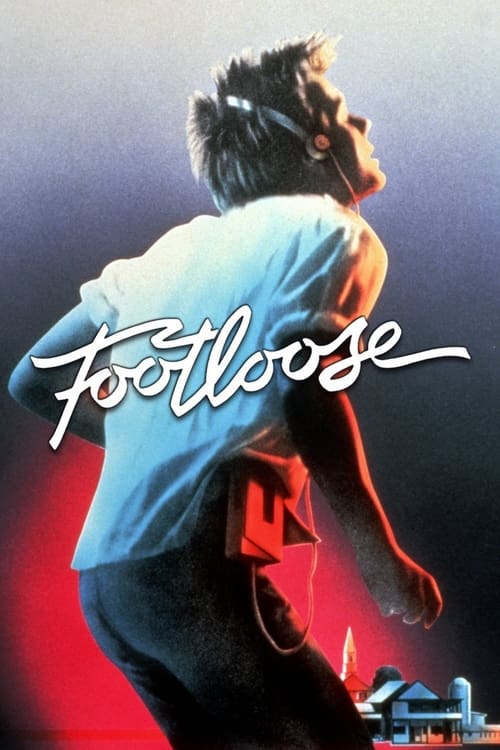
Footloose - Review
Footloose: A Blast from the Past That Still Kicks
Footloose, released in 1984, isn't just a movie; it's a cultural phenomenon. More than just a simple story of a city boy challenging small-town traditions, it's a vibrant snapshot of a specific era, brimming with infectious energy, unforgettable music, and a surprisingly resonant message that continues to resonate with audiences today. But does this nostalgic dance party hold up under modern scrutiny? Let's lace up our dancing shoes and dive in.
Plot: Rebellion in Bomont
The premise of Footloose is deceptively simple. Ren McCormack (Kevin Bacon), a teenager from the bustling streets of Chicago, finds his life uprooted when his mother is forced to relocate to Bomont, a small, conservative town in rural America. He quickly discovers that Bomont is far from your average sleepy hamlet. Three years prior, a tragic accident claimed the lives of four teenagers after a night of dancing and drinking. Reverend Shaw Moore (John Lithgow), a respected figure in the community and father to one of the deceased, successfully lobbied for a ban on public dancing and rock music, effectively stifling any youthful exuberance.
Ren, naturally, is appalled. He sees the ban as an infringement on freedom and a suffocating attempt to control the town's youth. He quickly clashes with Reverend Moore and the town's authorities, becoming a symbol of rebellion for the younger generation. He finds an ally in Ariel (Lori Singer), Reverend Moore's rebellious daughter, who is struggling with her own grief and resentment towards her father's controlling nature. Together, they embark on a mission to overturn the ban and bring dancing back to Bomont, facing opposition from the older generation and struggling to navigate the complex dynamics of a town grappling with loss and fear.
The plot follows a predictable but effective underdog narrative. Ren and Ariel rally their friends, including Willard (Chris Penn), a lovable but initially dance-challenged farmhand, to their cause. They face obstacles such as parental disapproval, social ostracism, and even physical altercations. However, through their persistence and unwavering belief in the power of expression, they gradually chip away at the town's resistance, ultimately culminating in a climactic dance that symbolizes the liberation of Bomont's youth.
While the basic plot is straightforward, it's the emotional core and the characters' journeys that give Footloose its enduring appeal. The film explores themes of grief, repression, and the importance of self-expression with surprising depth, considering its lighthearted tone.
Characters: More Than Just Archetypes
Footloose boasts a cast of characters who, while fitting into certain archetypes, are given enough depth and nuance to make them relatable and engaging.
Ren McCormack (Kevin Bacon)
Ren is the quintessential "fish out of water." He's confident, charismatic, and possesses a rebellious streak that makes him the perfect catalyst for change in Bomont. Bacon's performance is energetic and captivating. He embodies the frustration and longing for freedom that many teenagers experience. While he initially comes across as a cocky outsider, we see his vulnerability and the pain he carries from his own personal tragedies, making him a more sympathetic and complex character.
Ariel Moore (Lori Singer)
Ariel is more than just the "rebellious preacher's daughter." She's a complex character grappling with grief, anger, and a strained relationship with her father. Singer portrays Ariel with a raw vulnerability that makes her relatable despite her sometimes reckless behavior. She craves attention and affection, often acting out as a way to cope with her inner turmoil. Her transformation throughout the film, from a self-destructive rebel to a more grounded and hopeful young woman, is one of the most compelling aspects of the story.
Reverend Shaw Moore (John Lithgow)
Reverend Moore is not a villain. He's a man driven by grief and a desire to protect his community from further pain. Lithgow delivers a powerful and nuanced performance, portraying Reverend Moore as a complex and conflicted figure. We see his love for his daughter, his unwavering faith, and his genuine concern for the well-being of his congregation. While his methods may be misguided, his intentions are ultimately good. His eventual realization that he's been stifling the town's youth and his willingness to reconsider his stance is a crucial turning point in the film.
Willard Hewitt (Chris Penn)
Willard is the lovable and comedic relief character. Initially, he's portrayed as a naive and awkward farmhand who is completely out of his element when it comes to dancing. Penn's performance is hilarious and endearing. Willard's journey from a dance-challenged klutz to a confident and enthusiastic participant in the final dance is one of the film's most satisfying subplots. He represents the potential for change and growth that exists within everyone, regardless of their background or initial limitations.
Vi Moore (Dianne Wiest)
Vi, Reverend Moore's wife, is a quiet but powerful force in the film. She provides a counterpoint to her husband's strict conservatism, offering a more compassionate and understanding perspective. Wiest delivers a subtle but effective performance, conveying Vi's inner turmoil and her desire to bridge the gap between her husband and her daughter. She serves as a voice of reason and ultimately plays a key role in helping Reverend Moore see the error of his ways.
While some supporting characters may fall into familiar tropes, the main cast delivers compelling performances that elevate the film beyond its simple premise.
Direction and Cinematography: A Visual Feast of the 80s
Herbert Ross's direction is energetic and visually engaging. He effectively captures the contrasting atmospheres of Chicago and Bomont, highlighting the cultural divide that Ren experiences. The dance sequences are dynamic and exciting, showcasing the talent of the dancers and the infectious energy of the music. Ross skillfully uses visual storytelling to convey the characters' emotions and the underlying themes of the film.
The cinematography, while undeniably dated in some aspects, is effective in creating a sense of place and atmosphere. The wide-open landscapes of Bomont contrast sharply with the gritty urban environment of Chicago, visually representing the cultural clash that Ren experiences. The use of color is also notable, with vibrant hues used to depict the energy of the dance sequences and more muted tones used to convey the somber mood of the town.
While the film's visual style is undeniably rooted in the 1980s, it still holds a certain charm. The costumes, hairstyles, and overall aesthetic contribute to the film's nostalgic appeal and help to transport the audience back to a specific era.
Performances: Bacon Steals the Show, But the Supporting Cast Shines Too
Kevin Bacon's performance as Ren McCormack is undoubtedly the film's standout. He embodies the character's rebellious spirit, his vulnerability, and his unwavering determination. He brings a charisma and energy to the role that is impossible to ignore. While Footloose wasn't Bacon's first role, it certainly catapulted him to stardom and solidified his status as a leading man.
Lori Singer delivers a compelling performance as Ariel Moore, portraying the character's inner turmoil and her struggle to find her own identity. John Lithgow is excellent as Reverend Shaw Moore, bringing depth and nuance to a character who could easily have been portrayed as a one-dimensional villain. Chris Penn provides much-needed comedic relief as Willard Hewitt, and Dianne Wiest delivers a subtle but effective performance as Vi Moore.
The entire cast works well together, creating a believable and engaging ensemble. The chemistry between Bacon and Singer is particularly strong, adding to the romantic tension and the overall emotional impact of the film.
Themes and Messages: More Than Just Dancing
Footloose is more than just a feel-good movie about dancing. It explores several important themes and delivers a message that is still relevant today.
The Importance of Self-Expression
The film champions the importance of self-expression and the right to pursue one's passions, even in the face of opposition. Ren's determination to bring dancing back to Bomont is not just about having fun; it's about asserting his right to express himself and to challenge the stifling conformity of the town.
The Dangers of Repression
Footloose highlights the dangers of repression and the negative consequences of suppressing emotions and desires. The town's ban on dancing is a symbol of its attempt to control and suppress its youth, leading to resentment, anger, and ultimately, rebellion.
The Power of Forgiveness and Understanding
The film ultimately promotes the power of forgiveness and understanding. Reverend Moore's journey from a rigid and controlling figure to a more compassionate and understanding one demonstrates the importance of being open to different perspectives and of learning from one's mistakes. The film suggests that by embracing forgiveness and understanding, communities can heal and move forward.
Grief and Healing
Underneath the dancing and the rebellion lies a story of grief and healing. The town of Bomont is still reeling from the tragic accident that claimed the lives of four teenagers. The ban on dancing is, in part, a manifestation of the town's collective grief and its attempt to prevent future tragedies. The film suggests that while grief is a powerful emotion, it should not be allowed to control one's life or to stifle the joy of living.
These themes are woven throughout the narrative, adding depth and resonance to what could have been a simple story of teenage rebellion.
Comparison to Other Films and Works
Footloose can be compared to other films that explore similar themes of teenage rebellion and cultural clashes, such as Rebel Without a Cause (1955) and Dirty Dancing (1987). However, Footloose distinguishes itself with its focus on the power of music and dance as a form of self-expression and its more optimistic and uplifting tone.
Herbert Ross, the director of Footloose, also directed films such as The Turning Point (1977) and Steel Magnolias (1989). While these films differ in subject matter, they share Ross's talent for capturing human emotions and relationships with sensitivity and nuance. He excels at character-driven narratives, a strength clearly visible in Footloose.
Kevin Bacon's performance in Footloose is often compared to his later roles in films such as Tremors (1990) and A Few Good Men (1992). While these roles showcase Bacon's versatility as an actor, Footloose remains his most iconic and memorable performance.
Positive Aspects
- Infectious Music: The soundtrack is undeniably one of the film's greatest strengths. From the iconic title track to "Holding Out for a Hero," the songs are catchy, energetic, and perfectly capture the spirit of the film.
- Energetic Performances: The cast delivers enthusiastic and engaging performances, particularly Kevin Bacon as Ren McCormack.
- Uplifting Message: The film's message about the importance of self-expression and the power of forgiveness is ultimately uplifting and inspiring.
- Nostalgic Appeal: Footloose is a quintessential 1980s film, and its visual style and soundtrack evoke a strong sense of nostalgia for that era.
- Dance Sequences: The dance sequences are well-choreographed and visually dynamic, adding to the film's overall energy and excitement.
Constructive Criticism
- Predictable Plot: The plot is fairly predictable and relies on familiar tropes of the underdog narrative.
- Stereotypical Characters: Some of the supporting characters fall into familiar stereotypes.
- Dated Visuals: The film's visual style is undeniably dated, which may detract from the viewing experience for some modern audiences.
- Simplified Conflict Resolution: The resolution of the conflict, while ultimately satisfying, feels somewhat simplified and rushed.
- Over-the-Top Moments: Some scenes, particularly those involving Ariel's rebellious behavior, can feel over-the-top and melodramatic.
Conclusion
Footloose is a flawed but ultimately enjoyable film. While its plot may be predictable and its visuals dated, its infectious music, energetic performances, and uplifting message make it a timeless classic. It's a film that celebrates the power of self-expression, the importance of forgiveness, and the joy of dancing. Whether you're a longtime fan or a first-time viewer, Footloose is sure to get your feet tapping and your spirits soaring.
Rating: 7.5/10