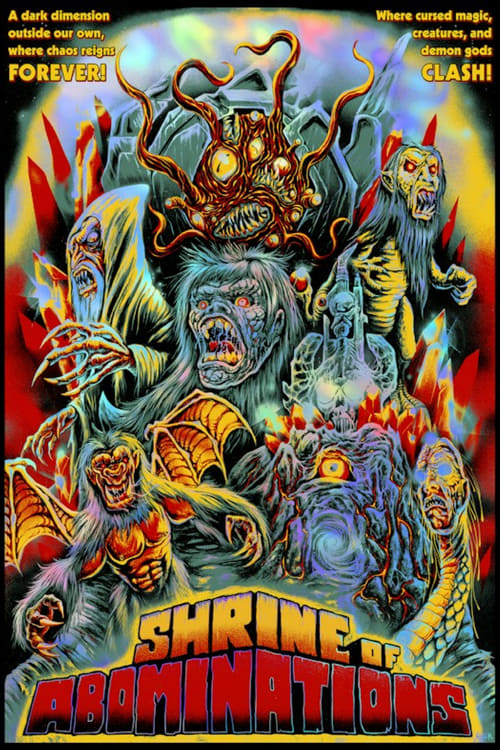
Shrine of Abominations - Review
Shrine of Abominations: A Cosmic Horror Feast for the Eyes (and Mind)
Shrine of Abominations. The title alone conjures images of grotesque idols, forbidden rituals, and the kind of cosmic dread that makes H.P. Lovecraft turn in his grave (with admiration, of course). And thankfully, the film delivers on that promise, offering a visually stunning and narratively ambitious descent into the madness of Orbus Kaal, a world teeming with malevolent wizards, unspeakable horrors, and enough arcane power to shatter a galaxy. Released on September 21st, 2025, this animated horror fantasy is not for the faint of heart, but for those with a taste for the bizarre, the beautiful, and the utterly terrifying, Shrine of Abominations is a must-see.
Plot: A Collision of Cosmic Ambitions
The plot, while seemingly straightforward at first glance, quickly unravels into a complex tapestry of competing ambitions and ancient grudges. On Orbus Kaal, a world perpetually shrouded in twilight and steeped in sorcery, Gar-Gnargorath, the leader of a council of wizards (each more unsettling than the last), seeks to invoke the Demotep, cosmic entities of unimaginable power. His aim is simple: universal domination and revenge against those who wronged him in a past he refuses to let go. His methods, however, are anything but. He employs dark rituals, sacrifices, and a blatant disregard for the sanity of his followers – and himself.
But Gar-Gnargorath isn’t the only power player on Orbus Kaal. Lurking in the shadows is Morgogg, a creature of immense and terrifying power, whose origins are shrouded in mystery. Morgogg's motivations are less clear than Gar-Gnargorath's, but his presence is a constant threat, a wild card that could disrupt the wizard's carefully laid plans. The film cleverly interweaves their narratives, creating a sense of impending doom and escalating tension. The possibility of these two forces clashing hangs heavy in the air, promising a cataclysmic showdown that could reshape the very fabric of Orbus Kaal.
The narrative strength lies in its world-building. Orbus Kaal feels genuinely alien, with its bizarre flora, grotesque architecture, and a history that stretches back to the dawn of time. The film doesn't spoon-feed the audience; it trusts them to piece together the lore through visual cues, cryptic dialogue, and the sheer palpable atmosphere of dread. This approach creates a sense of immersion that is both rewarding and unsettling.
However, the plot occasionally suffers from pacing issues. The exposition, while necessary to establish the complex world and characters, can feel dense at times. Certain subplots, while intriguing, could have been streamlined to maintain a tighter focus on the central conflict between Gar-Gnargorath and Morgogg. A few scenes drag on a bit, and the film could have benefited from a slightly shorter runtime.
Characters: A Rogues' Gallery of the Damned
The characters in Shrine of Abominations are a fascinating blend of the grotesque and the compelling. Gar-Gnargorath, voiced with chilling gravitas by veteran actor Benedict Cumberbatch, is a truly terrifying antagonist. He is not simply evil; he is driven by a deep-seated pain and a burning desire for retribution. Cumberbatch perfectly captures the character's arrogance, his madness, and his underlying vulnerability, making him a surprisingly complex and sympathetic figure, despite his monstrous actions.
Morgogg, voiced by the legendary Doug Bradley (best known as Pinhead from the Hellraiser franchise), is a more enigmatic presence. Bradley's performance is masterful, conveying a sense of ancient power and unknowable malice with every guttural utterance. Morgogg is less a character and more a force of nature, a cosmic entity that defies comprehension. His scenes are the most visually striking and unsettling, leaving a lasting impression long after the credits roll.
The supporting characters, while not as deeply developed as Gar-Gnargorath and Morgogg, are equally memorable. The members of the council of wizards are a bizarre and unsettling bunch, each with their own unique quirks and deformities. Special mention goes to the character of Xylar, Gar-Gnargorath's loyal but increasingly disillusioned apprentice, voiced by Anya Taylor-Joy. Xylar's arc, as she grapples with the moral implications of her master's actions, provides a much-needed human element to the story.
One minor criticism is that some of the supporting characters could have been given more screen time to flesh out their motivations and relationships. While their designs are striking and their performances are strong, they sometimes feel like set dressing rather than fully realized characters.
Direction and Cinematography: A Feast for the Eyes
Director Anya Petrova has crafted a visually stunning and atmospheric masterpiece. The animation style is a unique blend of traditional hand-drawn techniques and cutting-edge CGI, resulting in a look that is both timeless and modern. The character designs are grotesque and imaginative, drawing inspiration from the works of H.R. Giger and Zdzisław Beksiński. Orbus Kaal is brought to life with breathtaking detail, from its towering fungal forests to its crumbling, cyclopean ruins.
The cinematography is equally impressive. Petrova employs a variety of camera angles and lighting techniques to create a sense of unease and dread. The use of chiaroscuro (the contrast between light and dark) is particularly effective, casting long shadows and highlighting the characters' distorted features. The action sequences are dynamic and visceral, showcasing the raw power of the wizards and the terrifying might of Morgogg.
The film's visual style is its greatest strength. It is a true feast for the eyes, offering a constant stream of grotesque beauty and unsettling imagery. Petrova's direction is confident and assured, creating a cohesive and immersive world that draws the viewer in and refuses to let go.
However, the heavy reliance on dark and unsettling imagery may not appeal to all viewers. Some may find the film visually overwhelming or even disturbing. While the animation is technically impressive, it can occasionally feel a bit too stylized, sacrificing clarity for aesthetic impact.
Themes and Messages: The Corruption of Power and the Price of Ambition
Shrine of Abominations explores a number of complex themes, including the corruption of power, the price of ambition, and the futility of revenge. Gar-Gnargorath's descent into madness is a cautionary tale about the dangers of unchecked power and the corrosive effects of hatred. His obsession with revenge consumes him, turning him into the very monster he sought to destroy.
The film also explores the nature of good and evil. Morgogg, despite being a creature of immense power and terrifying appearance, is not necessarily evil. He is simply a force of nature, indifferent to the concerns of mortals. This ambiguity challenges the audience to question their own preconceived notions about morality and to consider the possibility that evil is not always a conscious choice, but rather a consequence of circumstance.
The film's message is ultimately one of hope, albeit a bleak and qualified one. Even in the darkest of times, there is always the possibility of redemption, even for those who have committed the most heinous acts. Xylar's journey, as she confronts her master's evil and chooses a different path, offers a glimmer of light in a world consumed by darkness.
Some viewers may find the film's themes to be overly pessimistic or nihilistic. The ending, while satisfying in its own way, is not exactly uplifting. However, the film's willingness to confront difficult and uncomfortable truths is one of its greatest strengths.
Comparisons: Echoes of Lovecraft and Beyond
Shrine of Abominations is clearly influenced by the works of H.P. Lovecraft, particularly his tales of cosmic horror and ancient, unknowable entities. The film's depiction of the Demotep is reminiscent of Lovecraft's Great Old Ones, beings of immense power and unimaginable horror that lie dormant beneath the surface of reality. The film also shares Lovecraft's pessimistic worldview, suggesting that humanity is ultimately insignificant in the face of the vast and uncaring cosmos.
However, Shrine of Abominations is not simply a Lovecraftian pastiche. It also draws inspiration from other sources, including the works of Clive Barker, Guillermo del Toro, and the fantasy art of Frank Frazetta. The film's blend of horror, fantasy, and dark humor is reminiscent of Barker's work, while its grotesque creature designs and its emphasis on practical effects (even in animation) are reminiscent of del Toro's films. The film's overall aesthetic, with its emphasis on muscular figures and baroque architecture, evokes the spirit of Frazetta's iconic fantasy paintings.
Compared to Anya Petrova's previous film, the critically acclaimed animated fantasy The Obsidian Labyrinth (2020), Shrine of Abominations is a darker and more ambitious work. While The Obsidian Labyrinth was a more traditional fantasy adventure, Shrine of Abominations delves into more complex and disturbing themes. Petrova has clearly grown as a director, demonstrating a greater command of visual storytelling and a willingness to take risks.
Positive Aspects: A Triumph of Visual Storytelling
- Stunning animation and visual design
- Compelling characters and strong voice acting
- Ambitious and thought-provoking themes
- Effective use of atmosphere and suspense
- Unique blend of horror, fantasy, and dark humor
Constructive Criticism: Areas for Improvement
- Pacing issues in the first act
- Some supporting characters could be more developed
- The heavy reliance on dark imagery may not appeal to all viewers
- The film's themes may be too pessimistic for some
Conclusion: A Must-See for Fans of Dark Fantasy and Cosmic Horror
Shrine of Abominations is a triumph of visual storytelling and a must-see for fans of dark fantasy and cosmic horror. It is a visually stunning and narratively ambitious film that will stay with you long after the credits roll. While it may not be for everyone, those with a taste for the bizarre, the beautiful, and the utterly terrifying will find much to appreciate in this grotesque masterpiece. Anya Petrova has cemented her place as one of the most exciting and innovative directors working in animation today.