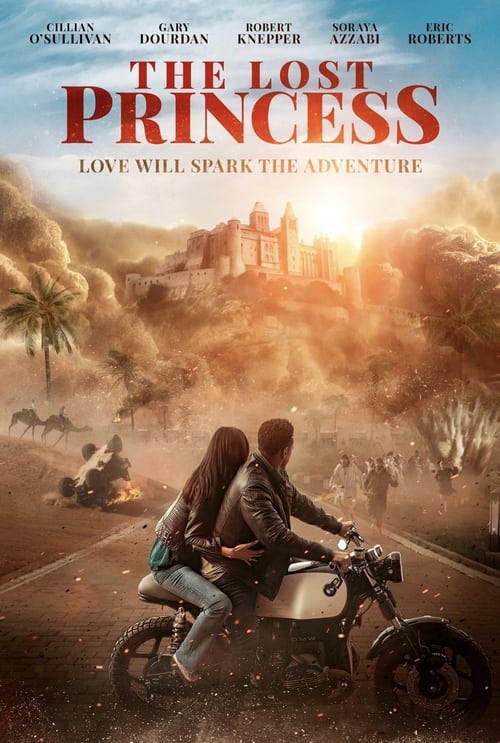
The Lost Princess - Review
"The Lost Princess" (2025): A Haunting Tale of Love, Loss, and Ayahuasca-Fueled Adventure
In a cinematic landscape saturated with superhero fatigue and predictable sequels, director Anya Petrova's "The Lost Princess," released on October 16th, 2025, dares to be different. It’s a heady blend of action, adventure, historical drama, and the supernatural, all seasoned with a potent dose of South American mysticism. While the film's ambitious scope occasionally stumbles, its captivating performances, stunning visuals, and thought-provoking themes make it a truly memorable cinematic experience. Prepare to be transported to a world where reality blurs with vision, and the past echoes with a haunting resonance.
Plot: A Tangled Web of Destiny and Forbidden Love
The film opens with Alec (played with compelling vulnerability by rising star Liam O'Connell), a disillusioned travel writer seeking inspiration, embarking on an Ayahuasca retreat in the Amazon. During a particularly vivid vision, Alec is transported to a crumbling, gothic castle shrouded in mist. There, he encounters Hanna (portrayed with captivating depth by veteran actress Isabella Moreau), a spectral figure who is bound to the castle, eternally reliving the tragic story of her family. Hanna recounts the tale of her mother, Princess Isolde, a woman forced into a loveless marriage with the cruel and ambitious Duke Armand. Isolde's heart, however, belonged to another – a charismatic stable hand named Jean-Luc. Their forbidden passion blossomed in secret, culminating in Isolde's pregnancy. The revelation of this affair threatened to unravel the kingdom, plunging Isolde, Jean-Luc, and their unborn child into grave danger.
Alec, initially skeptical, finds himself increasingly drawn into Hanna's story. As he delves deeper into the mystery of the lost princess, he begins to question the nature of reality and his own sanity. Is he merely hallucinating, or has he truly been granted access to a forgotten chapter of history? The film cleverly interweaves Alec's present-day struggle with Hanna's historical narrative, blurring the lines between the two timelines. We see flashbacks of Isolde's tumultuous life, her passionate romance with Jean-Luc, and the ruthless machinations of Duke Armand, who will stop at nothing to secure his power. As Alec pieces together the truth, he realizes that he is not merely an observer, but a key player in a destiny that spans centuries.
The plot, while intricate and engaging, does suffer from occasional pacing issues. The first act, focused on Alec's Ayahuasca experience and initial encounter with Hanna, feels somewhat rushed. More time could have been spent establishing Alec's character and motivations before plunging him into the supernatural realm. Furthermore, the film’s climax, involving a confrontation with the Duke’s descendant and a symbolic act to release Hanna from her spectral prison, feels slightly contrived and lacks the emotional weight that the rest of the film so deftly cultivates. However, these minor flaws are ultimately overshadowed by the film's overall narrative strength and its ability to keep the audience guessing until the very end.
Characters: Complex and Compelling
The strength of "The Lost Princess" lies not only in its captivating plot but also in its richly developed characters. Liam O'Connell delivers a nuanced performance as Alec, portraying him as a man wrestling with his own demons and grappling with the overwhelming reality (or unreality) of his situation. He effectively conveys Alec's initial skepticism, his growing fascination with Hanna's story, and his eventual acceptance of his role in the unfolding drama.
Isabella Moreau is simply mesmerizing as Hanna. She imbues her spectral character with a palpable sense of grief, longing, and quiet strength. Moreau’s ability to express a wide range of emotions with subtle gestures and piercing glances is truly remarkable. She is the emotional heart of the film, and her performance is sure to garner significant awards attention.
The flashbacks offer us a glimpse into the lives of Princess Isolde and Jean-Luc. Young actress Sophie Dubois shines as Isolde, capturing her beauty, vulnerability, and rebellious spirit. Her chemistry with Antoine Dubois (no relation) as Jean-Luc is undeniable, making their forbidden romance all the more poignant. Antoine Dubois brings a charming earthiness to the role of Jean-Luc, portraying him as a man of genuine passion and unwavering loyalty.
Veteran actor Klaus Richter delivers a chilling performance as Duke Armand. He embodies the cold, calculating ambition of a man who values power above all else. Richter masterfully portrays Armand's cruelty and ruthlessness without resorting to caricature, making him a truly formidable and believable antagonist.
Even the supporting characters, such as the enigmatic shaman (played by veteran indigenous actor Kai Umana) and the skeptical but supportive friend of Alec (portrayed by Chloe Davies), are well-developed and contribute significantly to the film's overall richness.
Direction: Anya Petrova's Masterful Vision
Anya Petrova has cemented her reputation as one of the most exciting and innovative directors working today with "The Lost Princess." She masterfully blends genres, creating a film that is both thrilling and emotionally resonant. Petrova's direction is characterized by her keen eye for detail, her ability to elicit powerful performances from her actors, and her willingness to take risks. She seamlessly transitions between Alec's present-day reality and the historical flashbacks, creating a fluid and immersive cinematic experience.
Petrova's use of symbolism is particularly noteworthy. The crumbling castle serves as a metaphor for the decay of the kingdom and the weight of the past. The mist that shrouds the castle represents the secrets and lies that have been buried for centuries. The Ayahuasca vision serves as a gateway to the subconscious, allowing Alec to confront his own inner demons and connect with the past. Petrova doesn't spoon-feed the audience; she trusts them to interpret the symbolism and draw their own conclusions.
While Petrova's direction is generally impeccable, her handling of the action sequences is perhaps the film's weakest point. The action scenes, while visually impressive, feel somewhat out of place in the context of the overall narrative. They lack the emotional weight and thematic relevance of the rest of the film, and they occasionally detract from the story's central themes.
Cinematography: A Feast for the Eyes
The cinematography of "The Lost Princess," helmed by the talented Sofia Volkov, is simply breathtaking. Volkov's use of light and shadow creates a visually stunning and atmospheric world. The scenes set in the Amazon are vibrant and lush, capturing the beauty and mystery of the rainforest. The scenes set in the castle are dark and foreboding, creating a sense of claustrophobia and unease. The contrast between these two environments effectively underscores the film's themes of reality and illusion.
Volkov's use of color is also particularly noteworthy. The flashbacks are bathed in warm, golden hues, evoking a sense of nostalgia and romance. The present-day scenes are often shot in cooler tones, reflecting Alec's isolation and disillusionment. The use of color effectively enhances the film's emotional impact.
The film also boasts impressive special effects, particularly in the scenes involving the Ayahuasca vision. The visual representation of Alec's altered state of consciousness is both surreal and captivating. The special effects are seamlessly integrated into the narrative, enhancing the film's overall sense of realism.
Performances: A Stellar Ensemble Cast
As previously mentioned, the performances in "The Lost Princess" are uniformly excellent. Liam O'Connell delivers a breakout performance as Alec, showcasing his versatility and range. Isabella Moreau is simply captivating as Hanna, delivering a performance that is sure to be remembered for years to come. Sophie Dubois and Antoine Dubois bring a youthful exuberance and genuine chemistry to their roles as Isolde and Jean-Luc. And Klaus Richter delivers a chillingly effective performance as Duke Armand.
The supporting cast is equally strong, with each actor bringing depth and nuance to their respective roles. Kai Umana delivers a memorable performance as the enigmatic shaman, and Chloe Davies provides much-needed comic relief as Alec's skeptical friend.
Themes and Messages: Love, Loss, and the Power of the Past
"The Lost Princess" explores a number of profound themes, including the power of love, the devastating consequences of loss, and the enduring impact of the past. The film suggests that love, even forbidden love, can transcend time and space. The romance between Isolde and Jean-Luc serves as a testament to the enduring power of the human heart. The film also explores the devastating consequences of loss, both for the individuals involved and for the kingdom as a whole. The tragic fate of Isolde and Jean-Luc serves as a cautionary tale about the dangers of unchecked power and the importance of standing up for what is right.
The film also emphasizes the importance of remembering the past. The past, the film suggests, is not merely a collection of historical events; it is a living force that continues to shape the present. By confronting the past, we can learn from our mistakes and build a better future.
Furthermore, the film touches upon the theme of perception and reality. Alec's Ayahuasca experience raises questions about the nature of reality and the limitations of human perception. Is what we see and experience truly real, or is it merely a construct of our own minds? The film suggests that the line between reality and illusion is often blurred, and that it is important to be open to the possibility of other realities.
Comparisons: Echoes of the Past, a New Vision
"The Lost Princess" draws inspiration from a variety of sources, including classic gothic romances like "Rebecca" and "The Haunting of Hill House," as well as adventure films like "Indiana Jones" and "The Mummy." However, Petrova manages to create something that is entirely her own. The film's unique blend of genres, its stunning visuals, and its thought-provoking themes set it apart from its predecessors.
Anya Petrova's previous film, "The Serpent's Kiss" (2022), also explored themes of love, loss, and the supernatural. However, "The Lost Princess" is a more ambitious and accomplished work. Petrova has clearly grown as a director, and her vision is more fully realized in this film.
Liam O'Connell's performance in "The Lost Princess" can be compared to his work in the indie drama "Silent Echoes" (2023). In both films, he portrays a character who is grappling with inner turmoil and searching for meaning in his life. However, his performance in "The Lost Princess" is more nuanced and emotionally resonant.
Positive Aspects: A Triumph of Vision and Performance
The film's strengths are numerous. The performances are exceptional, the cinematography is breathtaking, and the direction is masterful. The plot is intricate and engaging, and the themes are profound and thought-provoking. The film is visually stunning, emotionally resonant, and intellectually stimulating.
Constructive Criticism: Areas for Improvement
While "The Lost Princess" is a remarkable film, it is not without its flaws. The pacing could be improved in the first act, and the action sequences feel somewhat out of place. The climax feels slightly contrived and lacks the emotional weight of the rest of the film.
Conclusion: A Must-See Cinematic Experience
Despite its minor flaws, "The Lost Princess" is a truly exceptional film. It is a testament to the power of cinema to transport us to other worlds, to evoke our emotions, and to challenge our perceptions. Anya Petrova has created a haunting and unforgettable cinematic experience that is sure to stay with audiences long after the credits have rolled. This is a must-see for film enthusiasts who appreciate ambitious storytelling, stunning visuals, and powerful performances.