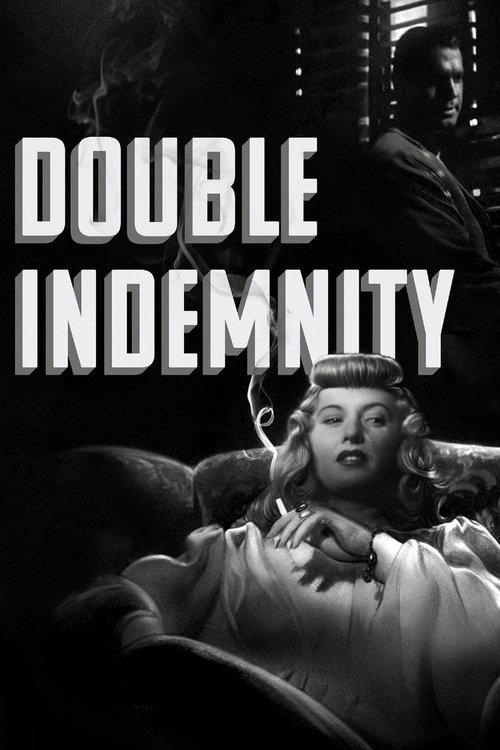
Double Indemnity - Review
Double Indemnity: A Shadowy Masterpiece of Noir
Billy Wilder's Double Indemnity, released in 1944, isn't just a film; it's a descent into the moral abyss. A landmark achievement in the noir genre, it's a tightly wound thriller fueled by lust, greed, and the suffocating atmosphere of post-war Los Angeles. More than just a crime story, it's a chilling exploration of human fallibility, where even the seemingly ordinary are capable of extraordinary darkness. Prepare to be captivated by its sharp dialogue, stunning visuals, and the palpable tension that permeates every frame. This is a film that lingers long after the credits roll, prompting uncomfortable questions about the nature of desire and the corrupting influence of temptation.
Plot: A Web of Deceit
The film opens with Walter Neff (Fred MacMurray), a successful insurance salesman, returning to his office late at night, bleeding and confessing his sins into a dictaphone. This immediately establishes the gravity of the situation and sets the stage for a flashback that unravels the intricate plot. Neff's life takes a dramatic turn when he meets Phyllis Dietrichson (Barbara Stanwyck), the alluring wife of one of his clients. Phyllis, trapped in a loveless marriage and desperate for freedom and financial security, seduces Neff and proposes a deadly scheme: to murder her husband and collect on a double indemnity insurance policy.
Neff, initially resistant, is eventually consumed by his lust for Phyllis and the allure of easy money. Together, they meticulously plan the perfect crime, exploiting a loophole in Mr. Dietrichson's accidental death policy. The plan involves Neff impersonating Mr. Dietrichson and staging an accident on a train. However, even the most carefully laid plans can unravel, and as the investigation intensifies, led by Neff's astute colleague and friend, Barton Keyes (Edward G. Robinson), the two lovers find themselves trapped in a tightening web of suspicion and betrayal.
The plot's brilliance lies in its simplicity and meticulous execution. Wilder and Raymond Chandler, who co-wrote the screenplay, masterfully build suspense, revealing details gradually and keeping the audience constantly guessing. The narrative is driven by the internal conflict of Neff, who wrestles with his conscience while simultaneously trying to outsmart Keyes and cover his tracks. The increasing paranoia and distrust between Neff and Phyllis further amplify the tension, highlighting the destructive nature of their alliance.
Characters: Flawed Humanity
Double Indemnity boasts a trio of unforgettable characters, each deeply flawed and driven by their own desires and motivations.
Walter Neff (Fred MacMurray): The All-American Anti-Hero
Fred MacMurray delivers a career-defining performance as Walter Neff, a seemingly ordinary insurance salesman who is seduced into a life of crime. What makes Neff so compelling is his relatability. He's not a hardened criminal; he's an average guy, susceptible to temptation and blinded by lust. MacMurray expertly portrays Neff's internal struggle, his growing paranoia, and his eventual realization of the gravity of his actions. He embodies the film's central theme: that even the most ordinary individuals can be capable of extraordinary evil when pushed to the edge.
Phyllis Dietrichson (Barbara Stanwyck): The Femme Fatale
Barbara Stanwyck's portrayal of Phyllis Dietrichson is iconic. She is the quintessential femme fatale, a captivating and ruthless woman who uses her sexuality to manipulate and control those around her. Stanwyck perfectly embodies Phyllis's coldness and calculating nature, conveying a sense of danger and mystery that keeps the audience guessing about her true motives. Her performance is a masterclass in subtle manipulation, and she establishes Phyllis as one of the most memorable and chilling characters in noir history.
Barton Keyes (Edward G. Robinson): The Infallible Investigator
Edward G. Robinson shines as Barton Keyes, Neff's astute and intuitive colleague. Keyes is not just a detective; he's a father figure and a moral compass. He possesses an almost uncanny ability to detect insurance fraud, relying on his "little man" – his gut instinct – to guide him. Robinson's performance is a perfect counterpoint to MacMurray's and Stanwyck's. He provides a sense of justice and moral clarity, even as he remains tragically unaware of the betrayal happening right under his nose. His unwavering dedication to his job and his genuine concern for Neff make him a sympathetic and compelling character.
Direction: Wilder's Masterful Touch
Billy Wilder's direction is nothing short of masterful. He expertly crafts a world of shadows and secrets, using visual cues and subtle gestures to convey the characters' inner turmoil and the escalating tension. Wilder's attention to detail is evident in every scene, from the carefully chosen locations to the meticulously crafted dialogue. He uses the camera as a tool to reveal the characters' true nature, often focusing on their eyes and expressions to convey their hidden emotions.
Wilder's pacing is also impeccable. He slowly builds the suspense, allowing the audience to become fully invested in the characters and their predicament. He doesn't rely on cheap thrills or jump scares; instead, he creates a sense of unease and dread that permeates the entire film. The film's final act is a tour de force of suspense, as Neff and Phyllis's carefully constructed world begins to crumble around them.
Cinematography: Shadows and Light
John F. Seitz's cinematography is crucial to the film's overall atmosphere. He employs a classic noir style, using stark contrasts of light and shadow to create a sense of claustrophobia and moral ambiguity. The lighting often obscures faces and creates a sense of unease, reflecting the characters' hidden motives and the darkness that lurks beneath the surface. The use of Venetian blinds casting shadows across the characters' faces is a recurring motif, symbolizing their entrapment and the pervasive sense of guilt.
Seitz's use of deep focus allows the audience to see multiple layers of the story unfolding simultaneously. He often frames shots with objects in the foreground that obscure the characters, creating a sense of voyeurism and emphasizing the hidden nature of their actions. The cinematography is not just visually stunning; it's an integral part of the storytelling, enhancing the film's themes and creating a truly immersive experience.
Performances: A Noir Dream Team
The performances in Double Indemnity are uniformly excellent. Fred MacMurray sheds his typical "nice guy" image to deliver a nuanced and compelling portrayal of a man consumed by lust and greed. Barbara Stanwyck is simply unforgettable as Phyllis Dietrichson, embodying the classic femme fatale with chilling precision. Edward G. Robinson provides a strong moral center as Barton Keyes, balancing his sharp intellect with a genuine sense of concern for his colleagues. The chemistry between the three leads is palpable, creating a dynamic and compelling narrative.
The supporting cast is also exceptional, adding depth and texture to the film's world. Porter Hall as Mr. Jackson, the suspicious claims adjuster, provides a sense of foreboding, while Jean Heather as Lola Dietrichson, Phyllis's stepdaughter, offers a glimpse of innocence amidst the corruption. Each performance contributes to the film's overall sense of realism and moral complexity.
Themes and Messages: Corruption and Consequences
Double Indemnity explores several key themes, including:
The Corrupting Influence of Desire
The film highlights the destructive power of lust and greed. Neff's desire for Phyllis and the allure of easy money lead him down a path of crime and ultimately to his own destruction. The film suggests that even the most seemingly rational individuals can be blinded by their desires, leading them to make choices that have devastating consequences.
Moral Ambiguity
Double Indemnity challenges the audience to question their own moral compass. None of the characters are entirely good or entirely evil. Neff, while committing a heinous crime, is also portrayed as a sympathetic figure, struggling with his conscience. Phyllis, despite her ruthlessness, is also a victim of her circumstances, trapped in a loveless marriage. The film suggests that morality is not always black and white, and that even the most seemingly clear-cut situations can be fraught with ambiguity.
The Illusion of Control
Neff and Phyllis believe they can control their destiny by orchestrating the perfect crime. However, their carefully laid plans quickly unravel, revealing the futility of trying to control fate. The film suggests that life is unpredictable and that even the most meticulous plans can be thwarted by unforeseen circumstances.
The Consequences of Sin
Ultimately, Double Indemnity is a cautionary tale about the consequences of sin. Neff and Phyllis's actions have devastating repercussions, not only for themselves but also for those around them. The film suggests that crime does not pay and that those who engage in immoral behavior will eventually face the consequences of their actions.
Comparisons: A Noir Benchmark
Double Indemnity is often compared to other classic noir films, such as The Maltese Falcon (1941) and The Big Sleep (1946). While all three films share similar themes and visual styles, Double Indemnity stands out for its focus on the psychological motivations of its characters and its unflinching portrayal of moral decay. Unlike some noir films that romanticize crime, Double Indemnity presents a bleak and realistic view of the consequences of immoral behavior.
In terms of Billy Wilder's filmography, Double Indemnity represents a significant departure from his earlier comedies. While Wilder would later return to comedy with films like Some Like It Hot (1959) and The Apartment (1960), Double Indemnity established him as a master of suspense and a director capable of exploring the darkest aspects of human nature.
Positive Aspects: A Timeless Classic
Double Indemnity is a cinematic masterpiece for several reasons:
- Sharp Dialogue: The screenplay, co-written by Wilder and Raymond Chandler, is filled with witty and memorable lines.
- Stunning Visuals: John F. Seitz's cinematography creates a haunting and atmospheric world.
- Compelling Performances: The cast delivers outstanding performances, bringing the characters to life with depth and nuance.
- Tightly Wound Plot: The story is expertly crafted, building suspense and keeping the audience guessing until the very end.
- Timeless Themes: The film explores universal themes of lust, greed, and the consequences of sin, making it relevant to audiences today.
Constructive Criticism: Minor Imperfections
While Double Indemnity is a near-perfect film, there are a few minor criticisms that can be made:
- Pacing in the Middle: The middle section of the film, while necessary for plot development, can feel slightly slower compared to the gripping opening and closing acts.
- Phyllis's Motivations: While Stanwyck's performance is outstanding, some viewers may find Phyllis's motivations for killing her husband somewhat unclear. A deeper exploration of her backstory could have added another layer to her character.
Conclusion: A Must-See Masterpiece
Double Indemnity is a landmark achievement in the noir genre and a timeless cinematic masterpiece. Its sharp dialogue, stunning visuals, compelling performances, and exploration of universal themes make it a must-see for any film enthusiast. While it has minor imperfections, they do not detract from the film's overall brilliance. Double Indemnity is a film that will stay with you long after the credits roll, prompting reflection on the dark side of human nature and the consequences of our choices.