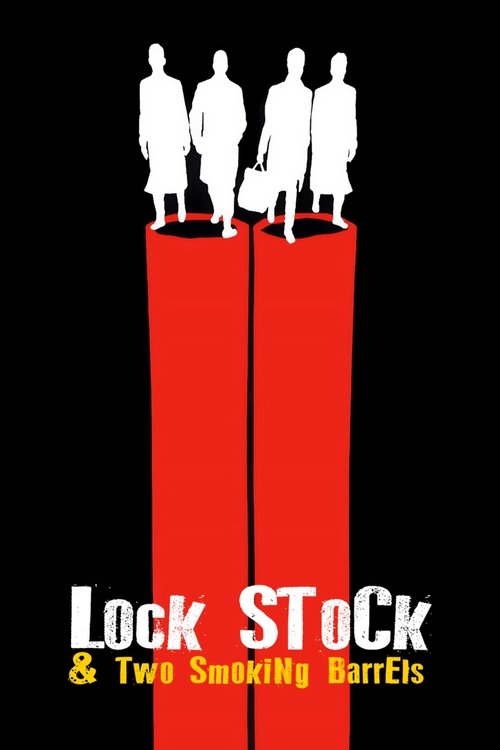
Lock, Stock and Two Smoking Barrels - Review
Lock, Stock and Two Smoking Barrels: A Cockney Chaos Symphony
In the late 90s, a cinematic Molotov cocktail was tossed onto the screen, igniting a new wave of British gangster films. That explosive concoction was Guy Ritchie's directorial debut, Lock, Stock and Two Smoking Barrels. More than just a crime caper, it's a whirlwind of rapid-fire dialogue, stylized violence, and a cast of unforgettable characters, all set to a soundtrack that pulsates with the energy of London's underbelly. But does this cult classic still hold up after all these years, or has its swagger faded? Let's delve into the chaotic, comedic, and ultimately captivating world of Lock, Stock and Two Smoking Barrels.
Plot: A Tangled Web of Bad Decisions
The narrative, at its core, is deceptively simple: Eddy, a skilled card shark, loses a rigged poker game to Hatchet Harry, a notorious gangster, racking up a debt of £500,000. He and his three friends – Tom, Soap, and Bacon – have a week to pay it back. Desperate, they decide to rob their neighbors, a small-time gang planning their own heist. What follows is a series of interconnected events, misunderstandings, and near-misses, creating a plot so intricately woven that it requires multiple viewings to fully appreciate. Ritchie masterfully uses non-linear storytelling, flashing back and forth to provide context and build suspense. The film is less about the destination and more about the journey, a chaotic dance of fate and circumstance where even the smallest action can have massive repercussions.
The brilliance lies in the interconnectedness of the seemingly disparate plot threads. The antique shotguns, the stolen weed, the missing cash, and the various criminal factions all collide in a spectacular and often hilarious fashion. This intricate plot structure demands the audience's attention, rewarding close viewing with a deeper understanding of the unfolding chaos. However, the complexity can also be a point of criticism. At times, the sheer number of characters and subplots can become overwhelming, potentially losing some viewers along the way.
Characters: A Rogues' Gallery of the Unforgettable
Lock, Stock and Two Smoking Barrels boasts a cast of characters that are as memorable as they are morally ambiguous. Each character, from the central quartet to the supporting players, is vividly drawn with distinct personalities and quirks.
The Quartet: Eddy, Tom, Soap, and Bacon
- Eddy (Nick Moran): The card shark whose gambling addiction sets the entire plot in motion. He's the brains of the operation, but his overconfidence and recklessness often lead to trouble.
- Tom (Jason Flemyng): Eddy's childhood friend and the voice of reason (to a limited extent). He's the reluctant participant, often questioning the group's decisions, but ultimately loyal.
- Soap (Dexter Fletcher): The cockney wise-cracker, providing much of the film's comedic relief. He's impulsive and prone to violence, but also fiercely loyal to his friends.
- Bacon (Jason Statham): The street-smart hustler, always looking for a quick buck. He's the most resourceful of the group, using his connections to acquire weapons and information.
The Antagonists: Hatchet Harry and his Crew
- Hatchet Harry (P.H. Moriarty): The ruthless gangster with a penchant for antique weapons and a terrifying demeanor. He's the primary antagonist, demanding the repayment of Eddy's debt.
- Chris (Vinnie Jones): Harry's enforcer, a silent and imposing figure who inspires fear with his mere presence. His brutal efficiency is a constant threat.
The Small-Time Gang: Dog, Plank, Winston, and Rory Breaker
- Dog (Frank Harper): The leader of the small-time gang, planning to rob a cannabis farm. He's incompetent and easily flustered, making him a source of both tension and humor.
- Plank (Steve Sweeney): Dog's loyal but dim-witted henchman. He's easily manipulated and often the target of Dog's frustration.
- Winston (Steven Mackintosh): The drug supplier with a penchant for violence and a short temper. His involvement adds another layer of complexity to the plot.
- Rory Breaker (Vas Blackwood): The drug dealer who gets his weed stolen, leading him on a hunt for the thieves.
The strength of the characters lies in their relatability, despite their criminal activities. They are flawed, often making poor decisions, but their loyalty and camaraderie make them endearing to the audience. The supporting characters, particularly Hatchet Harry and Chris, add a layer of menace and danger to the proceedings, ensuring that the film never loses its edge.
Direction: A Stylish Debut
Guy Ritchie's direction is the driving force behind Lock, Stock and Two Smoking Barrels. His unique style, characterized by rapid editing, slow-motion sequences, and freeze-frames, creates a visual feast that is both energetic and engaging. He employs a distinctive Cockney slang-infused dialogue, delivered at breakneck speed, which adds to the film's authenticity and comedic appeal. Ritchie's use of music is also noteworthy, seamlessly blending classic rock, soul, and reggae tracks to create a vibrant and unforgettable soundtrack.
Ritchie's influence from Quentin Tarantino is evident, particularly in the non-linear storytelling and the stylized violence. However, he manages to create his own distinct voice, injecting a distinctly British sensibility into the genre. His direction is confident and assured, particularly for a debut filmmaker, showcasing a natural talent for visual storytelling and character development.
However, Ritchie's style can also be seen as a potential weakness. The rapid editing and stylized visuals, while initially engaging, can become overwhelming at times, distracting from the narrative. Some critics have argued that the film prioritizes style over substance, relying on visual flair to compensate for a relatively thin plot. While the dialogue is witty and memorable, it can also be difficult to understand for viewers unfamiliar with Cockney slang, potentially hindering their enjoyment of the film.
Cinematography: Capturing the Grit of London
Tim Maurice-Jones' cinematography effectively captures the gritty realism of London's underworld. The film's visuals are characterized by a muted color palette, emphasizing the bleakness and desperation of the characters' lives. He effectively uses close-ups to highlight the characters' emotions and reactions, drawing the audience into their world. The camera work is dynamic and energetic, mirroring the film's fast-paced editing and frantic action.
The use of location shooting in London adds to the film's authenticity, immersing the audience in the city's underbelly. The cinematography effectively captures the contrast between the opulent world of Hatchet Harry and the rundown apartments of the central characters, highlighting the stark inequalities that exist within the city. The visual style is consistent throughout the film, creating a cohesive and immersive viewing experience.
Performances: A Star-Making Ensemble
Lock, Stock and Two Smoking Barrels features a stellar ensemble cast, many of whom were relatively unknown at the time. The performances are uniformly excellent, with each actor perfectly embodying their respective character. Nick Moran, Jason Flemyng, Dexter Fletcher, and Jason Statham deliver standout performances as the central quartet, showcasing their comedic timing and dramatic range.
Vinnie Jones, in his acting debut, is terrifying as Hatchet Harry's enforcer, Chris. His imposing physique and silent demeanor create a chilling presence that lingers throughout the film. P.H. Moriarty is equally effective as Hatchet Harry, portraying him as a ruthless and calculating gangster with a refined taste for antique weapons.
The performances are particularly impressive considering the film's fast-paced dialogue and complex plot. The actors manage to deliver their lines with clarity and precision, while also conveying the characters' emotions and motivations. The chemistry between the cast members is palpable, contributing to the film's overall sense of realism and camaraderie. Jason Statham's performance in this film launched his career as an action star, and it's easy to see why – he exudes a natural charisma and screen presence.
Themes and Messages: Fate, Loyalty, and the Consequences of Greed
Beneath the surface of its comedic violence and stylized visuals, Lock, Stock and Two Smoking Barrels explores several key themes. The most prominent is the theme of fate. The characters are constantly at the mercy of circumstance, their lives intertwined in a web of events that they cannot fully control. Even the smallest decisions can have unforeseen consequences, leading to a chain reaction of chaos and violence.
Loyalty is another important theme. The friendship between Eddy, Tom, Soap, and Bacon is tested throughout the film, but ultimately their loyalty to each other prevails. They are willing to risk their lives for one another, demonstrating the strength of their bond. However, the film also explores the darker side of loyalty, as the characters are often forced to make morally questionable decisions in order to protect their friends.
The film also offers a critique of greed and the pursuit of wealth. The characters are driven by their desire for money, leading them to make increasingly desperate and reckless choices. The film suggests that the pursuit of wealth can corrupt even the most well-intentioned individuals, leading to violence and ultimately, destruction.
Comparison to Similar Films and Previous Works
Lock, Stock and Two Smoking Barrels is often compared to Quentin Tarantino's films, particularly Pulp Fiction and Reservoir Dogs, due to its non-linear storytelling, stylized violence, and quirky characters. However, Ritchie's film distinguishes itself with its distinctly British sensibility and its focus on Cockney slang and culture.
The film also shares similarities with other British gangster films, such as The Long Good Friday and Get Carter. However, Lock, Stock and Two Smoking Barrels is more comedic and lighthearted than these films, offering a more accessible and entertaining take on the genre.
Ritchie's subsequent films, such as Snatch and RocknRolla, follow a similar formula to Lock, Stock and Two Smoking Barrels, featuring ensemble casts, intricate plots, and stylized violence. However, none of these films have quite captured the same magic as his debut, which remains a cult classic.
Positive Aspects
- Engaging Plot: The intricate and interconnected plot keeps the audience guessing until the very end.
- Memorable Characters: The characters are vividly drawn and instantly memorable.
- Stylish Direction: Guy Ritchie's unique directing style is both energetic and engaging.
- Excellent Performances: The cast delivers uniformly excellent performances.
- Witty Dialogue: The Cockney slang-infused dialogue is both hilarious and authentic.
- Great Soundtrack: The soundtrack perfectly complements the film's action and energy.
Constructive Criticism
- Overly Complex Plot: The intricate plot can be overwhelming at times.
- Style Over Substance: The film sometimes prioritizes style over substance.
- Difficult Dialogue: The Cockney slang can be difficult to understand for some viewers.
- Stylized Violence: The stylized violence may not appeal to all viewers.
Conclusion
Lock, Stock and Two Smoking Barrels is a cinematic triumph, a stylish and energetic crime caper that redefined the British gangster genre. Guy Ritchie's directorial debut is a masterclass in visual storytelling, showcasing his unique style and his ability to create memorable characters. While the film's complexity and stylized violence may not appeal to all viewers, its engaging plot, excellent performances, and witty dialogue make it a must-see for fans of crime comedies. Even after multiple viewings, Lock, Stock and Two Smoking Barrels continues to entertain and surprise, solidifying its status as a cult classic.