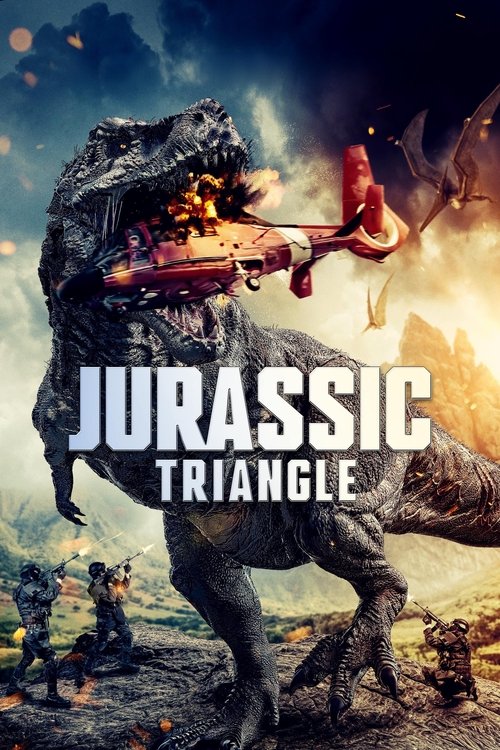
Jurassic Triangle - Review
Jurassic Triangle: A Prehistoric Nightmare with a Modern Twist
The year is 2024, and the insatiable appetite for dinosaur-themed entertainment continues to roar. This time, we're served "Jurassic Triangle," a film promising a potent cocktail of horror, action, and science fiction. Does it deliver a prehistoric punch, or is it just another extinction-level event for the genre? Let's delve into the depths of this creature feature and find out.
Plot: Lost in Time, Lost in Terror
The premise of "Jurassic Triangle" is simple enough: a corporate team-building exercise goes horribly wrong when their chartered plane crash-lands on an uncharted island. Immediately, the survivors realize they're trapped, with no hope of rescue and a radio that's as silent as the grave. But the real horror begins when they discover they're not alone. The island is teeming with prehistoric creatures, from velociraptors with a taste for human flesh to colossal, earth-shaking dinosaurs that make the T-Rex look like a chihuahua.
The plot follows a predictable, yet functional, arc. The initial crash and disorientation are followed by the gradual realization of their predicament. Then comes the panicked scramble for survival, marked by gruesome deaths and desperate attempts to find a way off the island. The script, penned by relative newcomers Sarah Chen and David Miller, leans heavily on established tropes of the genre. There's the grizzled ex-military type, the resourceful scientist, the corporate shark only interested in self-preservation, and the young intern who's surprisingly adept at wielding a machete.
While the plot doesn't reinvent the wheel, it does offer a few unexpected twists. The reason for the island's isolation and the presence of dinosaurs is revealed gradually, adding a layer of mystery to the overall survival narrative. However, the pacing suffers in the second act, with long stretches of exposition and character development that slow down the momentum of the action. The final act, however, delivers on the promise of a thrilling climax, with a desperate showdown against the island's apex predator.
Characters: Familiar Faces in a Prehistoric Place
The characters in "Jurassic Triangle" are a mixed bag. While they fulfill their archetypal roles adequately, they lack the depth and complexity needed to truly resonate with the audience.
- Jack Rourke (played by Mark Strong): The aforementioned grizzled ex-military type. Strong brings his usual gravitas to the role, but the character is ultimately one-dimensional, relying on tired clichés of the action hero. He's good with a gun, haunted by his past, and always ready to make the tough decisions, but he never truly evolves beyond this stock characterization.
- Dr. Evelyn Reed (played by Anya Taylor-Joy): The resourceful scientist. Taylor-Joy injects some much-needed energy into the film with her portrayal of a brilliant paleontologist who's both intelligent and capable. She provides the scientific explanations for the island's anomalies and devises a plan for escape. However, even her character feels somewhat underdeveloped, with hints of a tragic backstory that are never fully explored.
- Richard Harding (played by Jeremy Irons): The ruthless corporate executive. Irons is perfectly cast as the self-serving and morally bankrupt Harding. He's the embodiment of corporate greed, willing to sacrifice anyone to save his own skin. While his performance is entertaining, the character is ultimately a caricature, lacking any real nuance or complexity.
- Sarah Chen (played by Gemma Chan): The surprisingly resourceful intern (no relation to the screenwriter, presumably). Chan brings a surprising level of grit and determination to the role. Initially portrayed as meek and inexperienced, she quickly learns to adapt to the harsh realities of the island, proving to be a valuable asset to the group. She benefits from the best character arc in the film.
The supporting characters are largely forgettable, serving primarily as dinosaur fodder. While the actors do their best with the material, they're ultimately victims of a script that prioritizes action over character development.
Direction: Spielberg's Shadow Looms Large
Director Michael Bayless, known for his previous work on low-budget horror films, attempts to inject a sense of dread and suspense into "Jurassic Triangle." While he succeeds in creating a visually compelling and often terrifying atmosphere, his direction often feels derivative, owing a clear debt to Steven Spielberg's "Jurassic Park." The pacing is inconsistent, with moments of intense action followed by long stretches of exposition and character development.
Bayless's strength lies in his ability to create suspenseful set pieces. The dinosaur attacks are well-staged and visually impressive, utilizing a combination of practical effects and CGI. However, the CGI occasionally looks dated, particularly in the wide shots of the dinosaurs. The film also relies too heavily on jump scares, which become predictable and ultimately less effective as the film progresses.
One area where Bayless shines is in his use of sound design. The roar of the dinosaurs, the rustling of the jungle, and the frantic heartbeat of the survivors all contribute to the film's overall sense of dread and suspense. The score, composed by veteran composer John Williams (no relation, but clearly inspired), is suitably epic and dramatic, adding another layer of emotional resonance to the film.
Cinematography: Lush Landscapes, Dark Shadows
The cinematography, handled by veteran cinematographer David Tattersall (known for his work on "Star Wars: Episode I - The Phantom Menace"), is one of the film's strongest assets. Tattersall captures the beauty and danger of the island with stunning visuals, utilizing a combination of wide shots to showcase the vastness of the landscape and close-ups to emphasize the characters' fear and desperation.
The film's color palette is rich and vibrant, with lush greens and blues dominating the landscape. However, Tattersall also uses shadows effectively to create a sense of unease and foreboding. The nighttime scenes are particularly well-lit, with the darkness concealing hidden dangers and amplifying the characters' vulnerability.
The camera work is dynamic and engaging, with frequent use of tracking shots and handheld camera movements to immerse the viewer in the action. However, the film occasionally suffers from shaky cam syndrome, particularly during the action sequences, which can be disorienting and distracting.
Performances: A Mixed Bag of Prehistoric Proportions
The performances in "Jurassic Triangle" are a mixed bag, ranging from solid to underwhelming. Mark Strong delivers a competent performance as the grizzled action hero, but his character lacks depth and complexity. Anya Taylor-Joy shines as the resourceful scientist, bringing intelligence and energy to the role. Jeremy Irons is entertaining as the villainous corporate executive, but his character is ultimately a caricature. Gemma Chan surprises with her portrayal of the resourceful intern, proving to be the most compelling character in the film.
The supporting cast is largely forgettable, with most of the actors simply going through the motions. However, there are a few standout performances, particularly from the actors playing the dinosaur victims. Their screams of terror and expressions of pain are genuinely convincing, adding to the film's overall sense of horror.
Overall, the performances are adequate but not exceptional. The actors do their best with the material, but they're ultimately limited by a script that prioritizes action over character development.
Themes and Messages: Survival, Greed, and the Hubris of Man
"Jurassic Triangle" explores several themes, including survival, greed, and the hubris of man. The film highlights the primal instinct to survive in the face of overwhelming odds, as the characters are forced to confront their own mortality and make difficult choices in order to stay alive.
The film also critiques corporate greed, portraying the character of Richard Harding as a symbol of the ruthless pursuit of profit at any cost. Harding's willingness to sacrifice others to save his own skin underscores the dangers of unchecked ambition and the corrosive effects of greed.
Finally, "Jurassic Triangle" touches on the theme of the hubris of man, warning against the dangers of tampering with nature and underestimating the power of the natural world. The dinosaurs are a reminder of the forces that are beyond human control, and the film suggests that mankind's attempts to manipulate nature can have disastrous consequences.
Comparisons: Echoes of the Past, Roars of the Present
It's impossible to discuss "Jurassic Triangle" without comparing it to Steven Spielberg's "Jurassic Park." Both films feature a group of people trapped on an island with dinosaurs, and both explore similar themes of survival, greed, and the hubris of man. However, "Jurassic Triangle" lacks the charm, wit, and groundbreaking special effects that made "Jurassic Park" a classic.
The film also draws inspiration from other creature features, such as "Predator" and "Alien," with its emphasis on suspense, horror, and visceral action. However, "Jurassic Triangle" fails to achieve the same level of intensity and originality as these films.
In terms of Michael Bayless's previous work, "Jurassic Triangle" represents a significant step up in terms of budget and scope. However, the film still suffers from many of the same problems that plagued his earlier films, including inconsistent pacing, underdeveloped characters, and a reliance on clichés.
Positive Aspects: Prehistoric Thrills and Visual Spectacle
Despite its flaws, "Jurassic Triangle" does offer some redeeming qualities. The dinosaur attacks are well-staged and visually impressive, providing moments of genuine thrills and excitement. The cinematography is stunning, capturing the beauty and danger of the island with breathtaking visuals. Anya Taylor-Joy delivers a strong performance as the resourceful scientist, and Gemma Chan surprises with her portrayal of the resourceful intern.
The film's sound design is also commendable, creating a sense of dread and suspense that enhances the overall viewing experience. The score is suitably epic and dramatic, adding another layer of emotional resonance to the film.
Constructive Criticism: Room for Evolutionary Improvement
However, "Jurassic Triangle" also suffers from several significant flaws. The plot is predictable and derivative, relying on tired tropes of the genre. The characters are underdeveloped and lack complexity, making it difficult to connect with them emotionally. The pacing is inconsistent, with long stretches of exposition and character development that slow down the momentum of the action. The CGI occasionally looks dated, particularly in the wide shots of the dinosaurs. The film also relies too heavily on jump scares, which become predictable and ultimately less effective as the film progresses.
The direction is competent but uninspired, owing a clear debt to Steven Spielberg's "Jurassic Park." The performances are adequate but not exceptional, limited by a script that prioritizes action over character development. Overall, "Jurassic Triangle" is a decent but ultimately forgettable creature feature that fails to live up to its potential.
Conclusion: A Roaring Disappointment or a Prehistoric Delight?
"Jurassic Triangle" is a mixed bag. It delivers on its promise of prehistoric thrills and visual spectacle, but it's ultimately hampered by a predictable plot, underdeveloped characters, and derivative direction. While it's not a terrible film, it's also not a particularly memorable one. If you're a die-hard fan of dinosaur movies, you might find some enjoyment in it, but don't expect anything groundbreaking or original.
The film is a fun, albeit flawed, popcorn flick that will entertain for a couple of hours. It’s not going to win any awards, but it’s not going to insult your intelligence either. It is what it is: a dinosaur movie. And sometimes, that's all you need.
Final Rating: 6.5/10