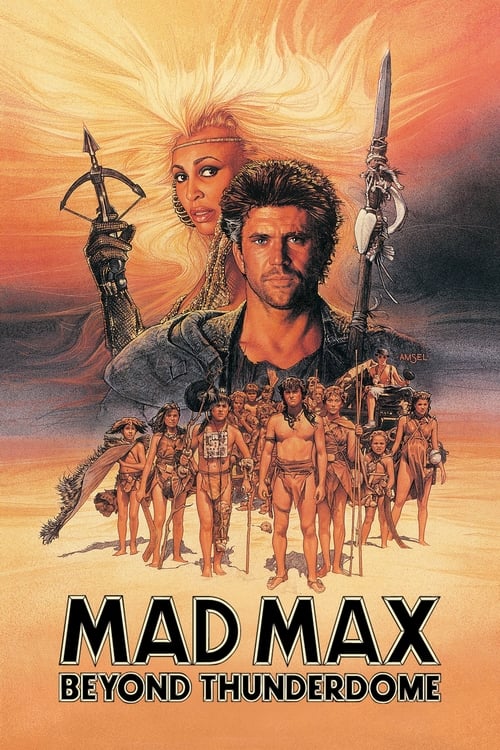
Mad Max Beyond Thunderdome - Review
Mad Max Beyond Thunderdome: A Symphony of Survival in the Wasteland
Mad Max Beyond Thunderdome, the third installment in George Miller's post-apocalyptic saga, arrived in 1985, promising a continuation of Max Rockatansky's desolate journey. While some argue it deviates from the raw, gritty realism of its predecessors, Thunderdome carves its own unique niche, offering a blend of action, adventure, and surprisingly touching themes of hope and responsibility. Is it a perfect film? No. But is it a worthy addition to the Mad Max mythos? Absolutely. Prepare to enter a world where gladiatorial combat meets lost children, and where Max must choose between survival and sacrifice.
Plot: From Bartertown to the Promised Land
The film opens with Max (Mel Gibson), ever the lone wolf, ambushed and stripped of his possessions, including his precious vehicle. He stumbles upon Bartertown, a bustling but morally bankrupt settlement built on pig dung and ruled by the formidable Aunt Entity (Tina Turner). To retrieve his stolen goods, Max enters into a deal with Entity: assassinate Master Blaster, the dwarf-giant duo who control Bartertown's methane production. This leads to the iconic "Thunderdome" battle, where "two men enter, one man leaves."
However, Max refuses to kill Blaster once he discovers the giant's mental limitations, violating Entity's agreement and earning himself banishment to the desert. Near death, he's discovered by a tribe of feral children, survivors of a crashed Boeing 747, who believe Max is their savior, Captain Walker, destined to return to "Tomorrow-morrow Land," the lost Sydney. Initially reluctant, Max becomes entangled in their dream, ultimately deciding to help them escape the wasteland and their ingrained hope for a world that may no longer exist.
The plot, while seemingly straightforward, is layered with allegorical elements. Bartertown represents a decaying civilization clinging to power through manipulation and resource control. The children embody innocence and the potential for a new beginning. Max's journey is one of reluctant heroism, forced upon him by circumstance and ultimately fueled by a burgeoning sense of responsibility. The ending, a high-octane chase sequence involving a train, trucks, and Aunt Entity's forces, culminates in a bittersweet victory: the children escape, but Max remains behind, fulfilling his role as a protector.
Characters: Beyond the Thunderdome of Archetypes
Mad Max Beyond Thunderdome boasts a cast of memorable characters, each contributing to the film's thematic richness:
- Max Rockatansky (Mel Gibson): This is arguably the most nuanced portrayal of Max in the original trilogy. He's still the stoic survivor, but he displays a greater capacity for compassion and selflessness. He's no longer simply driven by vengeance; he's motivated by a growing sense of duty to protect the vulnerable. Gibson's performance is subtly powerful, conveying Max's internal struggle with minimal dialogue.
- Aunt Entity (Tina Turner): Turner's portrayal of the ruthless but pragmatic ruler of Bartertown is iconic. She's not a mustache-twirling villain; she's a survivor who understands the harsh realities of the wasteland. Entity is intelligent, cunning, and ultimately respects Max's integrity, even as she attempts to eliminate him. Turner imbues the character with a regal presence and a surprising vulnerability.
- Master Blaster (Angelo Rossitto and Paul Larsson): The unlikely duo who control Bartertown's power. Master, the intelligent dwarf, rides atop Blaster, the mentally challenged giant. They represent the exploitation of the vulnerable for personal gain. Their tragic demise highlights the film's theme of compassion for the marginalized.
- The Lost Children: This group of feral youngsters, led by Savannah Nix (Helen Buday), embodies hope and innocence in a desolate world. Their unwavering belief in "Tomorrow-morrow Land" represents the enduring power of dreams and the importance of preserving hope for future generations.
- Pig Killer (Robert Grubb): A seemingly minor character, Pig Killer's loyalty to Aunt Entity and his pragmatic approach to survival exemplify the moral compromises required to thrive in Bartertown.
The character development, particularly Max's evolution from a solitary wanderer to a reluctant guardian, is a highlight of the film. He's forced to confront his own cynicism and embrace a responsibility he never sought.
Direction and Cinematography: A Visual Feast of Wasteland Aesthetics
George Miller returns to direct, and while Thunderdome lacks the raw intensity of Mad Max 2: The Road Warrior, it compensates with a more polished and visually ambitious style. The film's production design is exceptional, creating a believable and immersive post-apocalyptic world.
- Bartertown: A stunningly realized set, Bartertown is a chaotic, claustrophobic metropolis built from scrap and desperation. The scenes within its walls are filled with energy, capturing the frenetic pace of a society driven by trade and survival.
- The Thunderdome: A cage of steel and bungee cords, the Thunderdome is a brutal arena where gladiatorial combat is elevated to a spectacle. The fight choreography is inventive and visceral, making the most of the unique setting.
- The Wasteland: The vast, desolate landscapes of the Australian outback are beautifully captured, emphasizing the isolation and vulnerability of the characters. The cinematography utilizes wide shots to convey the scale of the environment and close-ups to highlight the characters' emotions.
- The Chase Sequence: The climactic chase sequence is a masterclass in action filmmaking. The practical effects are impressive, and the pacing is relentless, keeping the audience on the edge of their seats.
The cinematography, by Dean Semler, is a crucial element of the film's success. He uses a combination of harsh lighting and vibrant colors to create a visually striking and memorable experience. The use of slow-motion during key action moments adds to the dramatic impact.
Performances: Gibson and Turner Shine
The performances in Mad Max Beyond Thunderdome are uniformly strong, with Mel Gibson and Tina Turner delivering standout performances.
- Mel Gibson: As mentioned earlier, Gibson's portrayal of Max is nuanced and compelling. He conveys the character's internal struggle with subtlety and conviction. He's a believable action hero, but he also brings a depth of emotion to the role.
- Tina Turner: Turner's performance as Aunt Entity is iconic and unforgettable. She embodies the character's strength, intelligence, and vulnerability with equal measure. Her presence is commanding, and her performance is both believable and captivating.
- The Supporting Cast: The supporting cast, including Angelo Rossitto, Paul Larsson, and Helen Buday, all deliver memorable performances, contributing to the film's overall success.
The chemistry between Gibson and Turner is palpable, adding another layer of complexity to their characters' relationship. Their scenes together are among the most compelling in the film.
Themes and Messages: Hope in the Wasteland
Mad Max Beyond Thunderdome explores several important themes, including:
- Hope and Innocence: The film emphasizes the importance of hope and innocence in a world ravaged by violence and despair. The children's unwavering belief in "Tomorrow-morrow Land" represents the enduring power of dreams and the potential for a better future.
- Responsibility: Max's journey is one of reluctant responsibility. He's forced to confront his own cynicism and embrace a duty to protect the vulnerable. The film suggests that even in the darkest of times, individuals have a responsibility to act with compassion and courage.
- The Cycle of Violence: The film explores the cyclical nature of violence and the difficulty of breaking free from it. Bartertown is a microcosm of a society trapped in a cycle of exploitation and aggression. Max's actions, while often violent, are ultimately aimed at breaking this cycle.
- The Importance of Community: The film highlights the importance of community and the need for human connection in a world of isolation. The children's strong bonds of friendship and loyalty provide them with the strength to survive and overcome adversity.
- The Dangers of Power and Corruption: Bartertown serves as a cautionary tale about the dangers of unchecked power and corruption. Aunt Entity's rule, while seemingly pragmatic, is ultimately based on exploitation and manipulation.
These themes resonate deeply, making Mad Max Beyond Thunderdome more than just a post-apocalyptic action film. It's a story about the enduring power of hope, the importance of responsibility, and the potential for redemption even in the most desolate of circumstances.
Comparison to Other Films and Works
Compared to Mad Max and Mad Max 2: The Road Warrior, Thunderdome feels tonally different. The original Mad Max was a gritty, revenge-fueled thriller, while The Road Warrior was a relentless action masterpiece. Thunderdome incorporates more elements of adventure and even fantasy, with the tribe of lost children and their mythical "Tomorrow-morrow Land."
Some critics argue that Thunderdome is too sanitized and family-friendly compared to its predecessors. The violence is less graphic, and the overall tone is more optimistic. However, this tonal shift allows the film to explore different themes and reach a wider audience.
In terms of other post-apocalyptic films, Thunderdome shares similarities with films like A Boy and His Dog and Waterworld, but it distinguishes itself with its unique blend of action, adventure, and thematic depth. The film's influence can be seen in later post-apocalyptic works, such as the Fallout video game series.
Positive Aspects and Constructive Criticism
Positive Aspects:
- Strong Performances: Mel Gibson and Tina Turner deliver outstanding performances.
- Impressive Production Design: Bartertown and the Thunderdome are visually stunning and memorable.
- Engaging Action Sequences: The action sequences are well-choreographed and exciting.
- Thought-Provoking Themes: The film explores important themes of hope, responsibility, and community.
- Memorable Characters: The film boasts a cast of memorable and well-developed characters.
Constructive Criticism:
- Tonal Shift: The film's more optimistic tone may not appeal to fans of the grittier earlier films.
- Pacing Issues: The middle section of the film, involving the children, can feel somewhat slow-paced.
- Over-Reliance on Cliched Tropes: The "chosen one" narrative with Max and the children is a familiar trope.
- Slightly Campy Elements: Some aspects of the film, such as the Thunderdome itself, can feel slightly campy.
Despite these criticisms, Mad Max Beyond Thunderdome remains a highly entertaining and thought-provoking film. Its strengths outweigh its weaknesses, making it a worthy addition to the Mad Max franchise.
Conclusion
Mad Max Beyond Thunderdome is a flawed but ultimately rewarding film. While it may not reach the heights of The Road Warrior, it offers a unique and compelling vision of the post-apocalyptic world. The strong performances, impressive production design, and thought-provoking themes make it a film worth watching, even for those who are not fans of the earlier installments. It's a testament to the enduring power of hope, the importance of responsibility, and the potential for redemption in even the darkest of times. So, lace up your boots, grab your boomerang, and prepare to enter the Thunderdome. You might just find more than you bargained for.
Rating: 8/10