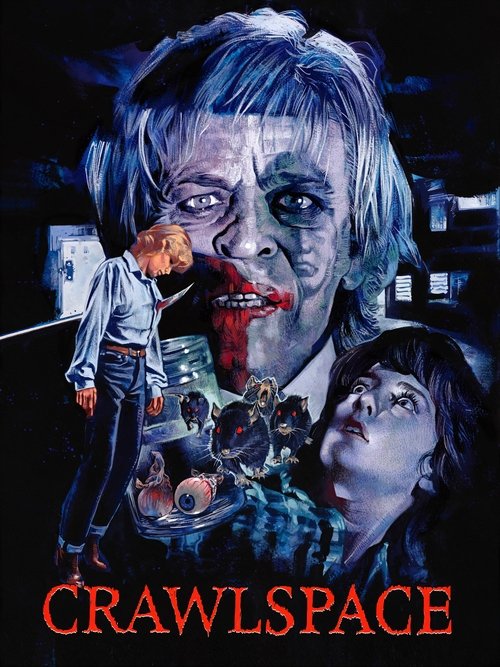
Crawlspace - Review
Crawlspace (1986): A Claustrophobic Descent into Madness
Wes Craven, a name synonymous with horror innovation, took a detour in 1986 with Crawlspace, a film that trades the overt supernatural elements of his earlier work for a chillingly grounded exploration of voyeurism, paranoia, and the lingering specter of Nazi ideology. While not as celebrated as A Nightmare on Elm Street or The Hills Have Eyes, Crawlspace offers a uniquely unsettling experience, trapping viewers in a labyrinthine apartment building with a deeply disturbed landlord. This review delves into the film's unsettling plot, dissects its characters, analyzes its direction and visual style, explores its thematic undercurrents, and ultimately assesses its place within the horror landscape.
Plot: A Tangled Web of Secrets and Surveillance
The narrative of Crawlspace centers around Karl Gunther (Klaus Kinski), the new superintendent of an apartment building. Unbeknownst to the tenants, Karl is the son of a notorious Nazi surgeon, Dr. Kurt Gunther, and has inherited not only his father's twisted worldview but also his penchant for experimentation and control. The apartment building itself is a character in its own right, meticulously designed with a network of secret passageways, hidden rooms, and sophisticated surveillance equipment. This allows Karl to observe, manipulate, and ultimately terrorize the unsuspecting female tenants.
The film unfolds as a series of escalating incidents. Karl initially presents himself as a charming, if somewhat eccentric, landlord. However, his true nature is gradually revealed through his increasingly intrusive behavior. He uses the crawlspaces to spy on the women, planting cameras and microphones to record their private lives. He also begins to experiment with booby traps and other deadly devices, turning the building into a lethal playground. The arrival of Lori Bancroft (Talia Balsam), a young aspiring actress, intensifies Karl's obsession and triggers a descent into full-blown madness. He sees Lori as the perfect subject for his twisted experiments, believing he can mold her into his ideal woman.
The plot, while relatively straightforward in its premise, is effective in building suspense and creating a pervasive sense of unease. The constant threat of Karl's presence, lurking just behind the walls, keeps the viewer on edge. The film also explores the psychological impact of being constantly watched, highlighting the vulnerability and powerlessness of the tenants. As Karl's actions become more brazen and violent, the film culminates in a bloody and claustrophobic showdown within the confines of the crawlspaces.
Characters: A Study in Obsession and Vulnerability
Crawlspace is largely a character-driven horror film, relying heavily on the performances of its cast to convey the psychological depth of its story.
Karl Gunther (Klaus Kinski): The Embodiment of Evil
Klaus Kinski's portrayal of Karl Gunther is undoubtedly the film's strongest asset. Kinski, known for his intense and unpredictable performances, brings a chilling authenticity to the role. He perfectly captures Karl's duality, portraying him as both charming and menacing. His eyes, often filled with a disturbing glint, convey the inner turmoil and madness that consume him. Kinski's performance is not simply about portraying a villain; it's about exploring the psychological complexities of a man haunted by his father's legacy and driven by a desire for control. He seamlessly transitions between moments of calculated charm and outbursts of violent rage, making Karl a truly terrifying and unpredictable antagonist.
Lori Bancroft (Talia Balsam): The Innocent Victim
Talia Balsam delivers a solid performance as Lori Bancroft, the young and vulnerable actress who becomes the focus of Karl's obsession. Balsam effectively portrays Lori's initial naivete and optimism, gradually giving way to fear and desperation as she realizes the true nature of her landlord. While the character might be seen as a somewhat stereotypical "final girl," Balsam brings a sense of realism and vulnerability to the role, making her plight all the more compelling. Her performance highlights the psychological toll of being constantly watched and manipulated, showcasing the character's resilience and determination to survive.
The Supporting Cast: Victims of a Twisted Game
The supporting cast, comprised of the other female tenants, serves primarily as victims of Karl's twisted game. While their characters are not as deeply developed as Karl or Lori, they contribute to the film's overall atmosphere of paranoia and vulnerability. Their interactions with Karl, initially innocuous, gradually reveal the subtle ways in which he manipulates and controls them. Their eventual fates serve as a grim reminder of the dangers lurking beneath the surface of everyday life.
Direction and Cinematography: A Claustrophobic Nightmare
Wes Craven's direction in Crawlspace is particularly effective in creating a claustrophobic and unsettling atmosphere. He masterfully utilizes the confined spaces of the apartment building and the crawlspaces to heighten the sense of tension and dread. The camera often lingers in tight corridors and dark corners, creating a feeling of constant surveillance. Craven also employs subjective camera angles, placing the viewer directly in Karl's perspective, allowing them to experience his voyeuristic impulses and twisted fantasies.
The cinematography, by Peter Deming, further enhances the film's unsettling visual style. Deming utilizes a combination of low-key lighting and stark shadows to create a sense of unease and mystery. The use of color is also noteworthy, with muted tones and flashes of bright red, particularly during moments of violence, adding to the film's overall sense of dread. The camera movements are often deliberate and unsettling, mirroring Karl's predatory gaze as he stalks his victims through the crawlspaces.
The film's editing, while occasionally choppy, is generally effective in building suspense and maintaining a brisk pace. The use of quick cuts and jarring transitions during moments of violence further amplifies the film's impact. The sound design is also crucial in creating a sense of unease, with creaking floorboards, muffled whispers, and the constant hum of surveillance equipment adding to the film's overall atmosphere of paranoia.
Themes and Messages: Voyeurism, Paranoia, and the Legacy of Evil
Crawlspace is more than just a simple slasher film; it explores a number of complex themes and messages.
Voyeurism and Surveillance
The film's central theme is undoubtedly voyeurism. Karl's obsession with observing the women in the apartment building raises questions about the ethics of surveillance and the invasion of privacy. The film suggests that the act of watching can be just as damaging as physical violence, highlighting the psychological impact of being constantly observed. In a pre-internet era, Craven foreshadowed the anxieties surrounding digital surveillance and the erosion of privacy that would become increasingly prevalent in the 21st century.
Paranoia and Distrust
Crawlspace also explores the theme of paranoia. The tenants' growing suspicion of Karl and their increasing sense of vulnerability create an atmosphere of distrust and unease. The film suggests that paranoia can be a powerful force, capable of eroding social bonds and creating a sense of isolation. The constant threat of Karl's presence forces the tenants to question everything they thought they knew, highlighting the fragility of trust in a world where danger can lurk behind every wall.
The Legacy of Evil
The film also delves into the theme of inherited evil. Karl's obsession and twisted worldview are directly linked to his father's Nazi past. The film suggests that the sins of the father can be passed down to the son, perpetuating a cycle of violence and hatred. Karl is portrayed as a product of his environment, a victim of his father's warped ideology. This exploration of inherited trauma adds a layer of complexity to the film, suggesting that evil is not simply a matter of individual choice but can be deeply ingrained in family history and societal structures.
Comparison to Other Films
Crawlspace shares thematic similarities with Alfred Hitchcock's Rear Window (1954), which also explores the themes of voyeurism and surveillance. However, while Rear Window focuses on the moral complexities of observation, Crawlspace takes a more overtly horrific approach, emphasizing the violence and psychological terror that can result from unchecked voyeurism.
The film also bears some resemblance to other slasher films of the 1980s, such as Halloween (1978) and Friday the 13th (1980). However, Crawlspace distinguishes itself through its focus on psychological horror and its exploration of complex themes. Unlike many slasher films, which rely primarily on gore and jump scares, Crawlspace attempts to delve into the motivations and psychological state of its antagonist.
In terms of Wes Craven's own filmography, Crawlspace represents a departure from the more overtly supernatural elements of his earlier work, such as A Nightmare on Elm Street. While A Nightmare on Elm Street explores the power of dreams and the blurring of reality and fantasy, Crawlspace is grounded in a more realistic and disturbing scenario. However, both films share a common theme of vulnerability and the fear of being attacked in one's own home.
Positive Aspects
- Klaus Kinski's Performance: Kinski's portrayal of Karl Gunther is a tour-de-force, elevating the film beyond typical slasher fare.
- Claustrophobic Atmosphere: Craven's direction effectively creates a sense of tension and dread, utilizing the confined spaces of the apartment building to maximum effect.
- Thematic Depth: The film explores complex themes of voyeurism, paranoia, and the legacy of evil, adding layers of meaning to the horror genre.
- Effective Visual Style: The cinematography and editing contribute to the film's unsettling visual style, creating a sense of unease and dread.
Constructive Criticism
- Uneven Pacing: The film's pacing can be somewhat uneven, with moments of intense suspense interspersed with slower, more expositional scenes.
- Stereotypical Characters: Some of the supporting characters are somewhat stereotypical, lacking the depth and complexity of Karl and Lori.
- Occasional Choppiness: The editing can be occasionally choppy, disrupting the flow of the narrative.
- Excessive Gore: While some viewers may appreciate the film's gore, others may find it gratuitous and distracting from the film's psychological themes.
Conclusion
Crawlspace is a disturbing and unsettling horror film that benefits greatly from Klaus Kinski's mesmerizing performance and Wes Craven's masterful direction. While the film may not be as widely celebrated as some of Craven's other works, it offers a unique and thought-provoking exploration of voyeurism, paranoia, and the legacy of evil. Despite its flaws, Crawlspace remains a worthwhile addition to the horror genre, offering a chilling glimpse into the mind of a deeply disturbed individual. The film's claustrophobic atmosphere and unsettling themes will linger long after the credits roll, making it a memorable and unsettling cinematic experience.
Rating: 7.5/10