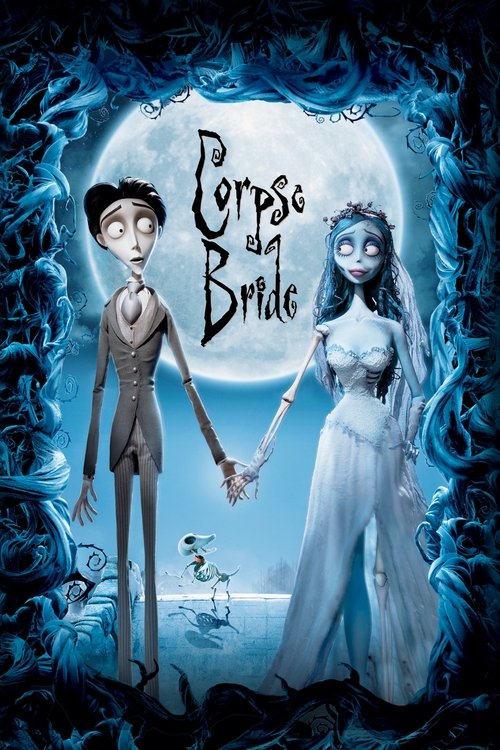
Corpse Bride - Review
A Dance with Death: A Review of Tim Burton's "Corpse Bride"
Tim Burton, the master of macabre whimsy, invites us once again into a world where the darkness is tinged with delightful absurdity in his 2005 stop-motion animation, Corpse Bride. Released on September 12th, 2005, this film isn't just a visual feast; it's a bittersweet waltz between life and death, obligation and desire, and the vibrantly bleak world of the underworld versus the suffocatingly gray existence of the living. Prepare to be charmed, saddened, and thoroughly entertained as we delve into the decaying delights of this animated masterpiece.
Plot: A Misstep into the Underworld
The narrative follows Victor Van Dort (voiced by Johnny Depp), a nervous young man from a newly wealthy family, and Victoria Everglot (voiced by Emily Watson), the repressed daughter of impoverished aristocrats. Their arranged marriage is intended to alleviate their respective families' financial woes. Victor, overwhelmed by the pressure, botches his wedding vows repeatedly during the rehearsal. He flees to a nearby forest to practice in solitude. In a moment of desperate hope, he recites his vows perfectly and, as a final flourish, places the wedding ring on what he believes to be a gnarled root. In reality, he's just inadvertently betrothed himself to Emily (voiced by Helena Bonham Carter), a deceased bride who has been waiting for years for her true love to arrive.
Whisked away to the Land of the Dead, Victor finds a vibrant, surprisingly joyful society, a stark contrast to the somber, monochrome world he left behind. Emily, despite her decaying appearance, is kind, understanding, and deeply longing for love. Victor, however, remains fixated on returning to Victoria, who he genuinely feels a connection with, despite their limited interactions. The remainder of the film explores Victor's attempts to return to the land of the living, Emily's yearning for a fulfilled life (or afterlife), and the machinations of the villainous Lord Barkis Bittern (voiced by Richard E. Grant), who seeks to marry Victoria for her family's supposed wealth.
The plot, while seemingly straightforward, is layered with themes of societal expectations, the true meaning of love, and the courage to choose one's own destiny. The journey Victor undertakes forces him to confront his own fears and to learn the value of genuine connection, even when it comes in the most unexpected form.
Characters: A Symphony of the Strange and Familiar
Burton excels at creating characters that are both bizarre and relatable. Each character in Corpse Bride, whether living or dead, is imbued with a distinct personality and motivation, making them instantly memorable.
Victor Van Dort: The Reluctant Groom
Victor is the archetypal Burton protagonist: awkward, introverted, and struggling to find his place in a world that doesn't quite understand him. His initial timidity and anxiety are palpable, making his eventual growth and self-discovery all the more rewarding. Johnny Depp's voice acting perfectly captures Victor's vulnerability and underlying kindness.
Emily, the Corpse Bride: A Heart of Gold
Emily is the heart and soul of the film. Despite her tragic backstory and decaying appearance, she possesses a remarkable sense of compassion and a genuine desire for love. Helena Bonham Carter delivers a nuanced performance, conveying Emily's vulnerability, her unwavering hope, and her eventual selflessness. She is not merely a "corpse bride"; she is a woman who was robbed of her happiness and deserves a chance at peace.
Victoria Everglot: The Imprisoned Beauty
Victoria is a victim of circumstance, trapped by societal expectations and her family's financial desperation. Although less overtly quirky than other Burton characters, she possesses a quiet strength and a genuine affection for Victor. Emily Watson's subtle performance portrays Victoria's longing for freedom and her unwavering belief in Victor's goodness.
Lord Barkis Bittern: The Villainous Scoundrel
Lord Barkis Bittern is a classic villain, motivated by greed and a desire for social status. Richard E. Grant's portrayal is deliciously sinister, capturing Barkis's arrogance, his duplicity, and his ultimate downfall. He serves as a foil to Victor, highlighting the importance of genuine love and compassion over superficial ambition.
The Supporting Cast: A Lively Ensemble
The supporting characters, both in the Land of the Living and the Land of the Dead, add depth and humor to the story. From the bumbling Pastor Galswells (voiced by Michael Gough) to the jovial Bonejangles (voiced by Danny Elfman), each character contributes to the film's unique atmosphere. The denizens of the Land of the Dead, in particular, are a delightful bunch, embracing their afterlife with a zest that is often lacking in the living world.
Direction: Burton's Signature Style
Tim Burton's directorial vision is unmistakable throughout Corpse Bride. His signature style, characterized by gothic aesthetics, quirky characters, and a blend of dark humor and heartfelt emotion, is on full display. The film is a testament to his ability to create worlds that are both fantastical and deeply personal.
Burton's use of stop-motion animation is particularly effective in bringing the characters to life. The meticulous attention to detail in the puppets' design and movement adds a layer of authenticity and charm that is often missing in CGI animation. The slightly jerky movements and subtle imperfections of stop-motion create a sense of tangible reality, making the characters feel more real, despite their fantastical nature.
Furthermore, Burton masterfully contrasts the bleak, monochromatic world of the living with the vibrant, colorful world of the dead. This visual contrast underscores the film's central theme: that life, even in death, can be more fulfilling than a joyless existence dictated by societal expectations.
Cinematography: A Visual Feast of the Macabre
The cinematography in Corpse Bride is stunning, a testament to the artistry of stop-motion animation and the creative vision of Burton and his team. The film is a visual feast, with meticulously crafted sets, intricate puppet designs, and a masterful use of color and lighting.
The contrast between the gray, oppressive world of the living and the colorful, vibrant world of the dead is particularly striking. The Land of the Living is rendered in muted tones, reflecting the characters' emotional stagnation and the stifling atmosphere of their society. In contrast, the Land of the Dead is a riot of color, with vibrant hues and dynamic lighting that reflect the characters' newfound freedom and joy.
The camera work is also noteworthy, with a variety of angles and movements that add depth and dynamism to the animation. The close-ups on the characters' faces, in particular, are incredibly effective in conveying their emotions and highlighting the intricate details of their puppet designs.
Performances: A Vocal Masterclass
The voice acting in Corpse Bride is exceptional, with each actor bringing their character to life with nuance and emotion. The cast is a who's who of talented performers, including Johnny Depp, Helena Bonham Carter, Emily Watson, and Richard E. Grant, all of whom deliver memorable performances.
Johnny Depp's portrayal of Victor is particularly noteworthy. He captures Victor's awkwardness, his vulnerability, and his eventual growth with remarkable sensitivity. Helena Bonham Carter's performance as Emily is equally impressive. She imbues Emily with a sense of warmth, compassion, and longing that makes her a truly unforgettable character. Emily Watson delivers a subtle but effective performance as Victoria, conveying her character's quiet strength and her unwavering belief in Victor. Richard E. Grant is perfectly cast as the villainous Lord Barkis Bittern, bringing a sense of arrogance and duplicity to the role.
The supporting cast also delivers strong performances, adding depth and humor to the film's ensemble. Danny Elfman, in particular, shines as Bonejangles, bringing his signature musical talent and quirky personality to the role.
Themes and Messages: Beyond the Grave
Corpse Bride is more than just a visually stunning animation; it's a film with profound themes and messages about love, sacrifice, and the importance of living life on one's own terms.
Love and Sacrifice
The film explores different facets of love, from the arranged marriage based on societal expectations to the genuine connection between Victor and Victoria, and the selfless love of Emily. Emily's ultimate sacrifice, releasing Victor to be with Victoria, is a testament to the power of true love, even in death. It underscores the idea that love is not about possession but about wanting the best for the other person, even if it means sacrificing one's own happiness.
Societal Expectations vs. Personal Fulfillment
The film critiques the rigid societal expectations of the 19th century, particularly the pressure to conform to social norms and to prioritize wealth and status over personal happiness. Victor and Victoria are both trapped by these expectations, forced into an arranged marriage that they neither desire nor believe in. The film suggests that true happiness lies in breaking free from these constraints and pursuing one's own path, even if it means defying societal norms.
The Value of Life (and Afterlife)
The contrast between the bleak world of the living and the vibrant world of the dead highlights the film's message about the value of life. The living characters are often repressed and unhappy, while the dead characters embrace their afterlife with a sense of joy and freedom. The film suggests that life, even with its imperfections and challenges, is a precious gift that should be cherished and lived to the fullest.
Embracing the Unusual
As with many of Burton's films, Corpse Bride celebrates the unusual and the unconventional. The characters who are considered "outcasts" or "freaks" are often the most interesting and the most compassionate. The film encourages viewers to embrace their own unique qualities and to find beauty in the unexpected.
Comparison to Other Films and Works
Corpse Bride shares thematic and stylistic similarities with other Tim Burton films, particularly The Nightmare Before Christmas and Edward Scissorhands. Like The Nightmare Before Christmas, it explores the contrast between two distinct worlds and features stop-motion animation and a whimsical, macabre aesthetic. Like Edward Scissorhands, it tells the story of an outsider who struggles to find acceptance in a conformist society.
The film also draws inspiration from classic fairy tales and gothic romances, such as "Bluebeard" and "The Bride of Frankenstein." However, Burton puts his own unique spin on these familiar tropes, creating a story that is both original and timeless.
Compared to Burton's later works, such as Alice in Wonderland (2010) and Dark Shadows (2012), Corpse Bride is often considered to be a more successful and cohesive film. While Burton's later films often suffer from a lack of focus and a reliance on CGI, Corpse Bride benefits from its meticulous stop-motion animation, its well-developed characters, and its clear thematic focus.
Positive Aspects
- Stunning Visuals: The stop-motion animation is breathtaking, with intricate puppet designs and meticulously crafted sets.
- Memorable Characters: The characters are quirky, relatable, and imbued with distinct personalities.
- Exceptional Voice Acting: The voice cast, led by Johnny Depp and Helena Bonham Carter, delivers outstanding performances.
- Profound Themes: The film explores themes of love, sacrifice, and the importance of living life on one's own terms.
- Tim Burton's Signature Style: The film is a perfect example of Burton's unique blend of gothic aesthetics, dark humor, and heartfelt emotion.
- Excellent Soundtrack: Danny Elfman's score is both haunting and whimsical, perfectly complementing the film's tone.
Constructive Criticism
- Predictable Plot: While the story is well-told, the plot is somewhat predictable, particularly the villain's motivations.
- Pacing Issues: The film's pacing can feel uneven at times, with some scenes dragging on while others feel rushed.
- Limited Character Development for Victoria: While Emily and Victor undergo significant character development, Victoria's character arc feels somewhat underdeveloped. She primarily serves as a plot device rather than a fully realized character.
Conclusion
Corpse Bride is a triumph of stop-motion animation and a testament to Tim Burton's unique vision. It's a visually stunning, emotionally resonant, and thematically rich film that will appeal to audiences of all ages. While the plot may be somewhat predictable and the pacing occasionally uneven, the film's strengths far outweigh its weaknesses. The characters are memorable, the voice acting is exceptional, and the themes are profound. It is a darkly beautiful romance that stays with you long after the credits roll. It's a reminder that even in the face of death, love, compassion, and the courage to be true to oneself can prevail.