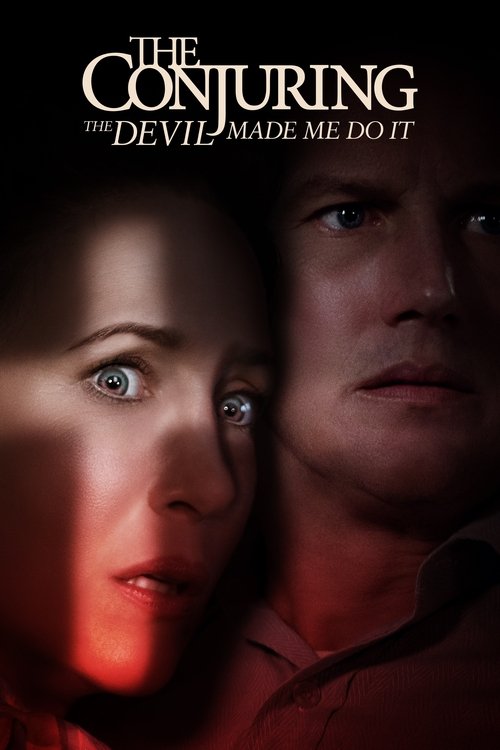
The Conjuring: The Devil Made Me Do It - Review
The Conjuring: The Devil Made Me Do It - A Descent into Darkness Worth Taking?
The Conjuring universe, a sprawling tapestry woven with jump scares, demonic entities, and the unwavering faith of Ed and Lorraine Warren, has become a staple of modern horror. With each installment, audiences eagerly anticipate a fresh dose of spine-chilling terror. The Conjuring: The Devil Made Me Do It, released in 2021, promised a departure from the haunted house formula, delving into a real-life court case where demonic possession was used as a defense. But does this shift in direction elevate the franchise, or does it stumble under the weight of its own ambition? Let's delve into the depths of this demonic legal drama and see if the devil truly made them do it… well, make a good movie, that is.
Plot: Beyond the Walls, Into the Courtroom
The film opens with a visceral and terrifying exorcism scene, setting the stage for the possession of young David Glatzel. Ed and Lorraine Warren, portrayed by Patrick Wilson and Vera Farmiga respectively, are called in to assist. During the harrowing exorcism, Arne Cheyenne Johnson, the boyfriend of David's sister, intervenes, pleading with the demon to take him instead. The demon obliges, and months later, Arne commits a brutal murder. He claims demonic possession, marking the first time in U.S. history such a defense is attempted.
The narrative then shifts from the initial haunting to a legal thriller, with Ed and Lorraine racing against time to prove Arne's innocence by uncovering the source of the demonic influence. Their investigation leads them down a rabbit hole of occult practices, satanic cults, and a mysterious witch who is cursing individuals and families. The plot becomes a complex web of clues, forcing the Warrens to confront not only the supernatural but also the limitations of the legal system and the skepticism of the outside world.
While the premise is intriguing, the plot occasionally suffers from pacing issues. The initial exorcism is incredibly intense, but the subsequent investigation sometimes feels disjointed, lacking the sustained tension of previous Conjuring films. The transition from haunted house horror to a detective story with supernatural elements is not always seamless, and some viewers may find the change jarring.
Characters: Faith, Love, and the Fight Against Evil
Ed Warren (Patrick Wilson)
Patrick Wilson continues to deliver a compelling performance as Ed Warren, the steadfast and devoted husband and paranormal investigator. In this film, Ed's physical health is failing, adding a layer of vulnerability to his character. He suffers a heart attack during the initial exorcism, leaving him physically and emotionally scarred. Wilson portrays Ed's unwavering faith and determination with conviction, making him a believable and sympathetic protagonist. His love for Lorraine is the bedrock of their partnership, and Wilson effectively conveys the depth of their bond.
Lorraine Warren (Vera Farmiga)
Vera Farmiga shines once again as Lorraine Warren, the clairvoyant and empathetic partner. Lorraine's abilities are crucial to unraveling the mystery behind the demonic possession. Farmiga masterfully portrays Lorraine's emotional toll as she delves into the darkness, experiencing visions of the evil that plagues Arne. Her unwavering faith and psychic abilities make her a formidable force against the forces of darkness. The film explores the toll that Lorraine's abilities take on her mental and physical well-being, adding depth to her character.
Arne Cheyenne Johnson (Ruairi O'Connor)
Ruairi O'Connor delivers a nuanced performance as Arne Cheyenne Johnson, the young man accused of murder. He effectively portrays Arne's initial innocence and his subsequent descent into demonic possession. O'Connor captures the character's internal struggle as he battles the evil forces that control him. While the film doesn't delve as deeply into Arne's psyche as it could have, O'Connor's performance is convincing and adds a layer of complexity to the narrative.
The Occultist (Eugenie Bondurant)
Eugenie Bondurant delivers a chilling performance as the occultist, the film's main antagonist. Her unsettling presence and creepy demeanor make her a formidable adversary for the Warrens. Bondurant effectively embodies the cold and calculating nature of the occultist, making her a memorable and terrifying villain. While her motivations could have been explored in more depth, her performance is undeniably captivating.
Direction: Michael Chaves Steps Up
Michael Chaves, who previously directed The Curse of La Llorona, takes the helm in The Conjuring: The Devil Made Me Do It. He successfully captures the atmosphere of dread and suspense that is characteristic of the Conjuring universe. Chaves utilizes jump scares effectively, but he also relies on psychological horror and atmospheric tension to create a truly terrifying experience. He also manages to handle the shift in genre, balancing the horror elements with the procedural aspects of the investigation.
However, Chaves' direction occasionally lacks the subtlety and finesse of James Wan, the director of the first two Conjuring films. Some of the scares feel somewhat predictable, and the film relies too heavily on jump scares at times. While Chaves demonstrates a strong understanding of the franchise's formula, he doesn't quite reach the same level of mastery as Wan.
Cinematography: Visual Storytelling
Michael Burgess's cinematography plays a crucial role in creating the film's unsettling atmosphere. The use of dark and shadowy lighting enhances the sense of dread and suspense. The camera work is dynamic, utilizing a variety of angles and perspectives to create a visually engaging experience. The film's visual style is consistent with the previous Conjuring films, maintaining the franchise's signature aesthetic.
Burgess effectively uses close-ups to capture the characters' emotions, particularly during moments of intense fear and distress. The wide shots of the haunted locations create a sense of isolation and vulnerability. The film's visual effects are well-executed, enhancing the supernatural elements without becoming overly distracting. The cinematography contributes significantly to the film's overall effectiveness as a horror experience.
Performances: A Strong Ensemble Cast
The performances in The Conjuring: The Devil Made Me Do It are consistently strong across the board. Patrick Wilson and Vera Farmiga continue to deliver compelling performances as Ed and Lorraine Warren, anchoring the film with their unwavering faith and love for each other. Ruairi O'Connor delivers a nuanced performance as Arne Cheyenne Johnson, capturing the character's internal struggle with demonic possession. Eugenie Bondurant is chilling as the occultist, making her a memorable and terrifying villain. The supporting cast also delivers solid performances, contributing to the film's overall effectiveness.
The chemistry between Wilson and Farmiga is palpable, and their performances elevate the film beyond a simple horror movie. Their portrayal of Ed and Lorraine Warren as loving and devoted partners is both heartwarming and inspiring. The actors effectively convey the emotional toll that the Warrens' work takes on them, adding depth and complexity to their characters.
Themes and Messages: Faith, Love, and the Power of Belief
The Conjuring: The Devil Made Me Do It explores several recurring themes within the Conjuring universe, including faith, love, and the power of belief. The film emphasizes the importance of faith in the face of evil, showcasing the Warrens' unwavering belief in God and their ability to combat demonic forces. The film also highlights the power of love as a force for good, demonstrating the strength of Ed and Lorraine's relationship and their willingness to risk everything for each other.
The film also touches on the theme of free will, raising questions about the extent to which Arne was responsible for his actions while under demonic possession. The film explores the complexities of the legal system and the challenges of proving demonic possession in a court of law. Ultimately, the film suggests that belief in the supernatural is a powerful force, capable of shaping reality and influencing human behavior.
Comparison to Other Similar Films or Previous Works
Compared to previous Conjuring films, The Devil Made Me Do It represents a significant departure in terms of its plot and setting. While the earlier films focused primarily on haunted houses and demonic possessions within confined spaces, this film expands the scope of the narrative, venturing into the realm of legal thrillers and criminal investigations. This shift in genre is both a strength and a weakness. It allows the film to explore new themes and ideas, but it also sacrifices some of the claustrophobic tension that characterized the earlier films.
In terms of its themes and style, The Devil Made Me Do It shares similarities with other films that explore the intersection of religion and horror, such as The Exorcist and The Omen. However, the Conjuring franchise distinguishes itself through its focus on the real-life cases of Ed and Lorraine Warren and its emphasis on the power of faith and love. While The Devil Made Me Do It may not be as groundbreaking as The Exorcist, it offers a compelling and entertaining take on the theme of demonic possession.
Compared to Michael Chaves' previous work, The Curse of La Llorona, The Devil Made Me Do It represents a significant improvement in terms of its direction and storytelling. Chaves demonstrates a greater command of the horror genre, creating a more suspenseful and atmospheric experience. While The Curse of La Llorona was criticized for its reliance on jump scares and its lack of originality, The Devil Made Me Do It offers a more nuanced and engaging narrative.
Positive Aspects
- Strong performances from Patrick Wilson and Vera Farmiga.
- Intriguing plot based on a real-life case.
- Effective use of atmosphere and suspense.
- Exploration of complex themes such as faith, love, and free will.
- Well-executed visual effects.
Constructive Criticism
- Pacing issues in the second act.
- Over-reliance on jump scares at times.
- The shift in genre from haunted house horror to legal thriller is not always seamless.
- The occultist's motivations could have been explored in more depth.
- Lacks the subtlety and finesse of James Wan's direction in the first two films.
Conclusion
The Conjuring: The Devil Made Me Do It is a solid addition to the Conjuring universe, offering a fresh and intriguing take on the theme of demonic possession. While it may not reach the heights of the first two films, it delivers a suspenseful and entertaining horror experience. The strong performances from Patrick Wilson and Vera Farmiga, the intriguing plot, and the effective use of atmosphere make it a worthwhile watch for fans of the franchise and horror enthusiasts in general. Despite some pacing issues and an over-reliance on jump scares, the film ultimately succeeds in creating a chilling and thought-provoking narrative. It's a decent descent into darkness, though perhaps not the most terrifying the Warrens have faced.