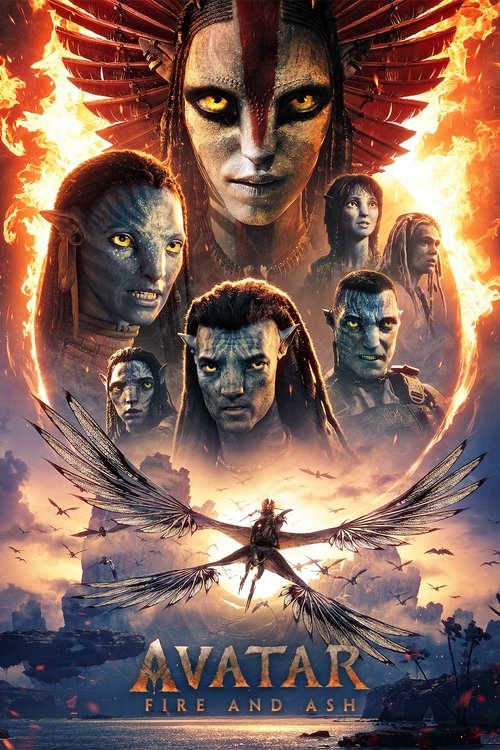
Avatar: Fire and Ash - Review
Avatar: Fire and Ash - A Fiery Chapter in Pandora's Saga
James Cameron returns to the breathtaking world of Pandora with Avatar: Fire and Ash, a sequel that bravely confronts the aftermath of war and introduces a formidable new adversary to Jake Sully and his family. Released on December 17th, 2025, this installment isn't just a visual spectacle; it's a deeply personal story about loss, resilience, and the enduring strength of family in the face of overwhelming odds. While it doesn't entirely escape the shadow of its predecessors, Fire and Ash forges its own path, delivering a compelling and action-packed experience that will leave audiences both breathless and emotionally invested.
Plot: A New Threat Rises from the Ashes
The film picks up several years after the events of Avatar: The Way of Water. The RDA, while still a lingering threat, is not the immediate focus. Instead, Pandora faces a new internal conflict: the rise of the Ash People, a fiercely independent and technologically advanced Na'vi tribe. Led by Varang, a charismatic but ruthless warrior, the Ash People seek to dominate Pandora, believing that the other clans have grown weak and complacent. Their methods are brutal, and their goal is clear: to conquer and assimilate all other Na'vi tribes under their banner.
Jake Sully, now a seasoned warrior and father, struggles to balance his responsibilities to his family and his duty to protect the Omaticaya clan and their allies. The death of Neteyam, his eldest son, in the previous film casts a long shadow over the family, adding emotional weight to every decision Jake makes. This loss fuels his determination to keep his remaining children safe, even if it means making difficult choices that challenge his own beliefs. The arrival of the Ash People forces Jake to confront his own leadership abilities and question whether his past victories are enough to prepare him for this new, more cunning enemy.
The plot unfolds with a deliberate pace, allowing ample time to explore the culture and motivations of the Ash People. We see their advanced weaponry, their complex social structure, and their deeply rooted belief in their own superiority. This depth of characterization prevents them from becoming mere villains, adding nuance to the conflict and raising questions about the nature of power and the consequences of unchecked ambition. The narrative skillfully interweaves action sequences with moments of quiet reflection, creating a balanced and engaging viewing experience.
Characters: Evolution and New Additions
The core characters from the previous films return, but they are not static. Jake Sully, played with renewed intensity by Sam Worthington, is a man grappling with grief and the weight of leadership. He's no longer the naive marine who first arrived on Pandora; he's a hardened warrior, a devoted father, and a leader who understands the true cost of war. Neytiri, portrayed by Zoe Saldana, remains a fierce protector of her family and her people. Her grief over Neteyam's death is palpable, adding a layer of vulnerability to her character that makes her even more compelling. The dynamic between Jake and Neytiri is further explored, showcasing their unwavering love and their shared determination to protect their children.
The Sully children – Lo'ak, Kiri, and Tuk – continue to grow and evolve. Lo'ak, still haunted by his brother's death, seeks to prove himself to his father and find his own purpose. Kiri, with her unique connection to Eywa, plays a crucial role in understanding the Ash People and finding a way to defeat them. Tuk, the youngest, provides moments of levity and reminds the audience of what is truly at stake. We also see the return of Spider, the human boy raised among the Na'vi, whose loyalties are constantly tested as he navigates the complex relationship between humans and Na'vi.
However, the most significant addition to the cast is Varang, the leader of the Ash People, played with chilling charisma by [Actor's Name]. Varang is not a one-dimensional villain; she is a complex and compelling character with her own motivations and beliefs. She believes that the Ash People are the only ones strong enough to protect Pandora from the inevitable return of the RDA. Her methods are brutal, but her intentions, at least in her own mind, are noble. This complexity makes her a formidable adversary and adds depth to the overall narrative.
Direction and Cinematography: A Visual Masterpiece, Again
James Cameron once again pushes the boundaries of visual effects and filmmaking technology. Avatar: Fire and Ash is a visual feast, with stunningly rendered landscapes, breathtaking action sequences, and incredibly lifelike character animations. The Ash People's territory, a volcanic region of Pandora, is brought to life with incredible detail, showcasing the planet's diverse ecosystems. The film's use of 3D is immersive and adds to the overall sense of wonder. The cinematography is masterful, capturing the beauty and danger of Pandora with equal skill. Long, sweeping shots showcase the vastness of the landscape, while close-ups capture the raw emotion on the characters' faces.
Cameron's direction is confident and assured. He expertly balances the action sequences with the more intimate character moments, creating a film that is both thrilling and emotionally resonant. He also demonstrates a continued commitment to pushing the boundaries of performance capture technology, resulting in incredibly nuanced and believable performances from the actors. The action sequences are particularly impressive, showcasing the Na'vi's agility and strength, as well as the Ash People's advanced weaponry. The battles are intense and visceral, but they are also carefully choreographed to be visually stunning and easy to follow.
Themes and Messages: Resilience, Family, and the Cost of Power
Avatar: Fire and Ash explores several important themes, including resilience, family, and the cost of power. The Sully family's journey is a testament to the enduring strength of the human spirit in the face of adversity. Despite the loss of Neteyam, they refuse to be broken, finding strength in each other and fighting for a better future. The film also emphasizes the importance of family, both biological and chosen. The bonds between Jake, Neytiri, and their children are the foundation of their strength, and they are willing to do anything to protect each other.
The film also delves into the dangers of unchecked power and the consequences of violence. Varang's ambition and her ruthless methods highlight the corrupting influence of power. The film suggests that true strength lies not in domination but in cooperation and respect for all living things. The conflict between the Omaticaya and the Ash People serves as a cautionary tale about the dangers of tribalism and the importance of understanding and empathy.
Furthermore, the film continues to explore the themes of environmentalism and the interconnectedness of all life on Pandora. The Na'vi's deep connection to Eywa is a reminder of the importance of respecting nature and living in harmony with the environment. The Ash People's disregard for the environment, in their pursuit of power, highlights the consequences of greed and shortsightedness.
Performances: Actors Bring Depth to the Na'vi
The actors deliver strong performances across the board. Sam Worthington brings a newfound depth and intensity to Jake Sully, portraying him as a man grappling with grief and the weight of leadership. Zoe Saldana is equally compelling as Neytiri, showcasing her strength and vulnerability. The younger actors, including [Actor's Name] as Lo'ak and [Actor's Name] as Kiri, continue to impress, delivering nuanced and believable performances. However, the standout performance belongs to [Actor's Name] as Varang. She imbues the character with a chilling charisma and a complex inner life, making her a truly memorable villain.
The use of performance capture technology allows the actors to fully embody their Na'vi characters, conveying a wide range of emotions through their facial expressions and body language. The technology has advanced significantly since the first Avatar film, resulting in even more lifelike and believable performances.
Comparison to Other Films and Previous Works
Avatar: Fire and Ash inevitably invites comparisons to its predecessors, Avatar and Avatar: The Way of Water. While it shares the same visual splendor and thematic concerns, Fire and Ash distinguishes itself by focusing on an internal conflict within Pandora. This shift in focus allows for a more nuanced exploration of Na'vi culture and the complexities of power. While the previous films centered on the conflict between humans and Na'vi, Fire and Ash explores the conflicts within the Na'vi community itself.
The film also draws parallels to other science fiction and fantasy films that explore themes of war, resilience, and the importance of family. Elements of Star Wars, particularly the struggles against overwhelming odds, can be seen. The film's exploration of tribalism and the consequences of unchecked ambition also resonates with themes found in films like Braveheart and Gladiator.
Compared to James Cameron's other works, Fire and Ash shares his signature attention to detail, his commitment to visual innovation, and his ability to create compelling characters. However, the film also demonstrates a greater willingness to explore darker themes and to challenge the audience's expectations. The death of Neteyam in the previous film and the introduction of a morally ambiguous villain like Varang are examples of this willingness to take risks and to push the boundaries of the franchise.
Positive Aspects
- Stunning visual effects and immersive 3D
- Compelling characters and strong performances
- Thought-provoking themes and messages
- Well-paced narrative that balances action and emotion
- A formidable and nuanced villain in Varang
Constructive Criticism
- The plot, while engaging, can feel somewhat predictable at times.
- Some of the dialogue can be clunky and exposition-heavy.
- The film could have benefited from a more original score, as some of the musical cues feel derivative of the previous films.
- While Varang is a compelling villain, the motivations of the Ash People as a whole could have been explored in greater depth.
Conclusion
Avatar: Fire and Ash is a worthy addition to the Avatar franchise. While it may not surpass its predecessors in terms of originality, it delivers a compelling and visually stunning experience that will leave audiences both entertained and emotionally invested. The film's strong performances, thought-provoking themes, and breathtaking visuals make it a must-see for fans of science fiction, adventure, and fantasy. Despite some minor flaws, Fire and Ash is a testament to James Cameron's skill as a filmmaker and his ability to create immersive and engaging worlds.
Rating: 8.5/10