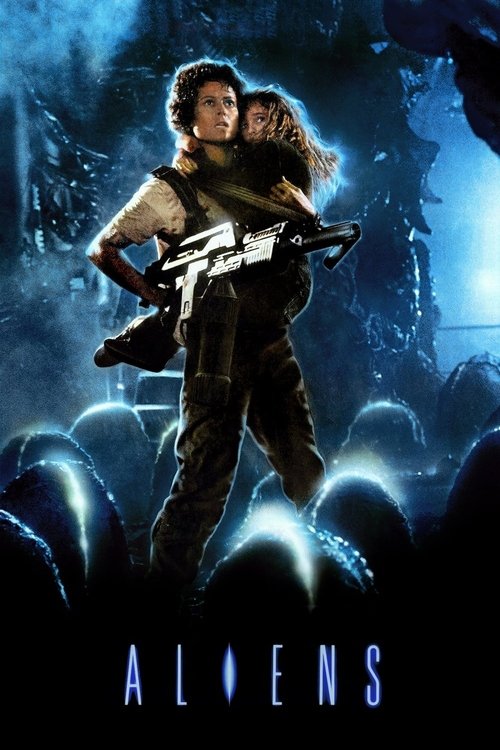
Aliens - Review
Aliens: A Symphony of Action, Terror, and Motherhood
James Cameron's Aliens, released in 1986, isn't just a sequel; it's a masterclass in how to elevate a sci-fi horror classic into a pulse-pounding action thriller. Where Ridley Scott's Alien whispered dread in the suffocating silence of space, Aliens screams terror amidst the cacophony of gunfire and the relentless onslaught of a xenomorphic horde. It's a film that redefined the action genre, solidified Sigourney Weaver as a cinematic icon, and explored themes of motherhood, trauma, and corporate greed with surprising depth. More than just a monster movie, Aliens is a visceral, emotionally resonant experience that continues to captivate audiences decades after its release.
Plot: From Isolation to Invasion
The narrative picks up with Ellen Ripley (Sigourney Weaver) adrift in hypersleep, rescued after 57 years and haunted by the nightmares of the Nostromo. Her warnings about the alien encounter are dismissed by the Weyland-Yutani Corporation, who, unsurprisingly, have been exploiting LV-426, the planet where her crew first encountered the deadly xenomorph. When contact with the colony on LV-426 is lost, Ripley is reluctantly persuaded to accompany a squad of Colonial Marines to investigate.
What begins as a search and rescue mission quickly devolves into a desperate fight for survival. The Marines, initially confident in their firepower, are quickly overwhelmed by the sheer number of aliens inhabiting the colony. Trapped and facing impossible odds, Ripley, burdened by her past trauma and fueled by a fierce protective instinct, must confront her fears and lead the survivors to safety. The plot is brilliantly structured, escalating the tension with each scene, culminating in a climactic showdown that is both thrilling and emotionally devastating.
The pacing is expertly handled. Cameron allows ample time to establish the characters and their relationships before unleashing the full force of the alien threat. The initial scenes on the Sulaco, the Marines' ship, are filled with camaraderie and banter, creating a sense of normalcy that is shattered when they arrive on LV-426. This contrast makes the ensuing chaos even more impactful.
Characters: Beyond the Archetypes
Aliens boasts a cast of memorable characters, each contributing to the film's overall success.
- Ellen Ripley (Sigourney Weaver): Weaver delivers a career-defining performance as Ripley. No longer the frightened warrant officer from the first film, she is now a hardened survivor, haunted by her past but determined to protect others. Her maternal instincts are awakened by Newt, making her character arc even more compelling. Ripley's strength, resilience, and unwavering courage make her a true cinematic hero.
- Corporal Dwayne Hicks (Michael Biehn): Hicks is the quintessential stoic soldier, a capable and reliable leader who provides a much-needed anchor for Ripley. His quiet competence and genuine concern for his fellow Marines make him a likable and relatable character. His growing bond with Ripley adds a touch of humanity to the intense action.
- Private Vasquez (Jenette Goldstein): Vasquez is a badass female Marine who challenges gender stereotypes. She's tough, skilled, and fiercely independent, proving herself to be a valuable asset to the team. Her rivalry with Hudson adds a layer of humor to the film.
- Private Hudson (Bill Paxton): Hudson, initially cocky and overconfident, crumbles under pressure, providing comic relief and highlighting the psychological toll of the alien encounter. Paxton's performance is memorable, capturing the character's vulnerability and descent into panic.
- Newt (Carrie Henn): Newt, the sole survivor of the colony, is a symbol of innocence and resilience. Her bond with Ripley is the emotional core of the film, driving Ripley's actions and adding a layer of maternal protectiveness to her character.
- Bishop (Lance Henriksen): Bishop, the synthetic human, is a complex character who challenges the audience's preconceived notions about artificial intelligence. His unwavering loyalty and willingness to sacrifice himself for the safety of the others earn him Ripley's trust and respect.
- Carter Burke (Paul Reiser): Burke is the embodiment of corporate greed and callousness. His willingness to sacrifice human lives for profit makes him a detestable villain and highlights the film's critique of corporate exploitation.
Cameron avoids creating simple archetypes, giving each character depth and nuance. Even the seemingly expendable Marines are given distinct personalities and backstories, making their deaths more impactful.
Direction: Cameron's Action Prowess
James Cameron's direction is nothing short of masterful. He seamlessly blends elements of science fiction, horror, and action, creating a film that is both thrilling and terrifying. His attention to detail is evident in every frame, from the meticulously designed sets to the realistic portrayal of combat. He understands how to build tension, using suspenseful music, claustrophobic environments, and the constant threat of the unseen to keep the audience on the edge of their seats.
Cameron's action sequences are legendary. He eschews shaky cam and relies on clear, dynamic camerawork to capture the intensity of the battles. The use of practical effects, such as the alien costumes and animatronics, adds a visceral quality to the film that is often lacking in modern CGI-heavy blockbusters. He also masterfully uses sound design to create a sense of dread and unease. The screeching of the aliens, the whirring of the sentry guns, and the pounding of the Marines' pulse rifles all contribute to the film's immersive atmosphere.
Cameron's direction also excels in its character work. He elicits strong performances from his cast, creating believable relationships and emotional connections between the characters. He understands the importance of human drama, and he uses it to elevate the film beyond a simple action spectacle.
Cinematography: A Dark and Gritty Vision
Adrian Biddle's cinematography is crucial to the film's overall atmosphere. The use of dark, shadowy lighting creates a sense of claustrophobia and dread, while the gritty, realistic visuals enhance the film's sense of realism. The camera movements are dynamic and engaging, capturing the intensity of the action and the emotional turmoil of the characters.
The visual design of the film is impeccable. The sets are meticulously detailed, creating a believable and immersive environment. The alien designs are both terrifying and fascinating, showcasing H.R. Giger's influence while also adding new elements to the xenomorph mythology. The use of practical effects, such as the alien costumes and animatronics, adds a visceral quality to the film that is often lacking in modern CGI-heavy blockbusters.
The cinematography also plays a key role in highlighting the film's themes. The contrast between the sterile, corporate environment of Weyland-Yutani and the chaotic, dangerous world of LV-426 underscores the film's critique of corporate greed and its consequences.
Performances: Weaver's Triumphant Return
The performances in Aliens are uniformly excellent, but Sigourney Weaver's portrayal of Ripley is the standout. She embodies the character's transformation from a traumatized survivor to a fierce protector with nuance and conviction. Her physicality, her emotional range, and her unwavering determination make her a truly iconic cinematic hero.
Michael Biehn delivers a strong performance as Corporal Hicks, providing a much-needed anchor for Ripley and the other Marines. Jenette Goldstein is memorable as Vasquez, a badass female Marine who challenges gender stereotypes. Bill Paxton provides comic relief as Hudson, capturing the character's vulnerability and descent into panic. Carrie Henn is excellent as Newt, portraying the character's innocence and resilience with remarkable maturity. Lance Henriksen is compelling as Bishop, challenging the audience's preconceived notions about artificial intelligence.
Even Paul Reiser, as the villainous Carter Burke, delivers a performance that is both believable and detestable. He perfectly captures the character's slimy demeanor and his willingness to sacrifice human lives for profit.
Themes and Messages: Beyond the Surface
Aliens is more than just a monster movie; it explores a number of important themes and messages.
- Motherhood and Protection: The film explores the themes of motherhood and protection through Ripley's relationship with Newt. Ripley's maternal instincts are awakened by Newt, driving her actions and adding a layer of emotional depth to her character. The film suggests that the bond between a mother and child is a powerful force that can overcome even the most terrifying obstacles.
- Trauma and PTSD: Ripley's experiences on the Nostromo have left her deeply traumatized. She suffers from nightmares and flashbacks, and she struggles to cope with the loss of her crewmates. The film explores the long-lasting effects of trauma and the challenges of overcoming PTSD.
- Corporate Greed: The Weyland-Yutani Corporation is portrayed as a ruthless and amoral entity that is willing to sacrifice human lives for profit. The film critiques corporate greed and its consequences, suggesting that unchecked power can lead to devastating results.
- The Value of Human Connection: In the face of overwhelming odds, the characters in Aliens rely on each other for support and survival. The film emphasizes the importance of human connection and the power of teamwork in overcoming adversity.
- The Nature of Fear: The film explores the nature of fear and how it can both paralyze and motivate individuals. The characters in Aliens must confront their fears in order to survive, and they learn that courage is not the absence of fear, but the ability to act in spite of it.
These themes elevate Aliens beyond a simple action spectacle, making it a thought-provoking and emotionally resonant film.
Comparison: A Different Kind of Terror
Aliens is a very different film from Ridley Scott's Alien. While Alien is a slow-burn horror film that focuses on suspense and atmosphere, Aliens is a high-octane action thriller that emphasizes adrenaline-pumping action sequences. Alien is a study in isolation and paranoia, while Aliens is a story about teamwork and resilience.
Despite their differences, both films are masterpieces in their own right. Alien is a landmark in the science fiction horror genre, while Aliens redefined the action genre. Both films feature strong female protagonists and explore themes of fear, survival, and the dangers of unchecked corporate power.
Cameron's work on Aliens can also be compared to his other action films, such as Terminator 2: Judgment Day. Both films feature strong female leads, groundbreaking special effects, and a relentless sense of pacing. However, Aliens is arguably more successful in its exploration of themes and its development of complex characters.
Positive Aspects: A Masterpiece of Genre Blending
Aliens is a masterpiece of genre blending, seamlessly combining elements of science fiction, horror, and action. The film's strengths include:
- Strong Female Lead: Sigourney Weaver's portrayal of Ripley is iconic and inspiring. She is a complex and believable character who embodies strength, resilience, and compassion.
- Memorable Characters: The film boasts a cast of memorable characters, each contributing to the overall success of the film.
- Masterful Direction: James Cameron's direction is nothing short of masterful. He expertly blends elements of science fiction, horror, and action, creating a film that is both thrilling and terrifying.
- Groundbreaking Special Effects: The film's special effects, particularly the alien designs and animatronics, are groundbreaking and still hold up today.
- Thought-Provoking Themes: The film explores a number of important themes and messages, including motherhood, trauma, corporate greed, and the value of human connection.
- Relentless Pacing: The film's pacing is relentless, keeping the audience on the edge of their seats from beginning to end.
Constructive Criticism: Minor Flaws
While Aliens is a near-perfect film, there are a few minor flaws:
- Some Dialogue Can Be Cheesy: While the majority of the dialogue is well-written, some lines can come across as cheesy or cliché, particularly during the action sequences.
- Burke's Villainy Can Feel Cartoonish: While Paul Reiser delivers a strong performance, Burke's villainy can sometimes feel cartoonish, lacking the nuance and complexity of other characters.
- The Marines Can Seem Incompetent at Times: While the film does a good job of showing the overwhelming power of the aliens, there are moments when the Marines seem inexplicably incompetent, making questionable tactical decisions.
These flaws are minor and do not significantly detract from the overall quality of the film.
Conclusion: A Timeless Classic
Aliens is a timeless classic that continues to thrill and captivate audiences decades after its release. It's a masterclass in genre blending, featuring strong characters, masterful direction, groundbreaking special effects, and thought-provoking themes. While it has a few minor flaws, they are easily overlooked in the face of its many strengths. Aliens is a must-see for fans of science fiction, horror, and action, and it remains one of the greatest sequels ever made.
Rating: 10/10