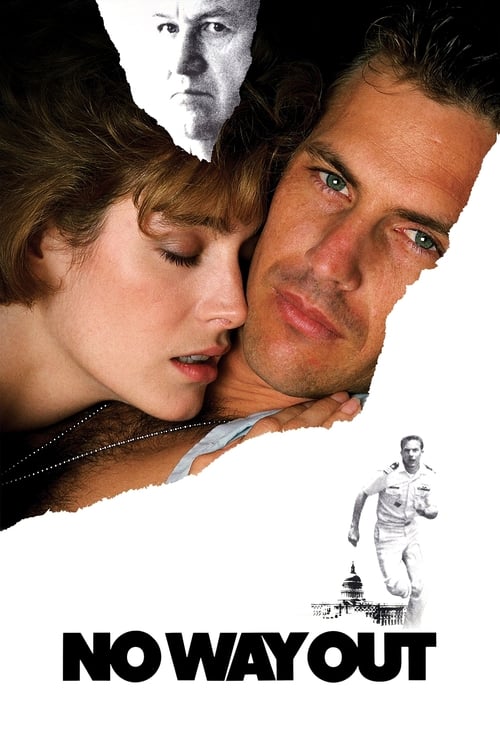
No Way Out - Review
No Way Out: A Cold War Thriller That Still Bites
In the annals of late 80s thrillers, Roger Donaldson's No Way Out stands as a particularly potent and memorable entry. Released in 1987, the film masterfully blends political intrigue, steamy romance, and a taut murder mystery, all set against the backdrop of Cold War paranoia in Washington D.C. What begins as a seemingly straightforward investigation quickly spirals into a labyrinthine conspiracy, forcing the protagonist to confront not only the machinations of the powerful but also the uncomfortable truths about himself. More than just a whodunit, No Way Out is a compelling exploration of power, betrayal, and the lengths to which individuals will go to protect their secrets. This review delves into the film's various facets, examining its plot, characters, direction, performances, and thematic resonance to determine why it continues to resonate with audiences decades later.
Plot: A Tangled Web of Deceit
The narrative of No Way Out kicks off with the introduction of Lieutenant Commander Tom Farrell (Kevin Costner), a decorated Navy officer handpicked to work directly for Secretary of Defense David Brice (Gene Hackman). Farrell is intelligent, ambitious, and seemingly incorruptible. However, his carefully constructed world begins to crumble when he embarks on a passionate affair with Susan Atwell (Sean Young), a beautiful and enigmatic woman. Unbeknownst to Farrell, Susan is also involved with Brice, adding a dangerous layer of complexity to the situation.
Tragedy strikes when Susan is murdered during a violent altercation with Brice. In a desperate attempt to cover up his involvement, Brice, aided by his loyal and ruthless Chief of Staff, Scott Pritchard (Will Patton), concocts a scheme to frame a fictitious "Soviet mole" for the crime. Farrell, due to his expertise and trusted position, is assigned to lead the investigation, tasked with tracking down this phantom spy. As Farrell delves deeper into the case, he uncovers a series of unsettling clues that point increasingly toward Brice. The tension escalates dramatically when evidence surfaces suggesting that Farrell himself might be the mole, making him both investigator and prime suspect.
The brilliance of the plot lies in its intricate layers and constant shifting of perspectives. Just when the audience thinks they have a grasp on the truth, another revelation throws everything into doubt. The ticking clock element, driven by the urgency to find the "mole" before the truth about Susan's murder is exposed, creates a palpable sense of suspense. The final twist, revealed in the film's closing moments, is a genuinely shocking and satisfying conclusion that recontextualizes everything that came before.
Characters: Moral Ambiguity and Hidden Depths
The characters in No Way Out are far from simple archetypes; they are complex individuals driven by ambition, desire, and self-preservation. This moral ambiguity adds a significant layer of depth to the narrative.
Tom Farrell (Kevin Costner)
Farrell is initially presented as the quintessential all-American hero – intelligent, dedicated, and patriotic. However, his affair with Susan reveals a vulnerability and a willingness to compromise his principles. As the investigation progresses, Farrell is forced to confront his own complicity in the events that have unfolded. Costner delivers a nuanced performance, portraying Farrell's internal struggle with conviction. He effectively conveys the character's growing desperation as he races against time to clear his name and expose the truth.
David Brice (Gene Hackman)
Hackman is masterful as David Brice, a powerful and charismatic Secretary of Defense who is ultimately consumed by his own ego and fear. Brice embodies the corrupting influence of power. He is willing to manipulate and even murder to protect his reputation and career. Hackman brings a chilling intensity to the role, conveying Brice's ruthless determination and underlying vulnerability. He doesn't portray Brice as a cartoonish villain, but as a flawed human being capable of monstrous acts.
Susan Atwell (Sean Young)
Susan Atwell is more than just a femme fatale; she is a complex and enigmatic figure caught between two powerful men. Young portrays Susan with a captivating blend of allure and vulnerability. While her motivations remain somewhat ambiguous, it is clear that she is a victim of circumstance, trapped in a dangerous game of power and manipulation. Her death serves as the catalyst for the entire plot, highlighting the destructive consequences of the characters' actions.
Scott Pritchard (Will Patton)
Pritchard is the quintessential loyal henchman, willing to do whatever it takes to protect his boss. Patton delivers a chilling performance as the cold and calculating Chief of Staff. He is the embodiment of bureaucratic evil, representing the insidious nature of unchecked power within the government. His unwavering loyalty to Brice, even in the face of overwhelming evidence, underscores the film's exploration of the dangers of blind obedience.
Direction and Cinematography: Building Tension and Atmosphere
Roger Donaldson's direction in No Way Out is masterful, creating a consistently tense and suspenseful atmosphere. He effectively utilizes visual cues and pacing to build anticipation and keep the audience on the edge of their seats. The film is meticulously crafted, with every shot carefully considered to enhance the narrative.
John Alcott's cinematography is equally impressive, capturing the sleek and sterile world of Washington D.C. with a sense of foreboding. The use of shadows and lighting creates a sense of paranoia and unease, reflecting the characters' internal turmoil. The film's visual style is both elegant and unsettling, perfectly complementing the themes of deception and betrayal. The editing, particularly in the suspenseful sequences, is sharp and precise, contributing to the film's overall sense of urgency.
Performances: A Stellar Ensemble Cast
The success of No Way Out is due in no small part to the exceptional performances of its ensemble cast. Kevin Costner delivers a career-defining performance as Tom Farrell, showcasing his range and charisma. Gene Hackman is equally brilliant as David Brice, embodying the corrupting influence of power with chilling precision. Sean Young is captivating as Susan Atwell, adding a layer of mystery and vulnerability to the role. Will Patton is unforgettable as Scott Pritchard, portraying the cold and calculating Chief of Staff with unsettling conviction.
The supporting cast, including Howard Duff as Senator Duvall and Iman as Nina Beka, also delivers strong performances, adding depth and texture to the film's narrative. The chemistry between the actors is palpable, enhancing the believability of the relationships and conflicts within the story.
Themes and Messages: Power, Betrayal, and Cold War Paranoia
No Way Out explores a number of complex themes, including the corrupting influence of power, the dangers of blind loyalty, and the pervasive paranoia of the Cold War era. The film suggests that power can corrupt even the most well-intentioned individuals, leading them to compromise their principles and engage in unethical behavior. The characters' actions are driven by a desire to protect their own interests, regardless of the consequences for others.
The film also examines the dangers of blind loyalty, highlighting the insidious nature of bureaucratic evil. Scott Pritchard's unwavering devotion to David Brice, even in the face of overwhelming evidence of his guilt, underscores the importance of critical thinking and independent judgment. The film suggests that unquestioning obedience can lead to disastrous consequences.
Furthermore, No Way Out reflects the pervasive paranoia of the Cold War era, where suspicion and mistrust were rampant. The film's plot, which revolves around the search for a "Soviet mole," taps into the anxieties of the time, highlighting the fear of infiltration and subversion. The film suggests that this paranoia can be easily manipulated by those in power to achieve their own goals.
Comparison to Similar Films and Previous Works
No Way Out shares thematic similarities with other political thrillers of the era, such as All the President's Men (1976) and Three Days of the Condor (1975). Like these films, No Way Out explores the dark underbelly of government and the lengths to which individuals will go to protect their secrets. However, No Way Out distinguishes itself with its emphasis on personal relationships and the psychological toll of betrayal.
Roger Donaldson's previous work, including Smash Palace (1981) and Marie (1985), demonstrates his skill in crafting suspenseful and character-driven narratives. No Way Out represents a significant step forward in his career, showcasing his ability to handle a larger budget and a more complex plot without sacrificing the emotional core of the story.
Kevin Costner's performance in No Way Out helped solidify his status as a leading man, paving the way for his later successes in films such as The Untouchables (1987) and Dances with Wolves (1990). Gene Hackman's portrayal of David Brice is reminiscent of his earlier roles as complex and morally ambiguous characters in films such as The French Connection (1971) and Unforgiven (1992).
Positive Aspects: A Masterful Thriller
No Way Out excels in several key areas:
- Intricate Plot: The film's plot is expertly crafted, with numerous twists and turns that keep the audience guessing until the very end.
- Compelling Characters: The characters are complex and morally ambiguous, adding depth and nuance to the narrative.
- Strong Performances: The ensemble cast delivers exceptional performances, bringing the characters to life with conviction and charisma.
- Suspenseful Direction: Roger Donaldson's direction is masterful, creating a consistently tense and suspenseful atmosphere.
- Thematic Resonance: The film explores important themes about power, betrayal, and the dangers of unchecked authority.
- Iconic Twist Ending: The film's ending is genuinely shocking and recontextualizes the entire narrative.
Constructive Criticism: Minor Imperfections
While No Way Out is a highly effective thriller, it is not without its minor flaws:
- Pacing Issues: The film's pacing can feel uneven at times, with certain scenes dragging on longer than necessary. While building tension is a good thing, some scenes could have been trimmed for a tighter overall experience.
- Susan Atwell's Character Development: While Sean Young delivers a strong performance, Susan Atwell's character could have been more fully developed. Her motivations and backstory remain somewhat ambiguous, making it difficult to fully empathize with her plight. More insight into her motivations could have elevated the emotional impact of her death.
- Reliance on Cold War Tropes: While the Cold War setting adds a layer of intrigue to the film, it also relies on some familiar tropes that may feel somewhat dated to modern audiences. The "Soviet mole" plot device, while effective, is a relatively common element in thrillers of this era.
Conclusion and Rating
No Way Out remains a highly effective and engaging thriller that continues to resonate with audiences decades after its release. The film's intricate plot, compelling characters, strong performances, and suspenseful direction make it a standout entry in the genre. While it has some minor flaws, such as pacing issues and underdeveloped characters, these are ultimately overshadowed by its many strengths.
No Way Out is a must-see for fans of political thrillers and anyone who appreciates a well-crafted and suspenseful story. It’s a film that stays with you long after the credits roll, prompting reflection on the nature of power, betrayal, and the choices we make in the face of adversity.
Final Rating: 9/10