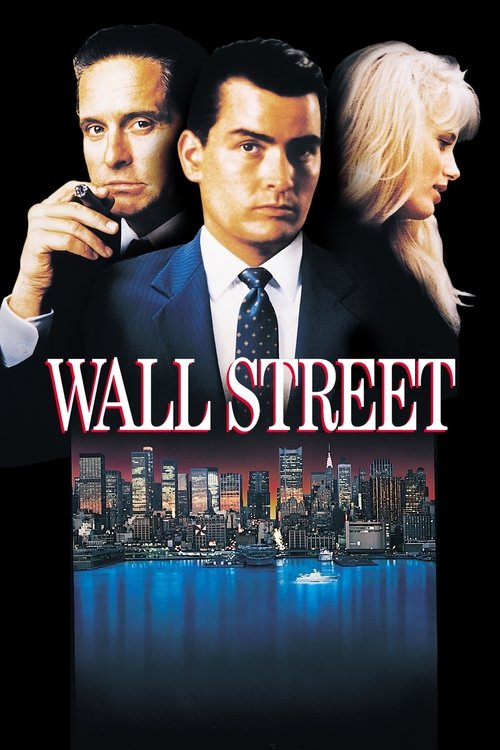
Wall Street - Review
Greed is Good? A Deep Dive into Oliver Stone's "Wall Street"
Oliver Stone's Wall Street, released in 1987, isn't just a film; it's a cultural touchstone, a cautionary tale etched in the neon-drenched landscape of 1980s excess. More than three decades later, its themes of ambition, greed, and the corrosive power of money remain startlingly relevant. But does the film hold up as a piece of cinema, or has its cultural impact overshadowed its artistic merit? Let's delve into the heart of "Wall Street" and see if Gordon Gekko's mantra of "greed is good" still resonates – and whether it should.
Plot: A Faustian Bargain on the Trading Floor
The story centers around Bud Fox (Charlie Sheen), a young, hungry, and ambitious stockbroker working at Jackson Steinem & Co., a second-tier brokerage firm. Bud is desperate to break into the big leagues, to escape the drudgery of cold-calling and small commissions. He idolizes Gordon Gekko (Michael Douglas), a legendary corporate raider known for his ruthless tactics and immense wealth. After relentless persistence, Bud finally gets Gekko's attention, offering him inside information about Bluestar Airlines, a company where Bud's father, Carl (Martin Sheen), is a union leader.
Gekko, intrigued by Bud's resourcefulness and willingness to bend the rules, takes him under his wing. Bud quickly becomes entangled in Gekko's web of illegal insider trading, reaping enormous financial rewards but sacrificing his moral compass in the process. He enjoys the trappings of wealth – a luxurious apartment, expensive suits, and a glamorous girlfriend, Darien Taylor (Daryl Hannah), who is herself drawn to Gekko's power and money.
As Bud's involvement deepens, he becomes increasingly conflicted. He witnesses firsthand the devastating consequences of Gekko's actions, including the dismantling of companies and the loss of jobs. His relationship with his father, a man of integrity and hard work, deteriorates as Carl disapproves of Bud's newfound wealth and questionable ethics. The turning point comes when Gekko plans to liquidate Bluestar Airlines, the very company Bud's father has dedicated his life to saving. This betrayal forces Bud to confront the consequences of his choices and ultimately decide whether to continue down the path of corruption or betray his mentor and expose Gekko's illegal activities.
Characters: Archetypes of Ambition and Corruption
Wall Street thrives on its memorable and archetypal characters, each representing a different facet of the world it portrays.
Gordon Gekko: The Embodiment of Greed
Gordon Gekko is the film's undisputed star, a magnetic and charismatic villain who embodies the unbridled ambition and moral bankruptcy of the 1980s. Michael Douglas delivers a career-defining performance, imbuing Gekko with a chilling charm and an unsettling sense of conviction. His infamous "greed is good" speech is a masterclass in rhetoric, justifying his ruthless pursuit of wealth as a driving force for economic progress. Gekko is a predator, a master manipulator who sees people as pawns in his game of profit. He is not merely motivated by money; he is driven by a desire for power and control, a need to dominate and conquer. Douglas's portrayal earned him an Academy Award for Best Actor, solidifying Gekko's place as one of cinema's most iconic antagonists.
Bud Fox: The Naive Protagonist
Bud Fox is the film's moral center, a young man seduced by the allure of wealth and power. He is initially portrayed as ambitious and hardworking, but his desire to succeed quickly blinds him to the ethical implications of his actions. Charlie Sheen delivers a solid performance, capturing Bud's naiveté and vulnerability as he is drawn into Gekko's orbit. Bud's journey is one of moral awakening, as he gradually realizes the destructive consequences of his choices and ultimately chooses to redeem himself. While some critics have argued that Sheen's performance is overshadowed by Douglas's, it is important to remember that Bud is intended to be a relatively ordinary individual, a blank slate upon which Gekko's influence is imprinted.
Carl Fox: The Voice of Integrity
Carl Fox, Bud's father, represents the antithesis of Gekko's values. He is a hardworking, honest union leader who believes in loyalty and integrity. Martin Sheen delivers a powerful performance as a man struggling to understand his son's choices and maintain his own moral compass in a world increasingly driven by greed. Carl serves as a constant reminder of the human cost of Gekko's actions, highlighting the devastating impact of corporate greed on ordinary working people. He is the film's moral compass, a beacon of hope in a sea of corruption.
Darien Taylor: The Trophy Wife
Darien Taylor is a complex and often overlooked character. She represents the superficiality and materialism of the 1980s, a woman who is drawn to Gekko's wealth and power but ultimately lacks any genuine connection to him. Daryl Hannah's performance is understated but effective, capturing Darien's vulnerability and her ultimate disillusionment with the world of high finance. She is a symbol of the emptiness that lies beneath the surface of wealth and success. While her character could have been developed further, Darien serves as a cautionary tale about the dangers of chasing superficial validation.
Direction and Cinematography: Capturing the Excess of the 80s
Oliver Stone's direction is energetic and stylized, reflecting the frenetic pace and moral ambiguity of the world he portrays. He uses dynamic camera movements, rapid editing, and a pulsating soundtrack to create a sense of urgency and excitement, drawing the viewer into the world of Wall Street. The film's visual style is heavily influenced by the aesthetics of the 1980s, with its sharp suits, power ties, and slicked-back hair.
The cinematography, by Robert Richardson, is equally impressive, capturing the glitz and glamour of Wall Street while also highlighting its underlying darkness. The film uses a variety of techniques to create a sense of unease and tension, including close-ups, low-angle shots, and chiaroscuro lighting. The contrast between the bright, opulent interiors of Gekko's office and the grimy, industrial landscapes of Bluestar Airlines underscores the disparity between the haves and have-nots, highlighting the human cost of corporate greed. The nighttime shots of the city, glittering with lights, further emphasize the allure and danger of the financial world.
Performances: A Masterclass in Acting
The performances in Wall Street are uniformly excellent, with Michael Douglas leading the way with his unforgettable portrayal of Gordon Gekko. Charlie Sheen delivers a convincing performance as Bud Fox, capturing his ambition, naiveté, and eventual moral awakening. Martin Sheen is equally impressive as Carl Fox, the film's moral compass. The supporting cast, including Daryl Hannah, James Spader, and Terence Stamp, also delivers strong performances, adding depth and nuance to the film's world. The chemistry between Douglas and Sheen is particularly effective, creating a dynamic and engaging relationship between mentor and protégé.
Themes and Messages: A Cautionary Tale for the Ages
Wall Street is a film rich in themes and messages, exploring the corrosive effects of greed, the dangers of unchecked ambition, and the importance of ethical conduct. The film is a cautionary tale about the seductive power of money and the moral compromises people make in pursuit of wealth. It also examines the relationship between fathers and sons, the importance of loyalty and integrity, and the responsibility of individuals to act ethically in the face of temptation.
The film's central theme is, of course, greed. Gekko's "greed is good" speech is not simply a justification for his own actions; it is a reflection of the broader cultural values of the 1980s, a period of rampant consumerism and deregulation. The film argues that unchecked greed can lead to corruption, exploitation, and ultimately, the destruction of individuals and institutions. It suggests that true success is not measured by wealth but by integrity and ethical conduct.
Another important theme is the relationship between fathers and sons. Bud's relationship with his father, Carl, is a central conflict in the film, representing the clash between old-fashioned values and the new, ruthless world of Wall Street. Carl embodies integrity and hard work, while Bud is seduced by the allure of quick riches. The film suggests that the values of one generation are often challenged by the next, and that the pursuit of wealth can come at the expense of family and tradition.
Comparison to Other Films and Works
Wall Street can be compared to other films that explore themes of ambition, corruption, and the dark side of capitalism. For example, Citizen Kane (1941) explores the corrupting influence of power, while The Wolf of Wall Street (2013), directed by Martin Scorsese, offers a more satirical and over-the-top portrayal of financial excess. Boiler Room (2000) also shares similarities, focusing on the high-pressure, ethically questionable world of a brokerage firm.
In terms of Oliver Stone's other works, Wall Street shares thematic similarities with films like Platoon (1986) and Born on the Fourth of July (1989), which explore the moral complexities of war and the disillusionment of the American dream. Stone often uses his films to critique American society and expose its flaws, and Wall Street is no exception. He revisited the character of Gordon Gekko in the 2010 sequel, Wall Street: Money Never Sleeps, which explores the aftermath of the 2008 financial crisis.
Positive Aspects
Wall Street is a compelling and thought-provoking film that offers a scathing critique of greed and corruption. Its strengths include:
- Michael Douglas's unforgettable performance as Gordon Gekko: He embodies the charisma and ruthlessness of a corporate raider.
- Oliver Stone's dynamic direction: The film's visual style is energetic and engaging, capturing the frenetic pace of Wall Street.
- The film's timely and relevant themes: The dangers of unchecked ambition and the importance of ethical conduct remain resonant today.
- The strong supporting performances: Charlie Sheen and Martin Sheen deliver compelling performances as Bud and Carl Fox.
- The film's cultural impact: Wall Street has become a cultural touchstone, influencing the way we think about finance and greed.
Constructive Criticism
While Wall Street is a powerful and influential film, it is not without its flaws:
- Bud Fox's character arc can feel somewhat underdeveloped: His transformation from ambitious young broker to moral crusader is not always entirely convincing.
- Darien Taylor's character could have been explored in more depth: She is often relegated to the role of a trophy wife, lacking agency and depth.
- The film's ending can feel somewhat simplistic and morally pat: The resolution of the conflict is perhaps too neat and tidy.
- The film's portrayal of women is somewhat limited: Darien is the only significant female character, and she is largely defined by her relationships with men.
Conclusion and Rating
Wall Street remains a powerful and relevant film, a cautionary tale about the dangers of greed and the importance of ethical conduct. While it may have some minor flaws, its strengths far outweigh its weaknesses. Michael Douglas's iconic performance as Gordon Gekko, Oliver Stone's dynamic direction, and the film's timeless themes make it a must-see for anyone interested in finance, politics, or the human condition. The film's impact on popular culture is undeniable, and its message continues to resonate today. Despite some dated aspects, "Wall Street" retains its power to provoke and entertain.
Rating: 9/10