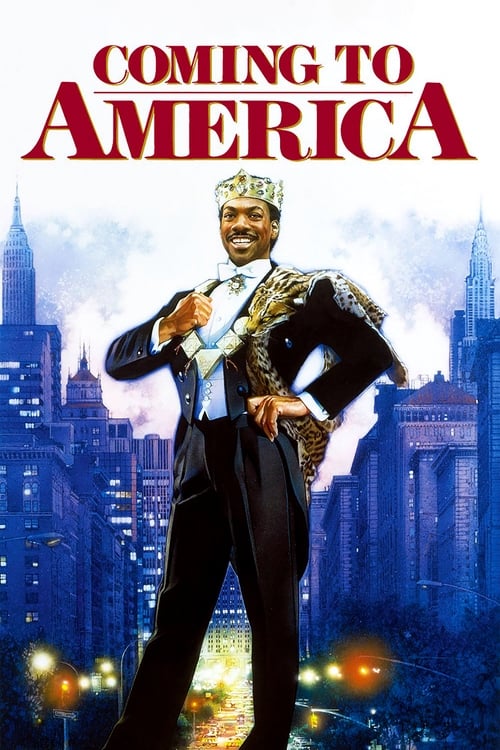
Coming to America - Review
Coming to America: A Royal Flush of Comedy and Heart
Imagine a world where your every whim is catered to, where rose petals pave your path, and even your morning bath is personally scrubbed by a bevy of beautiful women. Sounds idyllic, right? Now imagine wanting none of it. That's the delightful predicament facing Prince Akeem Joffer of Zamunda in John Landis's 1988 comedic masterpiece, Coming to America. More than just a fish-out-of-water story, it's a hilarious and surprisingly insightful exploration of identity, love, and the pursuit of genuine connection. Released on June 29, 1988, the film quickly became a cultural phenomenon, cementing Eddie Murphy's status as a comedic titan and leaving an indelible mark on popular culture. But does this royal comedy still reign supreme after all these years? Let's delve into the heart of Zamunda and see if Coming to America still delivers a comedic coup.
Plot: From Zamunda to Queens – A Prince's Quest for True Love
The plot of Coming to America is deceptively simple, a classic fairytale flipped on its head. Prince Akeem (Eddie Murphy), a wealthy and sheltered prince from the fictional African nation of Zamunda, is tired of being treated like royalty and having a pre-arranged marriage forced upon him. He desires a woman who loves him for who he is, not for his title or wealth. To find her, he decides to travel to America, specifically Queens, New York, believing it to be the perfect place to blend in and find a woman who will see him for his character.
Accompanied by his loyal and slightly reluctant friend, Semmi (Arsenio Hall), Akeem disguises himself as a poor student and takes a low-paying job at a McDowell's restaurant (a not-so-subtle parody of McDonald's). He soon falls for Lisa McDowell (Shari Headley), the intelligent and independent daughter of the restaurant owner, Cleo McDowell (John Amos). However, Akeem's true identity remains a secret, leading to a series of comedic misunderstandings and romantic complications.
The beauty of the plot lies in its clever blend of fairytale tropes and social commentary. The "poor prince" trope is used effectively to highlight the superficiality of wealth and status, while the contrast between the opulence of Zamunda and the grit of Queens provides ample opportunities for comedic juxtaposition. The subplot involving Semmi's inability to adapt to their impoverished lifestyle and his constant attempts to live lavishly adds another layer of humor to the narrative.
Characters: A Royal Cast of Comedic Characters
Coming to America boasts a cast of memorable and well-developed characters, each contributing to the film's overall comedic success. Eddie Murphy shines as Prince Akeem, portraying him as both charmingly naive and genuinely sincere. He effectively conveys Akeem's desire for authenticity and his struggle to reconcile his privileged background with his newfound desire for a simpler life. Arsenio Hall is equally brilliant as Semmi, providing a perfect foil to Akeem's earnestness. Semmi's flamboyant personality and his constant yearning for luxury create some of the film's funniest moments.
Shari Headley delivers a strong performance as Lisa McDowell, portraying her as an intelligent and independent woman with her own ambitions and desires. She is not simply a damsel in distress waiting to be rescued; she is a strong-willed character who challenges Akeem's preconceived notions about women. John Amos is hilarious as Cleo McDowell, the hardworking and somewhat clueless owner of McDowell's. His unwavering belief in his own fast-food empire and his constant comparisons to McDonald's provide some of the film's most memorable comedic moments.
Beyond the main characters, Coming to America is filled with a plethora of supporting characters who add to the film's richness and humor. Eddie Murphy and Arsenio Hall both showcase their incredible comedic range by playing multiple roles, including the barbers at Clarence's barbershop, the elderly Jewish men in the park, and the Reverend Brown. These characters are not just throwaway gags; they are fully realized individuals with their own distinct personalities and quirks, contributing to the film's overall sense of realism and authenticity.
One of the most genius aspects of the character development is the subtle subversion of stereotypes. While the film does rely on some broad comedic strokes, it also presents characters with depth and nuance. Lisa, for example, is not just a pretty face; she is a driven woman with political aspirations. McDowell is not simply a greedy businessman; he is a loving father who wants the best for his daughter. This complexity elevates the characters beyond simple caricatures and makes them more relatable and believable.
Direction: John Landis's Comedic Vision
John Landis, known for his comedic sensibilities and his ability to blend humor with social commentary, directs Coming to America with a steady hand. He masterfully balances the film's comedic and romantic elements, creating a film that is both laugh-out-loud funny and genuinely heartwarming. Landis's direction is characterized by his use of physical comedy, witty dialogue, and a keen eye for visual detail. He effectively captures the vibrant energy of Queens, New York, and the opulent extravagance of Zamunda, creating a visually stunning and immersive experience for the viewer.
Landis's experience with ensemble casts is evident in his ability to seamlessly integrate the various characters and storylines. He allows each actor to shine, giving them ample opportunity to showcase their comedic talents. He also effectively uses music to enhance the film's emotional impact, incorporating both African-inspired melodies and classic soul tracks to create a rich and diverse soundtrack.
However, Landis's direction is not without its flaws. Some critics have argued that the film relies too heavily on stereotypes and that its humor can be occasionally broad and insensitive. While these criticisms are valid to some extent, it's important to remember that Coming to America is a comedy, and its primary goal is to entertain. Landis's direction, while not always perfect, ultimately succeeds in creating a film that is both funny and thought-provoking.
Cinematography: A Visual Feast of Contrasts
The cinematography in Coming to America, helmed by Woody Omens, is visually striking and effectively captures the contrast between the opulent world of Zamunda and the gritty reality of Queens. The film utilizes vibrant colors and sweeping camera movements to showcase the grandeur of the Zamundan palace, while employing a more grounded and realistic style to depict the streets of New York. This visual dichotomy effectively underscores the film's themes of cultural difference and the search for authenticity.
The use of lighting is particularly effective in creating mood and atmosphere. The warm, golden light of Zamunda evokes a sense of luxury and tradition, while the harsher, more artificial light of Queens reflects the city's frenetic energy and urban decay. The film also utilizes a variety of camera angles and perspectives to create a dynamic and engaging visual experience.
The costume design is another standout aspect of the film's visual presentation. Ruth E. Carter's designs are both authentic and visually stunning, effectively capturing the cultural richness of Zamunda and the diverse fashion trends of New York City. The costumes worn by Prince Akeem and Semmi undergo a significant transformation throughout the film, reflecting their changing circumstances and their growing understanding of American culture.
Performances: Eddie Murphy and Arsenio Hall at Their Peak
The performances in Coming to America are nothing short of stellar. Eddie Murphy delivers one of the best performances of his career as Prince Akeem, seamlessly blending comedic timing with genuine emotional depth. He convincingly portrays Akeem's naivety and his growing awareness of the world outside of Zamunda. His physical comedy is impeccable, and his ability to inhabit multiple characters is truly remarkable. Arsenio Hall is equally brilliant as Semmi, providing a perfect comedic foil to Murphy's Akeem. His flamboyant personality and his impeccable comedic timing make him an indispensable part of the film's success.
Shari Headley delivers a strong and nuanced performance as Lisa McDowell, portraying her as an intelligent and independent woman with her own dreams and aspirations. She effectively conveys Lisa's skepticism towards Akeem's intentions and her growing affection for him. John Amos is hilarious as Cleo McDowell, bringing a comedic energy to the role that is both endearing and memorable.
The supporting cast is equally impressive, with Louie Anderson delivering a memorable performance as Maurice, McDowell's loyal and slightly dimwitted employee. Samuel L. Jackson also makes a brief but impactful appearance as a robber at McDowell's, showcasing his trademark intensity and charisma. The chemistry between the actors is palpable, creating a sense of authenticity and camaraderie that enhances the film's overall appeal.
Themes and Messages: More Than Just a Comedy
While Coming to America is primarily a comedy, it also explores a number of important themes and messages. At its core, the film is a story about the search for identity and the importance of authenticity. Prince Akeem's journey to America is not just a quest for love; it is also a quest to discover who he truly is outside of his royal title and his privileged upbringing.
The film also explores the themes of cultural difference and the challenges of adapting to a new environment. Akeem and Semmi's experiences in Queens highlight the stark contrast between the opulence of Zamunda and the gritty reality of urban America. The film also touches on issues of class and social inequality, depicting the struggles of working-class Americans and the challenges they face in pursuing their dreams.
Another important theme explored in the film is the importance of genuine connection and the superficiality of wealth and status. Akeem's desire for a woman who loves him for who he is, not for his money or his title, underscores the film's message that true happiness comes from meaningful relationships and authentic connections.
The film's portrayal of African culture, while sometimes exaggerated for comedic effect, also serves to celebrate the richness and diversity of African traditions. The scenes set in Zamunda showcase the vibrant colors, music, and customs of African culture, challenging Western stereotypes and promoting cross-cultural understanding.
Comparison to Other Films: A Royal Precedent
Coming to America can be compared to other fish-out-of-water comedies, such as Crocodile Dundee or Beverly Hills Cop, which also feature protagonists who are thrust into unfamiliar environments and forced to adapt to new cultures. However, Coming to America distinguishes itself through its unique blend of fairytale tropes, social commentary, and its focus on the search for identity and authenticity.
In terms of John Landis's filmography, Coming to America shares similarities with his earlier comedies, such as Animal House and The Blues Brothers, in its use of physical comedy, witty dialogue, and its ensemble cast. However, Coming to America is arguably more sentimental and heartwarming than Landis's earlier works, reflecting a shift in his directorial style.
The film also paved the way for other comedies that explore themes of cultural difference and the immigrant experience, such as My Big Fat Greek Wedding and Bend It Like Beckham. Coming to America's success demonstrated that audiences were receptive to stories that celebrate diversity and challenge cultural stereotypes.
Positive Aspects: A Comedic Crown Jewel
Coming to America is a comedic masterpiece that continues to entertain and delight audiences of all ages. Its strengths lie in its clever plot, its memorable characters, its stellar performances, and its insightful exploration of important themes. The film's humor is both broad and sophisticated, appealing to a wide range of viewers. The performances of Eddie Murphy and Arsenio Hall are particularly noteworthy, showcasing their incredible comedic range and their undeniable chemistry. The film's visual presentation is also impressive, effectively capturing the contrast between the opulence of Zamunda and the grit of Queens.
The film's enduring popularity is a testament to its timeless appeal and its ability to resonate with audiences on a deep emotional level. Coming to America is more than just a comedy; it is a story about the search for identity, the importance of genuine connection, and the power of love to transcend cultural boundaries.
Constructive Criticism: A Few Scratches on the Crown
While Coming to America is a highly enjoyable film, it is not without its flaws. Some critics have argued that the film relies too heavily on stereotypes and that its humor can be occasionally broad and insensitive. The film's portrayal of African culture, while celebratory in some respects, can also be seen as somewhat exaggerated and stereotypical. Additionally, the film's romantic subplot can feel somewhat predictable and formulaic at times.
Another criticism of the film is its length. At over two hours, Coming to America can feel somewhat long and drawn out at times. Some scenes could have been trimmed or cut altogether without significantly impacting the overall narrative. Despite these criticisms, Coming to America remains a highly entertaining and influential film that continues to be enjoyed by audiences around the world.
Conclusion and Rating
Coming to America is a timeless comedic classic that continues to resonate with audiences decades after its initial release. Its clever plot, memorable characters, stellar performances, and insightful exploration of important themes make it a truly special film. While it's not without its flaws, the film's strengths far outweigh its weaknesses. Eddie Murphy and Arsenio Hall are at the peak of their comedic powers, and John Landis directs with a steady hand, balancing humor and heart with remarkable skill.
For its enduring comedic brilliance, its cultural impact, and its surprisingly insightful exploration of identity and love, Coming to America earns a well-deserved rating of: