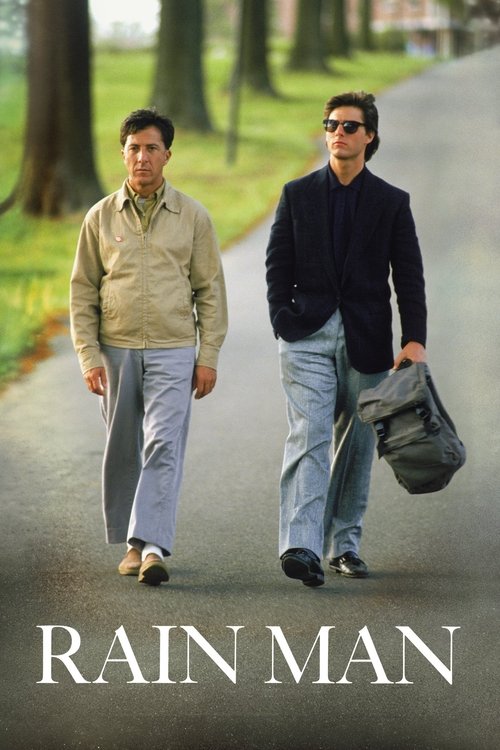
Rain Man - Review
Rain Man: A Journey of Connection and Understanding
In a cinematic landscape often dominated by explosions and fantastical narratives, Rain Man, released in 1988, offers a refreshing and profoundly moving exploration of human connection, acceptance, and the transformative power of understanding. Directed by Barry Levinson and starring Dustin Hoffman and Tom Cruise, the film transcends the boundaries of a simple road trip movie, delving into the complexities of autism, familial relationships, and the enduring search for meaning. More than just a drama, Rain Man is a poignant reminder of the beauty and potential that lies within us all, even those who perceive the world through a different lens.
Plot Analysis: A Road to Redemption and Recognition
The narrative centers around Charlie Babbitt (Tom Cruise), a self-centered and financially strapped car dealer whose world is turned upside down by the death of his estranged father. Expecting to inherit a considerable sum, Charlie is shocked to discover that his father's entire $3 million fortune has been bequeathed to a mental institution. Driven by greed and a sense of entitlement, he tracks down the recipient: his autistic older brother, Raymond (Dustin Hoffman), whom he never knew existed. Raymond, a savant with an exceptional memory and an unwavering adherence to routine, lives a regimented life within the institution's walls.
Seeing Raymond as a potential means to an end, Charlie impulsively checks him out of the institution, intending to manipulate him into signing over the inheritance. However, Raymond's unique needs and behaviors quickly become a source of frustration for Charlie. Raymond's meticulous routines, phobias, and inability to comprehend social norms create numerous challenges during their cross-country journey from Cincinnati to Los Angeles.
As they travel, Charlie is forced to confront his own selfishness and immaturity. He begins to see Raymond not just as a pawn in his financial scheme, but as a complex individual with his own distinct personality and capabilities. The film masterfully depicts the gradual evolution of their relationship, moving from resentment and exploitation to genuine affection and understanding. The road trip becomes a catalyst for Charlie's personal growth, forcing him to confront his past and re-evaluate his priorities.
The plot is not without its criticisms. Some argue that the initial premise of Charlie's greed feels somewhat contrived, and that his sudden transformation from ruthless businessman to caring brother is a bit too convenient. However, the strength of the performances and the emotional resonance of the story largely overshadow these minor flaws.
Character Development: Portraits of Transformation and Acceptance
Charlie Babbitt: From Selfishness to Empathy
Tom Cruise delivers a compelling performance as Charlie Babbitt, a character initially defined by his ambition, arrogance, and lack of empathy. He is a man driven by material possessions and a desire for success, seemingly incapable of forming genuine connections. As the film progresses, however, Charlie undergoes a significant transformation. He learns to be patient, understanding, and ultimately, to love his brother. Cruise effectively portrays the character's internal struggle as he grapples with his own flaws and gradually develops a sense of responsibility and compassion.
Raymond Babbitt: A Window into a Different World
Dustin Hoffman's portrayal of Raymond Babbitt is nothing short of iconic. He embodies the character with remarkable authenticity, capturing the nuances of autism with sensitivity and respect. Hoffman avoids caricature, instead presenting Raymond as a fully realized individual with his own unique strengths and vulnerabilities. He meticulously researched the condition, spending time with autistic individuals and their families to ensure an accurate and respectful portrayal. Raymond's unwavering routines, echolalia, and savant abilities are presented not as mere quirks, but as integral aspects of his identity. Through Hoffman's performance, the audience gains a deeper understanding and appreciation for the complexities of autism.
Susanna: The Voice of Reason and Compassion
Valeria Golino plays Susanna, Charlie's girlfriend, who serves as a voice of reason and compassion throughout the film. She provides a counterpoint to Charlie's initial selfishness, offering him support and guidance as he navigates his relationship with Raymond. Susanna's patience and understanding are instrumental in helping Charlie to see Raymond as a person, rather than just a means to an end. While her role is somewhat limited, Golino delivers a nuanced performance that adds depth and warmth to the story.
Direction and Cinematography: Capturing the Essence of Connection
Barry Levinson's direction is masterful in its subtlety and restraint. He avoids sensationalizing Raymond's autism, instead focusing on the human drama and the evolving relationship between the two brothers. Levinson allows the story to unfold organically, allowing the characters to drive the narrative. His direction is characterized by a keen attention to detail and a commitment to authenticity.
John Seale's cinematography is equally impressive, capturing the vastness of the American landscape and the intimacy of the characters' interactions. The film's visuals are both beautiful and understated, reflecting the emotional tone of the story. Seale effectively uses light and shadow to create a sense of atmosphere and to highlight the characters' internal states. The road trip sequences are particularly well-shot, capturing the sense of freedom and discovery that accompanies their journey.
The film's pacing is deliberate, allowing the audience to fully immerse themselves in the characters' experiences. While some viewers may find the pacing slow at times, it is essential to the film's overall impact. The deliberate pace allows for the development of the characters' relationships and for the exploration of the film's themes.
Performances: A Masterclass in Acting
The performances in Rain Man are universally praised, and for good reason. Dustin Hoffman's portrayal of Raymond Babbitt is widely considered to be one of the greatest performances in cinematic history. He won the Academy Award for Best Actor for his role, and his performance has had a lasting impact on the public's understanding of autism. Tom Cruise also delivers a career-defining performance as Charlie Babbitt, showcasing his range as an actor and demonstrating his ability to portray complex and flawed characters. Valeria Golino provides a strong supporting performance as Susanna, adding depth and warmth to the story. The chemistry between Hoffman and Cruise is palpable, and their interactions are both believable and emotionally resonant.
Themes and Messages: Exploring Empathy, Acceptance, and the Meaning of Family
Rain Man explores a number of important themes, including:
- Empathy and Understanding: The film encourages viewers to look beyond superficial differences and to cultivate empathy for those who perceive the world differently. It challenges us to question our assumptions and to embrace diversity.
- Acceptance: The film promotes acceptance of individuals with disabilities and highlights the importance of providing them with the support and resources they need to thrive.
- The Meaning of Family: Rain Man demonstrates that family is not just about blood ties, but about connection, understanding, and mutual support. It shows that even the most strained relationships can be healed through compassion and forgiveness.
- Personal Growth: Charlie's journey is one of personal growth and transformation. He learns to overcome his selfishness and to embrace his responsibility as a brother.
- The Value of Human Connection: In a world often characterized by isolation and alienation, Rain Man reminds us of the importance of human connection and the power of relationships to enrich our lives.
The film's message is ultimately one of hope and optimism. It suggests that even in the face of adversity, it is possible to find connection, understanding, and meaning. Rain Man is a testament to the resilience of the human spirit and the transformative power of love.
Comparison to Other Films and Works: A Legacy of Impact
Rain Man can be compared to other films that explore themes of disability, family relationships, and personal growth. Films like "Forrest Gump" (1994) and "I Am Sam" (2001) also feature protagonists with cognitive differences, but Rain Man stands out for its realistic and nuanced portrayal of autism. Unlike some other films that romanticize or sentimentalize disability, Rain Man presents a more grounded and authentic perspective.
In terms of Barry Levinson's filmography, Rain Man is arguably his most acclaimed and enduring work. It shares some thematic similarities with his earlier films, such as "Diner" (1982) and "The Natural" (1984), which also explore themes of friendship, family, and the search for meaning. However, Rain Man is a more mature and ambitious film than his previous works, showcasing his growth as a director.
Dustin Hoffman's performance in Rain Man can be compared to his other iconic roles, such as his portrayal of Benjamin Braddock in "The Graduate" (1967) and his role as Ratso Rizzo in "Midnight Cowboy" (1969). In each of these roles, Hoffman demonstrates his ability to embody complex and unconventional characters with remarkable authenticity. Tom Cruise's performance in Rain Man marked a turning point in his career, demonstrating his ability to tackle more challenging and dramatic roles. It paved the way for his later successes in films like "A Few Good Men" (1992) and "Jerry Maguire" (1996).
Positive Aspects and Constructive Criticism: Balancing Acclaim and Analysis
Positive Aspects:
- Exceptional Performances: Dustin Hoffman and Tom Cruise deliver career-defining performances that are both believable and emotionally resonant.
- Sensitive and Respectful Portrayal of Autism: The film avoids sensationalizing or romanticizing autism, instead presenting a realistic and nuanced perspective.
- Compelling Story: The narrative is engaging and emotionally moving, exploring themes of empathy, acceptance, and the meaning of family.
- Masterful Direction: Barry Levinson's direction is subtle and restrained, allowing the story to unfold organically.
- Beautiful Cinematography: John Seale's cinematography captures the vastness of the American landscape and the intimacy of the characters' interactions.
Constructive Criticism:
- Pacing: The film's deliberate pacing may not appeal to all viewers. Some may find it slow at times.
- Charlie's Transformation: Charlie's sudden transformation from ruthless businessman to caring brother may feel somewhat contrived to some viewers.
- Susanna's Role: Susanna's role is somewhat limited, and her character could have been developed further.
- Simplification of Autism: While generally respectful, some argue that the film simplifies the complexities of autism for the sake of narrative.
Conclusion and Rating
Rain Man is a powerful and moving film that explores the complexities of human connection, acceptance, and the transformative power of understanding. The film's exceptional performances, sensitive portrayal of autism, and compelling story make it a truly unforgettable cinematic experience. While the pacing may be slow for some viewers, and Charlie's transformation may feel somewhat contrived, these minor flaws are overshadowed by the film's overall impact. Rain Man is a testament to the resilience of the human spirit and the importance of empathy and compassion.
Rating: 9.5/10