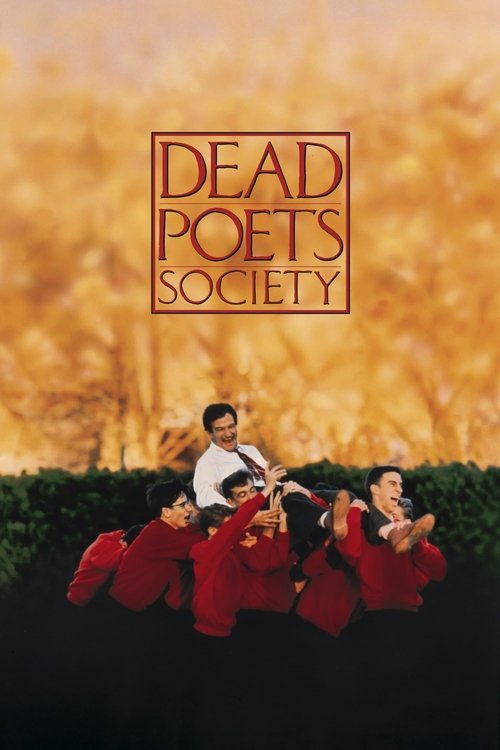
Dead Poets Society - Review
"Dead Poets Society": A Timeless Ode to Individuality and the Perils of Conformity
Dead Poets Society, released in 1989, isn't just a film; it's a cultural touchstone. It’s a cinematic poem, a passionate cry for individuality in a world that often demands conformity. Directed by Peter Weir and starring the late, great Robin Williams, this coming-of-age drama continues to resonate with audiences decades later, stirring within them a desire to "seize the day" and live lives of purpose and passion. But does the film's enduring popularity truly reflect its artistic merit, or is it simply a victim of its own sentimental success? This review delves deep into the heart of Dead Poets Society, exploring its narrative strengths, its powerful performances, and its complex themes, while also acknowledging its occasional missteps.
Plot Summary and Analysis
The film unfolds at Welton Academy, a prestigious and tradition-bound boarding school in Vermont. We are introduced to a new academic year and a group of bright, albeit repressed, young men. Their lives are predictable, their futures seemingly predetermined by the expectations of their parents and the school. Enter John Keating (Robin Williams), the new English teacher, an alumnus of Welton himself, who challenges everything they thought they knew about education, life, and themselves. Keating, with his unconventional teaching methods – standing on desks, tearing pages from textbooks, and quoting poetry with fervor – ignites a spark of rebellion and self-discovery within his students.
Keating reintroduces the boys to the "Dead Poets Society," a clandestine group he belonged to during his time at Welton. They revive the society, meeting in a secluded cave to read poetry, share their dreams, and explore their identities. This newfound freedom, however, comes at a price. The boys begin to question authority, challenge expectations, and pursue their passions, often in direct conflict with their parents and the rigid structure of Welton. The narrative tension builds as the boys grapple with the consequences of their choices, culminating in a tragic event that forces them to confront the harsh realities of the world and the limitations of their newfound freedom.
The plot, while relatively straightforward, is effective in its simplicity. It provides a clear framework for exploring the film's central themes. However, some critics argue that the narrative is somewhat predictable and relies on familiar coming-of-age tropes. The tragic ending, while emotionally impactful, can feel somewhat contrived, serving more as a dramatic device to highlight the consequences of nonconformity than a natural outgrowth of the characters' actions.
Character Development and Performances
The strength of Dead Poets Society lies in its compelling characters and the outstanding performances that bring them to life.
John Keating (Robin Williams)
Robin Williams delivers a career-defining performance as John Keating. He is charismatic, inspiring, and genuinely believes in the power of poetry and the importance of living a meaningful life. Williams masterfully balances the character's idealism with a subtle undercurrent of vulnerability, hinting at the personal sacrifices he has made to maintain his unconventional approach. Keating is not without flaws; his methods are sometimes reckless, and he arguably fails to adequately prepare his students for the potential repercussions of their actions. However, his passion and genuine care for his students are undeniable, making him a truly unforgettable character.
Neil Perry (Robert Sean Leonard)
Neil Perry is the quintessential "good boy" – obedient, intelligent, and burdened by the overwhelming expectations of his domineering father. Robert Sean Leonard portrays Neil's internal struggle with heartbreaking sensitivity. His desire to pursue his passion for acting is stifled by his father's rigid plans for him to become a doctor. Neil's tragic fate serves as the film's most potent example of the devastating consequences of suppressing one's true self.
Todd Anderson (Ethan Hawke)
Todd Anderson is the shy, introverted newcomer who initially struggles to find his voice. Ethan Hawke delivers a nuanced performance as Todd, capturing his awkwardness and his gradual transformation under Keating's influence. Todd's journey from a timid observer to a courageous individual who stands up for what he believes in is one of the film's most rewarding character arcs.
Knox Overstreet (Josh Charles)
Knox Overstreet represents the romantic idealist, driven by a passionate desire for love. Josh Charles portrays Knox's infatuation with Chris Noel with a charming awkwardness, highlighting the challenges of expressing genuine emotion in a repressed environment.
Charlie Dalton (Gale Hansen)
Charlie Dalton, also known as "Nuwanda," is the rebellious and impulsive member of the group. Gale Hansen brings a mischievous energy to the role, embodying the spirit of youthful defiance. While his actions are often reckless, Charlie's unwavering commitment to individuality makes him a compelling and ultimately tragic figure.
The supporting cast, including Dylan Kussman as Richard Cameron and Allelon Ruggiero as Steven Meeks, also contribute to the film's overall success. Each character is distinct and memorable, adding depth and texture to the narrative.
However, the film has been criticized for its somewhat simplistic portrayal of the adult characters, particularly the parents and headmaster Mr. Nolan (Norman Lloyd). They are often depicted as one-dimensional authority figures, representing the stifling forces of tradition and conformity. While this serves to highlight the contrast between the older and younger generations, it lacks the nuance and complexity that could have made their perspectives more compelling.
Direction and Cinematography
Peter Weir's direction is masterful, creating a visually stunning and emotionally resonant film. He effectively utilizes the setting of Welton Academy to create a sense of both beauty and claustrophobia. The sweeping landscapes of Vermont contrast sharply with the dark, wood-paneled interiors of the school, reflecting the tension between the students' desire for freedom and the restrictive environment they inhabit.
John Seale's cinematography is equally impressive. He uses light and shadow to create a sense of atmosphere and to emphasize the emotional states of the characters. The scenes in the cave, where the Dead Poets Society meets, are particularly evocative, bathed in soft, flickering light that creates a sense of intimacy and secrecy.
Weir's use of symbolism is also noteworthy. The recurring motif of poetry serves as a metaphor for self-expression and the pursuit of truth. The images of birds and open spaces represent the students' yearning for freedom. The film's visual language is rich and layered, adding depth and meaning to the narrative.
Themes and Messages
Dead Poets Society explores a multitude of complex themes, including:
Individuality vs. Conformity
This is the central theme of the film. Keating's teachings encourage his students to reject societal expectations and embrace their own unique identities. The film argues that true fulfillment comes from pursuing one's passions and living authentically, even if it means going against the grain.
The Power of Education
The film celebrates the transformative power of education. Keating's unconventional methods inspire his students to think critically, question authority, and discover their own voices. He demonstrates that education is not merely about memorizing facts but about fostering creativity, imagination, and a love of learning.
The Importance of Art and Poetry
Poetry is presented as a vital form of self-expression and a means of connecting with the human experience. The film highlights the beauty and power of language, emphasizing its ability to inspire, challenge, and transform lives.
The Dangers of Repression
The film illustrates the devastating consequences of suppressing one's true self. Neil Perry's tragic fate serves as a cautionary tale about the dangers of living a life dictated by others.
Seizing the Day ("Carpe Diem")
The film's most famous message, "Carpe Diem," encourages viewers to live in the present moment and make the most of every opportunity. It is a call to action, urging people to pursue their dreams and live life to the fullest.
While these themes are powerful and resonant, some critics argue that the film presents them in a somewhat simplistic and idealized manner. The conflict between individuality and conformity is often portrayed as a clear-cut battle between good and evil, lacking the nuance and complexity that characterizes real-world situations.
Comparison to Other Films and Works
Dead Poets Society can be compared to other coming-of-age dramas that explore similar themes, such as The Catcher in the Rye by J.D. Salinger, Rebel Without a Cause (1955), and Good Will Hunting (1997). Like these works, Dead Poets Society explores the struggles of young people to find their place in the world and to reconcile their own desires with the expectations of society.
Peter Weir's previous works, such as Witness (1985) and The Truman Show (1998), also explore themes of conformity, identity, and the search for truth. However, Dead Poets Society is arguably his most commercially successful and widely recognized film.
Robin Williams' performance in Dead Poets Society is often compared to his roles in other films that showcase his dramatic abilities, such as Good Will Hunting and Awakenings (1990). While Williams is primarily known for his comedic roles, these films demonstrate his versatility and his ability to portray complex and emotionally resonant characters.
Positive Aspects and Constructive Criticism
Dead Poets Society boasts numerous strengths:
- Inspirational Story: The film's message of "Carpe Diem" and the importance of individuality is deeply inspiring and continues to resonate with audiences.
- Powerful Performances: Robin Williams delivers a career-defining performance, and the young cast is equally impressive.
- Beautiful Cinematography: The film is visually stunning, capturing the beauty and atmosphere of Welton Academy and its surroundings.
- Thought-Provoking Themes: The film explores complex themes about education, conformity, and the pursuit of happiness.
However, the film also has some weaknesses:
- Simplistic Portrayal of Authority Figures: The parents and headmaster are often depicted as one-dimensional villains, lacking nuance and complexity.
- Predictable Narrative: The plot is somewhat predictable and relies on familiar coming-of-age tropes.
- Idealized Themes: The film's themes are presented in a somewhat simplistic and idealized manner, lacking the complexities of real-world situations.
- Overly Sentimental: At times, the film leans too heavily into sentimentality, potentially alienating some viewers.
Conclusion
Despite its flaws, Dead Poets Society remains a powerful and enduring film. Its message of individuality, its inspiring performances, and its beautiful cinematography continue to resonate with audiences decades after its release. While the film may occasionally succumb to sentimentality and simplistic characterizations, its overall impact is undeniable. It is a film that challenges us to question our assumptions, to embrace our passions, and to live lives of purpose and meaning. Dead Poets Society is not just a movie; it's an experience, a call to action, and a reminder that "the powerful play goes on, and you may contribute a verse."
Rating: 8.5/10