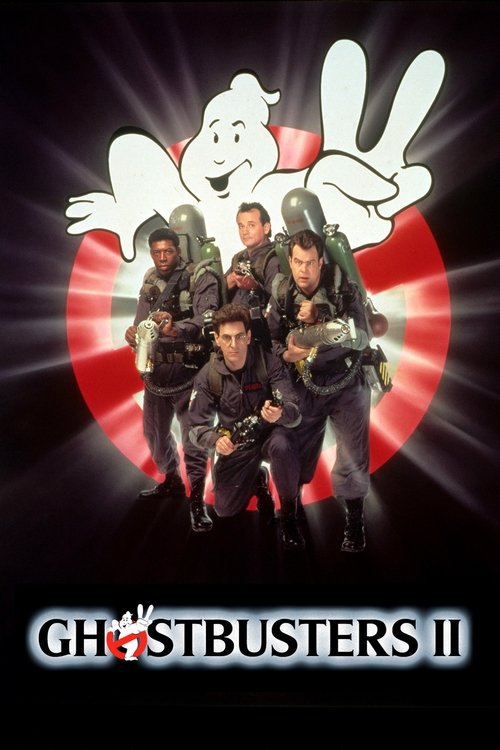
Ghostbusters II - Review
Ghostbusters II: A Slimy Sequel Worth Revisiting?
Five years after saving New York City from Gozer the Gozerian and becoming overnight sensations, the Ghostbusters find themselves down on their luck, discredited, and even legally barred from practicing their unique brand of paranormal investigation. Ivan Reitman’s Ghostbusters II, released in 1989, picks up the story of Peter Venkman, Ray Stantz, Egon Spengler, and Winston Zeddemore as they grapple with the consequences of their past heroism while facing a new, even slimier, threat. But does this sequel capture the magic of the original, or does it succumb to the sophomore slump? Let's dive in and find out.
Plot: A River of Slime and a Carpathian Tyrant
The plot of Ghostbusters II is arguably where the film faces its biggest criticisms. While the original Ghostbusters presented a clear and escalating threat, culminating in the iconic Stay Puft Marshmallow Man, the sequel's narrative feels somewhat convoluted and less focused. The story revolves around a river of psycho-reactive slime flowing beneath New York City, fueled by the negative emotions of its inhabitants. This slime amplifies paranormal activity, leading to strange occurrences and eventually awakening the spirit of Vigo the Carpathian, a 16th-century tyrant trapped within a painting at the Manhattan Museum of Art.
Dana Barrett, once again played by Sigourney Weaver, is now a single mother with a baby named Oscar. When Oscar becomes the target of Vigo’s malevolent influence, Dana seeks help from the Ghostbusters, reuniting the team and setting them on a path to save the city once more. The plot also involves a subplot concerning Dana's art curator boss, Janosz Poha (Peter MacNicol), who becomes possessed by Vigo and serves as his clumsy, yet menacing, lackey.
While the core concept of psycho-reactive slime is intriguing, its execution feels somewhat underdeveloped. The film relies heavily on visual gags and slapstick humor to convey the effects of the slime, sometimes at the expense of narrative coherence. The connection between the city's negativity and Vigo's growing power isn't always clearly established, making the overall threat feel less immediate and impactful than Gozer's arrival in the first film.
However, the plot does offer some clever moments, such as the Ghostbusters using a mood-altering slime-blower to make the Statue of Liberty walk across the city, spreading positive emotions and ultimately defeating Vigo. This climax, while visually impressive, feels somewhat rushed and lacks the same sense of dread and impending doom that characterized the original's finale.
Characters: Familiar Faces, Evolving Dynamics
One of the strongest aspects of Ghostbusters II is the return of the beloved characters from the original. The dynamic between Peter Venkman (Bill Murray), Ray Stantz (Dan Aykroyd), Egon Spengler (Harold Ramis), and Winston Zeddemore (Ernie Hudson) remains a highlight, providing plenty of comedic moments and genuine camaraderie.
- Peter Venkman: Murray's Venkman is as sarcastic and irreverent as ever, delivering witty one-liners and navigating the paranormal chaos with his signature nonchalance. While his romantic pursuit of Dana is toned down compared to the first film, his concern for her and Oscar adds a layer of depth to his character.
- Ray Stantz: Aykroyd's Ray continues to be the heart of the Ghostbusters, driven by his genuine passion for the paranormal and his unwavering belief in the supernatural. He's the most enthusiastic member of the team, often providing the scientific explanations and unwavering optimism that keeps them going.
- Egon Spengler: Ramis' Egon remains the stoic and scientifically minded member of the group, offering dry wit and logical solutions to the paranormal challenges they face. His fascination with the psycho-reactive slime provides some of the film's most memorable moments.
- Winston Zeddemore: Hudson's Winston, unfortunately, continues to be somewhat underdeveloped compared to the other Ghostbusters. While he remains a valuable member of the team, his character doesn't receive the same level of attention or depth as the others.
- Dana Barrett: Weaver's Dana is portrayed as a more independent and resourceful character in Ghostbusters II. Her role as a single mother adds a new dimension to her personality, and her determination to protect Oscar from Vigo's influence makes her a compelling protagonist.
- Janosz Poha: MacNicol's Janosz is a scene-stealing addition to the cast. His portrayal of the quirky and increasingly unhinged art curator, possessed by Vigo, is both hilarious and unsettling. His exaggerated accent and eccentric mannerisms provide some of the film's most memorable comedic moments.
- Vigo the Carpathian: While the concept of Vigo as an ancient tyrant trapped in a painting is intriguing, his character lacks the same presence and menace as Gozer. His motivations are somewhat vague, and his ultimate defeat feels anticlimactic.
The character dynamics within the Ghostbusters team are as strong as ever, providing the film with its comedic backbone. However, the sequel could have benefited from further developing Winston's character and giving Vigo a more compelling and threatening presence.
Direction and Cinematography: A Familiar Aesthetic
Ivan Reitman returns to direct Ghostbusters II, maintaining the same comedic tone and visual style that made the original so successful. The film is filled with memorable visual gags, practical effects, and impressive set pieces, creating a visually engaging and entertaining experience.
The cinematography, while competent, doesn't necessarily stand out as exceptional. The film relies on a similar visual palette to the original, with a focus on bright colors and exaggerated expressions to enhance the comedic effect. However, the sequel does feature some impressive visual effects, particularly the scenes involving the psycho-reactive slime and the animated Statue of Liberty.
Reitman's direction is generally solid, maintaining a brisk pace and ensuring that the comedic moments land effectively. However, the film sometimes struggles to balance the comedic elements with the more serious aspects of the plot, resulting in a somewhat uneven tone. The pacing also feels slightly rushed in the final act, preventing the climax from reaching its full potential.
Performances: The Cast Shines
The performances in Ghostbusters II are consistently strong, with the entire cast delivering memorable and entertaining portrayals of their respective characters. Bill Murray shines as Peter Venkman, delivering his signature sarcastic wit and charm with effortless ease. Dan Aykroyd's Ray Stantz is as endearing and enthusiastic as ever, while Harold Ramis' Egon Spengler provides the film with its dry wit and scientific expertise.
Sigourney Weaver delivers a solid performance as Dana Barrett, portraying her as a strong and independent single mother determined to protect her child. Peter MacNicol steals many scenes as Janosz Poha, delivering a hilarious and memorable performance as the possessed art curator. Ernie Hudson, while still somewhat underutilized, delivers a solid performance as Winston Zeddemore.
The strength of the performances helps to elevate the film's overall quality, making it a consistently entertaining and engaging experience, even when the plot falters.
Themes and Messages: Positivity vs. Negativity
While Ghostbusters II is primarily a comedy, it also explores some interesting themes and messages. The central theme of the film revolves around the power of human emotions, both positive and negative, and their impact on the world around us. The psycho-reactive slime serves as a metaphor for the collective negativity of New York City, which is shown to amplify paranormal activity and create a breeding ground for evil.
The film ultimately advocates for the importance of positivity and hope in overcoming adversity. The Ghostbusters' use of a mood-altering slime-blower to spread positive emotions throughout the city, culminating in the animated Statue of Liberty, symbolizes the power of collective optimism in defeating negativity and restoring balance.
Another theme explored in the film is the importance of believing in the impossible. The Ghostbusters, despite being discredited and ridiculed, never lose faith in their ability to combat the paranormal. Their unwavering belief in the supernatural ultimately allows them to save the city once again, demonstrating the power of conviction and determination.
Comparison to Other Films and Previous Works
Compared to the original Ghostbusters, Ghostbusters II is generally considered to be a weaker film. While the sequel retains the same comedic tone and visual style, it lacks the originality and narrative focus of its predecessor. The plot feels somewhat convoluted and less impactful, and the villain, Vigo the Carpathian, is not as memorable or menacing as Gozer.
However, Ghostbusters II does offer some improvements over the original in certain areas. The visual effects are more advanced, and the character dynamics within the Ghostbusters team are further developed. The sequel also explores some interesting themes and messages, such as the power of human emotions and the importance of believing in the impossible.
In comparison to other comedy sequels, Ghostbusters II falls somewhere in the middle. It's not as disastrous as some sequels, but it doesn't quite reach the same level of success as the original. It's a fun and entertaining film, but it ultimately lacks the spark and originality that made Ghostbusters a classic.
Positive Aspects
- The return of the beloved characters and their dynamic.
- Strong performances from the entire cast, especially Bill Murray and Peter MacNicol.
- Memorable visual gags and practical effects.
- Exploration of interesting themes and messages.
- Nostalgia factor for fans of the original film.
Constructive Criticism
- The plot feels convoluted and less focused than the original.
- Vigo the Carpathian is not as menacing or memorable as Gozer.
- Winston Zeddemore's character remains underdeveloped.
- The pacing feels rushed in the final act.
- The film lacks the originality and spark of the original Ghostbusters.
Conclusion
Ghostbusters II is a flawed but ultimately enjoyable sequel that offers plenty of laughs and memorable moments. While it doesn't quite reach the same level of success as the original, it's still a fun and entertaining film that's worth revisiting for fans of the Ghostbusters franchise. The strong performances, memorable visual gags, and exploration of interesting themes make it a worthwhile addition to the series, even if it falls short of being a true classic.
Is it as good as the original? No. Is it a bad movie? Absolutely not. It's a fun, nostalgic trip back to a world of proton packs, ectoplasm, and witty banter, and sometimes that's all you need.