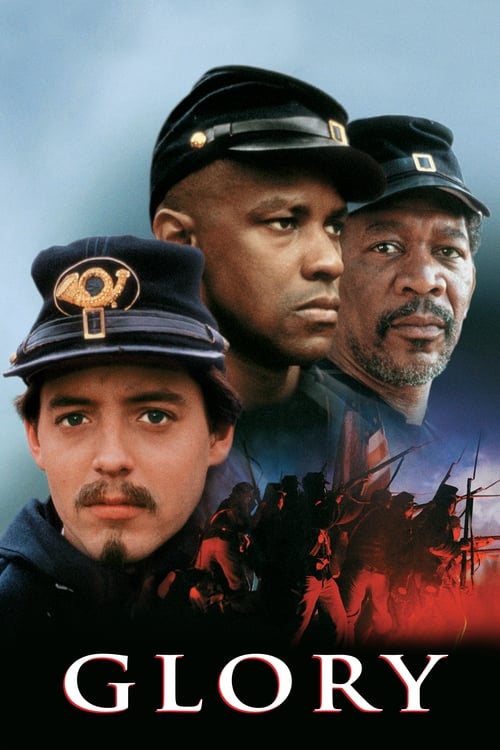
Glory - Review
Glory: A Riveting Testament to Courage and Sacrifice
Glory, released in 1989, is more than just a war film; it's a powerful and deeply moving historical drama that shines a light on a largely overlooked chapter of the American Civil War. The story of the 54th Massachusetts Volunteer Infantry Regiment, the Union Army's first all-black volunteer company, is one of extraordinary courage, resilience, and the unwavering pursuit of freedom in the face of overwhelming prejudice. Director Edward Zwick masterfully crafts a cinematic experience that is both visually stunning and emotionally resonant, leaving an indelible mark on the viewer long after the credits roll. This review delves into the film's narrative, characters, direction, and enduring themes, exploring why Glory remains a landmark achievement in historical filmmaking.
Plot Summary: Forging a Path to Freedom
The film opens with the Battle of Antietam, where a young and idealistic Captain Robert Gould Shaw (Matthew Broderick) witnesses the brutal realities of war. Recovering from his injuries, Shaw is offered command of the newly formed 54th Massachusetts, a regiment composed entirely of African-American soldiers. Initially hesitant, Shaw accepts the challenge, driven by a sense of duty and a growing awareness of the injustice surrounding him.
The narrative then follows the regiment's arduous journey from its formation to its tragic yet heroic climax. The soldiers face relentless discrimination and skepticism from their white counterparts, who doubt their ability to fight and deny them proper equipment and pay. Shaw, along with his close friend Forbes (Cary Elwes), struggles to navigate the complex racial dynamics within the Union Army while simultaneously striving to mold his men into a disciplined and effective fighting force.
Among the recruits are a diverse group of individuals, each with their own motivations and experiences. Trip (Denzel Washington), a runaway slave with a burning rage and a distrust of white authority, embodies the raw anger and resentment of his people. Thomas Searles (Andre Braugher), a well-educated free man and childhood friend of Shaw, represents the aspirations and hopes of the black community. Rawlins (Morgan Freeman), a gravedigger turned soldier, provides a voice of wisdom and reason, offering a grounded perspective on the challenges they face.
As the 54th undergoes rigorous training, they encounter constant obstacles and indignities. They are initially assigned menial tasks, denied uniforms, and subjected to racial slurs. Shaw, however, becomes increasingly determined to prove their worth. He fights for equal treatment, risking his own career and reputation in the process. He eventually earns the respect and loyalty of his men, forging a bond based on mutual trust and shared purpose.
The climax of the film arrives with the assault on Fort Wagner, a heavily fortified Confederate stronghold guarding the entrance to Charleston Harbor. Knowing the odds are stacked against them, Shaw leads the 54th in a daring charge against the seemingly impenetrable defenses. The battle is a brutal and chaotic affair, resulting in heavy casualties on both sides. Despite their valiant efforts, the 54th is ultimately repelled, but their courage and sacrifice prove to be a turning point in the war, demonstrating the bravery and potential of black soldiers and inspiring thousands more to enlist in the Union Army.
Character Analysis: Portraits of Courage and Conviction
Glory boasts a cast of compelling and well-developed characters, each contributing to the film's emotional depth and historical accuracy.
Robert Gould Shaw (Matthew Broderick)
Broderick delivers a nuanced performance as Robert Gould Shaw, portraying him as a complex and evolving figure. Initially naive and somewhat detached, Shaw undergoes a profound transformation throughout the film. He grapples with his own prejudices and gradually comes to understand the true meaning of equality and justice. Broderick effectively conveys Shaw's internal struggles, his growing empathy for his men, and his unwavering commitment to their cause. While some critics initially questioned Broderick's casting, arguing that he lacked the gravitas to portray a Civil War hero, his performance ultimately proves to be both subtle and effective, allowing the audience to witness Shaw's gradual awakening and transformation.
Trip (Denzel Washington)
Denzel Washington's portrayal of Trip is arguably the most memorable and impactful performance in the film. Trip is a fiercely independent and deeply scarred individual, haunted by the horrors of slavery. His initial distrust and resentment towards Shaw and the Union Army are palpable, reflecting the historical realities of the black experience during the Civil War. Washington's raw and visceral performance earned him an Academy Award for Best Supporting Actor, a well-deserved recognition of his ability to embody the pain, anger, and unwavering spirit of Trip. His iconic whipping scene is particularly powerful and emotionally wrenching, serving as a stark reminder of the brutality and dehumanization of slavery.
Thomas Searles (Andre Braugher)
Andre Braugher, as Thomas Searles, provides a contrasting perspective to Trip's. Searles is a well-educated and articulate free man who believes in the power of education and the possibility of achieving equality through peaceful means. He represents the aspirations and hopes of the black middle class, offering a counterpoint to Trip's more radical and rebellious attitude. Braugher's performance is understated yet powerful, conveying Searles' intelligence, idealism, and unwavering belief in the promise of America. He serves as a voice of reason and hope amidst the chaos and brutality of war.
Rawlins (Morgan Freeman)
Morgan Freeman's portrayal of Rawlins is characterized by his trademark wisdom, gravitas, and quiet dignity. Rawlins is a former gravedigger who becomes a trusted confidant and advisor to Shaw. He provides a grounded and pragmatic perspective on the challenges faced by the 54th, offering a voice of reason and experience. Freeman's performance is both subtle and powerful, adding depth and nuance to the film's exploration of race, class, and leadership.
Direction and Cinematography: A Visual Masterpiece
Edward Zwick's direction in Glory is masterful, seamlessly blending historical accuracy with compelling storytelling. He creates a visually stunning and emotionally resonant cinematic experience that immerses the viewer in the world of the Civil War. Zwick's attention to detail is evident in every aspect of the film, from the meticulously recreated battle scenes to the authentic costumes and set designs.
Freddie Francis's cinematography is equally impressive, capturing the beauty and brutality of the war with breathtaking skill. The film's visuals are both epic and intimate, showcasing the vast landscapes of the American South while also focusing on the individual struggles and triumphs of the soldiers. The battle scenes are particularly well-executed, utilizing a combination of wide shots and close-ups to create a sense of realism and intensity. The use of light and shadow is also particularly effective, enhancing the film's dramatic impact and creating a sense of foreboding.
The score, composed by James Horner, is another standout element of the film. The music is both stirring and melancholic, perfectly capturing the emotional weight of the story. Horner's score effectively amplifies the film's themes of courage, sacrifice, and the pursuit of freedom, adding another layer of depth and resonance to the viewing experience.
Themes and Messages: Echoes of Freedom and Equality
Glory explores a multitude of themes, including courage, sacrifice, racial prejudice, leadership, and the pursuit of freedom and equality. The film's central theme is the unwavering determination of the 54th Massachusetts to prove their worth and fight for their right to be treated as equals. Despite facing constant discrimination and skepticism, they persevere, demonstrating their bravery and commitment to the Union cause.
The film also examines the complexities of racial prejudice and the insidious nature of systemic inequality. The soldiers of the 54th are subjected to constant insults and indignities, highlighting the deeply ingrained racism that permeated American society during the Civil War. Glory serves as a powerful reminder of the injustices faced by African-Americans throughout history and the ongoing struggle for racial equality.
Furthermore, the film explores the themes of leadership and the importance of empathy and understanding. Shaw's transformation from a naive and somewhat detached officer to a compassionate and dedicated leader is a central focus of the narrative. He learns to appreciate the humanity and resilience of his men, ultimately forging a bond based on mutual respect and shared purpose. Glory suggests that true leadership requires not only courage and determination but also the ability to understand and empathize with those you lead.
The film's message is ultimately one of hope and inspiration. Despite the tragic loss of life, the story of the 54th Massachusetts serves as a testament to the power of courage, sacrifice, and the unwavering pursuit of freedom. Glory reminds us that even in the face of overwhelming adversity, individuals can make a difference and contribute to a more just and equitable world.
Comparison to Other Films and Works
Glory stands out as a unique and powerful film within the war genre, particularly in its focus on the experiences of African-American soldiers during the Civil War. While other films, such as The Red Badge of Courage (1951) and Gettysburg (1993), depict the broader scope of the Civil War, Glory offers a more intimate and personal perspective on the conflict, highlighting the specific challenges and triumphs of the 54th Massachusetts.
In terms of Edward Zwick's filmography, Glory shares thematic similarities with his later films, such as The Last Samurai (2003) and Blood Diamond (2006), which also explore themes of courage, sacrifice, and the struggle for justice in the face of oppression. Zwick's ability to combine historical accuracy with compelling storytelling is a hallmark of his work, making him a respected and influential filmmaker.
Denzel Washington's performance in Glory is often compared to his other iconic roles, such as Malcolm X in Malcolm X (1992) and Rubin "Hurricane" Carter in The Hurricane (1999). In each of these films, Washington portrays complex and morally ambiguous characters who are fighting for their rights and their dignity. His ability to embody the pain, anger, and resilience of these characters has made him one of the most respected and admired actors of his generation.
Positive Aspects and Constructive Criticism
Glory is a film of immense power and artistic merit. Its strengths lie in its compelling narrative, well-developed characters, masterful direction, stunning cinematography, and emotionally resonant score. The film's ability to immerse the viewer in the world of the Civil War and to convey the struggles and triumphs of the 54th Massachusetts is truly remarkable.
However, the film is not without its flaws. Some critics have argued that the film relies too heavily on the "white savior" trope, portraying Shaw as the central figure in the story and downplaying the agency and contributions of the black soldiers. While Shaw's character is undoubtedly important to the narrative, it is important to acknowledge that the film's focus on his perspective may inadvertently perpetuate certain historical biases.
Additionally, some viewers may find the film's depiction of violence to be overly graphic and disturbing. While the battle scenes are undoubtedly realistic and impactful, they may be difficult for some viewers to watch. However, it is important to remember that the Civil War was a brutal and bloody conflict, and the film's depiction of violence serves as a stark reminder of the human cost of war.
Finally, while the film does an excellent job of portraying the challenges faced by the 54th Massachusetts, it could have delved deeper into the complexities of black life during the Civil War. The film primarily focuses on the soldiers' experiences in the army, but it could have explored their lives and communities outside of the military in more detail.
Conclusion and Rating
Despite its minor flaws, Glory remains a powerful and important film that deserves to be seen and appreciated. It is a moving and inspiring testament to the courage, sacrifice, and unwavering pursuit of freedom of the 54th Massachusetts Volunteer Infantry Regiment. Edward Zwick's masterful direction, Freddie Francis's stunning cinematography, James Horner's emotionally resonant score, and the exceptional performances of the cast, particularly Denzel Washington, make Glory a landmark achievement in historical filmmaking.
Glory is a must-see for anyone interested in the Civil War, African-American history, or simply compelling and thought-provoking cinema. It is a film that will stay with you long after the credits roll, prompting reflection on the enduring themes of courage, sacrifice, and the ongoing struggle for equality.
Rating: 9.5/10