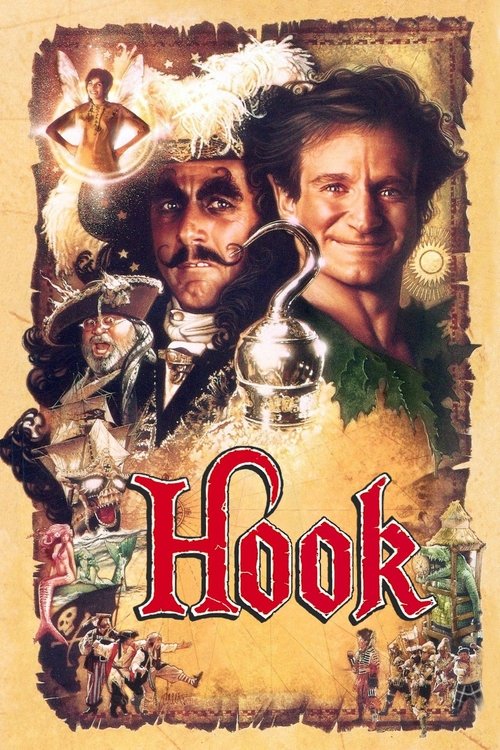
Hook - Review
Hook: A Nostalgic Voyage Back to Neverland – A Review
Steven Spielberg’s 1991 fantasy adventure, Hook, isn't just a film; it's a cultural touchstone for a generation. For many, it's a shimmering memory of childhood wonder, a promise of adventure, and a potent reminder of the importance of imagination. But does this nostalgic allure hold up under the scrutiny of critical analysis? Does the film, starring Robin Williams as a grown-up Peter Pan, Dustin Hoffman as the iconic Captain Hook, and Julia Roberts as Tinkerbell, truly soar, or is it merely a gilded cage of sentimentality?
Plot: Rediscovering the Boy Who Wouldn't Grow Up
The premise of Hook is ingenious: what if Peter Pan grew up? Peter Banning (Robin Williams) is a successful, albeit workaholic, lawyer, seemingly devoid of the joy and wonder that once defined him. He's forgotten Neverland, lost his ability to fly, and struggles to connect with his children, Jack (Charlie Korsmo) and Maggie (Amber Scott). A trip to London to visit his grandmother-in-law, Wendy Darling (Maggie Smith), takes a dramatic turn when Captain Hook (Dustin Hoffman), seeking revenge, kidnaps Jack and Maggie.
Wendy reveals the truth to Peter: he is Peter Pan, the boy who wouldn't grow up. Reluctantly, Peter returns to Neverland, where he must rediscover his lost youth, learn to believe in magic again, and confront the ever-scheming Captain Hook to rescue his children. The plot follows Peter's transformation from a cynical adult back into the playful, courageous hero of his youth. He undergoes rigorous training with the Lost Boys, led by the initially skeptical Rufio (Dante Basco), and gradually regains his memories and abilities.
The narrative structure is fairly straightforward, following a classic hero's journey archetype. However, the film's length (over two hours) can feel somewhat padded, particularly in the middle act where Peter's training and rediscovery process drags on. While these scenes are crucial for character development, they could have been streamlined to maintain a tighter pace.
Characters: A Symphony of Eccentricity and Heart
The strength of Hook lies in its memorable and multifaceted characters. Each character, from the iconic villains to the endearing Lost Boys, contributes to the film's overall charm and emotional resonance.
Peter Banning/Pan (Robin Williams):
Robin Williams delivers a nuanced performance as Peter Banning, initially portraying him as a tightly wound, emotionally distant father. He effectively conveys the character's gradual transformation as he sheds his adult cynicism and embraces his inner child. Williams' comedic timing is impeccable, but he also brings a vulnerability and sincerity to the role, making Peter's journey relatable and heartwarming. While some critics found his performance occasionally veering into caricature, his energy and charisma are undeniable and essential to the film's success.
Captain Hook (Dustin Hoffman):
Dustin Hoffman's portrayal of Captain Hook is arguably the film's highlight. He masterfully embodies the character's vanity, pettiness, and underlying sadness. Hook is not simply a mustache-twirling villain; he's a complex character driven by a deep-seated insecurity and a longing for recognition. Hoffman's performance is both hilarious and surprisingly poignant, making Hook a villain you love to hate. He chews the scenery with relish, delivering witty dialogue and embodying a flamboyant theatricality that perfectly suits the character.
Tinkerbell (Julia Roberts):
Julia Roberts' Tinkerbell is a delightful addition to the cast, though her screen time is somewhat limited. She brings a playful energy and a touch of sass to the iconic fairy. While her role is primarily supportive, she plays a crucial part in Peter's transformation, believing in him even when he doubts himself. The romantic tension between Tinkerbell and Peter, though subtly implied, adds another layer of complexity to their relationship.
Wendy Darling (Maggie Smith):
Maggie Smith brings her signature gravitas and warmth to the role of Wendy Darling. She serves as a wise and nurturing figure, guiding Peter on his journey of self-discovery. Smith's performance is understated yet powerful, providing a grounding presence amidst the fantastical elements of Neverland.
Rufio (Dante Basco):
Dante Basco's Rufio, the leader of the Lost Boys in Peter's absence, is a fan favorite. He embodies the rebellious spirit and unwavering loyalty of the Lost Boys. Rufio's initial animosity towards Peter gradually transforms into respect and admiration as he witnesses Peter's reawakening. Basco's performance is energetic and charismatic, making Rufio a memorable and beloved character.
The Lost Boys:
The Lost Boys, a ragtag group of orphans who never want to grow up, are a charming and essential part of Neverland's vibrant tapestry. Each Lost Boy has a distinct personality and contributes to the film's overall sense of whimsy and adventure. Their playful antics and unwavering loyalty to Peter add depth and heart to the story.
Direction: Spielberg's Signature Blend of Wonder and Sentimentality
Steven Spielberg, a master of family-friendly adventure, brings his signature directorial style to Hook. He crafts a visually stunning and emotionally resonant film, filled with breathtaking sets, dazzling special effects, and heartwarming moments. While some critics found the film overly sentimental and lacking in the darker edge of the original Peter Pan story, Spielberg's direction effectively captures the magic and wonder of Neverland.
Spielberg excels at creating a sense of scale and grandeur, particularly in the scenes set in Neverland. The pirate ship, the Lost Boys' hideout, and the various landscapes of the island are meticulously designed and brought to life with impressive visual effects. He uses sweeping camera movements and dynamic compositions to create a sense of adventure and excitement. However, the sheer scale of the production occasionally overshadows the more intimate character moments, leading to a slightly uneven emotional balance.
The film's pacing is somewhat inconsistent, with the first act feeling rushed and the middle act feeling drawn out. While the final battle sequence is visually spectacular and emotionally satisfying, it could have benefited from tighter editing and more focused storytelling. Despite these minor flaws, Spielberg's direction ultimately succeeds in creating a memorable and entertaining cinematic experience.
Cinematography: Painting Neverland with Light and Shadow
Dean Cundey's cinematography is a crucial element in bringing Neverland to life. He uses a vibrant color palette and dramatic lighting to create a visually stunning and immersive world. The film is filled with lush greens, sparkling blues, and rich golds, evoking a sense of magic and wonder. Cundey effectively utilizes light and shadow to create a sense of depth and atmosphere, particularly in the scenes set on the pirate ship and in the darker corners of Neverland.
The use of special effects, while somewhat dated by today's standards, is still impressive and contributes to the film's overall sense of fantasy. The flying sequences, in particular, are well-executed and create a sense of freedom and exhilaration. However, some of the CGI effects are less convincing, particularly in the scenes involving Tinkerbell and other magical creatures.
The composition of each shot is carefully considered, creating a visually dynamic and engaging experience. Cundey uses wide shots to establish the scale and grandeur of Neverland, and close-ups to capture the emotions and expressions of the characters. The camera movements are fluid and graceful, guiding the viewer through the fantastical world and enhancing the storytelling.
Performances: A Mixed Bag of Brilliance and Overacting
The performances in Hook are a mixed bag, ranging from brilliant to slightly over-the-top. While Robin Williams and Dustin Hoffman deliver standout performances, some of the supporting cast members occasionally veer into caricature. However, the overall quality of the acting is strong, and the cast's commitment to their roles is evident.
Robin Williams' performance as Peter Banning/Pan is a testament to his versatility as an actor. He seamlessly transitions from a cynical adult to a playful child, capturing the essence of both characters with equal skill. Dustin Hoffman's portrayal of Captain Hook is a masterclass in villainy, blending humor, pathos, and menace into a truly memorable performance. Julia Roberts' Tinkerbell is charming and sassy, adding a touch of magic to the film. Maggie Smith's Wendy Darling provides a grounding presence and a sense of wisdom. Dante Basco's Rufio is energetic and charismatic, becoming a fan favorite.
However, some critics found the performances of the Lost Boys to be somewhat uneven, with some actors overacting and others fading into the background. The child actors, while enthusiastic, occasionally struggle to deliver their lines convincingly. Despite these minor flaws, the overall quality of the acting is strong and contributes to the film's overall charm.
Themes and Messages: Believing in Magic and the Power of Family
Hook explores several important themes, including the importance of imagination, the power of belief, the value of family, and the dangers of losing one's inner child. The film emphasizes the need to embrace wonder and joy, even in the face of adult responsibilities. It suggests that the ability to believe in magic is essential for maintaining a sense of hope and optimism.
The film also highlights the importance of family and the need to prioritize relationships over work. Peter Banning's transformation from a workaholic lawyer to a loving father is a central theme of the story. He learns that the most important things in life are not material possessions or professional success, but rather the love and connection he shares with his family.
Hook also touches upon the theme of growing up and the challenges of maintaining one's identity in the face of societal pressures. Peter's journey is a reminder that it's possible to retain a sense of childlike wonder even as we navigate the complexities of adulthood. The film encourages viewers to embrace their inner child and to never lose sight of the things that bring them joy.
Comparison to Other Films and Works
Hook can be compared to other films that explore similar themes of childhood, imagination, and the power of belief. Films like E.T. the Extra-Terrestrial, also directed by Steven Spielberg, share a similar sense of wonder and a focus on the importance of family. The NeverEnding Story, another 1980s fantasy film, also explores the power of imagination and the dangers of losing hope.
In terms of previous works by Steven Spielberg, Hook shares similarities with his other family-friendly adventure films, such as Raiders of the Lost Ark and Jurassic Park. However, Hook is arguably more sentimental and emotionally driven than some of his earlier works. It also represents a departure from the darker and more mature themes explored in films like Schindler's List and Saving Private Ryan.
In comparison to other adaptations of the Peter Pan story, Hook takes a unique approach by focusing on Peter's life after he has grown up. While other adaptations typically focus on Peter's adventures in Neverland as a child, Hook explores the consequences of losing one's inner child and the challenges of rediscovering it. This fresh perspective makes Hook a distinctive and memorable addition to the Peter Pan canon.
Positive Aspects: A Visual Spectacle with Heart
Hook boasts several positive aspects that contribute to its enduring appeal. The film's visual spectacle is undeniable, with breathtaking sets, dazzling special effects, and vibrant cinematography. The performances of Robin Williams and Dustin Hoffman are particularly strong, bringing depth and nuance to their iconic characters. The film's themes of family, imagination, and the power of belief resonate deeply with audiences of all ages. The score, composed by John Williams, is both rousing and emotionally evocative, enhancing the film's overall impact.
The film's sense of humor is also a major strength, with witty dialogue and slapstick comedy providing plenty of laughs. The Lost Boys are a particularly endearing and entertaining group of characters, adding a sense of whimsy and playfulness to the story. The film's message of embracing one's inner child is both heartwarming and inspiring.
Constructive Criticism: Pacing and Sentimentality
Despite its many strengths, Hook is not without its flaws. The film's pacing can be inconsistent, with the middle act feeling somewhat drawn out. The special effects, while impressive for their time, are somewhat dated by today's standards. Some critics have also argued that the film is overly sentimental and lacks the darker edge of the original Peter Pan story. The performances of some of the supporting cast members can occasionally veer into caricature.
The film's length (over two hours) can also be a challenge for some viewers, particularly younger children. The plot, while engaging, can feel somewhat predictable at times. The film's reliance on nostalgia can also be seen as a weakness, as it may not resonate as strongly with viewers who are not familiar with the original Peter Pan story.
Conclusion: A Flawed but Beloved Classic
Hook is a flawed but ultimately beloved classic that continues to captivate audiences with its visual spectacle, memorable characters, and heartwarming themes. While the film may not be perfect, its strengths far outweigh its weaknesses. It's a film that encourages us to believe in magic, to embrace our inner child, and to cherish the bonds of family. Despite some pacing issues and occasional over-the-top performances, Hook remains a cherished cinematic experience for many.
The film's enduring appeal lies in its ability to transport viewers to a world of wonder and adventure, reminding us of the importance of imagination and the power of belief. It's a film that can be enjoyed by audiences of all ages, and its message of hope and optimism is as relevant today as it was when it was first released.
Rating: 8.5/10