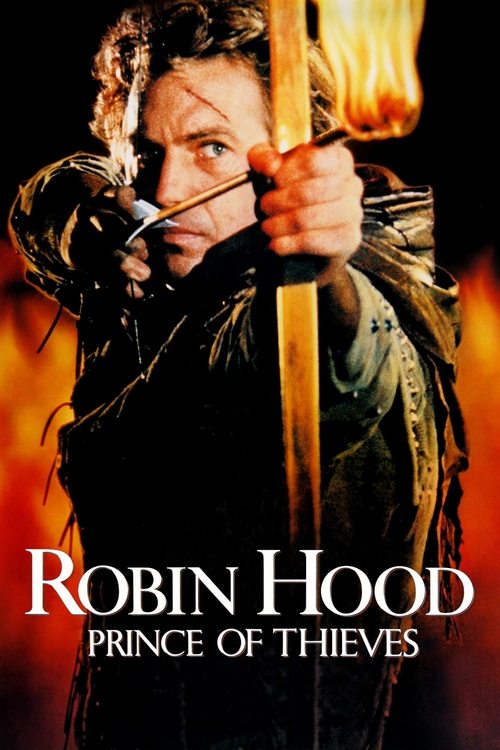
Robin Hood: Prince of Thieves - Review
Robin Hood: Prince of Thieves - A Swashbuckling Epic Revisited
Forget tights and merry men singing around a campfire. "Robin Hood: Prince of Thieves," released in 1991, took the legendary outlaw and plunged him into a darker, grittier, and decidedly more Hollywood-sized adventure. Kevin Costner donned the green tunic, Alan Rickman chewed scenery with relish, and the result was a blockbuster that, while not without its flaws, remains a memorable and often thrilling interpretation of the classic tale. Let's delve into the forests of Sherwood and dissect this epic Robin Hood adaptation.
Plot: From Crusades to Sherwood Forest
The narrative kicks off with a bang. Robin of Locksley (Kevin Costner), a nobleman fighting in the Crusades, finds himself imprisoned in Jerusalem. His escape, facilitated by the noble Moor Azeem (Morgan Freeman), sets the stage for a journey back to England fraught with peril. Upon arriving, Robin discovers a devastated Locksley estate and the horrifying truth: his father has been murdered by the Sheriff of Nottingham (Alan Rickman), a man whose villainy knows no bounds. This personal tragedy fuels Robin's transformation from crusader to outlaw, vowing revenge and justice against the tyrannical Sheriff and his henchmen. He joins forces with a band of outlaws led by Little John (Nick Brimble), and amidst daring raids and narrow escapes, Robin rallies the oppressed villagers against Nottingham's reign of terror. A love story blossoms between Robin and Maid Marian (Mary Elizabeth Mastrantonio), adding another layer of complexity to the already intricate plot. The film culminates in a spectacular siege of Nottingham Castle, a showdown between Robin and the Sheriff, and the restoration of justice to the land.
The plot, while adhering to the core Robin Hood mythos, takes significant liberties. The inclusion of Azeem as Robin's loyal companion adds a unique and progressive (for its time) element, though some argue it veers into the "magical negro" trope. The Sheriff's villainy is amplified to operatic proportions, making him a truly formidable antagonist. The pacing, however, can be uneven. The first act, detailing Robin's escape and return, feels rushed, while the middle act, focusing on establishing the outlaw camp and their activities, drags at times. Despite these pacing issues, the overall narrative is compelling, driven by revenge, romance, and the fight against injustice.
Characters: Heroes, Villains, and Everything In Between
Robin of Locksley (Kevin Costner): Costner's portrayal of Robin Hood is perhaps the most debated aspect of the film. He embodies a noble spirit and possesses a certain charisma, but his performance is often criticized for being too modern and lacking the necessary English accent. While he delivers the action sequences convincingly, his dramatic scenes sometimes fall flat. He's not a *bad* Robin Hood, but he's certainly not the most memorable. He plays Robin as a fundamentally decent man thrust into extraordinary circumstances, rather than a cunning rogue. This interpretation works on a basic level, but lacks the depth and nuance that other actors have brought to the role.
Azeem (Morgan Freeman): Freeman's Azeem is a standout character. He brings gravitas, wisdom, and a quiet strength to the role. Azeem's scientific curiosity and unwavering loyalty to Robin make him a valuable ally and a fascinating character in his own right. His presence adds a layer of cultural diversity that was relatively uncommon in action-adventure films of the era. He is more than just a sidekick; he's an intellectual equal and a moral compass for Robin.
Sheriff of Nottingham (Alan Rickman): Alan Rickman *is* the Sheriff of Nottingham. His performance is legendary, a masterclass in scenery-chewing villainy. Rickman imbues the Sheriff with a unique blend of ruthlessness, sardonic wit, and outright insanity. Every line delivery is dripping with venom, and his facial expressions are simply priceless. He elevates the film immeasurably. He doesn't just play a bad guy; he embodies pure, unadulterated evil, making him one of cinema's most memorable villains. His iconic lines, delivered with perfect timing and inflection, have become ingrained in popular culture.
Maid Marian (Mary Elizabeth Mastrantonio): Mastrantonio's Marian is a strong-willed and independent woman, a far cry from the damsel-in-distress often portrayed in Robin Hood adaptations. She's intelligent, resourceful, and actively involved in the fight against the Sheriff. While her romance with Robin feels somewhat underdeveloped, she holds her own against the male characters and provides a much-needed female perspective.
Little John (Nick Brimble): Brimble's Little John is a formidable fighter and a loyal friend. He brings a gruff charm and a touch of humor to the role, providing a solid foundation for the outlaw band.
Will Scarlett (Christian Slater): Slater's Will Scarlett, Robin's half-brother, is a somewhat underdeveloped character. His motivations are unclear, and his eventual betrayal feels rushed and unconvincing. He serves more as a plot device than a fully realized character.
Direction and Cinematography: A Grand Scale
Kevin Reynolds' direction is competent, delivering a visually impressive and action-packed film. He effectively utilizes the vast landscapes of England to create a sense of scale and grandeur. The battle sequences are well-choreographed and exciting, and the overall pacing, while uneven, keeps the audience engaged. However, Reynolds' direction lacks a distinctive style. He relies heavily on established Hollywood tropes and doesn't bring a unique vision to the material. He prioritizes spectacle over subtlety, resulting in a film that is visually impressive but lacks emotional depth.
The cinematography, by Douglas Milsome, is stunning. The lush forests, imposing castles, and sweeping landscapes are captured beautifully. Milsome uses natural light effectively, creating a sense of realism and authenticity. The camera work is dynamic, particularly during the action sequences, adding to the excitement and energy of the film. The visual style is epic and romantic, perfectly complementing the grand scale of the story. The use of slow-motion during key moments, while somewhat overused, adds a sense of drama and impact.
Themes and Messages: Justice, Loyalty, and Tolerance
"Robin Hood: Prince of Thieves" explores several key themes. The most prominent is the fight against injustice and tyranny. Robin Hood becomes a symbol of resistance against the oppressive rule of the Sheriff of Nottingham, rallying the oppressed villagers to fight for their freedom. The film champions the idea that even ordinary people can make a difference in the face of overwhelming power.
Loyalty is another central theme. Robin's unwavering loyalty to his friends and his people is a driving force behind his actions. The bond between Robin and Azeem, forged in captivity, is a testament to the power of friendship and mutual respect. The loyalty of the outlaws to Robin and their shared commitment to justice create a strong sense of camaraderie.
The film also touches upon themes of tolerance and acceptance. Azeem's presence challenges the prevailing prejudices of the time, and his integration into the outlaw band symbolizes a growing acceptance of diversity. While the film's portrayal of Azeem has been criticized for its problematic elements, it nonetheless attempts to promote a message of understanding and inclusion.
Finally, the film explores the corrupting influence of power. The Sheriff of Nottingham's unchecked authority leads to his descent into cruelty and madness. The film suggests that power without accountability is a dangerous thing and that those in positions of authority must be held responsible for their actions.
Performances: Rickman Steals the Show
As mentioned earlier, Alan Rickman's performance as the Sheriff of Nottingham is the undisputed highlight of the film. He elevates the entire production with his magnetic presence and unforgettable portrayal of villainy. Morgan Freeman delivers a strong and nuanced performance as Azeem, providing a much-needed moral compass and adding depth to the story.
Kevin Costner's performance is adequate, but ultimately underwhelming. He lacks the charisma and intensity to fully embody the iconic role. Mary Elizabeth Mastrantonio is a solid Maid Marian, portraying her as a strong and independent woman. Nick Brimble provides a reliable performance as Little John, adding a touch of humor and physicality to the outlaw band. Christian Slater's performance as Will Scarlett is forgettable, and his character feels underdeveloped.
The supporting cast is generally strong, with notable performances from Michael Wincott as Guy of Gisborne, the Sheriff's ruthless henchman, and Brian Blessed as Lord Locksley, Robin's father. Their contributions add to the overall quality of the film.
Comparison to Other Films and Works
"Robin Hood: Prince of Thieves" arrived amidst a resurgence of interest in the Robin Hood legend. Compared to Errol Flynn's swashbuckling adventure "The Adventures of Robin Hood" (1938), Costner's version is darker, grittier, and more violent. While Flynn's film is pure escapism, Reynolds' film attempts to ground the story in a more realistic historical context. However, it lacks the charm and exuberance of the earlier adaptation.
More recent adaptations, such as Ridley Scott's "Robin Hood" (2010) starring Russell Crowe, have attempted to further deconstruct the legend and portray Robin Hood as a more complex and flawed character. While Scott's film is more historically accurate, it lacks the epic scope and memorable characters of "Prince of Thieves."
Kevin Reynolds had previously directed Costner in "Fandango" (1985), a coming-of-age road trip film. "Prince of Thieves" represents a significant departure in terms of scale and genre. While Reynolds demonstrates competence in directing large-scale action sequences, he lacks the auteur vision that would elevate the film to a higher level.
Positive Aspects and Constructive Criticism
Positive Aspects:
- Alan Rickman's iconic performance as the Sheriff of Nottingham.
- Morgan Freeman's strong and nuanced portrayal of Azeem.
- Stunning cinematography and impressive visual effects.
- Well-choreographed action sequences.
- Engaging and epic storyline.
Constructive Criticism:
- Kevin Costner's performance lacks charisma and authenticity.
- Uneven pacing, particularly in the middle act.
- Some problematic representation issues with Azeem's character.
- Will Scarlett's character is underdeveloped and his betrayal feels unconvincing.
- The romance between Robin and Marian feels rushed and superficial.
Conclusion and Rating
"Robin Hood: Prince of Thieves" is a flawed but ultimately entertaining action-adventure film. While Costner's performance may be underwhelming and the pacing uneven, the film is elevated by Alan Rickman's unforgettable villainy, Morgan Freeman's strong supporting role, and the stunning visuals. It's a grand spectacle that captures the spirit of the Robin Hood legend, even if it takes significant liberties with the source material. Despite its shortcomings, it remains a memorable and enjoyable cinematic experience.
Rating: 7.5/10