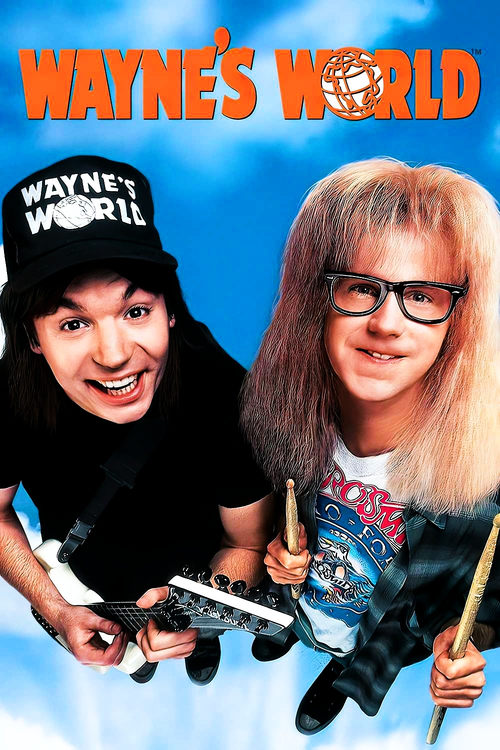
Wayne's World - Review
Wayne's World: A Schwing-Worthy Celebration of Slackerdom
Wayne's World, released on Valentine's Day 1992, isn't just a comedy; it's a cultural artifact. It's a time capsule of early 90s slacker culture, a loving parody of commercialism, and a surprisingly heartwarming story about friendship and staying true to yourself. Twenty years later, its quotable lines, headbanging soundtrack, and irreverent humor still resonate, making it a truly excellent party time, excellent movie.
Plot: A Simple Story, Deftly Executed
The plot of Wayne's World, at its core, is relatively straightforward. Wayne Campbell (Mike Myers) and Garth Algar (Dana Carvey), two best friends living in Aurora, Illinois, host a public access television show from Wayne's basement, aptly named "Wayne's World." Their lives are a comfortable routine of hanging out, rocking out, and generally avoiding any real responsibility. This idyllic existence is threatened when Benjamin Kane (Rob Lowe), a slick and unscrupulous television executive, offers them a lucrative deal to bring "Wayne's World" to a major network. Simultaneously, Wayne falls head-over-heels for Cassandra Wong (Tia Carrere), a talented and ambitious rock singer. The film then follows Wayne and Garth as they navigate the treacherous waters of commercialism, try to maintain their artistic integrity, and attempt to win Cassandra's heart, all while grappling with the classic "selling out" dilemma.
What elevates the plot beyond a simple fish-out-of-water story is its self-awareness and meta-commentary. The film constantly breaks the fourth wall, winking at the audience and acknowledging the artificiality of the narrative. Wayne and Garth frequently address the camera directly, offering their own commentary on the events unfolding, predicting future plot points, and even pointing out product placement. This meta-narrative approach, while now commonplace in comedies, was relatively fresh and innovative in 1992 and contributed significantly to the film's unique appeal.
The plot also cleverly incorporates several subplots, including Garth's awkward but ultimately successful pursuit of a donut shop employee, the introduction of Wayne's stalkerish ex-girlfriend Stacy (Lara Flynn Boyle), and the ongoing battle against Benjamin's manipulative tactics. These subplots add depth and humor to the main narrative, preventing it from becoming too predictable or one-dimensional.
Characters: A Cast of Endearing Eccentrics
The success of Wayne's World hinges on its cast of memorable and relatable characters. Mike Myers and Dana Carvey, reprising their roles from Saturday Night Live, deliver iconic performances as Wayne and Garth, respectively. Their chemistry is undeniable, and their portrayal of the two lovable slackers is both hilarious and endearing.
Wayne Campbell
Wayne, the more assertive and charismatic of the duo, serves as the de facto leader of "Wayne's World." He's a passionate music lover, a loyal friend, and a hopeless romantic. Myers imbues Wayne with a childlike enthusiasm and a genuine sense of decency, making him a character that audiences can easily root for. Wayne's catchphrases, such as "Excellent!" and "Schwing!" have become ingrained in popular culture, and his headbanging antics are instantly recognizable.
Garth Algar
Garth, the quieter and more eccentric of the two, is a master of electronics and gadgets. He's socially awkward and prone to bizarre outbursts, but he's also fiercely loyal and surprisingly resourceful. Carvey's portrayal of Garth is a masterclass in physical comedy, and his deadpan delivery of absurd lines is consistently hilarious. Garth's inventions, such as the "suck cut" and the camera-equipped remote control car, add a layer of quirky inventiveness to the film.
Cassandra Wong
Tia Carrere shines as Cassandra, the talented and independent rock singer who captures Wayne's heart. Cassandra is not simply a damsel in distress; she's a strong and ambitious woman who is determined to make it in the music industry. Carrere's musical performances in the film are electrifying, and her chemistry with Myers is palpable.
Benjamin Kane
Rob Lowe delivers a deliciously smarmy performance as Benjamin, the villainous television executive. Benjamin is a master manipulator who uses his charm and wealth to get what he wants. Lowe perfectly embodies the sleazy corporate type, making him a character that audiences love to hate.
Supporting Characters
The supporting cast of Wayne's World is equally memorable. Lara Flynn Boyle is delightfully unhinged as Stacy, Wayne's clingy and possessive ex-girlfriend. Brian Doyle-Murray is hilarious as Noah Vanderhoff, the owner of the arcade that Wayne and Garth frequent. And Ed O'Neill makes a brief but memorable appearance as Glen, the creepy donut shop manager.
Direction: Penelope Spheeris's Masterful Touch
Wayne's World was directed by Penelope Spheeris, a filmmaker known for her documentaries about the Los Angeles punk rock scene. Spheeris brings a unique sensibility to the film, blending slapstick humor with genuine heart and a keen understanding of youth culture. Her direction is confident and assured, and she allows the actors to improvise and riff on their characters, resulting in a film that feels both spontaneous and carefully crafted.
Spheeris's background in documentary filmmaking is evident in the film's realistic portrayal of suburban life. She captures the look and feel of Aurora, Illinois, with a level of authenticity that is rarely seen in mainstream comedies. The film's use of real locations and its attention to detail contribute to its overall sense of believability.
Spheeris also demonstrates a strong understanding of comedic timing. She knows how to build tension and release it with a well-placed joke. The film's pacing is brisk and energetic, and it never lingers too long on any one scene. Spheeris keeps the audience engaged from beginning to end, ensuring that the film is consistently funny and entertaining.
Cinematography: Capturing the Essence of Suburban Anarchy
The cinematography of Wayne's World, while not groundbreaking, is effective in capturing the film's tone and atmosphere. The film's color palette is bright and vibrant, reflecting the energy and exuberance of the characters. The camera work is mostly straightforward, but there are occasional moments of visual flair, such as the dream sequences and the fantasy sequences.
The film's use of close-ups is particularly effective in highlighting the characters' emotions. The camera often lingers on Wayne and Garth's faces, allowing the audience to connect with them on a personal level. The close-ups also emphasize the actors' comedic expressions, enhancing the humor of the film.
The film's editing is also well-done, contributing to its overall sense of pacing and energy. The scenes are cut together quickly and efficiently, keeping the film moving forward. The editing also helps to emphasize the comedic timing of the jokes, ensuring that they land effectively.
Performances: A Symphony of Silliness
The performances in Wayne's World are uniformly excellent. Mike Myers and Dana Carvey are at the top of their game, delivering performances that are both hilarious and endearing. Tia Carrere is a standout as Cassandra, bringing a sense of strength and independence to the role. Rob Lowe is perfectly cast as Benjamin, embodying the sleazy corporate type with relish. And the supporting cast is equally strong, adding depth and humor to the film.
Myers and Carvey's chemistry is the key to the film's success. They have a natural rapport that is evident in every scene. They bounce off each other effortlessly, creating a dynamic that is both funny and believable. Their characters are clearly best friends, and their affection for each other is palpable.
Carrere's performance as Cassandra is particularly noteworthy. She is not simply a love interest; she is a fully realized character with her own goals and ambitions. Carrere's musical performances are electrifying, and she brings a sense of energy and passion to the role.
Lowe's performance as Benjamin is a masterclass in comedic villainy. He is charming and manipulative, but also utterly devoid of morals. Lowe perfectly captures the essence of the sleazy corporate type, making him a character that audiences love to hate.
Themes and Messages: Beyond the Slapstick
While Wayne's World is primarily a comedy, it also explores several important themes and messages. The film is a celebration of friendship, loyalty, and staying true to yourself. It also critiques the corrupting influence of commercialism and the importance of artistic integrity.
The film's central theme is the importance of friendship. Wayne and Garth's relationship is the heart of the film, and their unwavering loyalty to each other is a constant source of humor and warmth. They support each other through thick and thin, and they always have each other's backs.
The film also emphasizes the importance of staying true to yourself. Wayne and Garth are constantly pressured to conform to the expectations of others, but they ultimately resist these pressures and remain true to their own values. They refuse to sell out, and they maintain their artistic integrity even in the face of financial temptation.
The film also critiques the corrupting influence of commercialism. Benjamin Kane represents the worst aspects of corporate greed, and his attempts to exploit Wayne and Garth for his own profit are met with resistance. The film suggests that commercial success should not come at the expense of artistic integrity or personal values.
Comparison to Other Films and Works
Wayne's World draws inspiration from a variety of sources, including Saturday Night Live, Monty Python, and other absurdist comedies. The film's meta-narrative approach is reminiscent of Woody Allen's films, which often break the fourth wall and comment on the filmmaking process.
The film's portrayal of slacker culture is similar to that of other 90s comedies, such as Clerks and Reality Bites. However, Wayne's World distinguishes itself with its optimistic and upbeat tone. While other slacker comedies often focus on the frustrations and anxieties of young adulthood, Wayne's World celebrates the freedom and possibilities of youth.
Penelope Spheeris's previous work, particularly her documentaries about the Los Angeles punk rock scene, informs the film's realistic portrayal of suburban life and its appreciation for alternative music. Her understanding of youth culture and her ability to capture the energy and enthusiasm of young people are evident throughout the film.
Positive Aspects: A Symphony of Excellent!
Wayne's World boasts numerous strengths that contribute to its enduring appeal:
- Hilarious Humor: The film is consistently funny, with a blend of slapstick, absurdist humor, and clever meta-commentary.
- Memorable Characters: Wayne, Garth, Cassandra, and Benjamin are all iconic characters that have become ingrained in popular culture.
- Excellent Performances: The cast delivers uniformly strong performances, with Mike Myers and Dana Carvey at the top of their game.
- Catchy Soundtrack: The film's soundtrack is filled with classic rock anthems and original songs that perfectly complement the action.
- Unique Style: The film's meta-narrative approach and its self-aware humor set it apart from other comedies.
- Positive Message: The film promotes the importance of friendship, loyalty, and staying true to yourself.
Constructive Criticism: Nuances and Nitpicks
While Wayne's World is largely successful, there are a few minor criticisms that can be made:
- Some Jokes Haven't Aged Well: Certain jokes, particularly those related to gender and sexuality, may be considered offensive by modern audiences.
- Plot Can Be Predictable: The film's plot, while well-executed, is ultimately fairly straightforward and predictable.
- Over-Reliance on Catchphrases: While the catchphrases are memorable, they can sometimes feel overused and repetitive.
- Stacy's Character: Stacy, Wayne's ex-girlfriend, is portrayed as somewhat of a caricature, lacking the depth and complexity of other characters.
Conclusion: A Timeless Comedy Classic
Wayne's World is more than just a comedy; it's a cultural phenomenon. Its quotable lines, headbanging soundtrack, and irreverent humor have made it a beloved classic for generations. While some of its jokes may not have aged perfectly, its core message of friendship, loyalty, and staying true to yourself remains as relevant as ever. Excellent!
Rating: 9.5/10