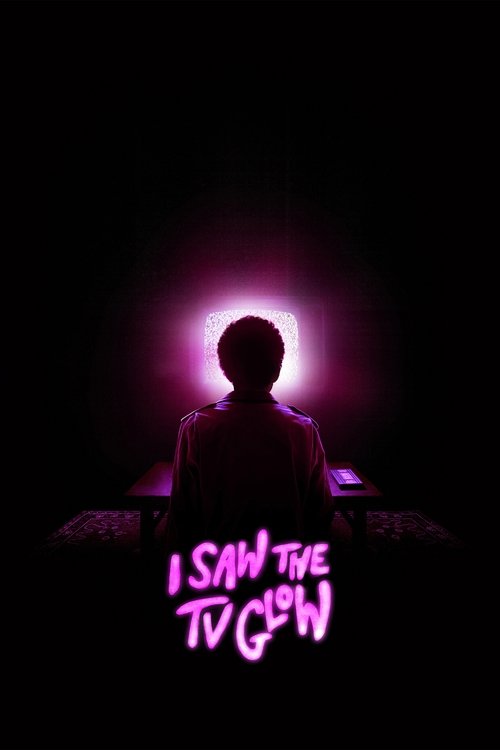
I Saw the TV Glow - Review
I Saw the TV Glow: A Haunting Meditation on Identity and Escape
Imagine a world where the comforting glow of your favorite TV show becomes a lifeline, a portal to a reality far more compelling than the mundane existence you're trapped in. That's the premise of Jane Schoenbrun's sophomore feature, I Saw the TV Glow, a film that burrows deep under your skin and leaves you questioning the very nature of reality, identity, and the power of shared experience. Released on May 3rd, 2024, this isn't just a horror film; it's a haunting, melancholic dreamscape that lingers long after the credits roll, demanding to be dissected and understood.
Plot: Fractured Realities and the Allure of the Supernatural
I Saw the TV Glow centers on Owen (Justice Smith), a shy, awkward teenager navigating the isolating landscape of suburban life. His world is irrevocably changed when he meets Maddy (Brigette Lundy-Paine), a classmate who introduces him to "The Pink Opaque," a late-night anthology series that blends elements of Are You Afraid of the Dark? and Buffy the Vampire Slayer with a distinctly Lynchian sensibility. The show, with its low-budget special effects and unsettling narratives, becomes an obsession for Owen and Maddy, a shared escape from their respective personal struggles.
As Owen and Maddy delve deeper into "The Pink Opaque," the line between reality and fiction begins to blur. They start to see parallels between the show's monsters and their own lives, experiencing strange phenomena that suggest the supernatural world of the show might be bleeding into their own. Maddy, in particular, becomes increasingly convinced that she is connected to the show in a profound way, perhaps even a character within its narrative. One night, Maddy disappears, leaving Owen adrift and questioning everything he thought he knew.
The film then shifts into a more fragmented and dreamlike structure. Years pass, and Owen is still haunted by Maddy's disappearance and the lingering influence of "The Pink Opaque." He struggles to form meaningful connections, trapped in a cycle of repetition and denial. As he tries to unravel the mystery of Maddy's fate, he confronts the possibility that his entire reality is a construct, a carefully curated illusion designed to keep him from facing a painful truth. The plot isn't straightforward; it's a puzzle box of fragmented memories, distorted perceptions, and unsettling imagery, forcing the audience to actively participate in piecing together the narrative's unsettling truth.
Characters: Lost Souls in Search of Meaning
The strength of I Saw the TV Glow lies not just in its plot, but in its deeply realized characters. Owen and Maddy are not simply plot devices; they are complex, flawed individuals struggling to find their place in a world that feels alienating and oppressive.
Owen (Justice Smith): Smith delivers a nuanced and heartbreaking performance as Owen, capturing his vulnerability, his crippling shyness, and his desperate need for connection. Owen is a character defined by his passivity, content to drift through life, avoiding conflict and suppressing his own desires. His obsession with "The Pink Opaque" is not just a form of entertainment; it's a coping mechanism, a way to escape the crushing weight of his own insecurities and the expectations of his parents. Smith masterfully portrays Owen's gradual unraveling as he is forced to confront the truth about himself and his relationship with Maddy.
Maddy (Brigette Lundy-Paine): Lundy-Paine is equally compelling as Maddy, a more assertive and enigmatic figure than Owen. Maddy is the catalyst for Owen's journey, the one who pulls him into the world of "The Pink Opaque" and challenges his perception of reality. She is a rebel, a nonconformist who refuses to be defined by societal expectations. Maddy's conviction that she is connected to the show is both unsettling and strangely believable, fueled by her own sense of alienation and her desire to find meaning and purpose in a world that feels meaningless. Lundy-Paine imbues Maddy with a captivating blend of vulnerability and defiance, making her a truly unforgettable character.
The supporting characters, while less central to the narrative, are also effectively drawn. Owen's parents, played by Danielle Deadwyler and Amber Benson, represent the stifling conformity of suburban life. Their attempts to control and mold Owen into their image contribute to his sense of isolation and his desire to escape. The various figures Owen encounters in his fragmented reality, including those seemingly plucked from "The Pink Opaque," add to the film's unsettling atmosphere and further blur the line between fiction and reality.
Direction: A Masterclass in Atmosphere and Anxiety
Jane Schoenbrun's direction is the driving force behind I Saw the TV Glow's success. Schoenbrun crafts a visually stunning and emotionally resonant film that is both deeply personal and universally relatable. Their use of atmosphere, color, and sound creates a sense of unease and disorientation that perfectly mirrors Owen's internal state. The film is bathed in a pale, sickly light, reflecting the artificial glow of the television screen and the decaying nature of Owen's reality. The soundtrack, featuring a mix of original compositions and curated tracks, is equally effective in creating a mood of dread and melancholy.
Schoenbrun's decision to embrace a more fragmented and dreamlike narrative structure is a bold one, but it ultimately pays off. By refusing to spoon-feed the audience, they force them to actively engage with the film's themes and messages. The film's ambiguity is not a weakness; it's a strength, allowing for multiple interpretations and encouraging viewers to grapple with the complexities of identity, trauma, and the power of shared experience.
The film is punctuated by moments of surreal and unsettling imagery, further enhancing its dreamlike quality. These images, often inspired by the aesthetics of "The Pink Opaque," are both visually striking and deeply disturbing, leaving a lasting impression on the viewer. Schoenbrun's ability to create a sense of unease and dread without resorting to cheap jump scares is a testament to their skill as a filmmaker.
Cinematography: A Visual Feast of Unease
The cinematography, helmed by Eric K. Yue, is nothing short of breathtaking. Yue's use of color, light, and shadow creates a visual landscape that is both beautiful and unsettling. The film's color palette is dominated by muted tones, punctuated by bursts of vibrant color that often feel out of place and jarring. The use of low light and long shadows creates a sense of claustrophobia and paranoia, reflecting Owen's feelings of isolation and entrapment.
Yue's camera work is equally impressive. The film is filled with long, lingering shots that allow the viewer to soak in the atmosphere and absorb the emotional weight of each scene. The camera often lingers on Owen's face, capturing his vulnerability and his growing sense of unease. Yue also makes effective use of unconventional camera angles and framing techniques, further enhancing the film's sense of disorientation and unease.
The visual effects, while intentionally low-budget in keeping with the aesthetic of "The Pink Opaque," are surprisingly effective. They add to the film's surreal and dreamlike quality, blurring the line between reality and fiction. The overall visual style of I Saw the TV Glow is a perfect complement to Schoenbrun's direction, creating a truly immersive and unforgettable cinematic experience.
Performances: A Showcase of Emerging Talent
As mentioned earlier, Justice Smith and Brigette Lundy-Paine deliver exceptional performances as Owen and Maddy. Their chemistry is palpable, and they both bring a depth and complexity to their roles that is truly remarkable. Smith's portrayal of Owen's quiet desperation and Lundy-Paine's portrayal of Maddy's defiant spirit are both deeply affecting.
The supporting cast is also strong, with Danielle Deadwyler and Amber Benson delivering memorable performances as Owen's parents. Their portrayal of the suffocating conformity of suburban life is both believable and unsettling. The various actors who appear in the fragmented reality of "The Pink Opaque" also contribute to the film's overall sense of unease and disorientation.
The casting choices in I Saw the TV Glow are particularly noteworthy. Schoenbrun has assembled a cast of emerging talent who are perfectly suited to their roles. The actors' ability to convey complex emotions with subtlety and nuance is a testament to their skill and Schoenbrun's ability to elicit strong performances.
Themes and Messages: Identity, Trauma, and the Power of Shared Experience
I Saw the TV Glow is a film that tackles a wide range of complex themes and messages. At its core, it's a story about identity, trauma, and the power of shared experience. The film explores the ways in which we construct our identities, the impact of trauma on our perception of reality, and the importance of finding connection and community in a world that often feels isolating.
The film also delves into the themes of escapism and the allure of fantasy. Owen and Maddy's obsession with "The Pink Opaque" is a form of escapism, a way to avoid the painful realities of their own lives. However, the film also suggests that fantasy can be a powerful tool for understanding ourselves and the world around us. By exploring the themes and narratives of "The Pink Opaque," Owen and Maddy are able to confront their own fears and anxieties in a safe and controlled environment.
The film also touches on the themes of gender identity and sexuality. While not explicitly stated, there are subtle hints that both Owen and Maddy are struggling with their identities in ways that are not fully understood by themselves or those around them. Their connection to "The Pink Opaque," a show that often features characters who defy traditional gender roles and sexual orientations, may be a way for them to explore these aspects of their identities in a more subtle and indirect way.
Ultimately, I Saw the TV Glow is a film about the search for meaning and purpose in a world that often feels meaningless. It's a story about the importance of finding connection and community, even in the face of adversity. It's a film that will stay with you long after the credits roll, prompting you to question your own perception of reality and the nature of your own identity.
Comparisons: Echoes of the Past, Visions of the Future
I Saw the TV Glow draws inspiration from a variety of sources, including the works of David Lynch, the films of Gregg Araki, and the television shows of the 1990s and early 2000s. Its exploration of fractured realities and the blurring of lines between fiction and reality is reminiscent of Lynch's Mulholland Drive and Lost Highway. Its focus on alienated teenagers and their search for identity echoes the themes of Araki's The Doom Generation and Mysterious Skin.
The film's aesthetic, with its low-budget special effects and unsettling narratives, is also clearly influenced by television shows like Are You Afraid of the Dark?, Buffy the Vampire Slayer, and The X-Files. However, I Saw the TV Glow is not simply a pastiche of these influences. Schoenbrun has created something entirely original, a film that is both deeply personal and universally relatable.
Comparing it to Schoenbrun's previous work, We're All Going to the World's Fair, it's clear that they have a distinct directorial style characterized by slow-burn tension, unsettling imagery, and a focus on the anxieties of the digital age. Both films explore themes of identity, isolation, and the search for connection in a world that is increasingly mediated by technology. However, I Saw the TV Glow is a more ambitious and fully realized work, showcasing Schoenbrun's growth as a filmmaker.
Positive Aspects: A Triumph of Atmosphere and Emotion
I Saw the TV Glow is a film that succeeds on multiple levels. Its strengths include:
- Atmosphere: The film's atmosphere is its greatest asset. Schoenbrun creates a sense of unease and dread that permeates every scene, drawing the viewer into Owen's fragmented reality.
- Performances: Justice Smith and Brigette Lundy-Paine deliver exceptional performances, bringing depth and complexity to their characters.
- Direction: Schoenbrun's direction is confident and assured, showcasing their unique vision and their ability to create a truly immersive cinematic experience.
- Cinematography: Eric K. Yue's cinematography is stunning, creating a visual landscape that is both beautiful and unsettling.
- Themes: The film tackles a wide range of complex themes and messages, prompting viewers to question their own perception of reality and the nature of their own identity.
Constructive Criticism: Minor Stumbles in a Masterful Work
While I Saw the TV Glow is a remarkable film, it is not without its flaws. Some potential criticisms include:
- Pacing: The film's slow pace may not appeal to all viewers. Some may find the lack of a clear narrative drive frustrating.
- Ambiguity: The film's ambiguity, while a strength for some, may be a weakness for others. Some viewers may find the lack of clear answers unsatisfying.
- Accessibility: The film's complex themes and fragmented narrative may make it difficult for some viewers to fully grasp its meaning.
However, these criticisms are minor in comparison to the film's overall strengths. I Saw the TV Glow is a challenging and rewarding film that will stay with you long after the credits roll. It's a testament to Jane Schoenbrun's talent as a filmmaker and a reminder of the power of cinema to explore the complexities of the human condition.
Conclusion and Rating
I Saw the TV Glow is a haunting and unforgettable film that will resonate with anyone who has ever felt like an outsider, anyone who has ever sought solace in the flickering glow of a screen. It's a challenging and rewarding experience that demands to be seen and discussed. Jane Schoenbrun has crafted a modern masterpiece, a film that will be dissected and debated for years to come.
Rating: 9.5/10