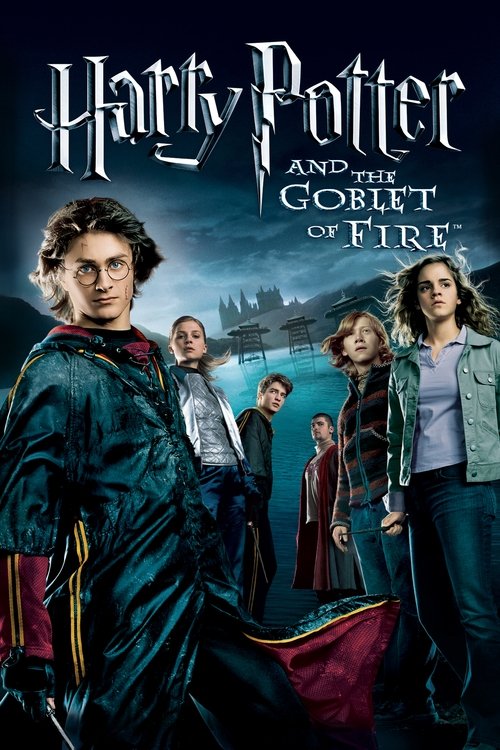
Harry Potter and the Goblet of Fire - Review
Harry Potter and the Goblet of Fire: A Darker Magic Emerges
The air crackles with anticipation, the stakes are higher than ever, and the magic is undeniably darker. “Harry Potter and the Goblet of Fire,” the fourth installment in the beloved film franchise, marks a significant turning point. Gone are the youthful whimsy and innocent adventures of the earlier films, replaced by a palpable sense of dread, teenage angst, and the chilling return of a long-dormant evil. Released in 2005, this film, directed by Mike Newell, not only adapts J.K. Rowling’s hefty novel but also successfully transitions the series into a more mature and complex realm, setting the stage for the increasingly grim battles to come. Buckle up, Potterheads; this is where the magic gets real.
Plot: Trials, Tribulations, and the Tournament of Terror
The plot of "Goblet of Fire" centers around the prestigious Triwizard Tournament, a competition held between three of Europe's leading wizarding schools: Hogwarts, Beauxbatons, and Durmstrang. This year, Hogwarts is chosen as the host, and excitement buzzes through the castle walls. Students from the other schools arrive, adding a layer of international flair and romantic tension to the already charged atmosphere. However, the celebratory mood takes a sinister turn when Harry Potter, despite being underage and ineligible, finds his name mysteriously drawn from the Goblet of Fire, forcing him to compete alongside the chosen champions: Cedric Diggory (Robert Pattinson), Fleur Delacour (Clémence Poésy), and Viktor Krum (Stanislav Ianevski).
The tournament itself forms the backbone of the narrative, with each task designed to test the champions' magical abilities, courage, and resourcefulness. Harry faces a fire-breathing dragon, navigates treacherous underwater obstacles, and battles through a perplexing maze filled with dangerous creatures and illusions. These challenges are not merely spectacle; they serve to reveal the strengths and weaknesses of the characters, highlighting their bravery, their flaws, and their capacity for both good and evil.
However, the tournament is merely a smokescreen for a much larger and more sinister plot. As Harry progresses through the tasks, it becomes increasingly clear that someone is manipulating events from behind the scenes, orchestrating his participation and guiding him towards a deadly confrontation. The true purpose of the tournament is revealed in a shocking climax, as Harry finds himself face-to-face with Lord Voldemort (Ralph Fiennes) in a graveyard, where a dark ritual brings the Dark Lord back to full power.
One of the criticisms often leveled against the film is its abridgment of the novel. Rowling's book is notoriously long and intricate, and the film necessarily cuts out numerous subplots and character details. While understandable from a cinematic perspective, this simplification can sometimes feel rushed, particularly for viewers who are intimately familiar with the source material. The Quidditch World Cup, a highlight of the book's opening, is reduced to a brief scene, and several supporting characters are either minimized or omitted entirely. This truncation can dilute the richness of the world-building and the complexity of the relationships between characters.
Characters: Growing Up and Facing Demons
The characters in "Goblet of Fire" undergo significant development, reflecting the growing maturity of the actors and the increasingly serious tone of the story. Harry Potter (Daniel Radcliffe) is no longer the wide-eyed boy wizard of the earlier films. He is now a teenager grappling with the complexities of adolescence, the weight of his destiny, and the recurring nightmares that plague his sleep. Radcliffe delivers a nuanced performance, capturing Harry's vulnerability, his determination, and his growing sense of responsibility.
Ron Weasley (Rupert Grint) and Hermione Granger (Emma Watson) continue to provide essential support for Harry, but their relationship is tested by the strains of teenage romance and jealousy. Ron's insecurities are amplified by Harry's fame and the arrival of Viktor Krum, who takes an interest in Hermione. Hermione, in turn, grapples with her own feelings and the challenges of balancing her academic pursuits with her burgeoning social life. Grint and Watson effectively portray the awkwardness and emotional turmoil of adolescence, adding a relatable human element to the fantastical world of Hogwarts.
The introduction of new characters adds depth and complexity to the narrative. Cedric Diggory, played with earnest charm by Robert Pattinson, represents a rival to Harry but also embodies the values of fair play and integrity. His tragic fate serves as a stark reminder of the dangers that lurk in the shadows. Mad-Eye Moody (Brendan Gleeson), the eccentric and paranoid Defense Against the Dark Arts teacher, provides a welcome dose of humor and intrigue, but his true identity is revealed in a shocking twist that underscores the theme of deception and betrayal.
However, the most significant character introduction is undoubtedly Lord Voldemort, brought to life with chilling brilliance by Ralph Fiennes. Fiennes's portrayal of Voldemort is terrifying and mesmerizing, capturing the Dark Lord's ruthlessness, his arrogance, and his insatiable thirst for power. His performance elevates the film to a new level of intensity, solidifying Voldemort as one of the most iconic villains in cinematic history. The graveyard scene, where Voldemort is resurrected, is a masterclass in suspense and horror, showcasing Fiennes's ability to convey pure evil with a subtle gesture or a chilling whisper.
One minor criticism lies in the somewhat underdeveloped roles of Fleur Delacour and Viktor Krum. While both characters are integral to the Triwizard Tournament, their personalities and motivations are not fully explored, leaving them feeling somewhat one-dimensional compared to the other champions.
Direction and Cinematography: A Darker Palette
Mike Newell's direction marks a departure from the previous films, adopting a darker and more visually striking style. The film is filled with sweeping camera angles, dramatic lighting, and intense close-ups, creating a sense of unease and foreboding. The Quidditch World Cup sequence, though brief, is visually stunning, showcasing the scale and spectacle of the wizarding world. The underwater task is particularly impressive, with its immersive underwater cinematography and eerie sound design.
The cinematography, helmed by Roger Pratt, is crucial in establishing the film's darker tone. The color palette is more muted and somber than in the previous films, reflecting the growing darkness of the story. The use of shadows and contrasts creates a sense of mystery and danger, particularly in the scenes set in the Forbidden Forest and the graveyard. The visual effects are also significantly improved, with the dragons, merpeople, and other magical creatures brought to life with stunning realism.
The film's pacing is generally well-managed, balancing the action-packed tournament sequences with the more character-driven moments. However, some viewers may find the film's length to be a bit excessive, particularly given the abridgment of the novel. Certain scenes could have been trimmed or streamlined without sacrificing the overall impact of the story.
Themes and Messages: Facing Fear and Accepting Loss
“Harry Potter and the Goblet of Fire” explores a range of complex themes, including the dangers of prejudice, the importance of friendship, and the inevitability of loss. The arrival of the Beauxbatons and Durmstrang students highlights the cultural differences and prejudices that exist within the wizarding world. The film also examines the pressures of fame and the burden of responsibility, as Harry struggles to cope with his unwanted participation in the Triwizard Tournament and the growing threat of Voldemort.
Friendship remains a central theme, as Harry, Ron, and Hermione rely on each other for support and guidance in the face of adversity. Their bond is tested by jealousy and misunderstanding, but ultimately, their loyalty to each other prevails. The film also emphasizes the importance of courage and resilience, as Harry confronts his fears and faces his enemies with unwavering determination.
Perhaps the most significant theme of "Goblet of Fire" is the acceptance of loss. The tragic death of Cedric Diggory serves as a stark reminder of the fragility of life and the devastating consequences of Voldemort's return. Harry's grief and guilt over Cedric's death are palpable, and his willingness to acknowledge his pain marks a significant step in his emotional development. The film teaches that even in the face of unimaginable loss, it is possible to find strength and hope.
Performances: A Cast Coming into Their Own
The performances in "Goblet of Fire" are universally strong, reflecting the growth and maturity of the young actors and the addition of seasoned professionals to the cast. Daniel Radcliffe delivers his most compelling performance to date, capturing Harry's vulnerability, his anger, and his unwavering determination. Rupert Grint and Emma Watson continue to shine as Ron and Hermione, bringing depth and nuance to their characters' emotional journeys.
The supporting cast is equally impressive, with Brendan Gleeson stealing scenes as the eccentric Mad-Eye Moody and Robert Pattinson making a memorable impression as the honorable Cedric Diggory. However, the standout performance is undoubtedly Ralph Fiennes as Lord Voldemort. His portrayal of the Dark Lord is chilling and unforgettable, establishing Voldemort as one of the most iconic villains in cinematic history.
Alan Rickman continues to deliver a masterful performance as Severus Snape, adding layers of mystery and intrigue to his enigmatic character. Maggie Smith, Michael Gambon (as Dumbledore), and Robbie Coltrane provide steadfast support as the Hogwarts faculty, offering wisdom, guidance, and occasional comic relief.
Comparison to Other Films/Works
"Goblet of Fire" stands in stark contrast to the earlier, more lighthearted films in the Harry Potter franchise. It shares thematic similarities with other coming-of-age stories that grapple with darker themes, such as "The Lord of the Rings" trilogy or "The Hunger Games" series. Like those films, "Goblet of Fire" explores the challenges of adolescence, the burden of responsibility, and the importance of standing up against evil.
Mike Newell's direction differs significantly from that of Chris Columbus, who directed the first two Harry Potter films. Newell's style is more visually dynamic and emotionally intense, reflecting the darker tone of the story. His approach is closer to that of Alfonso Cuarón, who directed "Harry Potter and the Prisoner of Azkaban," but Newell's vision is arguably even more unsettling and suspenseful.
Ralph Fiennes's portrayal of Voldemort is often compared to other iconic villains, such as Darth Vader from "Star Wars" or Hannibal Lecter from "The Silence of the Lambs." Like those characters, Voldemort is a force of pure evil, driven by a lust for power and a complete disregard for human life. Fiennes's performance is particularly effective because he avoids resorting to cartoonish villainy, instead portraying Voldemort as a complex and terrifying figure.
Positive Aspects
- Strong performances from the entire cast, particularly Daniel Radcliffe and Ralph Fiennes.
- Visually stunning cinematography and special effects.
- Effective direction by Mike Newell, capturing the darker tone of the story.
- Exploration of complex themes, such as prejudice, loss, and the burden of responsibility.
- Faithful adaptation of key plot points from J.K. Rowling's novel.
Constructive Criticism
- Abridgment of the novel leads to some rushed pacing and underdeveloped characters.
- Fleur Delacour and Viktor Krum could have been given more depth.
- The film's length may be excessive for some viewers.
- Some of the teenage angst feels a bit forced or melodramatic.
Conclusion
"Harry Potter and the Goblet of Fire" is a pivotal film in the Harry Potter series, marking a significant shift towards a darker and more mature tone. While the film necessarily simplifies some aspects of J.K. Rowling's novel, it successfully captures the essence of the story, delivering a thrilling and emotionally resonant cinematic experience. The strong performances, stunning visuals, and exploration of complex themes make this a must-see for fans of the Harry Potter franchise and a compelling entry point for newcomers.
Rating: 9/10