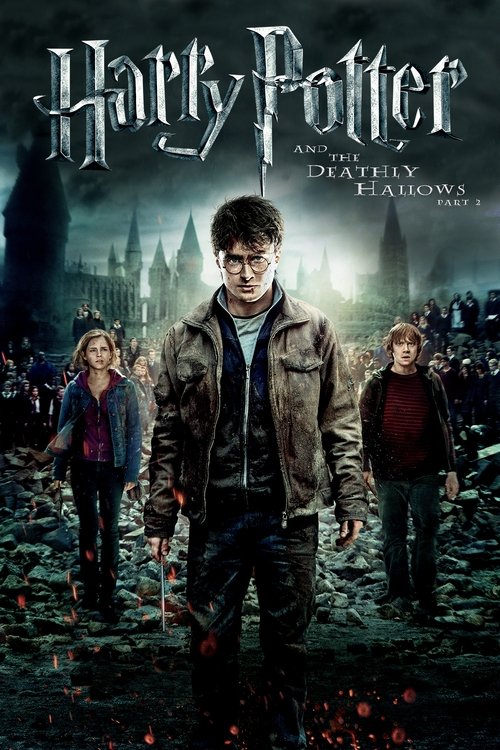
Harry Potter and the Deathly Hallows: Part 2 - Review
Harry Potter and the Deathly Hallows: Part 2: A Wizarding World Triumphant, But Not Without Scars
Ten years. Eight films. One epic conclusion. Harry Potter and the Deathly Hallows: Part 2 arrived in 2011 not merely as another installment in a beloved franchise, but as a cultural event. The weight of a decade of storytelling, character development, and fan expectations rested heavily upon its shoulders. Did it buckle? Absolutely not. Did it deliver a satisfying and emotionally resonant finale? For the most part, yes. But like the Battle of Hogwarts itself, it was a victory hard-won, leaving behind both moments of breathtaking brilliance and a few lingering regrets.
Plot: A Race Against Time, A Battle for the Ages
Deathly Hallows: Part 2 picks up immediately where its predecessor left off. Voldemort has secured the Elder Wand, Harry, Ron, and Hermione are on the hunt for the remaining Horcruxes, and the Wizarding World teeters on the brink of complete darkness. The plot, therefore, is a relentless sprint towards the final confrontation. The trio's journey takes them from Gringotts Wizarding Bank, where they stage a daring heist to steal Hufflepuff's Cup, to Hogwarts itself, which becomes the epicenter of a devastating battle. The narrative skillfully interweaves action-packed sequences with moments of quiet introspection, allowing the characters (and the audience) to catch their breath amidst the chaos. The film smartly condenses the sprawling narrative of the book, streamlining certain plot points while retaining the core emotional beats. However, this streamlining also leads to some sacrifices, particularly regarding the backstory and motivations of certain characters, which we'll discuss later.
The pacing is generally excellent, maintaining a sense of urgency throughout. The Gringotts sequence, with its intricate planning and terrifying dragon escape, is a standout. The Battle of Hogwarts is visually stunning and emotionally charged, showcasing the courage and sacrifice of students and teachers alike. The film also manages to incorporate flashbacks, most notably Snape's memories, which provide crucial context and reshape our understanding of his character.
Characters: Growth, Sacrifice, and Redemption
The strength of the Harry Potter franchise has always been its characters, and Deathly Hallows: Part 2 allows them to shine, even amidst the destruction. Harry, played with increasing maturity by Daniel Radcliffe, finally embraces his destiny. He is no longer just a boy wizard; he is a leader, a symbol of hope, and ultimately, a sacrifice. Radcliffe delivers his most nuanced performance of the series, conveying Harry's internal struggles with conviction and vulnerability.
Ron Weasley, portrayed by Rupert Grint, provides much-needed comedic relief and unwavering loyalty. He and Hermione Granger (Emma Watson) finally solidify their relationship, adding a touch of romance to the otherwise bleak landscape. Watson, as always, embodies Hermione's intelligence, bravery, and compassion. While their romance feels a bit rushed, especially for those unfamiliar with the books, it provides a heartwarming counterpoint to the surrounding darkness.
However, it's the supporting characters who truly steal the show. Maggie Smith as Professor McGonagall delivers a powerhouse performance, her dry wit and fierce protectiveness of Hogwarts providing some of the film's most memorable moments. Alan Rickman's portrayal of Severus Snape is nothing short of iconic. The revelation of Snape's true allegiance is handled with masterful precision, transforming him from a seemingly villainous figure into a tragic hero. Rickman's performance is subtle, powerful, and deeply moving, solidifying Snape's place as one of the most complex and compelling characters in cinematic history.
Ralph Fiennes as Lord Voldemort is suitably terrifying. He embodies pure evil, his cold demeanor and chilling presence sending shivers down the spine. However, the film occasionally struggles to fully explore Voldemort's motivations, reducing him at times to a one-dimensional villain. This is a consequence of condensing the book's narrative, as Voldemort's backstory and psychological complexities are somewhat diminished.
Direction: Yates' Dark Vision Comes to Fruition
David Yates, who directed the final four Harry Potter films, brings a distinct visual style to Deathly Hallows: Part 2. His direction is characterized by its dark, gritty realism, a stark contrast to the more whimsical tone of the earlier films. This approach perfectly suits the darker themes and more mature tone of the later books. Yates expertly balances large-scale action sequences with intimate character moments, creating a film that is both visually spectacular and emotionally resonant.
His use of visual effects is particularly impressive, seamlessly blending CGI with practical effects to create a believable and immersive world. The dragon escape from Gringotts is a visual masterpiece, and the Battle of Hogwarts is a breathtaking spectacle of magic and destruction. However, some critics have argued that Yates' direction occasionally veers towards excessive darkness, obscuring some of the action and making it difficult to follow. While this is a valid point, the overall effect is undeniably powerful and contributes to the film's sense of urgency and dread.
Cinematography: A World Shrouded in Shadow
Eduardo Serra's cinematography plays a crucial role in establishing the film's somber and foreboding atmosphere. The use of muted colors, low lighting, and dramatic shadows creates a world that feels both familiar and profoundly unsettling. The camera work is dynamic, capturing the energy and chaos of the battle sequences while also allowing for moments of quiet contemplation. The aerial shots of Hogwarts under siege are particularly striking, highlighting the scale of the conflict and the vulnerability of the wizarding world.
The visual contrast between the flashbacks, which are bathed in warm, golden light, and the present-day scenes, which are often shrouded in darkness, further emphasizes the film's themes of hope and despair. The cinematography effectively conveys the emotional weight of the story, enhancing the impact of the characters' struggles and sacrifices.
Performances: A Cast at the Peak of Their Powers
As mentioned previously, the performances in Deathly Hallows: Part 2 are uniformly excellent. Daniel Radcliffe, Rupert Grint, and Emma Watson deliver their best work of the series, embodying their characters with a depth and maturity that reflects their own personal growth. The supporting cast is equally impressive, with Maggie Smith, Alan Rickman, and Ralph Fiennes delivering truly memorable performances.
However, it's worth noting that some of the smaller roles are somewhat underdeveloped. Characters like Neville Longbottom (Matthew Lewis) and Luna Lovegood (Evanna Lynch), who play significant roles in the book, are given less screen time and their contributions are somewhat minimized. This is another consequence of condensing the narrative, but it does detract slightly from the overall impact of the film.
Themes and Messages: Love, Sacrifice, and the Power of Choice
Deathly Hallows: Part 2 explores several complex and profound themes. The most prominent theme is the power of love and sacrifice. Harry's willingness to sacrifice himself for the greater good is ultimately what defeats Voldemort. The film also emphasizes the importance of friendship, loyalty, and courage in the face of adversity. The students and teachers of Hogwarts stand together against Voldemort's forces, demonstrating the strength of unity and the power of collective action.
Another key theme is the importance of choice. Harry, Ron, and Hermione are constantly faced with difficult decisions, and their choices ultimately determine the fate of the wizarding world. The film suggests that even in the darkest of times, individuals have the power to choose their own path and to make a difference. The film also deals with themes of death, loss, and redemption. Snape's story arc is a powerful example of redemption, demonstrating that even those who have made mistakes can find forgiveness and make amends.
Comparison to Similar Films and Previous Works
Deathly Hallows: Part 2 is the culmination of a decade-long cinematic journey, and it inevitably invites comparisons to other fantasy epics, such as The Lord of the Rings: The Return of the King. Both films feature large-scale battles, complex characters, and profound themes of good versus evil. However, the Harry Potter series is ultimately more focused on the personal journeys of its characters, while The Lord of the Rings is more concerned with the fate of Middle-earth as a whole.
Compared to previous Harry Potter films directed by David Yates, Deathly Hallows: Part 2 is arguably his most successful. He successfully captures the darker tone of the later books while also delivering a visually stunning and emotionally resonant finale. However, some critics have argued that Yates' direction occasionally lacks the whimsical charm of the earlier films, which were directed by Chris Columbus and Alfonso Cuarón.
Positive Aspects
- Excellent performances from the entire cast, particularly Daniel Radcliffe, Rupert Grint, Emma Watson, Alan Rickman, and Maggie Smith.
- Visually stunning special effects and cinematography.
- Well-paced and engaging plot.
- Powerful and emotionally resonant themes.
- Satisfying conclusion to the Harry Potter series.
Constructive Criticism
- Some plot points are rushed, leading to underdeveloped characters and motivations.
- The film occasionally veers towards excessive darkness, obscuring some of the action.
- The epilogue feels somewhat tacked on and lacks emotional impact.
Conclusion
Harry Potter and the Deathly Hallows: Part 2 is a triumphant conclusion to a beloved franchise. It is a visually stunning, emotionally resonant, and ultimately satisfying film that delivers on its promise to bring the Harry Potter saga to a close. While it is not without its flaws, the film's strengths far outweigh its weaknesses. The performances are excellent, the special effects are impressive, and the themes are both profound and timely. It's a film that will stay with you long after the credits roll, a testament to the enduring power of the Harry Potter universe.
Despite the minor shortcomings, Harry Potter and the Deathly Hallows: Part 2 stands as a fitting and powerful end to a cinematic era. It's a film that will be cherished by fans for years to come.