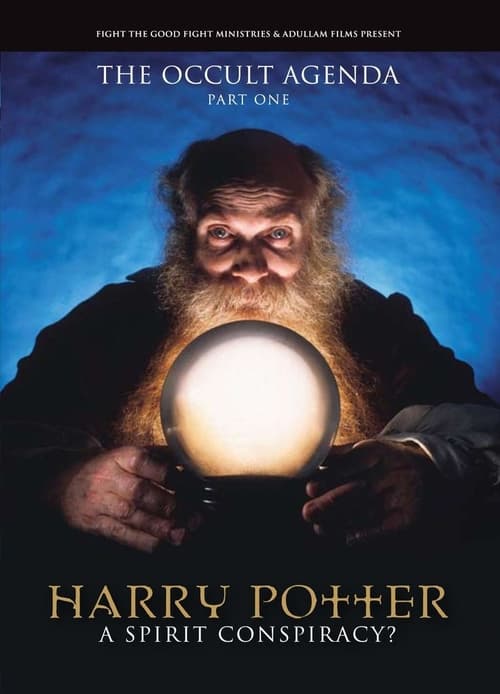
Harry Potter: A Spirit Conspiracy? - Review
Harry Potter: A Spirit Conspiracy? – A Review of Fear, Faith, and Fantasy
In 2005, as the Harry Potter phenomenon reached its zenith, a different kind of magic was brewing. Not the wand-waving, spell-casting kind, but a more insidious, allegedly demonic force, according to the documentary Harry Potter: A Spirit Conspiracy?. This isn’t your typical film review; it’s an exploration of a film that attempts to expose a perceived darkness lurking beneath the surface of a beloved children’s series. Forget your house scarves and butterbeer; we're diving into the theological trenches to dissect this controversial piece of cinema.
Plot: Unveiling the Alleged Occult Agenda
The documentary’s plot, if you can call it that, doesn't follow a traditional narrative structure. Instead, it presents a series of arguments, testimonies, and interpretations aimed at convincing the viewer that the Harry Potter books and films are not innocent entertainment but rather a gateway drug to the occult. The film weaves together interviews with self-proclaimed experts, former witches and warlocks, and concerned parents who claim to have witnessed the negative effects of Harry Potter on their children. These effects range from nightmares and behavioral problems to a fascination with witchcraft and the demonic. The film meticulously, or perhaps obsessively, dissects various elements of the Harry Potter universe, including spells, rituals, characters, and symbols, interpreting them as evidence of a deliberate occult agenda designed to indoctrinate young minds and lead them away from Christianity.
The "plot" progresses by highlighting perceived parallels between the fictional world of Harry Potter and real-world occult practices. For example, the film draws comparisons between the incantations used in the books and spells found in witchcraft manuals. It suggests that the normalization of magic in popular culture desensitizes children to the dangers of the occult and makes them more susceptible to demonic influence. The documentary also focuses on the characters, particularly Harry himself, portraying him as a messianic figure who embodies pagan values and rejects traditional Christian morality.
The film lacks a clear, logical flow, often jumping between different arguments and testimonies without providing sufficient context or evidence. It relies heavily on anecdotal evidence and selective interpretations of the source material, often distorting the original intent of the author and ignoring the positive themes of friendship, courage, and sacrifice that are central to the Harry Potter series.
Characters: The Accusers and the Accused (Figuratively)
The "characters" in this documentary are not fictional beings but real people who share their concerns and experiences related to Harry Potter. There is no central protagonist or antagonist in the traditional sense. Instead, the film presents a cast of individuals who are united by their belief that Harry Potter is a dangerous and harmful influence.
The key "characters" include:
- The "Experts": These are individuals who claim to have specialized knowledge of the occult, witchcraft, and demonology. They provide commentary and analysis, interpreting the Harry Potter books and films through the lens of their particular beliefs. Their credentials and expertise are often questionable, and their interpretations are highly subjective.
- The "Former Witches and Warlocks": These individuals share their personal experiences with witchcraft and claim that Harry Potter led them down a dark path. They often describe terrifying encounters with demonic forces and express regret for their involvement in the occult. Their testimonies are presented as evidence of the real dangers of witchcraft and the potential harm of Harry Potter.
- The "Concerned Parents": These are parents who claim to have witnessed the negative effects of Harry Potter on their children. They share stories of nightmares, behavioral problems, and a fascination with the occult. Their testimonies are intended to evoke empathy and fear in the viewer, reinforcing the film's message that Harry Potter is a threat to children.
The absence of counter-arguments or perspectives from Harry Potter fans, scholars, or even J.K. Rowling herself creates a biased and one-sided narrative. The film presents these individuals as credible and authoritative sources, without acknowledging their potential biases or motivations. It fails to provide a balanced and objective assessment of the Harry Potter phenomenon.
Direction and Cinematography: Low-Budget Fearmongering
The direction and cinematography of Harry Potter: A Spirit Conspiracy? are decidedly low-budget and unremarkable. The film lacks visual flair and relies heavily on talking-head interviews and stock footage. The camera work is static and uninspired, and the editing is often choppy and disjointed. The overall aesthetic is amateurish and unpolished, which detracts from the film's credibility.
The film employs a variety of visual techniques to reinforce its message. It uses ominous music, slow-motion footage, and dramatic lighting to create a sense of unease and foreboding. It also incorporates images of demons, witches, and occult symbols to further emphasize the alleged dangers of Harry Potter. These techniques are often heavy-handed and manipulative, designed to evoke fear and anxiety in the viewer rather than to provide a rational and objective analysis.
The film's visual presentation is consistent with other documentaries of its kind, which often prioritize sensationalism over substance. The focus is on creating a sense of alarm and urgency, rather than on presenting a well-researched and balanced argument.
Performances: The Power of Belief (and Confirmation Bias)
The "performances" in this documentary are not acting performances in the traditional sense. However, the individuals who appear in the film are clearly invested in their beliefs and express them with conviction. The "experts" speak with an air of authority and confidence, while the "former witches and warlocks" share their experiences with emotional intensity. The "concerned parents" express their fears and anxieties with genuine concern.
The effectiveness of these "performances" depends largely on the viewer's pre-existing beliefs and biases. Those who are already skeptical of Harry Potter or open to the idea of demonic influence are more likely to be persuaded by the film's arguments. Those who are fans of Harry Potter or who hold more secular views are likely to be dismissive of the film's claims.
The film's producers have clearly selected individuals who are likely to reinforce their message and appeal to their target audience. The absence of dissenting voices or alternative perspectives further strengthens the film's biased and one-sided narrative.
Themes and Messages: Fear, Faith, and the Perilous Power of Imagination
The primary theme of Harry Potter: A Spirit Conspiracy? is the perceived conflict between Christianity and the occult. The film argues that Harry Potter promotes pagan values and undermines traditional Christian morality. It suggests that the normalization of magic in popular culture desensitizes children to the dangers of the occult and makes them more susceptible to demonic influence. The film's overarching message is that Harry Potter is a threat to the spiritual well-being of children and should be avoided.
The film also explores themes of fear, faith, and the power of imagination. It attempts to instill fear in the viewer by highlighting the alleged dangers of witchcraft and demonology. It reinforces the importance of faith by presenting Christianity as the only true path to salvation. And it warns against the perils of imagination, suggesting that fantasy can lead to delusion and spiritual harm.
The film's messages are rooted in a particular theological perspective and are not universally shared. Many Christians, as well as people of other faiths and no faith, embrace Harry Potter as a harmless form of entertainment that promotes positive values such as friendship, courage, and tolerance.
Comparison to Similar Films and Works
Harry Potter: A Spirit Conspiracy? belongs to a genre of documentaries that attempt to expose the alleged hidden dangers of popular culture. Other examples include films that criticize Disney movies, rock music, and video games for promoting violence, sex, and occultism. These films often share similar characteristics, including a reliance on anecdotal evidence, selective interpretations of the source material, and a biased and one-sided narrative.
The film also shares similarities with other works that explore the conflict between Christianity and the occult, such as books and sermons that warn against the dangers of witchcraft and demonology. These works often draw on biblical texts and theological arguments to support their claims.
Compared to other documentaries of its kind, Harry Potter: A Spirit Conspiracy? is relatively unremarkable. It lacks the sophistication and production value of more mainstream documentaries. However, it is consistent with the genre in its use of fear-mongering tactics and its reliance on anecdotal evidence.
Positive Aspects: A Testament to the Power of Story
It's difficult to find genuine "positive" aspects in a film so fundamentally flawed and driven by fear. However, one could argue that Harry Potter: A Spirit Conspiracy? unintentionally highlights the immense power of storytelling. The very fact that a fictional series about a boy wizard could inspire such passionate debate and concern speaks volumes about the impact of narrative on our beliefs and values. The film, in its own misguided way, acknowledges the profound influence that stories can have on shaping our perceptions of the world and our understanding of ourselves. It shows how deeply stories can resonate with us, sparking both joy and fear, and prompting us to question our own beliefs and assumptions.
Furthermore, the film can be seen as a reminder of the importance of critical thinking. It encourages viewers to examine the messages they are receiving from popular culture and to consider the potential impact of these messages on their lives. While the film's own analysis is deeply flawed, it does raise important questions about the role of media in shaping our beliefs and values.
Constructive Criticism: A Masterclass in Misinterpretation
The most significant criticism of Harry Potter: A Spirit Conspiracy? is its blatant misinterpretation of the Harry Potter books and films. The film selectively extracts elements from the stories, twisting their meaning and context to fit its pre-determined agenda. It ignores the positive themes of friendship, courage, and sacrifice that are central to the series, focusing instead on perceived occult elements. This biased and distorted analysis undermines the film's credibility and makes it difficult to take seriously.
The film also suffers from a lack of evidence and logical reasoning. It relies heavily on anecdotal evidence and subjective interpretations, without providing sufficient support for its claims. The "experts" who appear in the film often lack credible credentials, and their interpretations are highly speculative. The film's arguments are often based on faulty assumptions and logical fallacies.
The film's one-sided narrative is another major flaw. It presents a biased and incomplete picture of the Harry Potter phenomenon, without acknowledging alternative perspectives or counter-arguments. The absence of dissenting voices or critical analysis further undermines the film's credibility.
Finally, the film's fear-mongering tactics are deeply irresponsible. It attempts to instill fear and anxiety in the viewer by highlighting the alleged dangers of witchcraft and demonology. This approach is not only manipulative but also potentially harmful, particularly to children and those with pre-existing anxieties.
Conclusion and Rating
Harry Potter: A Spirit Conspiracy? is a deeply flawed and misleading documentary that attempts to demonize a beloved children's series. Its biased analysis, lack of evidence, and fear-mongering tactics undermine its credibility and make it difficult to take seriously. While the film unintentionally highlights the power of storytelling and the importance of critical thinking, its overall message is harmful and irresponsible.
For its misleading information and lack of any journalistic integrity, Harry Potter: A Spirit Conspiracy? receives a rating of:
2/10