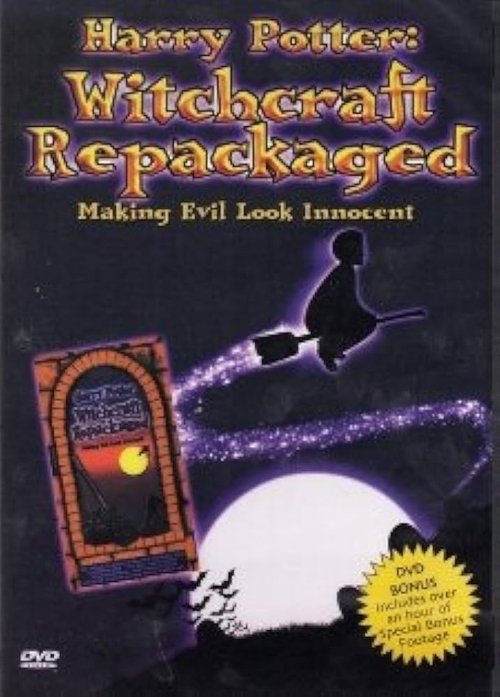
Harry Potter: Witchcraft Repackaged - Review
Harry Potter: Witchcraft Repackaged - A Critical Examination of Fear and Fantasy
Released on January 1st, 2001, "Harry Potter: Witchcraft Repackaged" isn't your typical film review fodder. It's not a celebration of cinematic artistry or a deep dive into narrative brilliance. Instead, it's a documentary – or rather, a piece of propaganda – designed to instill fear and suspicion regarding the Harry Potter phenomenon, then rapidly gaining global popularity. This "documentary" attempts to paint J.K. Rowling's magical world as a gateway to actual witchcraft and occult practices, warning parents of the supposed detrimental effects on their children. But does this film hold any water, or is it merely a product of its time, fueled by anxieties surrounding children's entertainment and the perceived erosion of traditional values?
Plot and Structure: A Fear-Mongering Narrative
The film's "plot," if one can call it that, is structured around a series of arguments and assertions, each aiming to demonize the Harry Potter books. The narrators, unidentified experts and concerned citizens (likely from specific religious or conservative backgrounds), draw parallels between the fictional magic in the books and real-world witchcraft and occult practices. The film intercuts these talking heads with carefully selected film clips from various movies and television programs, often depicting stereotypical and negative portrayals of witches and the occult. The intention is clear: to associate Harry Potter's world with darkness, evil, and potential harm to children.
The structure is deliberately manipulative. It relies heavily on anecdotal evidence, cherry-picked quotes, and out-of-context snippets to build its case. There's no attempt at balanced reporting or presenting alternative viewpoints. The film's narrative is a one-sided argument, designed to evoke fear and reinforce pre-existing biases.
Characters: The Villains are Children's Imaginations
In a conventional film, characters drive the narrative. Here, however, the "characters" are largely abstract concepts: witchcraft, the occult, and the supposed corrupting influence of fantasy literature. The Harry Potter books themselves are presented as a villainous force, subtly enticing children towards dangerous practices. J.K. Rowling is, by implication, portrayed as an unwitting (or perhaps even witting) purveyor of harmful ideologies. The children who enjoy the books are presented as vulnerable and susceptible to these negative influences.
The human elements of the film – the narrators and talking heads – are presented as righteous defenders of traditional values, bravely speaking out against a perceived threat to children's innocence. Their motivations are presented as purely altruistic, though their potential biases and agendas are never explored.
Direction and Cinematography: Exploiting Fear Through Visuals
The film's direction is less about artistic vision and more about strategic manipulation. The director (who remains largely anonymous) employs a range of techniques to reinforce the film's message. Dark lighting, ominous music, and jump cuts are used to create a sense of unease and dread. The juxtaposition of Harry Potter film clips with scenes depicting stereotypical witchcraft is particularly effective in creating a negative association.
The cinematography is functional rather than artistic. The focus is on conveying information and reinforcing the film's argument, rather than creating visually stunning or memorable imagery. The use of archival footage and film clips is often haphazard and poorly integrated, further highlighting the film's low budget and lack of production value.
Performances: Voices of Concern or Echoes of Prejudice?
The "performances" in "Harry Potter: Witchcraft Repackaged" are limited to the narrators and talking heads. Their delivery is generally earnest and sincere, conveying a sense of genuine concern for children's well-being. However, their arguments often rely on unsubstantiated claims and generalizations, undermining their credibility.
It's difficult to assess the sincerity of their beliefs. Some may genuinely believe that Harry Potter poses a threat to children, while others may be motivated by pre-existing biases or a desire to promote a specific religious or political agenda. Regardless of their motivations, their performances contribute to the film's overall atmosphere of fear and suspicion.
Themes and Messages: Fear, Faith, and the Power of Imagination
The central theme of "Harry Potter: Witchcraft Repackaged" is fear – fear of the unknown, fear of the occult, and fear of the potential corrupting influence of children's entertainment. The film attempts to exploit these fears by associating Harry Potter with dangerous and harmful practices.
Another key theme is the conflict between faith and fantasy. The film implicitly argues that the Harry Potter books undermine traditional religious beliefs by presenting an alternative system of magic and morality. It suggests that children who immerse themselves in the world of Harry Potter may lose their faith or become confused about the difference between good and evil.
The film also touches upon the power of imagination. While it acknowledges that imagination can be a positive force, it warns that unchecked imagination can lead to dangerous fantasies and a distorted view of reality. It suggests that children who are too immersed in the world of Harry Potter may become disconnected from the real world and vulnerable to negative influences.
Comparison to Other Films: A Lineage of Moral Panics
"Harry Potter: Witchcraft Repackaged" is not unique in its attempt to demonize children's entertainment. It belongs to a long lineage of films and documentaries that have sought to instill fear and suspicion regarding various forms of media, from comic books and rock music to video games and Dungeons & Dragons.
Films like "Mazes and Monsters" (1982) and documentaries like "Rock: It's Your Decision" (1982) similarly warned of the dangers of immersive fantasy and popular music, respectively. These films often rely on anecdotal evidence, sensationalism, and moral panic to make their case, and they often fail to account for the complex and nuanced ways in which children engage with media.
In comparison to these earlier films, "Harry Potter: Witchcraft Repackaged" is arguably less sensationalistic and more focused on providing "evidence" to support its claims. However, it shares the same underlying agenda: to protect children from perceived threats by demonizing a popular form of entertainment.
Positive Aspects: A Glimpse into Cultural Anxieties
It's difficult to identify truly "positive" aspects of a film so deeply rooted in fear and prejudice. However, "Harry Potter: Witchcraft Repackaged" does offer a glimpse into the cultural anxieties of its time. It reveals the concerns that some people had regarding the growing popularity of fantasy literature and the perceived erosion of traditional values.
The film also highlights the importance of critical thinking and media literacy. By exposing the film's manipulative techniques and unsubstantiated claims, viewers can learn to be more discerning consumers of information and more resistant to propaganda.
Finally, the film inadvertently demonstrates the power of the Harry Potter books. The fact that a film like this was made at all suggests that the books had a significant cultural impact and were perceived as a threat to certain established norms and beliefs.
Constructive Criticism: A Failure of Reason and Nuance
The most significant criticism of "Harry Potter: Witchcraft Repackaged" is its complete lack of reason and nuance. The film presents a simplistic and distorted view of the Harry Potter books, ignoring the complex themes and positive messages that they contain. It fails to acknowledge the difference between fantasy and reality, and it unfairly demonizes a form of entertainment that has brought joy and inspiration to millions of children.
The film's reliance on anecdotal evidence and cherry-picked quotes is also deeply problematic. It presents these as definitive proof of the harmful effects of Harry Potter, while ignoring the vast body of evidence that suggests otherwise. The film's lack of balanced reporting and alternative viewpoints further undermines its credibility.
Furthermore, the film's attempt to associate Harry Potter with actual witchcraft and occult practices is misleading and irresponsible. It perpetuates harmful stereotypes and contributes to the stigmatization of marginalized groups.
Ultimately, "Harry Potter: Witchcraft Repackaged" is a failure of critical thinking and responsible filmmaking. It's a product of fear and prejudice, and it offers nothing of value to viewers seeking a balanced and informed perspective on the Harry Potter phenomenon.
Conclusion: A Cautionary Tale of Fear-Mongering
"Harry Potter: Witchcraft Repackaged" is not a documentary; it's a piece of propaganda designed to instill fear and suspicion. It's a cautionary tale of how anxieties surrounding children's entertainment and the perceived erosion of traditional values can lead to the demonization of harmless and even beneficial forms of media.
While the film offers a glimpse into the cultural anxieties of its time, its lack of reason, nuance, and balanced reporting make it a deeply flawed and ultimately harmful piece of filmmaking. It's a reminder of the importance of critical thinking and media literacy in navigating a world filled with misinformation and propaganda.
Rating: 1/10