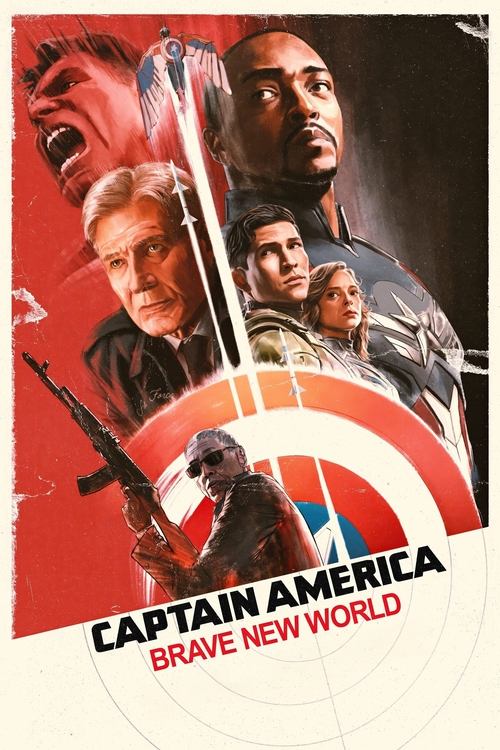
Captain America: Brave New World - Review
Captain America: Brave New World - A Review
The weight of the shield. The legacy of a legend. These are burdens Sam Wilson has carried since accepting the mantle of Captain America. "Captain America: Brave New World," released on February 12th, 2025, throws Sam headfirst into a world teetering on the brink of global conflict, forcing him to confront not only external threats but also the internal struggles of leadership and the moral complexities of a world rapidly changing. Does this new chapter in the Captain America saga live up to the hype? Let's dive in.
Plot Analysis: Conspiracy and Complicated Choices
The film opens with a scene of cautious optimism. Sam Wilson, now firmly established as Captain America, is invited to the White House to meet with the newly elected President Thaddeus "Thunderbolt" Ross. The meeting is initially presented as an attempt to forge a new era of collaboration between the government and the Avengers, moving past the Sokovia Accords and building trust. However, the seemingly amicable atmosphere quickly dissolves as an international incident erupts, triggered by a meticulously planned attack orchestrated by a shadowy organization. This organization, known only as "Crimson Dawn," aims to destabilize global power structures and usher in an era of authoritarian control, all under the guise of restoring order.
The plot unfolds as a complex web of political intrigue, espionage, and high-octane action sequences. Sam, along with his trusted allies, including Joaquin Torres (the new Falcon), Sharon Carter (now seemingly on a path of redemption), and a surprisingly nuanced and morally ambiguous version of Isaiah Bradley, must unravel Crimson Dawn's conspiracy before they can execute their ultimate plan: to manipulate world leaders into accepting a global security protocol that effectively eliminates individual freedoms.
One of the most compelling aspects of the plot is its willingness to explore the gray areas of morality. Ross, despite his past as a staunch antagonist, is portrayed as a leader grappling with the realities of a world constantly threatened by superpowered individuals. His motives are not purely villainous, but rather driven by a desire, albeit misguided, to protect the nation. This complexity adds depth to the narrative and forces Sam to question his own judgment and the true meaning of protecting freedom.
However, the plot isn't without its flaws. At times, the sheer number of characters and subplots can feel overwhelming, leading to pacing issues in the second act. The introduction of several new characters, while expanding the Captain America universe, also feels rushed, leaving some underdeveloped. Furthermore, the motivations of Crimson Dawn, while initially intriguing, become somewhat generic in the final act, falling into the familiar trope of world domination. A tighter focus on the core conflict and a more nuanced exploration of Crimson Dawn's ideology would have elevated the plot to a higher level.
Character Development: Old Faces, New Challenges
The strength of "Captain America: Brave New World" lies in its character development. Anthony Mackie delivers a powerful and nuanced performance as Sam Wilson, showcasing his growth as a leader and his internal struggle to reconcile the ideals of Captain America with the realities of a complex world. He's not just wielding the shield; he's embodying the responsibility and the burden of hope.
Harrison Ford steps into the role of President Thaddeus Ross, and his performance is a revelation. He brings a gravitas and a weariness to the character that adds layers of complexity. This isn't the raging Hulk-hunter of the past; this is a man burdened by the weight of leadership, making difficult choices in a world spiraling out of control. His interactions with Sam are particularly compelling, showcasing a dynamic of respect and distrust that drives the narrative forward.
Sharon Carter's character arc takes a significant turn. After her controversial actions in "The Falcon and the Winter Soldier," she is presented with an opportunity to redeem herself. While her motivations remain somewhat ambiguous, Emily VanCamp delivers a compelling performance, hinting at a deeper understanding of the sacrifices required to operate in the shadows. Her relationship with Sam is strained but ultimately crucial to uncovering Crimson Dawn's conspiracy.
Joaquin Torres, portrayed by Danny Ramirez, takes on the mantle of Falcon with enthusiasm and a youthful exuberance that contrasts nicely with Sam's more serious demeanor. He provides much-needed levity and serves as a reminder of the hope and optimism that Captain America represents. Isaiah Bradley, played by Carl Lumbly, continues to be a powerful presence, serving as a moral compass for Sam and reminding him of the sacrifices made by those who came before him. His scenes are particularly poignant and emotionally resonant.
However, the film suffers from a lack of a truly compelling villain. The leader of Crimson Dawn, while initially presented as a formidable threat, ultimately lacks the depth and charisma to be truly memorable. Their motivations feel generic, and their actions are often predictable. A more nuanced and compelling antagonist would have significantly elevated the stakes and added more weight to Sam's journey.
Direction and Cinematography: A Modern Marvel Aesthetic
Director Julius Onah brings a gritty and realistic aesthetic to "Captain America: Brave New World." The action sequences are grounded and visceral, emphasizing the physical toll of combat. There are fewer CGI-heavy spectacles and more hand-to-hand combat, reminiscent of the Russo brothers' Captain America films. The choreography is inventive and exciting, showcasing Sam's unique fighting style, which blends his skills as a paratrooper with the strategic use of the vibranium shield.
The cinematography, helmed by Ben Davis, is visually stunning. The film utilizes a muted color palette, creating a sense of realism and emphasizing the gravity of the situation. The use of shadows and lighting is particularly effective in creating a sense of suspense and intrigue. The location scouting is also impressive, with scenes filmed in diverse locations around the world, adding to the film's global scope.
However, the film occasionally suffers from a reliance on familiar Marvel tropes. The use of slow-motion during action sequences, while visually appealing, feels somewhat overused. Additionally, the film's visual effects, while generally well-executed, occasionally lack the polish of other Marvel productions. A more unique and distinctive visual style would have helped "Captain America: Brave New World" stand out from the crowd.
Themes and Messages: Freedom, Responsibility, and the Cost of Security
"Captain America: Brave New World" explores several complex and timely themes. The film grapples with the tension between freedom and security, questioning whether it is possible to maintain individual liberties in a world constantly threatened by terrorism and superpowered individuals. It asks whether the pursuit of security can ultimately lead to the erosion of the very freedoms it is meant to protect.
The film also examines the responsibilities of leadership. Sam Wilson is constantly forced to make difficult choices, weighing the needs of the many against the rights of the few. He struggles with the burden of representing a nation that has historically oppressed marginalized communities and questions whether he can truly embody the ideals of Captain America in a world plagued by inequality and injustice.
Furthermore, the film explores the legacy of the Super Soldier Serum and its impact on the world. Isaiah Bradley's story serves as a cautionary tale, reminding us of the ethical implications of scientific advancements and the potential for abuse. The film raises questions about the responsibility of scientists and governments to ensure that powerful technologies are used for good, not for exploitation or control.
Ultimately, "Captain America: Brave New World" is a film about hope. Despite the darkness and despair that permeate the narrative, Sam Wilson remains committed to fighting for a better future. He believes in the power of the human spirit and the importance of standing up for what is right, even when the odds are stacked against him. This message of hope is particularly resonant in a world grappling with complex challenges and uncertainties.
Comparisons: Echoes of the Past, Glimpses of the Future
"Captain America: Brave New World" draws clear inspiration from previous Captain America films, particularly "Captain America: The Winter Soldier." Both films explore themes of government corruption, conspiracy, and the tension between individual liberty and national security. The grounded action sequences and the focus on character development are also reminiscent of the Russo brothers' work.
However, "Captain America: Brave New World" also distinguishes itself from its predecessors. It delves deeper into the political complexities of the Marvel Cinematic Universe, exploring the challenges of international relations and the ethical dilemmas faced by world leaders. The film's focus on Sam Wilson's personal struggles as a Black man carrying the mantle of Captain America also adds a unique and timely dimension to the narrative.
In terms of other similar films, "Captain America: Brave New World" shares thematic similarities with spy thrillers like "Tinker Tailor Soldier Spy" and political dramas like "Zero Dark Thirty." However, its superhero elements and its connection to the broader Marvel Cinematic Universe set it apart. The film successfully blends the genres of action, thriller, and science fiction, creating a unique and engaging cinematic experience.
Comparing it to Julius Onah's previous work, notably "The Cloverfield Paradox," "Brave New World" showcases a significant step forward in terms of scale and ambition. While "The Cloverfield Paradox" suffered from pacing issues and convoluted plot elements, "Brave New World" demonstrates a tighter narrative structure and a more confident directorial vision. Onah's ability to balance action, character development, and thematic exploration is commendable.
Positive Aspects: A Worthy Successor
There are many aspects of "Captain America: Brave New World" that deserve praise:
- Anthony Mackie's performance: He embodies the role of Captain America with grace, strength, and vulnerability.
- The exploration of complex themes: The film grapples with timely issues of freedom, security, and responsibility.
- The grounded action sequences: The fight choreography is inventive and exciting, emphasizing the physical toll of combat.
- The character development: The film provides nuanced and compelling arcs for Sam Wilson, Thaddeus Ross, and Sharon Carter.
- The cinematography: The film is visually stunning, with a muted color palette and effective use of shadows and lighting.
Constructive Criticism: Room for Improvement
Despite its strengths, "Captain America: Brave New World" also has areas that could be improved:
- The lack of a compelling villain: The leader of Crimson Dawn lacks the depth and charisma to be truly memorable.
- The pacing issues: The second act feels somewhat rushed and overwhelming due to the number of characters and subplots.
- The reliance on familiar Marvel tropes: The use of slow-motion and visual effects occasionally feels overused.
- The underdeveloped new characters: Several new characters are introduced but not given enough screen time to fully develop.
- The somewhat generic motivations of Crimson Dawn: Their plan for world domination feels predictable and uninspired.
Conclusion: A Brave New Chapter
"Captain America: Brave New World" is a worthy addition to the Marvel Cinematic Universe. It's a complex and engaging film that explores timely themes of freedom, responsibility, and the cost of security. Anthony Mackie delivers a powerful performance as Sam Wilson, and Harrison Ford adds gravitas to the role of President Thaddeus Ross. While the film suffers from a lack of a compelling villain and some pacing issues, its strengths outweigh its weaknesses. It's a film that will leave you thinking long after the credits roll, prompting reflection on the challenges facing our world and the importance of standing up for what is right. This film cements Sam Wilson's place as Captain America and sets the stage for an exciting future in the MCU.
Rating: 8.5/10