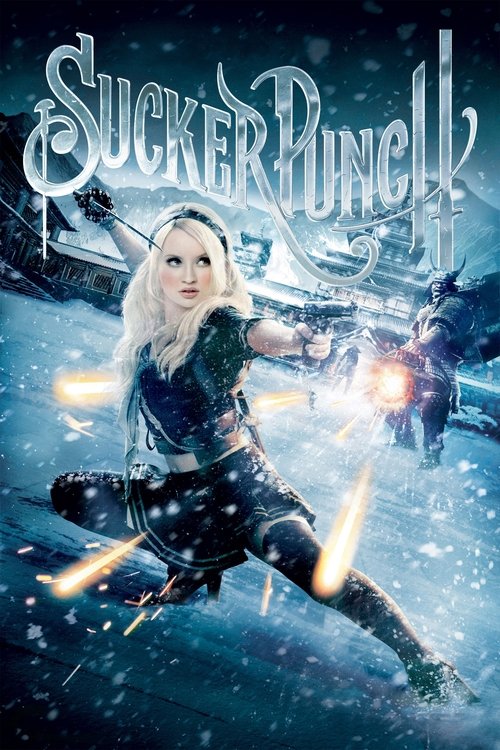
Sucker Punch - Review
Sucker Punch: A Visually Stunning but Narratively Flawed Dreamscape
Zack Snyder's Sucker Punch, released in 2011, remains a controversial and divisive film. Hailed by some as a visually groundbreaking feminist action fantasy and derided by others as a shallow, exploitative spectacle, it's a movie that demands attention, even if that attention isn't always positive. The film plunges us into the fractured psyche of Babydoll, a young woman trapped in a nightmarish asylum, as she constructs elaborate fantasy worlds to cope with her trauma and orchestrate an escape. But is the spectacle enough to redeem its narrative shortcomings? Let's dive deep into the dream layers of Sucker Punch.
Plot: A Labyrinth of Realities
The plot of Sucker Punch is, to put it mildly, layered. It begins with a tragic origin story: Babydoll (Emily Browning), grieving the death of her mother, is framed by her abusive stepfather for the accidental shooting of her sister. He has her committed to the Lennox House for the Mentally Insane, a grim institution where he bribes the corrupt orderly Blue Jones (Oscar Isaac) to lobotomize her within five days. To escape the horror of her impending fate, Babydoll retreats into a complex fantasy world.
Within this fantasy, Lennox House becomes a brothel, and Babydoll and her fellow inmates – Sweet Pea (Abbie Cornish), Rocket (Jena Malone), Blondie (Vanessa Hudgens), and Amber (Jamie Chung) – are dancers preparing to perform for wealthy clients. To secure their freedom, Babydoll envisions a mission: to collect five items – a map, fire, a knife, a key, and a mysterious fifth element – which will allow them to escape the brothel.
However, the film doesn't stop there. Within the "brothel" layer, each item retrieval is further visualized as a series of elaborate action sequences. These sequences, guided by the enigmatic Doctor Vera Gorski (Carla Gugino), depict the girls as heavily armed warriors battling steampunk soldiers, dragons, samurai, and other fantastical enemies. These are essentially "dreams within dreams," creating a multi-layered narrative structure that can be both captivating and confusing. The "real" world of the asylum, the "brothel" world, and the "action" worlds are all presented with varying degrees of visual and narrative clarity, leaving the audience to constantly question what is real and what is imagined.
The core of the plot revolves around the girls' attempts to obtain the five items while simultaneously navigating the dangers and manipulations within the brothel. Blue Jones, now the brothel's manager, poses a constant threat, while Doctor Gorski provides cryptic guidance. As the girls succeed in their missions, the lines between reality and fantasy blur further, culminating in a final, devastating revelation about the true nature of Babydoll's fate.
Characters: Archetypes in a Dream
The characters in Sucker Punch are deliberately archetypal, representing different aspects of Babydoll's psyche and her struggle for survival. While this allows for symbolic resonance, it also contributes to a sense of emotional distance.
- Babydoll (Emily Browning): The protagonist, Babydoll is the vessel through which the audience experiences the film's complex layers of reality. She is presented as innocent and vulnerable, yet possesses a hidden strength and resilience. Her fantasy worlds are a direct response to her trauma, allowing her to confront her fears and fight back against her oppressors, albeit in a symbolic way. Browning delivers a performance that captures Babydoll's fragility and determination, but the character's internal world remains somewhat opaque.
- Sweet Pea (Abbie Cornish): Sweet Pea is the de facto leader of the group, offering Babydoll guidance and protection. She is more grounded and emotionally mature than the other girls, providing a voice of reason amidst the chaos. Cornish imbues Sweet Pea with a quiet strength and a deep sense of loyalty, making her one of the more compelling characters.
- Rocket (Jena Malone): Sweet Pea's younger sister, Rocket, is impulsive and rebellious. She is fiercely protective of her sister and willing to fight for their freedom. Malone brings a raw energy to the role, portraying Rocket's vulnerability and her unwavering loyalty.
- Blondie (Vanessa Hudgens): Blondie is initially hesitant and fearful, but she gradually finds her courage and contributes to the group's efforts. Hudgens portrays Blondie's journey from insecurity to self-assurance, although the character remains somewhat underdeveloped.
- Amber (Jamie Chung): Amber is the group's pilot and driver, providing practical skills and support. Chung delivers a solid performance as Amber, but the character's personality is less defined than the others.
- Blue Jones (Oscar Isaac): The primary antagonist, Blue Jones, is a corrupt and sadistic figure who exploits the girls for his own gain. Isaac brings a chilling intensity to the role, portraying Blue's cruelty and his manipulative nature. He embodies the forces of oppression that Babydoll is fighting against.
- Doctor Vera Gorski (Carla Gugino): Doctor Gorski is a complex and enigmatic figure who mentors and guides the girls, but her true motives remain ambiguous. Gugino delivers a nuanced performance, portraying Gorski's wisdom and her underlying sadness. She acts as a facilitator of Babydoll's fantasy and a symbol of hope amidst the darkness.
While the actors deliver competent performances, the characters themselves are often limited by their archetypal nature. They serve as symbolic representations of Babydoll's inner struggles, rather than fully realized individuals. This can make it difficult to connect with them on an emotional level, despite the harrowing circumstances they face.
Direction and Cinematography: Snyder's Signature Style
Zack Snyder's direction in Sucker Punch is undeniably distinctive. He employs his signature visual style, characterized by slow-motion action sequences, stylized violence, and a hyper-real aesthetic. The film is a feast for the eyes, with stunning visuals and meticulously crafted set pieces.
The cinematography, helmed by Larry Fong, is equally impressive. The film's color palette is rich and vibrant, creating a visually arresting experience. The use of slow motion during the action sequences is particularly effective, allowing the audience to appreciate the choreography and the sheer spectacle of the battles. The camera work is dynamic and engaging, constantly moving and swirling around the characters, immersing the viewer in the film's fantasy worlds.
However, Snyder's reliance on style over substance is a common criticism of his work, and Sucker Punch is no exception. While the visuals are undeniably impressive, they sometimes overshadow the narrative and the characters. The action sequences, while visually stunning, can feel repetitive and gratuitous, detracting from the emotional impact of the story.
The film's pacing is also uneven. The transitions between the different layers of reality can be jarring, and the film sometimes struggles to maintain a consistent tone. The first act, which establishes Babydoll's backstory and her arrival at Lennox House, is arguably the strongest, but the subsequent action sequences often feel disconnected from the emotional core of the story.
Themes and Messages: Empowerment or Exploitation?
The themes and messages of Sucker Punch are complex and open to interpretation. On the surface, the film appears to be a story of female empowerment, with the girls fighting back against their oppressors and taking control of their own destinies. Babydoll's fantasy worlds allow her to reclaim her agency and confront her trauma, albeit in a symbolic way.
However, the film has also been criticized for its perceived exploitation of female sexuality. The girls are often depicted in revealing outfits and subjected to violent and sexualized situations. Some critics argue that the film's male gaze undermines its feminist message, turning the girls into objects of male fantasy rather than empowering them as individuals.
The film also explores themes of mental illness, trauma, and the power of imagination. Babydoll's fantasy worlds are a direct response to her traumatic experiences, providing her with a means of coping with her pain and finding hope in the face of despair. The film suggests that imagination can be a powerful tool for survival, allowing individuals to transcend their circumstances and find strength within themselves.
Ultimately, the interpretation of the film's themes and messages is subjective. Some viewers may see it as a celebration of female empowerment, while others may view it as an exploitative spectacle. The film's ambiguity and its willingness to challenge conventional narratives are both strengths and weaknesses, contributing to its divisive reception.
Comparisons: Echoes of the Past
Sucker Punch draws inspiration from a variety of sources, including video games, anime, and other action fantasy films. The film's visual style and its multi-layered narrative structure are reminiscent of films like The Matrix and Inception. The action sequences, with their stylized violence and fantastical enemies, evoke the aesthetics of video games like Devil May Cry and Bayonetta.
Compared to Snyder's previous works, such as 300 and Watchmen, Sucker Punch is arguably his most visually ambitious film. However, it also suffers from similar flaws, including a tendency towards style over substance and a reliance on slow-motion action sequences. While Snyder's visual flair is undeniable, his storytelling skills are often less impressive.
The film's exploration of female empowerment and its critique of institutional power structures can be compared to films like One Flew Over the Cuckoo's Nest and Girl, Interrupted. However, Sucker Punch takes a more fantastical approach to these themes, blurring the lines between reality and imagination in a way that is both unique and potentially problematic.
Positive Aspects: Visual Spectacle and Ambitious Concept
Despite its flaws, Sucker Punch has several redeeming qualities. The film's visual spectacle is undeniable. The action sequences are imaginative and well-choreographed, and the film's overall aesthetic is visually stunning. The costume design, set design, and special effects are all top-notch, creating a truly immersive and fantastical world.
The film's ambitious concept is also commendable. The multi-layered narrative structure, while confusing at times, is ultimately thought-provoking and engaging. The film challenges the audience to question the nature of reality and the power of imagination.
The performances of the lead actresses are also noteworthy. Emily Browning delivers a compelling performance as Babydoll, capturing her vulnerability and her determination. Abbie Cornish, Jena Malone, Vanessa Hudgens, and Jamie Chung all contribute solid performances as Babydoll's fellow inmates.
Constructive Criticism: Narrative Flaws and Exploitation Concerns
The film's narrative flaws are its most significant weakness. The plot is convoluted and difficult to follow, and the characters are often underdeveloped. The transitions between the different layers of reality can be jarring, and the film sometimes struggles to maintain a consistent tone.
The film's perceived exploitation of female sexuality is also a valid concern. The girls are often depicted in revealing outfits and subjected to violent and sexualized situations. While the film attempts to subvert these tropes by portraying the girls as powerful warriors, it ultimately reinforces them in many ways.
Furthermore, the film's ending is ambiguous and unsatisfying. While it attempts to offer a message of hope and resilience, it ultimately leaves the audience with more questions than answers.
Conclusion: A Divisive but Unforgettable Experience
Sucker Punch is a flawed but fascinating film. Its visual spectacle and ambitious concept are undeniable, but its narrative flaws and exploitation concerns cannot be ignored. It's a movie that demands to be seen and discussed, even if those discussions are often contentious. It's a testament to Snyder's unique vision, even if that vision is not always fully realized. Ultimately, Sucker Punch is a divisive but unforgettable cinematic experience.
Rating: 6.5/10