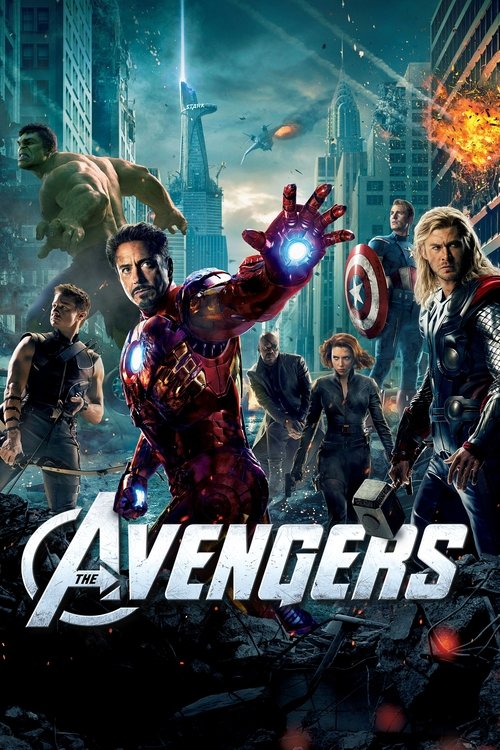
The Avengers - Review
The Avengers: A Superhero Symphony of Action, Wit, and World-Saving Glory
In 2012, the cinematic landscape was forever altered. Not by a rogue asteroid, a zombie outbreak, or a sentient AI uprising, but by something far more compelling: The Avengers. Joss Whedon's masterful orchestration of Marvel's superhero ensemble wasn't just a movie; it was a cultural phenomenon. It was the culmination of years of carefully laid groundwork, a gamble that paid off in dividends of critical acclaim, box office records, and a lasting legacy that continues to shape the superhero genre today. But beyond the explosions and the star-spangled spandex, does The Avengers still hold up a decade later? Let's dive in and find out.
Plot: Weaving a Tapestry of Interconnected Narratives
The plot of The Avengers is deceptively simple: Loki, the mischievous Asgardian god, arrives on Earth seeking to conquer it using the Tesseract, a powerful cosmic cube capable of opening portals to other dimensions. Nick Fury, the director of S.H.I.E.L.D., activates the "Avengers Initiative," a contingency plan to assemble a team of extraordinary individuals to combat threats beyond conventional military capabilities. This leads to the recruitment (or, in some cases, forced conscription) of Iron Man, Captain America, Thor, Hulk, Black Widow, and Hawkeye.
However, the brilliance of the plot lies not in its simplicity, but in its skillful weaving of threads from the preceding Marvel Cinematic Universe (MCU) films. Each Avenger carries their own baggage, their own motivations, and their own pre-established relationships (or lack thereof) with the other characters. The film masterfully juggles these individual storylines, allowing each hero to shine while contributing to the overarching narrative. The initial conflict isn't just about stopping Loki; it's about these disparate personalities learning to trust each other, to overcome their personal demons, and to function as a cohesive unit.
The pacing is expertly handled. The first act focuses on the individual heroes and the growing threat, the second act sees the team assembled but riddled with internal conflict, and the third act unleashes the explosive Battle of New York. This three-act structure provides a satisfying narrative arc, building tension effectively and culminating in a spectacular climax.
Criticism: While the plot is generally well-constructed, some might argue that Loki's motivations are somewhat underdeveloped. He's presented as power-hungry and vengeful, but the film doesn't fully explore the psychological complexities that drove his actions in Thor. Additionally, the Tesseract, while visually impressive, sometimes feels like a MacGuffin – a plot device primarily used to drive the story forward without significant intrinsic importance.
Characters: A Symphony of Superpowers and Personality
The true strength of The Avengers lies in its characters. Each member of the team is distinct, memorable, and expertly portrayed by their respective actors.
- Iron Man (Robert Downey Jr.): Downey Jr. continues his iconic portrayal of Tony Stark, the arrogant genius billionaire playboy philanthropist. He's the source of much of the film's humor and provides a grounded perspective amidst the fantastical elements. His arc revolves around his growing sense of responsibility and his willingness to sacrifice himself for the greater good.
- Captain America (Chris Evans): Evans embodies the unwavering morality and idealism of Steve Rogers. He serves as the moral compass of the team, constantly striving to do what's right, even when it's difficult. His struggle to adapt to the modern world and his clash with Stark's cynicism provide compelling character dynamics.
- Thor (Chris Hemsworth): Hemsworth brings a regal presence and a sense of otherworldliness to the role of Thor. He's torn between his loyalty to Asgard and his growing affection for Earth. His relationship with Loki adds emotional depth to the film.
- Hulk (Mark Ruffalo): Ruffalo's portrayal of Bruce Banner is arguably the best in the MCU. He captures the character's intelligence, his vulnerability, and his constant struggle to control the Hulk. His dry wit and self-deprecating humor provide a welcome contrast to the more serious characters.
- Black Widow (Scarlett Johansson): Johansson delivers a nuanced performance as Natasha Romanoff, the skilled spy with a mysterious past. She's intelligent, resourceful, and fiercely independent. Her interrogation scene with Loki is a highlight of the film.
- Hawkeye (Jeremy Renner): While Hawkeye's role is somewhat limited, Renner brings a quiet intensity to the character. His mind control by Loki provides a significant plot point and highlights his vulnerability.
- Nick Fury (Samuel L. Jackson): Jackson embodies the enigmatic and authoritative presence of Nick Fury. He's the glue that holds the team together, and his calculated manipulations are essential to the Avengers' success.
- Loki (Tom Hiddleston): Hiddleston delivers a captivating performance as the villainous Loki. He's charming, intelligent, and delightfully evil. His motivations may be somewhat unclear, but his presence is undeniably magnetic.
The interactions between these characters are what truly make The Avengers special. The witty banter, the clashing ideologies, and the growing sense of camaraderie create a dynamic and engaging ensemble. The film understands that superhero stories are not just about superpowers; they're about the people behind the masks.
Criticism: While the core Avengers are well-developed, supporting characters like Maria Hill and Agent Coulson are somewhat underdeveloped. Coulson's death, while emotionally impactful, feels a bit contrived to motivate the Avengers to work together.
Direction: Whedon's Masterful Orchestration
Joss Whedon's direction is a masterclass in balancing action, humor, and character development. He seamlessly blends the individual styles and tones of the previous MCU films into a cohesive and engaging narrative. His signature witty dialogue is on full display, providing moments of levity amidst the chaos. He understands the strengths of each character and allows them to shine in their own way.
Whedon's experience in television, particularly with ensemble casts like Buffy the Vampire Slayer and Firefly, is evident in his ability to manage a large and complex cast of characters. He gives each Avenger their moment to shine, ensuring that no one feels sidelined. He also understands the importance of pacing, building tension effectively and delivering a satisfying climax.
The Battle of New York is a testament to Whedon's directorial skill. He manages to choreograph a complex and visually stunning action sequence that involves all six Avengers, each utilizing their unique abilities to fight the Chitauri army. The camera work is dynamic and engaging, keeping the audience on the edge of their seats. The sequence is not just about spectacle; it's about showcasing the Avengers' teamwork and their growing understanding of each other's strengths.
Criticism: While Whedon's direction is generally excellent, some might argue that his reliance on quips and one-liners can occasionally feel forced or distracting. Additionally, the visual effects, while impressive for their time, have aged somewhat and are not quite as seamless as those in more recent superhero films.
Cinematography: A Visual Feast
The cinematography of The Avengers, handled by Seamus McGarvey, is visually striking and effectively captures the scale and scope of the story. The film utilizes a variety of shooting styles to differentiate between the different settings and characters. The scenes in New York are gritty and realistic, while the scenes in Asgard are more fantastical and otherworldly.
The use of color is also noteworthy. The film employs a vibrant color palette, particularly in the Iron Man sequences, which are characterized by bright reds and golds. The Hulk sequences are dominated by greens and purples, reflecting the character's raw power and untamed nature. The lighting is also carefully considered, creating a sense of mood and atmosphere.
The visual effects, while not perfect by today's standards, were groundbreaking for their time. The Hulk is particularly impressive, with his realistic musculature and expressive facial features. The Chitauri army is also effectively rendered, creating a sense of overwhelming threat.
Criticism: As mentioned earlier, the visual effects have aged somewhat and are not quite as seamless as those in more recent superhero films. Some of the CGI backgrounds also appear slightly artificial. Additionally, the film's aspect ratio has been a subject of debate, with some viewers preferring the IMAX version for its expanded vertical field of view.
Performances: Superb Across the Board
The performances in The Avengers are uniformly excellent. The cast chemistry is palpable, and each actor embodies their character with conviction and charisma.
- Robert Downey Jr. continues to deliver a masterful performance as Tony Stark, balancing arrogance with vulnerability and humor with heart.
- Chris Evans perfectly captures the unwavering morality and idealism of Captain America.
- Chris Hemsworth brings a regal presence and a sense of otherworldliness to the role of Thor.
- Mark Ruffalo delivers the definitive portrayal of Bruce Banner, capturing the character's intelligence, vulnerability, and dry wit.
- Scarlett Johansson is compelling as Black Widow, showcasing her intelligence, resourcefulness, and fighting skills.
- Jeremy Renner, while underutilized, brings a quiet intensity to the role of Hawkeye.
- Samuel L. Jackson is perfectly cast as the enigmatic and authoritative Nick Fury.
- Tom Hiddleston delivers a captivating performance as the villainous Loki, making him both charming and menacing.
The success of The Avengers is largely due to the strength of its ensemble cast. The actors clearly enjoy working together, and their chemistry shines through in every scene.
Criticism: As mentioned earlier, some of the supporting characters are somewhat underdeveloped, which limits the actors' ability to fully flesh out their roles.
Themes and Messages: More Than Just Superpowers
Beyond the spectacle and the action, The Avengers explores several important themes and messages.
- Teamwork and Collaboration: The film emphasizes the importance of teamwork and collaboration in overcoming challenges. The Avengers are a group of individuals with vastly different backgrounds, skills, and personalities, but they learn to work together to achieve a common goal.
- Trust and Forgiveness: The film explores the theme of trust, both within the team and between the Avengers and S.H.I.E.L.D. The characters must learn to trust each other, even when they have reason to doubt. The film also touches on the theme of forgiveness, as the characters must confront their past mistakes and learn to move forward.
- Sacrifice and Selflessness: The film highlights the importance of sacrifice and selflessness. The Avengers are willing to put their lives on the line to protect the world, and they often make personal sacrifices for the greater good.
- Responsibility and Accountability: The film explores the theme of responsibility, particularly in relation to power. The Avengers must learn to use their powers responsibly and to be accountable for their actions.
- Humanity's Potential: Despite the chaos and destruction, The Avengers ultimately offers a message of hope. It suggests that humanity is capable of great things, even in the face of overwhelming odds.
The Avengers is not just a superhero film; it's a story about the power of human connection and the importance of fighting for what's right.
Comparison to Other Films
The Avengers set a new standard for superhero ensemble films. Before its release, attempts to bring multiple superheroes together on screen were often met with mixed results. Films like League of Extraordinary Gentlemen failed to capture the magic of the source material, while others, like X-Men, focused primarily on a single team dynamic.
The Avengers succeeded where others failed by carefully building its universe over several years, introducing each hero individually before bringing them together. This allowed audiences to become invested in the characters and their individual stories, making their eventual team-up all the more satisfying.
Since the release of The Avengers, numerous other superhero ensemble films have been released, including Justice League, Suicide Squad, and X-Men: Days of Future Past. While some of these films have been successful, none have quite reached the same level of critical acclaim and cultural impact as The Avengers.
Whedon's previous work on Buffy the Vampire Slayer and Firefly informed his approach to The Avengers, particularly in his ability to manage a large ensemble cast and to balance action with humor and character development. The film also shares thematic similarities with Whedon's previous work, exploring themes of teamwork, sacrifice, and the importance of fighting for what's right.
Positive Aspects
- Expertly crafted plot that weaves together multiple storylines.
- Memorable and well-developed characters.
- Masterful direction by Joss Whedon.
- Visually stunning cinematography.
- Superb performances from the entire cast.
- Exploration of important themes and messages.
- Set a new standard for superhero ensemble films.
Constructive Criticism
- Loki's motivations could have been more developed.
- Supporting characters are somewhat underdeveloped.
- Visual effects have aged somewhat.
- Reliance on quips and one-liners can occasionally feel forced.
Conclusion
The Avengers is more than just a superhero movie; it's a cinematic event. It's a testament to the power of storytelling, the importance of character development, and the magic of teamwork. While some aspects of the film have aged slightly, its core strengths remain as potent as ever. It's a film that can be enjoyed by both casual moviegoers and die-hard comic book fans alike. The Avengers not only redefined the superhero genre but also demonstrated the immense potential of interconnected cinematic universes. It remains a benchmark against which all subsequent superhero team-up films are judged, and for good reason. It's funny, action-packed, and ultimately, deeply satisfying.
Rating: 9.5/10