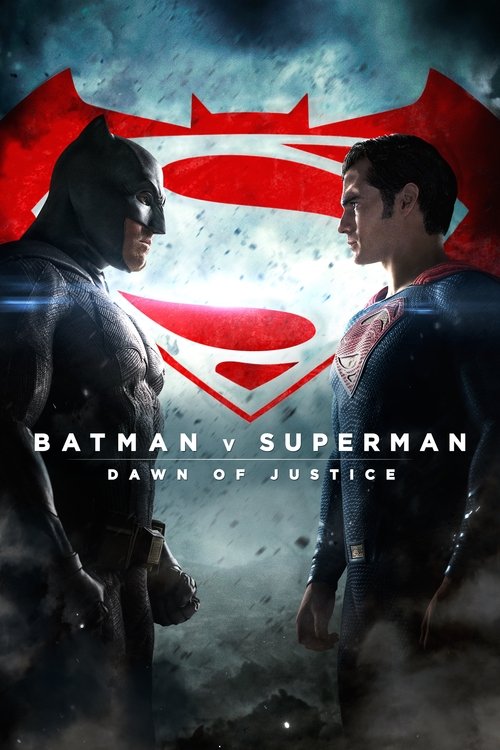
Batman v Superman: Dawn of Justice - Review
Batman v Superman: Dawn of Justice - A Clash of Titans, A Struggle for Identity
Zack Snyder's Batman v Superman: Dawn of Justice arrived in 2016 shrouded in immense anticipation, burdened by the weight of launching the DC Extended Universe (DCEU) and promising the cinematic showdown fans had dreamed of for decades. The film, pitting two of the world's most iconic superheroes against each other, aimed for operatic grandeur and philosophical depth. While it undeniably delivers on visual spectacle and introduces compelling iterations of its legendary characters, the film's ambition often buckles under its own weight, resulting in a divisive and ultimately flawed, albeit fascinating, cinematic experience.
Plot: A Collision Course of Ideologies and Manipulations
The plot of Batman v Superman is undeniably complex, perhaps overly so. The film opens with a beautifully rendered retelling of Bruce Wayne's origin story, witnessing the murder of his parents yet again, grounding us in his decades-long trauma and fueling his cynical worldview. We then cut to the aftermath of the climactic battle in Man of Steel, viewed this time from Bruce Wayne's perspective. The destruction wrought by Superman's fight with Zod leaves a devastating impression on Gotham's protector, solidifying his belief that Superman is an unchecked power, a potential threat to humanity that must be neutralized.
Meanwhile, Superman grapples with the consequences of his actions and the growing public distrust fueled by Senator Finch and Lex Luthor. He is constantly questioned about his responsibility and the collateral damage he causes. This internal conflict is further complicated by Luthor's machinations, which are designed to manipulate both heroes into a deadly confrontation. Luthor, driven by a personal vendetta against Superman and a twisted desire to prove that even a god can bleed, orchestrates events that paint Superman as a villain in the eyes of the world and push Batman to the brink.
The central conflict between Batman and Superman is initially driven by fear and misunderstanding, fueled by Luthor's calculated manipulations. Batman sees Superman as an alien invader capable of unimaginable destruction, while Superman views Batman as a brutal vigilante operating outside the law. Their ideologies clash violently, resulting in a series of intense and visually stunning fight sequences. However, the infamous "Martha" scene, where both heroes realize their mothers share the same name, serves as a somewhat contrived and abrupt resolution to their conflict, forcing them to unite against a greater threat: Doomsday.
The introduction of Doomsday, a genetically engineered monster created by Lex Luthor using Zod's DNA, feels rushed and somewhat underwhelming. While Doomsday provides a visual spectacle and a formidable physical threat, his appearance feels like a plot device to force Batman and Superman to team up rather than a natural progression of the story. The film culminates in a destructive battle against Doomsday, resulting in Superman's apparent death, a moment intended to be emotionally resonant but ultimately feels unearned due to the film's rushed pacing and underdeveloped character relationships.
Characters: Dark Knights, Alien Gods, and Twisted Geniuses
Batman (Ben Affleck): Affleck's portrayal of Batman is arguably one of the film's strongest aspects. He embodies a hardened, weary, and brutal version of the Dark Knight, one who has been fighting crime for decades and has become increasingly cynical and ruthless. This Batman is not afraid to use lethal force, reflecting the dark and gritty tone of the film. Affleck's physical presence and gravitas make him a believable and intimidating Batman, and his performance captures the character's internal struggle between his desire for justice and his descent into darkness.
Superman (Henry Cavill): Cavill reprises his role as Superman, but his characterization feels less defined than in Man of Steel. He is portrayed as a conflicted and somewhat passive figure, struggling to reconcile his powers with the responsibility of being a symbol of hope. The film explores the burden of being Superman and the constant scrutiny he faces from the world. However, Cavill's Superman lacks the warmth and charisma that have traditionally defined the character, making him less relatable and sympathetic.
Lex Luthor (Jesse Eisenberg): Eisenberg's portrayal of Lex Luthor is perhaps the most divisive aspect of the film. He departs significantly from the traditional portrayal of Luthor as a calculating and sophisticated businessman. Instead, Eisenberg delivers a manic and eccentric performance, portraying Luthor as a socially awkward and intellectually arrogant genius. While Eisenberg's performance is undeniably energetic and memorable, it often feels out of place in the film's dark and serious tone. Some viewers found his portrayal to be a refreshing take on the character, while others found it to be jarring and inconsistent with the established Luthor persona.
Wonder Woman (Gal Gadot): Gadot's Wonder Woman is a welcome addition to the film, injecting a sense of strength, grace, and mystery. She makes a memorable entrance during the battle against Doomsday, showcasing her fighting skills and her unwavering commitment to justice. While her screen time is limited, Gadot's Wonder Woman leaves a lasting impression and sets the stage for her own solo film.
Lois Lane (Amy Adams): Adams returns as Lois Lane, but her role is largely relegated to supporting Superman and investigating Luthor's schemes. While Adams delivers a solid performance, Lois Lane feels somewhat underdeveloped and lacks the agency and importance she has in other Superman adaptations.
Direction and Cinematography: A Visually Stunning Spectacle
Zack Snyder's direction is characterized by his signature visual style, which is on full display in Batman v Superman. The film is visually stunning, with meticulously crafted action sequences, striking imagery, and a dark and gritty aesthetic. Snyder's use of slow motion, dramatic lighting, and stylized camera angles creates a sense of epic scale and grandeur. The film's action sequences are particularly impressive, showcasing the power and brutality of Batman and Superman's conflict.
The cinematography, handled by Larry Fong, is equally impressive, contributing to the film's dark and atmospheric tone. The use of color is deliberate and effective, with muted tones and stark contrasts emphasizing the film's themes of darkness, hope, and redemption. The visual effects are generally well-executed, although some moments, particularly involving Doomsday, look somewhat unpolished.
However, Snyder's direction also has its drawbacks. The film's pacing is often uneven, with long stretches of exposition and dialogue interspersed with bursts of action. Some viewers found the film to be overly long and convoluted, with too many subplots and characters vying for attention. Additionally, Snyder's reliance on visual spectacle sometimes overshadows the film's narrative and character development.
Themes and Messages: Godhood, Responsibility, and the Cost of Fear
Batman v Superman explores several complex themes, including the nature of godhood, the responsibility that comes with power, and the dangers of fear and paranoia. The film questions whether Superman, as a being with god-like powers, should be trusted with such immense responsibility. It also explores the consequences of his actions and the collateral damage he causes, raising questions about the role of superheroes in a world grappling with fear and uncertainty.
The film also delves into the psychology of Batman, exploring his trauma, his cynicism, and his descent into darkness. Batman's fear of Superman drives him to take extreme measures, highlighting the dangers of allowing fear to cloud one's judgment. The film suggests that unchecked fear can lead to violence and oppression, even in the name of justice.
Furthermore, Batman v Superman touches upon themes of manipulation and propaganda, with Lex Luthor using the media and public opinion to turn the world against Superman. The film suggests that even the most powerful individuals can be manipulated by those who control information and exploit fear.
Ultimately, the film attempts to explore the concept of hope in a world consumed by darkness. Despite the violence and destruction, Batman v Superman suggests that even in the face of overwhelming odds, there is always the possibility of redemption and the potential for heroes to inspire hope and unity.
Comparison to Other Films and Previous Works
Batman v Superman draws heavily from Frank Miller's seminal graphic novel, The Dark Knight Returns, particularly in its portrayal of an older, more cynical Batman who is willing to use lethal force. The film also incorporates elements from other Batman storylines, such as The Killing Joke, referencing Batman's trauma and his complex relationship with the Joker.
In comparison to Christopher Nolan's Dark Knight trilogy, Batman v Superman is significantly darker and more violent. Nolan's films focused on grounded realism and explored the moral complexities of Batman's vigilantism. Snyder's film, on the other hand, embraces a more fantastical and operatic style, with larger-than-life characters and over-the-top action sequences.
Compared to other superhero films, Batman v Superman is notable for its deconstruction of the superhero myth. The film questions the traditional portrayal of superheroes as infallible symbols of hope, exploring the potential for corruption and the consequences of unchecked power. However, this deconstruction is not always successful, as the film's complex themes and convoluted plot often overshadow its more nuanced ideas.
Zack Snyder's previous work, such as Watchmen and 300, is evident in Batman v Superman's visual style and its exploration of dark and morally ambiguous themes. However, Snyder's tendency towards stylized violence and dramatic slow motion can sometimes feel excessive in Batman v Superman, detracting from the film's emotional impact.
Positive Aspects
- Ben Affleck's Batman: A definitive and compelling portrayal of a seasoned and brutal Dark Knight.
- Visual Spectacle: The film is visually stunning, with impressive action sequences and striking imagery.
- Gal Gadot's Wonder Woman: A strong and memorable introduction to Wonder Woman, hinting at her potential.
- Ambitious Themes: The film explores complex themes of godhood, responsibility, and the dangers of fear.
- Hans Zimmer's Score: The score is epic and powerful, enhancing the film's emotional impact.
Constructive Criticism
- Overly Complex Plot: The plot is convoluted and difficult to follow, with too many subplots and characters.
- Uneven Pacing: The film's pacing is inconsistent, with long stretches of exposition interspersed with bursts of action.
- Jesse Eisenberg's Lex Luthor: A divisive portrayal of Lex Luthor that may not appeal to all viewers.
- Superman's Characterization: Superman feels underdeveloped and lacks the warmth and charisma of previous iterations.
- "Martha" Scene: The resolution of the conflict between Batman and Superman feels contrived and unearned.
- Rushed Introduction of Doomsday: Doomsday feels like a plot device rather than a natural progression of the story.
Conclusion
Batman v Superman: Dawn of Justice is a flawed but fascinating film. It is a visually stunning spectacle that attempts to explore complex themes and deconstruct the superhero myth. While the film's ambition is admirable, its convoluted plot, uneven pacing, and divisive characterizations ultimately prevent it from reaching its full potential. However, Ben Affleck's Batman and Gal Gadot's Wonder Woman are undeniable highlights, and the film's visual style and epic scope are undeniably impressive. Despite its flaws, Batman v Superman remains a thought-provoking and memorable cinematic experience, one that sparks debate and discussion among superhero fans.
Rating: 6.5/10