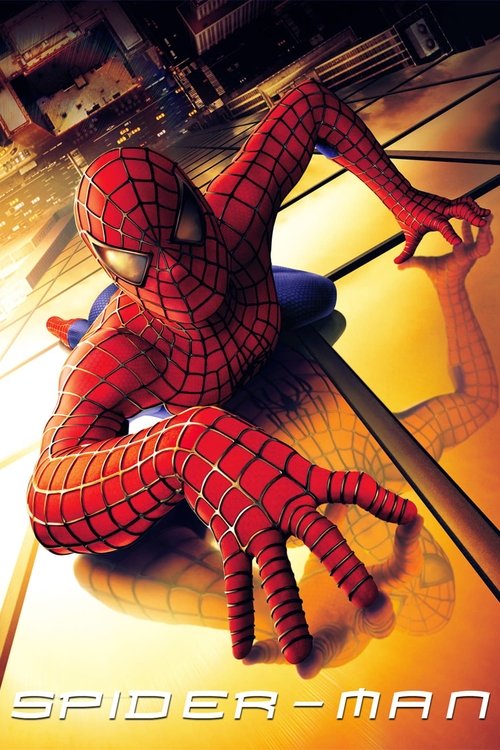
Spider-Man - Review
Spider-Man (2002): A Web of Nostalgia and Superheroic Triumph
In the realm of superhero cinema, certain films stand as pivotal moments, defining eras and setting benchmarks for those that follow. Sam Raimi's Spider-Man, released in 2002, is undeniably one of those films. More than just a comic book adaptation, it was a cultural phenomenon, capturing the hearts of audiences worldwide and cementing Spider-Man as a cinematic icon. But does this web-slinging adventure still hold up after all these years? Let's dive deep into the tangled web of this iconic film.
Plot: From Zero to Hero (and Back Again)
The narrative of Spider-Man is a classic origin story, meticulously crafted to resonate with audiences of all ages. We begin with Peter Parker (Tobey Maguire), a shy, intelligent, and perpetually awkward high school student, struggling to navigate the complexities of teenage life. He's the quintessential underdog, perpetually overlooked and harboring a secret crush on his beautiful neighbor, Mary Jane Watson (Kirsten Dunst). His life takes a dramatic turn during a school field trip to Oscorp, where he's bitten by a genetically engineered spider.
This fateful bite imbues Peter with extraordinary abilities: superhuman strength, agility, the ability to cling to walls, and the iconic "spider-sense" that warns him of impending danger. Initially, Peter uses these powers for personal gain, entering a wrestling competition to win money for a car, hoping to impress Mary Jane. However, tragedy strikes when his beloved Uncle Ben (Cliff Robertson) is murdered by a carjacker Peter could have stopped. This devastating loss serves as the catalyst for Peter's transformation into Spider-Man, adopting the mantra "With great power comes great responsibility."
The plot then introduces us to Norman Osborn (Willem Dafoe), the brilliant but unstable CEO of Oscorp and father to Peter's best friend, Harry Osborn (James Franco). Driven mad by an experimental performance-enhancing serum, Norman transforms into the Green Goblin, a menacing and unpredictable villain who terrorizes New York City. The film skillfully interweaves Peter's personal struggles with his burgeoning superhero career and the escalating conflict with the Green Goblin, creating a compelling and emotionally resonant narrative.
One of the plot's strengths lies in its pacing. It allows ample time for Peter's transformation, both physically and emotionally, to unfold naturally. We witness his initial excitement and experimentation with his powers, followed by the crushing weight of responsibility and the moral dilemmas he faces. The film also effectively builds the tension between Spider-Man and the Green Goblin, culminating in a thrilling and emotionally charged climax.
Characters: More Than Just Masks and Capes
Spider-Man boasts a cast of characters that are both relatable and compelling, each contributing to the film's overall success.
Peter Parker/Spider-Man (Tobey Maguire)
Tobey Maguire delivers a nuanced performance as Peter Parker, capturing both the awkwardness and the inherent goodness of the character. He portrays Peter's vulnerability and insecurities with sincerity, making him immediately relatable to the audience. His transition into Spider-Man is believable, showcasing his growing confidence and mastery of his powers. While some criticize his portrayal as overly sensitive, it's precisely this sensitivity that makes Peter so endearing and distinguishes him from other superheroes.
Mary Jane Watson (Kirsten Dunst)
Kirsten Dunst brings a warmth and vulnerability to Mary Jane Watson, portraying her as a complex character with her own dreams and struggles. She's not simply a damsel in distress; she's an aspiring actress trying to navigate the cutthroat world of show business while dealing with her own personal issues. While her character might be seen as somewhat underdeveloped compared to Peter, Dunst imbues her with a depth that makes her more than just a love interest.
Norman Osborn/Green Goblin (Willem Dafoe)
Willem Dafoe delivers a truly iconic performance as Norman Osborn/Green Goblin. He perfectly captures the duality of the character, seamlessly transitioning between the charismatic and brilliant CEO to the terrifying and unhinged villain. His portrayal of the Green Goblin is both menacing and theatrical, making him one of the most memorable villains in superhero cinema. Dafoe's ability to convey both the madness and the underlying humanity of Norman Osborn elevates the character beyond a simple antagonist.
Harry Osborn (James Franco)
James Franco portrays Harry Osborn as a loyal and supportive friend to Peter, but also as a deeply insecure and conflicted individual. He struggles with his father's expectations and harbors feelings of inadequacy, setting the stage for his eventual transformation into a villain in later films. Franco's performance is subtle yet effective, hinting at the darkness that lies beneath the surface.
Uncle Ben (Cliff Robertson)
Cliff Robertson's portrayal of Uncle Ben is brief but impactful. He embodies the wisdom and guidance that Peter desperately needs, delivering the iconic line, "With great power comes great responsibility," which becomes the guiding principle of Peter's life as Spider-Man. Robertson's performance is warm and paternal, making his death all the more tragic.
Direction and Cinematography: A Raimi Masterpiece
Sam Raimi's direction is a key factor in the success of Spider-Man. He brings his signature blend of horror, humor, and heart to the film, creating a unique and visually dynamic superhero experience. Raimi's experience in the horror genre is evident in the Green Goblin's scenes, which are often genuinely frightening and unsettling. He also injects a healthy dose of humor into the film, particularly in Peter's early attempts to control his powers, providing moments of levity amidst the drama.
The cinematography, led by Don Burgess, is equally impressive. The film effectively utilizes Dutch angles, dynamic camera movements, and creative visual effects to convey Spider-Man's agility and speed. The scenes of Spider-Man swinging through the New York City skyline are particularly breathtaking, capturing the exhilaration and freedom of his powers. The film's use of color is also noteworthy, with vibrant hues that enhance the visual appeal and create a distinct comic book aesthetic.
However, the CGI, while groundbreaking for its time, does show its age in some scenes. Spider-Man's movements can sometimes appear a bit stiff and unnatural, particularly during high-speed sequences. Despite this, the visual effects are largely effective in bringing Spider-Man's powers to life and creating a believable superhero world.
Performances: A Stellar Ensemble Cast
The success of Spider-Man is undoubtedly due to the exceptional performances of its cast. Tobey Maguire embodies the awkward charm and inner strength of Peter Parker, making him a relatable and sympathetic hero. Kirsten Dunst brings a vulnerability and depth to Mary Jane Watson, making her more than just a damsel in distress. Willem Dafoe delivers a truly unforgettable performance as Norman Osborn/Green Goblin, creating a villain who is both terrifying and tragic.
James Franco provides a solid performance as Harry Osborn, hinting at the darkness that lies beneath the surface. Cliff Robertson's portrayal of Uncle Ben is warm and paternal, making his death all the more impactful. Rosemary Harris, as Aunt May, provides a comforting and supportive presence in Peter's life. The entire ensemble cast works together seamlessly to bring the characters and the story to life.
Themes and Messages: Responsibility and Sacrifice
Spider-Man explores several important themes, most notably the concept of responsibility. The film emphasizes that with great power comes great responsibility, a message that resonates throughout Peter's journey as Spider-Man. He learns that his actions have consequences and that he must use his powers to protect others, even at great personal cost.
The film also explores the theme of sacrifice. Peter is forced to make difficult choices, sacrificing his own happiness and desires for the greater good. He must constantly balance his personal life with his responsibilities as Spider-Man, often putting himself in harm's way to protect the innocent. The film highlights the sacrifices that superheroes make and the toll that it can take on their lives.
Another important theme is the duality of human nature. Norman Osborn/Green Goblin represents the darker side of human nature, driven by ambition, greed, and madness. Peter Parker/Spider-Man represents the better side of human nature, driven by compassion, empathy, and a desire to help others. The film suggests that everyone has the potential for both good and evil, and that it is our choices that ultimately define us.
Comparison: Setting the Standard for Superhero Films
Spider-Man arrived at a time when superhero films were still finding their footing. While there had been successful superhero movies before, Spider-Man raised the bar in terms of special effects, storytelling, and character development. It helped to usher in a new era of superhero cinema, paving the way for the Marvel Cinematic Universe and other successful franchises.
Compared to previous Spider-Man adaptations, such as the 1970s television series, Raimi's film was a significant improvement. It captured the essence of the comic book character while also adding its own unique spin. The film's visual effects were far more advanced than anything that had been seen before, bringing Spider-Man's powers to life in a way that was both exciting and believable.
Compared to other superhero films of the time, such as X-Men (2000) and Batman Begins (2005), Spider-Man struck a different tone. It was more lighthearted and humorous than Batman Begins, but also more emotionally resonant than X-Men. Spider-Man found a balance between action, humor, and heart that resonated with audiences of all ages.
Raimi's direction is also distinct from other superhero directors. His use of horror elements and his signature visual style set Spider-Man apart from other films in the genre. His influence can be seen in later superhero films, particularly those that embrace a more stylized and visually dynamic approach.
Criticisms: Webs of Imperfection
While Spider-Man is a beloved and influential film, it is not without its flaws. As mentioned earlier, the CGI, while impressive for its time, can look dated by today's standards. Some of Spider-Man's movements appear stiff and unnatural, particularly during high-speed sequences.
Another criticism is that Mary Jane Watson's character is somewhat underdeveloped. While Kirsten Dunst delivers a strong performance, Mary Jane is often relegated to the role of damsel in distress, lacking the agency and complexity of other characters in the film. Her motivations and desires are not always clearly defined, making her less compelling than Peter or Norman.
Some viewers also find Tobey Maguire's portrayal of Peter Parker to be overly sensitive or whiny. While his vulnerability is part of what makes the character relatable, some feel that he spends too much time moping and not enough time embracing his powers. However, this is a matter of personal preference, and many viewers appreciate Maguire's nuanced and emotionally resonant performance.
Finally, the film's dialogue can sometimes be a bit cheesy or clichéd. While this is partly due to the film's comic book origins, some of the lines feel forced or unnatural. However, this is a minor criticism, and the film's overall strengths far outweigh its weaknesses.
Conclusion: A Timeless Superhero Classic
Despite some minor flaws, Spider-Man (2002) remains a timeless and influential superhero classic. Sam Raimi's direction, the stellar performances of the cast, and the film's compelling story and themes all contribute to its enduring appeal. It set a new standard for superhero films and helped to usher in a new era of comic book adaptations. The film's message of responsibility and sacrifice continues to resonate with audiences today, making it a film that can be enjoyed and appreciated by generations to come.
Spider-Man is more than just a superhero movie; it's a coming-of-age story, a love story, and a cautionary tale about the dangers of unchecked power. It's a film that celebrates the best of humanity while also acknowledging our flaws and imperfections. For its groundbreaking visual effects, compelling characters, and enduring themes, Spider-Man deserves its place among the greatest superhero films of all time.