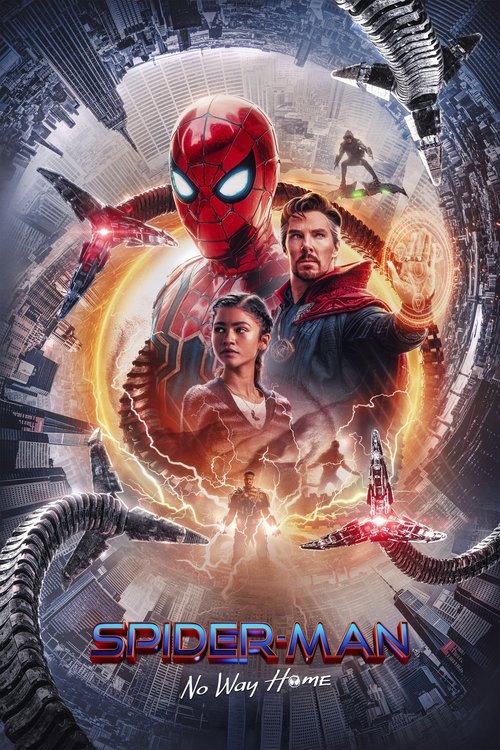
Spider-Man: No Way Home - Review
Spider-Man: No Way Home - A Web-Slinging Spectacle and Emotional Rollercoaster
Imagine the internet breaking. Now imagine it breaking again, harder, and with more screaming. That was the collective reaction to the rumors, leaks, and eventual confirmation surrounding Spider-Man: No Way Home. More than just a superhero movie, it was a cultural event, a testament to the enduring power of nostalgia, and a bold swing (pun intended) for Marvel Studios. But did it stick the landing? The answer, like Peter Parker's life, is complicated, messy, and ultimately, deeply satisfying. Prepare to delve into a spoiler-filled web of analysis as we dissect this cinematic phenomenon.
Plot: A Multiversal Mishap with Heart
The film picks up immediately after the shocking cliffhanger of Spider-Man: Far From Home: Mysterio has revealed Peter Parker's secret identity to the world. Suddenly, Peter, MJ, and Ned's lives are turned upside down. Unable to cope with the constant scrutiny and the damage it's causing to his loved ones' college prospects, Peter seeks the help of Doctor Strange. He asks Strange to make everyone forget he's Spider-Man. However, Peter's incessant meddling during the spellcasting causes it to go horribly wrong, tearing open the multiverse and bringing villains from alternate realities who know Peter Parker is Spider-Man into their world.
What follows is a chaotic, high-stakes adventure as Peter, with the help of his friends, tries to "cure" these villains – Doctor Octopus, Electro, Green Goblin, Sandman, and the Lizard – before sending them back to their respective universes, potentially changing their fates. This moral dilemma forms the core of the film's emotional weight. Do you send them back to their deaths, or do you try to give them a second chance? This internal conflict, coupled with the external threat of the villains, drives the narrative forward with relentless energy.
The plot, while initially straightforward, quickly becomes incredibly intricate and relies heavily on prior knowledge of the previous Spider-Man films. This isn't necessarily a criticism, but it does mean that No Way Home is best enjoyed as a culmination of everything that came before. The second act, featuring the arrival of... well, you know who... elevates the film to legendary status. The interactions between the different Spider-Men are genuinely heartwarming, funny, and provide a fantastic meta-commentary on the character's evolution across different iterations.
Characters: A Symphony of Spider-Men and Villains
Peter Parker (Tom Holland): Holland delivers his most mature and emotionally resonant performance as Peter Parker. He's no longer just the wide-eyed kid; he's grappling with the consequences of his actions, the weight of responsibility, and the overwhelming burden of being Spider-Man. His desperation to protect his loved ones is palpable, and his arc throughout the film is a masterclass in character development. He transforms from a somewhat naive teenager to a selfless hero willing to make the ultimate sacrifice.
MJ (Zendaya) and Ned Leeds (Jacob Batalon): Zendaya and Batalon continue to shine as MJ and Ned, providing much-needed levity and unwavering support for Peter. Their roles are significantly expanded in this film, and they prove to be more than just sidekicks. Ned's newfound magical abilities (hinted at but never fully explored) add an interesting dynamic, and MJ's grounded realism serves as a crucial anchor for Peter during his most challenging moments. Their friendship is the heart and soul of the movie. The fear of them forgetting Peter is a powerful motivator for his actions.
Doctor Strange (Benedict Cumberbatch): Cumberbatch's Doctor Strange is, perhaps, the most debatable aspect of the film. While his presence is crucial to the plot, some argue that he's portrayed as somewhat irresponsible and reckless, especially considering his vast knowledge of the multiverse. However, it can also be argued that he's acting in accordance with the larger, unseen plan, trusting Peter's ability to rise to the occasion. His interactions with Peter are filled with tension and a subtle mentor-mentee dynamic.
The Villains: The returning villains are not mere cameos; they are fully realized characters with their own motivations and arcs. Willem Dafoe's Green Goblin steals the show, delivering a terrifying and nuanced performance that reminds us why he's considered one of the greatest comic book villains of all time. Alfred Molina's Doctor Octopus is sympathetic and conflicted, while Jamie Foxx's Electro gets a much-needed upgrade from his previous portrayal. Thomas Haden Church's Sandman and Rhys Ifans' Lizard, while having less screen time, still contribute to the overall chaos and emotional weight of the story.
The Spider-Men (Tobey Maguire and Andrew Garfield): The elephant(s) in the room. Their inclusion is not just fan service; it's integral to Peter's growth. Maguire's Peter Parker is the wise, experienced mentor, offering guidance and support based on his own past struggles. Garfield's Peter Parker is seeking redemption, haunted by the loss of Gwen Stacy, and desperate for a second chance. Their interactions are filled with humor, camaraderie, and a deep understanding of what it means to be Spider-Man. Their presence adds layers of complexity and emotional resonance that would have been impossible without them.
Direction: A Masterful Balancing Act by Jon Watts
Jon Watts deserves immense credit for successfully juggling so many characters, storylines, and expectations. He manages to create a cohesive and engaging narrative that honors the past while forging its own path. The action sequences are thrilling and inventive, showcasing Spider-Man's agility and resourcefulness. But more importantly, Watts understands the heart of the character. He focuses on the emotional journey of Peter Parker, exploring themes of responsibility, sacrifice, and the importance of human connection. The pacing is generally excellent, although the exposition-heavy first act can feel slightly rushed at times.
Watts successfully navigates the tricky terrain of fan service without sacrificing the integrity of the story. The film is packed with Easter eggs and callbacks to previous Spider-Man films, but they never feel gratuitous or forced. They enhance the experience for longtime fans while remaining accessible to newcomers. He also manages to blend humor and pathos effectively, creating a film that is both entertaining and emotionally impactful.
Cinematography: A Visual Feast
The cinematography in No Way Home is a significant step up from the previous Spider-Man films in the MCU. The action sequences are dynamic and visually stunning, utilizing creative camera angles and special effects to showcase Spider-Man's abilities. The use of color is particularly effective, with vibrant hues contrasting against the darker, more somber moments. The visual effects are seamless and believable, bringing the multiverse to life in a spectacular way. The final battle sequence is a visual masterpiece, with each Spider-Man utilizing their unique fighting style and web-slinging techniques.
The film also makes effective use of lighting and shadows to create mood and atmosphere. The scenes featuring the Green Goblin are particularly well-lit, with harsh shadows emphasizing his menacing presence. The quieter, more intimate moments are bathed in warm, inviting light, creating a sense of intimacy and connection. The cinematography enhances the emotional impact of the story, drawing the viewer into Peter Parker's world and making them feel his triumphs and tribulations.
Performances: A Career-Defining Showcase
The performances in No Way Home are universally excellent. As mentioned before, Tom Holland delivers his best performance as Peter Parker, showcasing his range and emotional depth. Zendaya and Jacob Batalon provide strong supporting performances, adding humor and heart to the story. Benedict Cumberbatch is compelling as Doctor Strange, even if his character's motivations are sometimes unclear.
However, the true standouts are the returning villains and the Spider-Men. Willem Dafoe is absolutely terrifying as the Green Goblin, reminding us why he's considered one of the greatest villains in cinematic history. Alfred Molina is sympathetic and nuanced as Doctor Octopus, and Jamie Foxx is a revelation as Electro. Tobey Maguire and Andrew Garfield are both fantastic as their respective versions of Spider-Man, bringing a sense of nostalgia and emotional resonance to the film. Their performances are not just cameos; they are integral to the story and add layers of complexity and emotional weight that would have been impossible without them. The actors clearly relished the opportunity to revisit these iconic roles, and their enthusiasm is contagious.
Themes and Messages: Responsibility, Sacrifice, and Second Chances
Spider-Man: No Way Home explores several important themes, most notably the concept of responsibility. Peter Parker learns that with great power comes great responsibility, not just in terms of fighting crime, but also in terms of protecting his loved ones and making difficult choices. He's forced to confront the consequences of his actions and to accept the burden of being Spider-Man.
The film also explores the theme of sacrifice. Peter is willing to sacrifice his own happiness and well-being to protect his friends and family. He ultimately makes the ultimate sacrifice by asking Doctor Strange to erase him from everyone's memory, ensuring their safety but losing everything he holds dear. This act of selflessness demonstrates his growth as a character and solidifies his status as a true hero.
Finally, No Way Home explores the theme of second chances. Peter believes that the villains deserve a chance to redeem themselves, even after all the harm they've caused. He tries to "cure" them before sending them back to their respective universes, hoping to change their fates. This act of compassion reflects his own desire for redemption and his belief in the inherent goodness of people. The film suggests that even the most villainous individuals are capable of change and that everyone deserves a second chance.
Comparison to Other Films/Works
Spider-Man: No Way Home is unique within the MCU, as it draws heavily on the pre-existing Spider-Man films from Sony. It's less of a standalone adventure and more of a culmination of everything that came before. In that sense, it's similar to Avengers: Endgame, which brought together all the threads of the previous MCU films to create a satisfying conclusion. However, No Way Home is arguably even more ambitious, as it incorporates characters and storylines from entirely different cinematic universes.
In terms of superhero films that deal with the multiverse, No Way Home can be compared to Spider-Man: Into the Spider-Verse, which also featured multiple versions of Spider-Man. However, Into the Spider-Verse is more stylized and visually experimental, while No Way Home is more grounded in reality, despite its fantastical elements.
Comparing it to Jon Watts' previous Spider-Man films, No Way Home is a significant step up in terms of scope, ambition, and emotional depth. While Homecoming and Far From Home were enjoyable and entertaining, they were ultimately smaller-scale stories that focused on Peter Parker's journey to becoming Spider-Man. No Way Home, on the other hand, is a much more epic and impactful film that explores deeper themes and showcases Peter Parker's growth as a hero.
Positive Aspects
- The return of Tobey Maguire and Andrew Garfield as Spider-Man is a dream come true for fans.
- Willem Dafoe's performance as the Green Goblin is absolutely terrifying and unforgettable.
- The action sequences are thrilling and visually stunning.
- The emotional core of the story is powerful and resonant.
- The film successfully balances fan service with genuine storytelling.
- Tom Holland delivers his best performance as Peter Parker.
Constructive Criticism
- The first act can feel slightly rushed and exposition-heavy.
- Doctor Strange's motivations are sometimes unclear.
- The CGI occasionally looks a bit rough around the edges.
- The film relies heavily on prior knowledge of the previous Spider-Man films, which may alienate some viewers.
- Ned's magical abilities are hinted at but never fully explored.
Conclusion
Spider-Man: No Way Home is more than just a superhero movie; it's a cinematic event that will be talked about for years to come. It's a celebration of everything that makes Spider-Man such an enduring and beloved character. It's a thrilling, emotional, and ultimately satisfying conclusion to the Tom Holland Spider-Man trilogy, while also serving as a love letter to the entire Spider-Man cinematic universe. While it has its flaws, the film's strengths far outweigh its weaknesses. It's a must-see for any fan of Spider-Man, superhero movies, or just good storytelling in general. Be prepared to laugh, cry, and cheer along with the rest of the audience. This is a film that demands to be experienced on the big screen.