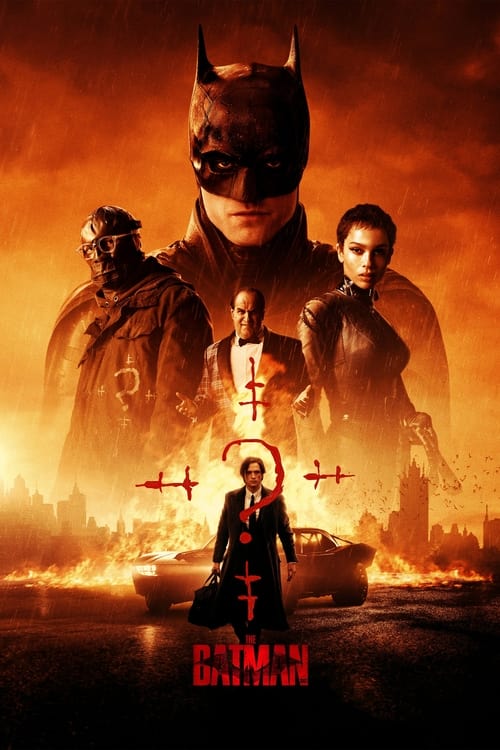
The Batman - Review
"The Batman": A Gritty Descent into Gotham's Abyss
Matt Reeves' "The Batman" isn't just another superhero film; it's a brooding, atmospheric crime thriller that plunges viewers into the darkest corners of Gotham City. Forget the campy theatrics or fantastical villains of past iterations; this Batman is grounded, visceral, and deeply flawed. It's a detective story first and foremost, with a caped crusader wrestling with his own demons as much as he's battling the criminals plaguing his city. This review will delve into the intricate layers of Reeves' vision, exploring its strengths, weaknesses, and ultimately, its impact on the Batman legacy.
Plot: A Detective Story Wrapped in Darkness
The narrative of "The Batman" unfolds over a series of meticulously crafted scenes, each contributing to a larger, more sinister picture. In his second year as Batman, Bruce Wayne (Robert Pattinson) is already a feared vigilante, working alongside Lieutenant James Gordon (Jeffrey Wright) to combat the rising tide of crime. However, Gotham is gripped by a new terror: the Riddler (Paul Dano), a masked serial killer who targets the city's elite, leaving behind cryptic clues for Batman to decipher.
The Riddler's victims are not random; they represent the corrupt foundations upon which Gotham is built. As Batman and Gordon investigate, they uncover a web of deceit involving Carmine Falcone (John Turturro), a powerful mob boss, and other influential figures. The investigation leads them to the Iceberg Lounge, a nightclub owned by Oswald Cobblepot, aka the Penguin (Colin Farrell), a rising figure in Gotham's underworld. Selina Kyle, aka Catwoman (Zoë Kravitz), also enters the picture, initially as a waitress at the Iceberg Lounge with her own agenda, tied to the disappearance of her friend. Her path intersects with Batman's, forming a complex and often uneasy alliance.
The plot is deliberately paced, allowing the mystery to unfold gradually, drawing the audience into the intricate details of the Riddler's schemes. It’s less about explosive action sequences and more about the psychological tension and the unraveling of Gotham's dark secrets. The film excels at creating a sense of unease and paranoia, reflecting the city's pervasive corruption. The Riddler's elaborate puzzles and messages force Batman to confront not only the crimes of others but also the legacy of his own family, adding a deeply personal dimension to the story.
Characters: Flawed Heroes and Twisted Villains
Bruce Wayne/Batman (Robert Pattinson): Pattinson's portrayal of Batman is a departure from previous iterations. He's not the suave billionaire playboy; he's a reclusive, emotionally damaged young man consumed by his mission. His Batman is raw, brutal, and almost feral, driven by a burning desire for vengeance. He's still learning, making mistakes, and grappling with the moral implications of his actions. Pattinson effectively conveys the character's internal struggle, showcasing the vulnerability beneath the armored exterior. His Bruce Wayne is almost unrecognizable without the suit, a stark contrast to the charismatic personas of previous actors. This Batman is haunted, almost broken, and his growth throughout the film is a crucial element of the narrative.
Selina Kyle/Catwoman (Zoë Kravitz): Kravitz delivers a captivating performance as Catwoman, portraying her as a resourceful, independent, and morally ambiguous character. She's not simply a love interest or a sidekick; she's a complex individual with her own motivations and vulnerabilities. Her chemistry with Pattinson is palpable, adding a layer of complexity to their relationship. Catwoman acts as a mirror to Batman, reflecting his own methods and challenging his rigid moral code. Her connection to the criminal underworld and her desire for justice make her a compelling and integral part of the story.
The Riddler (Paul Dano): Dano's Riddler is a terrifying and unsettling villain, far removed from the comical portrayal of Jim Carrey. He's a meticulous planner, a social outcast driven by a twisted sense of justice. His online presence and radicalized followers reflect contemporary anxieties about extremism and the power of the internet. Dano's performance is chilling, conveying the character's fanaticism and his warped perception of reality. He's not just a criminal; he's a symbol of the neglected and disenfranchised, a product of Gotham's systemic failures.
Lieutenant James Gordon (Jeffrey Wright): Wright's portrayal of Gordon is nuanced and grounded. He's a dedicated police officer who trusts Batman, even when others don't. He's a voice of reason and a moral compass in a corrupt city. Their partnership is crucial to the film's success, highlighting the importance of collaboration and trust in the fight against crime.
Carmine Falcone (John Turturro) & Oswald Cobblepot/Penguin (Colin Farrell): Turturro's Falcone is a powerful and menacing figure, embodying the deep-rooted corruption that plagues Gotham. Farrell's Penguin, unrecognizable beneath layers of prosthetics, is a scene-stealer, providing moments of dark humor amidst the grim atmosphere. Both actors deliver compelling performances, adding depth and complexity to the criminal underworld.
Direction: A Masterclass in Atmosphere and Tension
Matt Reeves' direction is masterful, creating a Gotham City that is both visually stunning and palpably oppressive. He draws inspiration from classic neo-noir films like "Chinatown" and "Seven," crafting a world of shadows, rain-slicked streets, and moral ambiguity. The film's pacing is deliberate, allowing the mystery to unfold gradually, building tension with each scene. Reeves utilizes long takes, close-ups, and strategic camera angles to create a sense of intimacy and unease, drawing the audience into the characters' emotional states.
Reeves successfully avoids the pitfalls of typical superhero films, focusing instead on character development and thematic exploration. The action sequences are impactful but infrequent, serving to punctuate the narrative rather than dominate it. He prioritizes atmosphere and suspense over spectacle, creating a film that is both intellectually stimulating and emotionally resonant. His vision of Gotham is unique and unforgettable, a city that feels both familiar and alien, a reflection of our own societal anxieties.
Cinematography: A Visual Feast of Darkness and Light
Greig Fraser's cinematography is a crucial element of "The Batman's" success. He masterfully uses light and shadow to create a visually stunning and emotionally evocative world. The film is predominantly dark, reflecting the city's moral decay and the characters' internal struggles. However, moments of light pierce through the darkness, offering glimpses of hope and redemption.
Fraser's use of color is equally effective. The film's palette is muted, with splashes of red and blue highlighting moments of violence and emotion. The rain-soaked streets of Gotham are a constant visual motif, adding to the city's oppressive atmosphere. The cinematography is not just visually appealing; it's integral to the storytelling, enhancing the film's themes and emotional impact. The way Fraser frames Batman, often shrouded in shadow, reinforces his status as a creature of the night, a symbol of vengeance lurking in the darkness.
Performances: A Stellar Ensemble Cast
The performances in "The Batman" are uniformly excellent, with each actor bringing depth and nuance to their respective roles. As mentioned earlier, Pattinson's portrayal of Batman is a standout, capturing the character's internal struggles and his raw, untamed energy. Kravitz delivers a captivating performance as Catwoman, showcasing her intelligence, resourcefulness, and moral ambiguity. Dano's Riddler is genuinely terrifying, a chilling portrayal of a disturbed individual driven by a warped sense of justice. Wright's Gordon provides a much-needed voice of reason, while Turturro and Farrell excel in their supporting roles as Falcone and Penguin, respectively.
The chemistry between Pattinson and Kravitz is particularly noteworthy, adding a layer of complexity to their characters' relationship. Their scenes together are filled with tension and unspoken emotions, creating a dynamic that is both intriguing and compelling. The actors' commitment to their roles is evident in every scene, contributing to the film's overall success.
Themes and Messages: Corruption, Justice, and Hope
"The Batman" explores several complex themes, including corruption, justice, and hope. The film is a scathing indictment of Gotham's corrupt institutions, highlighting the systemic failures that perpetuate crime and inequality. The Riddler's victims are not innocent; they represent the corrupt elite who have exploited the city for their own gain. The film questions the nature of justice, challenging the audience to consider whether vengeance is truly a solution to the problem of crime.
However, amidst the darkness and despair, there are also glimmers of hope. Batman's journey throughout the film is one of self-discovery and growth. He learns that vengeance is not enough and that true justice requires more than just punishing criminals. He begins to understand the importance of inspiring hope in the citizens of Gotham, becoming a symbol of something more than just fear. The film suggests that even in the darkest of times, there is always the possibility of redemption and renewal. This message is particularly relevant in today's world, where cynicism and despair often seem pervasive.
Comparison to Other Films and Works
"The Batman" draws inspiration from a variety of sources, including classic neo-noir films like "Chinatown" and "Seven," as well as the Batman comics "Year One" and "The Long Halloween." It distinguishes itself from previous Batman films by focusing on the detective aspects of the character and by presenting a more grounded and realistic portrayal of Gotham City. Compared to the fantastical elements of Tim Burton's Batman films or the operatic grandeur of Christopher Nolan's Dark Knight trilogy, "The Batman" feels more intimate and visceral.
Reeves' previous work on the "Planet of the Apes" films demonstrates his ability to create compelling characters and explore complex themes within a genre framework. Pattinson's performance as Batman can be compared to his work in independent films like "Good Time" and "The Lighthouse," showcasing his ability to portray damaged and complex characters. The film's visual style and atmosphere are reminiscent of David Fincher's crime thrillers, such as "Seven" and "Zodiac." Overall, "The Batman" is a unique and ambitious film that stands apart from its predecessors while still honoring the rich history of the Batman character.
Positive Aspects
- Compelling and intricate plot
- Excellent performances from the entire cast
- Masterful direction and cinematography
- Thought-provoking themes and messages
- Unique and unforgettable vision of Gotham City
Constructive Criticism
- The film's length (almost 3 hours) may be a deterrent for some viewers.
- The pacing, while deliberate, may feel slow at times.
- Some may find the film's darkness and grimness overwhelming.
- While the Riddler is a compelling villain, his motivations could have been explored in greater depth.
Conclusion
"The Batman" is a triumph of genre filmmaking, a dark and brooding crime thriller that elevates the superhero genre to new heights. Matt Reeves has crafted a compelling and unforgettable vision of Gotham City, populated by flawed heroes and twisted villains. The performances are excellent, the direction is masterful, and the themes are thought-provoking. While the film's length and darkness may not appeal to all viewers, it is a must-see for fans of Batman, crime thrillers, and intelligent cinema. It's a bold and ambitious film that redefines the character for a new generation. It's a complex, challenging, and ultimately rewarding cinematic experience.