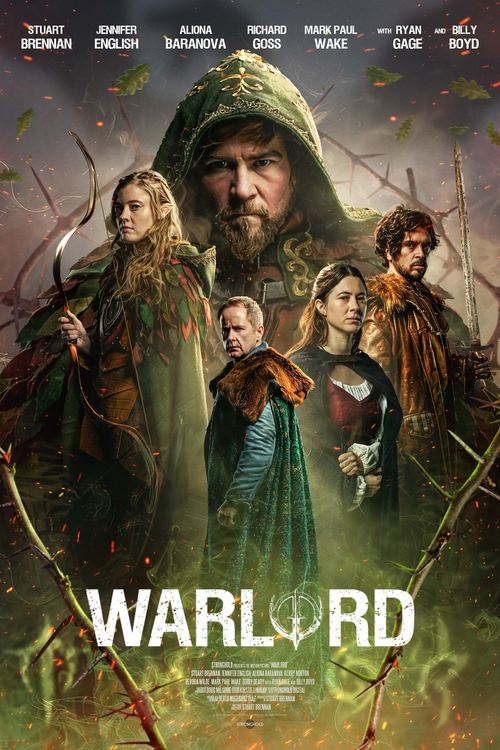
Warlord - Review
Warlord (2025): A Gripping Fantasy Epic Marred by Unfulfilled Potential
In the realm of high fantasy, where tales of valiant heroes, mystical creatures, and epic battles reign supreme, "Warlord" (released May 16th, 2025) strides onto the scene with a promise of grand spectacle and intricate world-building. Directed by Anya Sharma, known for her visually stunning but narratively inconsistent work on "Chronicles of Eldoria," this film aims to deliver a potent blend of action, adventure, and political intrigue. While "Warlord" certainly boasts impressive visuals and compelling performances, it ultimately stumbles under the weight of its own ambition, leaving viewers with a sense of unfulfilled potential.
Plot: A Dance of Deception and Rebellion
The narrative of "Warlord" unfolds in the ancient city of Lloris, a once-thriving metropolis now suffocating under the tyrannical rule of the Sheriff (played with chilling precision by Marcus Thorne) and his brutish enforcer, aptly named The Brute (a physically imposing performance by newcomer, Darius Khan). Lloris is a city steeped in ancient lore, where whispers of magic and forgotten races linger in the shadows. The oppression faced by the human populace is palpable, depicted through scenes of public executions, forced labor, and the ever-present threat of the Sheriff's iron fist.
Hope flickers in the form of Kaelen (portrayed by the promising young actor, Ethan Hayes), a resourceful and idealistic human who believes that the reclusive elves possess the mystical power to liberate Lloris. Driven by a burning desire for freedom, Kaelen embarks on a perilous journey to seek out the elves and, more importantly, their legendary Warlord, a figure shrouded in myth and whispered tales of unparalleled combat prowess. The elves, residing in the hidden forest of Eldoria, are presented as a proud but wary race, scarred by past betrayals and deeply distrustful of humans. Their leader, the enigmatic Elara (played with regal grace by Anya Petrova), initially rejects Kaelen's plea for aid, citing the long history of conflict between humans and elves.
However, Kaelen's unwavering determination and a shared threat – the Sheriff's growing ambition to expand his dominion beyond Lloris – eventually persuade Elara to consider an alliance. The titular Warlord (played with stoic intensity by veteran actor, Idris Elba), a figure haunted by his past and burdened by the weight of responsibility, emerges from his self-imposed exile, recognizing the potential for both salvation and destruction in this fragile partnership. The alliance is forged, but beneath the surface of unity lie hidden agendas and conflicting motivations. The elves harbor secrets about their own dwindling powers and the true nature of their connection to Lloris, while Kaelen's motivations are not entirely altruistic, driven by a personal vendetta against the Sheriff. This web of deception and mistrust forms the core of the narrative, adding layers of complexity to the traditional hero's journey.
The film's second act focuses on the training of the human rebels by the elves, showcasing impressive combat choreography and the integration of elven magic into human fighting techniques. This section also delves deeper into the relationship between Kaelen and Elara, hinting at a forbidden romance that is ultimately underdeveloped. The build-up to the final confrontation is well-paced, with escalating tension and strategic maneuvering on both sides. The Sheriff, aware of the impending revolt, fortifies Lloris and unleashes his own brutal forces to crush the rebellion before it can gain momentum.
The climax of "Warlord" is a visually spectacular battle for the soul of Lloris. The clash between the human rebels, aided by the elven warriors, and the Sheriff's army is a chaotic whirlwind of steel, magic, and desperation. While the battle sequences are undeniably thrilling, they are also marred by moments of shaky camera work and a reliance on CGI that occasionally detracts from the realism. The final confrontation between Kaelen and the Sheriff, and the Warlord and The Brute, is suitably epic, but the resolutions feel somewhat rushed and anticlimactic, leaving several plot threads unresolved.
Characters: Compelling Performances, Uneven Development
The strength of "Warlord" lies in its cast, who deliver compelling performances despite the uneven character development. Ethan Hayes shines as Kaelen, portraying the young rebel with a convincing blend of idealism and vulnerability. His transformation from a naive idealist to a hardened warrior is believable, and his chemistry with Anya Petrova is palpable, even if their romantic subplot feels somewhat forced.
Anya Petrova brings a regal gravitas to the role of Elara, the elven leader burdened by the responsibility of protecting her people. Her portrayal is nuanced, showcasing both her strength and her vulnerability. However, her character arc is somewhat predictable, following the familiar trope of the initially reluctant leader who eventually embraces her destiny.
Idris Elba delivers a commanding performance as the Warlord, embodying the stoicism and battle-hardened wisdom of a legendary warrior. His presence on screen is undeniable, and his fight sequences are a highlight of the film. However, the Warlord's backstory and motivations are only hinted at, leaving the audience wanting more. The film teases a tragic past that shaped his character, but it never fully explores the depths of his emotional scars.
Marcus Thorne is suitably menacing as the Sheriff, portraying the tyrannical ruler with a chilling blend of cruelty and cunning. He is a truly detestable villain, making his eventual downfall all the more satisfying. Darius Khan provides a physically imposing presence as The Brute, serving as the Sheriff's loyal enforcer. While his performance is effective, his character lacks depth and serves primarily as a physical obstacle for the heroes to overcome.
The supporting characters, while well-acted, are largely underdeveloped. The human rebels are portrayed as a faceless mass, lacking individual personalities and motivations. The elven warriors are similarly relegated to the background, serving as cannon fodder in the battle sequences. This lack of character development diminishes the emotional impact of the film, making it difficult to fully invest in the fate of the rebels and the elves.
Direction: Visually Stunning, Narratively Inconsistent
Anya Sharma's direction is a mixed bag. On the one hand, she excels at creating a visually stunning world, bringing Lloris and the forest of Eldoria to life with breathtaking landscapes and intricate set designs. The costume design is equally impressive, capturing the distinct cultures of the humans and the elves. The visual effects, while occasionally inconsistent, are generally well-executed, particularly in the depiction of elven magic and the scale of the battle sequences.
However, Sharma's direction falters when it comes to narrative pacing and character development. The film suffers from pacing issues, with the first act feeling rushed and the second act dragging in places. The romantic subplot between Kaelen and Elara feels forced and unnecessary, detracting from the main storyline. The character development is also uneven, with some characters receiving more attention than others. The Warlord, in particular, feels underdeveloped, despite being the titular character.
Sharma's reliance on familiar fantasy tropes also detracts from the film's originality. The story follows a predictable hero's journey, with familiar elements such as the chosen one, the reluctant mentor, and the tyrannical villain. While these tropes can be effective when executed well, they feel somewhat stale in "Warlord," lacking the freshness and innovation that would elevate the film above its genre contemporaries.
Cinematography: A Feast for the Eyes
The cinematography in "Warlord," helmed by veteran cinematographer, Ben Carter, is undoubtedly one of the film's strongest assets. Carter's use of sweeping landscapes, dramatic lighting, and carefully composed shots creates a visually immersive experience. The city of Lloris is depicted as a sprawling metropolis, its grandeur juxtaposed with the squalor of its oppressed citizens. The forest of Eldoria is brought to life with lush greenery, ethereal lighting, and intricate details, creating a sense of otherworldly beauty.
Carter's use of color is particularly effective, with the warm hues of Lloris contrasting with the cool tones of Eldoria, reflecting the different cultures and environments. The battle sequences are filmed with a dynamic energy, capturing the chaos and brutality of the conflict. However, the shaky camera work in some of the action scenes can be distracting, detracting from the overall visual impact.
Overall, the cinematography in "Warlord" is a feast for the eyes, showcasing the beauty and grandeur of the film's fantasy world. Carter's skillful use of light, color, and composition elevates the visual experience, making "Warlord" a visually stunning film, even if its narrative is somewhat lacking.
Themes and Messages: Freedom, Trust, and the Cost of War
"Warlord" explores several overarching themes, most notably the fight for freedom against oppression. The human rebellion against the Sheriff's tyranny serves as a powerful allegory for the struggle against injustice and the importance of standing up for what is right. The film also examines the theme of trust, highlighting the challenges of forming alliances between different cultures and the potential for betrayal. The relationship between the humans and the elves is built on a fragile foundation of mutual need, but their shared history of conflict and distrust threatens to undermine their alliance.
The film also touches upon the cost of war, both in terms of human lives and the emotional toll it takes on those who fight. The Warlord's character embodies this theme, haunted by the memories of past battles and the sacrifices he has made. The film does not shy away from depicting the brutality of war, showcasing the violence and suffering that it inflicts on both sides of the conflict.
However, the film's exploration of these themes is somewhat superficial, lacking the depth and nuance that would elevate it beyond a simple action-adventure story. The messages about freedom, trust, and the cost of war are present, but they are not fully explored or developed, leaving the audience with a sense of missed opportunity.
Comparisons: Echoes of the Past
"Warlord" inevitably draws comparisons to other fantasy epics, most notably "The Lord of the Rings" and "Game of Thrones." While it shares some thematic similarities with these films, it lacks their depth of world-building and character development. The political intrigue in "Warlord" is less complex than that of "Game of Thrones," and the scope of the conflict is significantly smaller than that of "The Lord of the Rings."
Anya Sharma's previous work, "Chronicles of Eldoria," shares similar strengths and weaknesses with "Warlord." Both films are visually stunning but suffer from narrative inconsistencies and underdeveloped characters. Sharma's strength lies in creating visually immersive worlds, but she struggles to craft compelling stories and fully realize her characters' potential.
Idris Elba's performance as the Warlord echoes his previous roles as stoic and battle-hardened warriors, most notably his portrayal of Heimdall in the Marvel Cinematic Universe. While he brings a similar gravitas and intensity to the role, the Warlord's character lacks the depth and complexity that would make it truly memorable.
Positive Aspects: Visual Spectacle and Compelling Performances
Despite its flaws, "Warlord" has several redeeming qualities. The film's visual spectacle is undeniable, with breathtaking landscapes, intricate set designs, and impressive visual effects. The cinematography is equally impressive, creating a visually immersive experience that draws the audience into the film's fantasy world.
The cast delivers compelling performances, particularly Ethan Hayes, Anya Petrova, and Idris Elba. Their portrayals of the main characters are nuanced and believable, even if the characters themselves are somewhat underdeveloped. Marcus Thorne is suitably menacing as the Sheriff, providing a memorable villain for the heroes to overcome.
The action sequences are well-choreographed and exciting, showcasing the skills of the human rebels and the elven warriors. The integration of elven magic into the combat is a creative and visually appealing element of the film.
Constructive Criticism: Narrative Inconsistencies and Underdeveloped Characters
The primary weakness of "Warlord" lies in its narrative inconsistencies and underdeveloped characters. The story follows a predictable hero's journey, lacking the originality and innovation that would elevate it above its genre contemporaries. The romantic subplot between Kaelen and Elara feels forced and unnecessary, detracting from the main storyline.
The characters, while well-acted, are largely underdeveloped. The Warlord, in particular, feels underdeveloped, despite being the titular character. The supporting characters are relegated to the background, lacking individual personalities and motivations.
The pacing of the film is also uneven, with the first act feeling rushed and the second act dragging in places. The ending feels somewhat rushed and anticlimactic, leaving several plot threads unresolved.
Conclusion
"Warlord" is a visually stunning fantasy epic that ultimately falls short of its potential. While the film boasts impressive visuals and compelling performances, it suffers from narrative inconsistencies, underdeveloped characters, and a reliance on familiar fantasy tropes. Anya Sharma's direction is a mixed bag, showcasing her talent for creating visually immersive worlds but also highlighting her struggles with narrative pacing and character development.
Despite its flaws, "Warlord" is an entertaining and visually appealing film that will likely appeal to fans of the fantasy genre. However, its lack of originality and depth prevents it from achieving true greatness.
Rating: 6.5/10