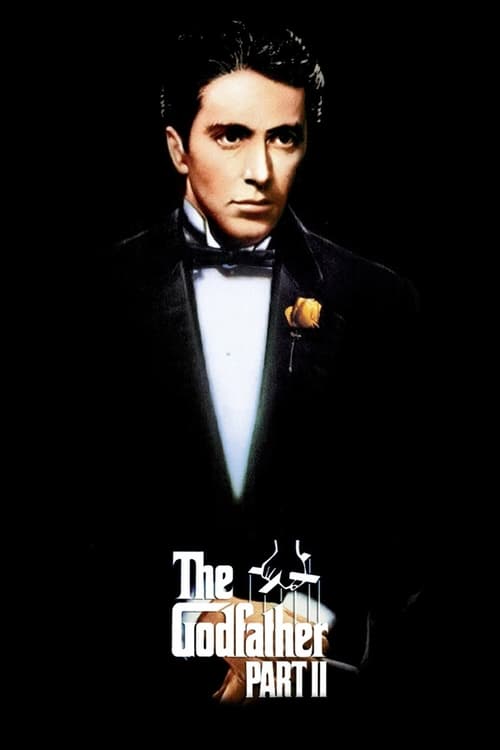
The Godfather Part II - Review
The Godfather Part II: A Masterpiece of Ambition and Loss
The Godfather Part II. The very name conjures images of operatic grandeur, chilling violence, and profound moral complexity. Released in 1974, just two years after its predecessor, Francis Ford Coppola's sequel doesn't merely continue the story of the Corleone family; it expands it, deepens it, and ultimately surpasses the original in its thematic resonance and cinematic ambition. It's a film that doesn't just tell a story; it dissects the American Dream, explores the corrosive nature of power, and examines the devastating consequences of choices made in the pursuit of that power. Forget simple sequel expectations; The Godfather Part II is a standalone masterpiece that redefines the very concept of a crime saga.
Plot: A Dual Narrative of Ascent and Descent
The film intricately weaves together two parallel narratives, each informing and enriching the other. One storyline follows Michael Corleone (Al Pacino) in the late 1950s as he attempts to consolidate his power and expand the Corleone empire into Las Vegas, Hollywood, and Cuba. He faces betrayal from within his own family and increasing pressure from rival crime families and the government. This narrative is fraught with tension, paranoia, and escalating violence, showcasing Michael's ruthless efficiency and growing isolation.
The second storyline, a prequel of sorts, chronicles the early life of Vito Corleone (Robert De Niro) as he escapes Sicily in his youth after his family is murdered and immigrates to New York City. We witness his transformation from a quiet, unassuming immigrant into a respected and feared figure in Little Italy. This storyline provides crucial context for understanding the motivations and values that shaped the Corleone family and ultimately defined Michael's path. It's a story of survival, ambition, and the creation of a self-made empire from the ground up.
Coppola masterfully intercuts between these two timelines, creating a powerful sense of cyclical history. We see how Vito's early experiences of loss and injustice fuel his desire for power and influence, and how those same desires, passed down to Michael, ultimately lead to tragedy and moral decay. The parallels and contrasts between father and son are stark and unsettling, demonstrating the corrupting influence of power across generations.
Characters: A Study in Contrasts and Transformations
The strength of The Godfather Part II lies not just in its plot, but in its richly drawn and complex characters.
Michael Corleone (Al Pacino)
Al Pacino delivers a performance of chilling brilliance. He portrays Michael not as a simple villain, but as a tragic figure consumed by the very power he sought to wield. We see him transform from the idealistic young man of the first film into a cold, calculating Don, willing to sacrifice everything – including his own family – to protect his empire. Pacino masterfully conveys Michael's inner turmoil, his growing paranoia, and the gradual erosion of his humanity. The scene where he denies ordering the hit on his brother Fredo is particularly devastating, showcasing the depth of his self-deception and the ultimate price of his ambition.
Vito Corleone (Robert De Niro)
Robert De Niro's portrayal of the young Vito Corleone is nothing short of iconic. He doesn't simply mimic Marlon Brando's performance; he embodies the essence of Vito's character, capturing his quiet strength, his unwavering loyalty, and his ruthless pragmatism. De Niro's Vito is a man of few words, but his actions speak volumes. He establishes himself as a protector of his community, a dispenser of justice, and a force to be reckoned with. This role earned De Niro his first Academy Award, cementing his status as one of the greatest actors of all time.
Fredo Corleone (John Cazale)
John Cazale's performance as Fredo is heartbreaking. He portrays Fredo as a weak and insecure character, constantly seeking approval and respect that he never receives. His betrayal of Michael is not born of malice, but of desperation and a deep-seated sense of inadequacy. Cazale imbues Fredo with a vulnerability that makes his ultimate fate all the more tragic. He's a constant reminder of the human cost of the Corleone's ambition.
Kay Adams-Corleone (Diane Keaton)
Diane Keaton's Kay is a voice of morality and reason within the Corleone family. She represents the outside world, the world that Michael has left behind. Her growing disillusionment with Michael's actions and her eventual departure are a powerful indictment of the Corleone lifestyle. The scene where she reveals that she aborted their son is a pivotal moment, marking the complete breakdown of their relationship and the irreversible damage caused by Michael's choices.
Hyman Roth (Lee Strasberg)
Lee Strasberg, a renowned acting coach, delivers a chilling performance as Hyman Roth, a Jewish mob boss based on Meyer Lansky. Roth is a master manipulator, a shrewd businessman, and a formidable adversary to Michael. He represents the old guard of organized crime, a figure who has seen it all and done it all. Roth's calm demeanor and calculating intellect make him a truly terrifying villain.
Direction and Cinematography: A Visual Masterpiece
Francis Ford Coppola's direction is masterful. He seamlessly blends the two narratives, creating a sense of momentum and thematic unity. He uses long takes, carefully composed shots, and evocative lighting to create a world that is both glamorous and menacing. The film's pacing is deliberate, allowing the story to unfold gradually and the characters to develop fully.
The cinematography, by Gordon Willis, is equally impressive. Willis, known for his use of shadows and low-key lighting, creates a visually stunning film that perfectly captures the mood and atmosphere of each scene. The scenes set in Sicily are bathed in warm, golden light, evoking a sense of nostalgia and tradition. The scenes set in America are often darker and more claustrophobic, reflecting the moral decay and the growing sense of paranoia within the Corleone family. The use of shadows is particularly effective in conveying the secrecy and danger that surround Michael.
The film's visual language is rich and symbolic. The recurring motif of windows, for example, often represents Michael's isolation and his inability to connect with the outside world. The use of color is also significant. Red, often associated with blood and violence, is used sparingly but effectively to highlight moments of intense conflict and bloodshed. The overall visual style of the film is both elegant and unsettling, perfectly complementing the story's themes of power, betrayal, and loss.
Themes and Messages: The Corrosive Nature of Power
The Godfather Part II is a film rich in themes and messages. At its core, it's an exploration of the corrupting influence of power. We see how the pursuit of power can lead to moral compromise, betrayal, and ultimately, the destruction of the very relationships that are most important. Michael's transformation from an idealistic young man into a ruthless Don is a stark warning about the dangers of unchecked ambition.
The film also examines the complexities of family and loyalty. The Corleone family is bound together by blood and tradition, but their loyalty is constantly tested by the demands of their criminal enterprise. The betrayal of Fredo is a particularly devastating example of how power can erode even the strongest family bonds. The film suggests that in the world of organized crime, family is often just another tool to be used and manipulated.
Another key theme is the American Dream. Both Vito and Michael seek to achieve the American Dream, but they do so through illegal and immoral means. The film suggests that the American Dream is often a myth, a false promise that can lead to corruption and despair. The Corleone's success is built on violence, exploitation, and ultimately, the destruction of their own souls.
The cyclical nature of history is also a prominent theme. The parallels between Vito's and Michael's stories suggest that the past is always present, shaping the future and perpetuating cycles of violence and betrayal. The film implies that the sins of the father are often visited upon the son, and that escaping the past is ultimately impossible.
Comparison to Other Films and Previous Works
The Godfather Part II stands as a high watermark in the crime genre. While films like Scarface (1983) and Goodfellas (1990) explore similar themes of ambition and violence, they lack the operatic scope and moral complexity of Coppola's masterpiece. The Godfather Part II is not just a gangster film; it's a Shakespearean tragedy, a profound meditation on power, family, and the human condition.
Compared to the original The Godfather, Part II is arguably a more ambitious and complex film. While the first film focuses primarily on the immediate threats to the Corleone family, Part II expands the scope of the story, exploring the historical context of the family's rise to power and delving deeper into the psychological motivations of its characters. The dual narrative structure and the more nuanced performances make Part II a richer and more rewarding cinematic experience.
Coppola's other works, such as Apocalypse Now (1979), also explore themes of corruption and the descent into madness. However, The Godfather Part II remains his most enduring and influential film, a testament to his directorial vision and his ability to elicit extraordinary performances from his actors.
Positive Aspects
- Masterful Direction: Coppola's direction is flawless, seamlessly blending the two narratives and creating a visually stunning film.
- Exceptional Performances: Pacino, De Niro, Cazale, Keaton, and Strasberg all deliver unforgettable performances.
- Rich and Complex Characters: The characters are deeply flawed and morally ambiguous, making them all the more compelling.
- Thematic Depth: The film explores profound themes of power, family, and the American Dream.
- Stunning Cinematography: Willis's cinematography is both beautiful and unsettling, perfectly capturing the mood and atmosphere of the film.
- Compelling Score: Nino Rota's score is haunting and evocative, adding to the film's emotional impact.
- Dual Narrative: The interweaving of Vito's past and Michael's present is brilliantly executed.
Constructive Criticism
- Pacing: The film's deliberate pacing may be challenging for some viewers. The film takes its time, which allows for character development, but some might find it slow.
- Length: At over three hours, the film is a significant time commitment. While the length is justified by the complexity of the story, it may be daunting for some.
- Violence: The film contains graphic violence, which may be disturbing for some viewers. While the violence is not gratuitous, it is an integral part of the story.
- Ambiguity: The film leaves some questions unanswered, which may frustrate some viewers. However, this ambiguity also adds to the film's complexity and encourages discussion.
Conclusion
The Godfather Part II is not just a great film; it's a cinematic landmark. It's a film that demands to be seen, studied, and discussed. Its themes are timeless, its characters are unforgettable, and its visual style is breathtaking. While its length and deliberate pacing may not appeal to all viewers, those who are willing to invest the time and effort will be richly rewarded. It is a masterpiece of ambition and loss, a chilling portrait of power and its corrupting influence. It's a film that will stay with you long after the credits roll, prompting you to reflect on the choices we make and the consequences we face. It is a testament to the power of cinema to explore the depths of the human condition.
Rating: 10/10