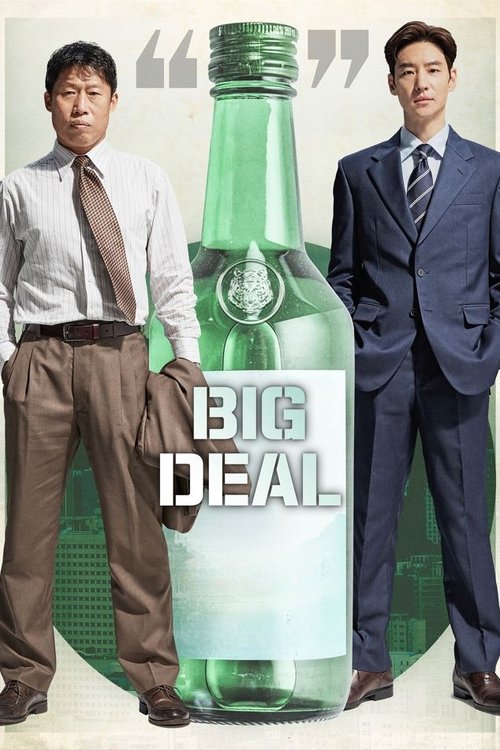
Big Deal - Review
"Big Deal" (2025): A Gripping Dive into Corporate Ambition and Economic Crisis
The year is 1997. The air in Seoul crackles not just with the humid summer heat, but with the palpable tension of an impending economic storm. "Big Deal," the new drama from director Park Ji-hoon, plunges headfirst into the heart of the Asian financial crisis, using the fictional Soju giant, Gukbo, as a microcosm of a nation teetering on the brink. Forget boardroom dramas that skim the surface; this is a visceral, character-driven narrative that explores the ruthless landscape of mergers and acquisitions, the corrosive nature of ambition, and the enduring power of loyalty in the face of overwhelming odds. "Big Deal" isn't just about money; it's about the soul of a company, and by extension, a nation.
Plot: A Symphony of Deception and Desperation
The film centers around In-beom (played with chilling precision by Lee Joon-gi), a young, ambitious associate at the global investment firm Solquin. Having clawed his way up from humble beginnings, In-beom sees the Asian financial crisis not as a tragedy, but as an opportunity. His mission: to acquire Gukbo, the number one Soju company in Korea, for Solquin. He returns to his homeland, a wolf in sheep's clothing, presenting himself as a consultant eager to help Gukbo navigate the turbulent waters. His target is Jong-rok (portrayed with quiet dignity by veteran actor Choi Min-sik), a long-time Gukbo executive fiercely loyal to the company's founding principles and its employees.
The plot unfolds as a carefully orchestrated game of cat and mouse. In-beom, armed with his sharp intellect and Americanized business acumen, slowly worms his way into Gukbo, gaining Jong-rok's trust while simultaneously laying the groundwork for a hostile takeover. He exploits vulnerabilities within the company, manipulates key players, and uses his insider knowledge to undermine Gukbo's position. Jong-rok, initially blinded by In-beom's seemingly genuine desire to help, gradually uncovers the truth, leading to a tense and emotionally charged battle for the soul of Gukbo. The narrative is meticulously paced, building suspense with each carefully crafted scene. The constant shifting of alliances and the unveiling of hidden agendas keep the audience on the edge of their seats, never quite sure who to trust.
The film doesn't shy away from the complexities of the M&A world. It delves into the intricate financial maneuvers, the legal loopholes, and the moral compromises that are often necessary to succeed in this high-stakes game. However, it also humanizes the victims of these corporate battles, highlighting the devastating impact on the employees and the communities that rely on companies like Gukbo. The plot cleverly interweaves the personal and the professional, showcasing how In-beom's ambition not only threatens Gukbo but also strains his relationships with his family and friends.
Characters: A Study in Contrasts and Moral Ambiguity
"Big Deal" thrives on its complex and well-developed characters. In-beom is not a simple villain. He's a product of his environment, driven by a relentless desire to prove himself and escape his past. Lee Joon-gi delivers a nuanced performance, portraying In-beom's ambition with a chilling intensity, but also hinting at the vulnerability and loneliness that lie beneath his polished exterior. He masterfully conveys the internal conflict that plagues In-beom as he grapples with the moral implications of his actions.
Jong-rok, on the other hand, represents the old guard, a staunch defender of traditional values and a firm believer in the importance of loyalty and integrity. Choi Min-sik brings a quiet strength and unwavering resolve to the role. He portrays Jong-rok as a man who is deeply committed to his company and its employees, willing to fight tooth and nail to protect them from the predatory forces of globalization. His portrayal is both heartbreaking and inspiring, showcasing the resilience of the human spirit in the face of adversity.
The supporting characters are equally well-drawn. We see the desperation of Gukbo's employees, fearing for their livelihoods as the company teeters on the brink. We witness the internal struggles of other executives, torn between their loyalty to Jong-rok and the potential financial rewards offered by Solquin. The film populates its world with believable and relatable characters, each with their own motivations and agendas, adding depth and complexity to the narrative.
One of the film's strengths is its exploration of moral ambiguity. There are no clear-cut heroes or villains. In-beom's actions, while ethically questionable, are driven by a desire to succeed and provide for his family. Jong-rok's unwavering loyalty, while admirable, can also be seen as stubborn and resistant to change. The film challenges the audience to question their own moral compass and consider the complexities of the choices these characters face.
Direction: A Masterclass in Tension and Atmosphere
Park Ji-hoon's direction is masterful, creating a palpable sense of tension and atmosphere throughout the film. He expertly uses camera angles, lighting, and sound design to heighten the suspense and draw the audience into the world of corporate intrigue. The boardroom scenes are particularly effective, with tight close-ups and rapid editing conveying the intensity of the negotiations and the power dynamics at play. The scenes depicting the impact of the financial crisis on ordinary people are equally compelling, showcasing the director's ability to evoke empathy and emotional resonance.
Park Ji-hoon doesn't rely on flashy visuals or excessive melodrama. His direction is restrained and understated, allowing the story and the characters to take center stage. He uses subtle cues and visual metaphors to convey deeper meanings, adding layers of complexity to the narrative. The film's pacing is deliberate, building suspense gradually and culminating in a powerful and emotionally satisfying climax.
The director also demonstrates a keen understanding of the historical context of the story. He seamlessly integrates archival footage and news reports into the film, providing a glimpse into the economic and social climate of 1997 Korea. This adds a layer of authenticity and realism to the narrative, making it all the more compelling.
Cinematography: A Visual Feast of Greys and Golds
The cinematography, helmed by Kim Jae-hoon, is a visual feast, perfectly capturing the mood and atmosphere of the film. The color palette is dominated by greys and golds, reflecting the stark reality of the economic crisis and the glitz and glamour of the corporate world. The use of light and shadow is particularly effective, creating a sense of foreboding and unease. The cinematography also highlights the contrasting environments of Seoul, from the sterile boardrooms of Solquin to the bustling streets and traditional factories of Gukbo.
Kim Jae-hoon's camera work is both elegant and dynamic. He uses sweeping shots to capture the grandeur of the city, and tight close-ups to emphasize the emotions of the characters. The cinematography is not just visually appealing; it also serves to enhance the storytelling, adding depth and meaning to the narrative. The framing of the shots is often deliberate, creating a sense of claustrophobia and confinement, reflecting the pressures faced by the characters.
The visual style of "Big Deal" is reminiscent of classic film noir, with its use of shadows, low-key lighting, and morally ambiguous characters. This adds a layer of sophistication and intrigue to the film, making it a visually compelling and intellectually stimulating experience.
Performances: A Showcase of Acting Prowess
The performances in "Big Deal" are nothing short of exceptional. Lee Joon-gi delivers a career-defining performance as In-beom, showcasing his range and versatility as an actor. He perfectly captures the character's ambition, intelligence, and vulnerability, making him both compelling and sympathetic. Choi Min-sik is equally impressive as Jong-rok, portraying the character's quiet strength and unwavering loyalty with a depth of emotion that is truly captivating. The chemistry between Lee Joon-gi and Choi Min-sik is electric, creating a dynamic and compelling rivalry that drives the narrative forward.
The supporting cast also delivers strong performances, bringing depth and authenticity to their respective roles. Each actor embodies their character with conviction and nuance, adding layers of complexity to the narrative. The film is a showcase of acting prowess, with each performer contributing to the overall success of the film.
The casting choices are particularly noteworthy. The actors perfectly embody their characters, both physically and emotionally. This adds a layer of realism to the film, making it all the more believable and engaging.
Themes and Messages: Greed, Loyalty, and the Price of Progress
"Big Deal" explores a number of important themes, including greed, loyalty, the price of progress, and the impact of globalization on national identity. The film questions the ethics of corporate ambition, highlighting the destructive consequences of unchecked greed. It also celebrates the importance of loyalty and integrity, showcasing the enduring power of human connection in the face of adversity.
The film raises important questions about the price of progress. Is economic growth worth sacrificing traditional values and cultural identity? Can globalization be a force for good, or does it inevitably lead to the exploitation of developing nations? "Big Deal" doesn't offer easy answers to these questions, but it encourages the audience to think critically about the complex issues facing the world today.
The film also explores the theme of national identity. In the face of economic crisis, Koreans are forced to confront their own values and beliefs. Are they willing to sacrifice their traditions and cultural heritage in order to survive in the global marketplace? "Big Deal" is a powerful reminder of the importance of preserving national identity in an increasingly interconnected world.
Comparisons: Echoes of the Past, Visions of the Future
"Big Deal" invites comparisons to other films that explore similar themes, such as "Wall Street" (1987) and "The Big Short" (2015). Like those films, "Big Deal" delves into the dark side of the financial world, exposing the greed and corruption that can thrive in a deregulated environment. However, "Big Deal" also distinguishes itself by focusing on the specific cultural and historical context of Korea during the Asian financial crisis. The film offers a unique perspective on the impact of globalization on a developing nation, highlighting the challenges and opportunities that arise when traditional values clash with modern economic forces.
In terms of director Park Ji-hoon's previous works, "Big Deal" represents a significant step forward. While his earlier films were primarily focused on action and suspense, "Big Deal" demonstrates his ability to handle complex themes and nuanced characters. The film is a testament to his growth as a filmmaker, showcasing his talent for creating compelling and thought-provoking narratives.
Lee Joon-gi's performance in "Big Deal" can be compared to his earlier roles in historical dramas and action films. However, his portrayal of In-beom is arguably his most complex and challenging role to date. He demonstrates a maturity and depth of emotion that was not always evident in his earlier work.
Positive Aspects: A Triumph of Storytelling and Performance
"Big Deal" is a triumph of storytelling and performance. The plot is gripping and suspenseful, the characters are complex and well-developed, the direction is masterful, and the performances are exceptional. The film tackles important themes with intelligence and nuance, leaving the audience with plenty to think about long after the credits have rolled. The cinematography and sound design are also top-notch, creating a visually and aurally immersive experience.
The film's attention to detail is particularly impressive. The costumes, set design, and music all contribute to the overall authenticity of the film, transporting the audience back to 1997 Korea. The film is a true work of art, showcasing the talent and dedication of everyone involved.
Constructive Criticism: A Few Minor Quibbles
While "Big Deal" is a generally excellent film, there are a few minor quibbles worth mentioning. The pacing in the second act occasionally lags, and some of the financial jargon may be confusing for viewers who are not familiar with the world of mergers and acquisitions. Additionally, the film could have explored the motivations of some of the supporting characters in greater depth.
However, these are minor criticisms that do not detract significantly from the overall quality of the film. "Big Deal" is a compelling and thought-provoking drama that is sure to resonate with audiences around the world.
Conclusion: A Must-See for Fans of Corporate Dramas and Korean Cinema
"Big Deal" is a must-see for fans of corporate dramas and Korean cinema. It's a gripping, suspenseful, and emotionally resonant film that explores the dark side of the financial world and the enduring power of human connection. With its exceptional performances, masterful direction, and thought-provoking themes, "Big Deal" is a film that will stay with you long after you've seen it.
Rating: 9.5/10