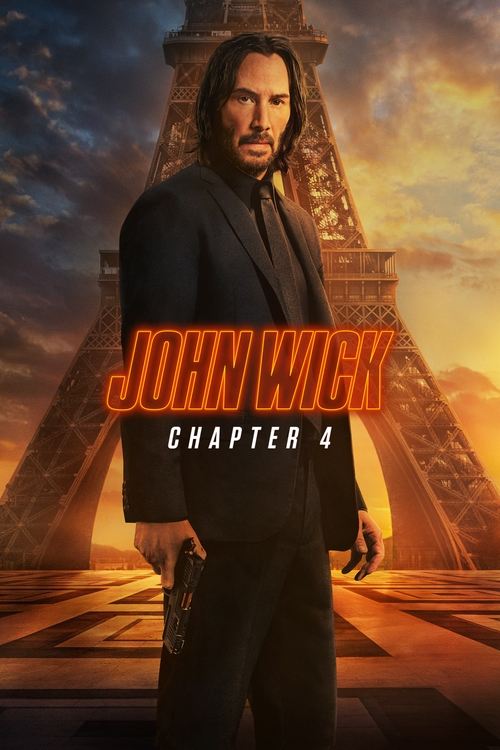
John Wick: Chapter 4 - Review
John Wick: Chapter 4 - A Ballet of Bullets and Brotherhood
The legend. The Baba Yaga. John Wick. By the time John Wick: Chapter 4 hits the screen, the name alone carries enough weight to crush lesser action franchises. But this isn't a franchise content to rest on its laurels. Instead, director Chad Stahelski and Keanu Reeves deliver a visually stunning, relentlessly paced, and surprisingly emotional culmination (or perhaps a temporary pause) to the saga of the world's most stylish assassin. This isn't just an action movie; it's a symphony of violence, a testament to the power of loyalty, and a masterclass in cinematic world-building. But does it stick the landing? Let's delve into the intricate layers of John Wick: Chapter 4 and find out.
Plot: A Global Gauntlet of Death
Chapter 4 picks up where Chapter 3 - Parabellum left off, with John Wick (Keanu Reeves) continuing his fight against the High Table, the shadowy organization that governs the world of assassins. The Marquis Vincent de Gramont (Bill Skarsgård), a ruthlessly ambitious and deeply arrogant High Table member, is tasked with eliminating Wick and anyone who aids him. This sets off a chain of events that takes John across the globe, from Osaka, Japan, to Berlin, Germany, and finally to Paris, France. The plot is, on the surface, simple: Wick must challenge the Marquis to a duel, a traditional way to gain freedom from the High Table's control. However, the journey is fraught with peril, betrayal, and breathtaking action sequences.
The film smartly avoids simply rehashing previous installments. While the core premise of Wick fighting for his survival remains, the stakes are higher, the obstacles more formidable, and the emotional weight more profound. The introduction of the Marquis as a truly detestable villain provides a compelling antagonist for Wick, and the various challenges he faces along the way are cleverly designed to showcase his skills and push him to his limits. The plot's strength lies not in its complexity, but in its efficient and effective delivery of non-stop action and compelling character interactions.
However, the film's length (clocking in at nearly three hours) is a point of contention. While the action is undeniably spectacular, some sequences, particularly in the middle act, feel somewhat repetitive and could have been trimmed without sacrificing the overall narrative. The constant barrage of violence, while initially exhilarating, can become slightly numbing after a while. A tighter edit could have maintained the intensity while preventing the film from feeling overlong.
Characters: Allies and Adversaries in a World of Shadows
Keanu Reeves delivers perhaps his most nuanced performance as John Wick to date. He embodies the character's stoicism, grief, and unwavering determination with a quiet intensity that is both captivating and heartbreaking. While Wick remains a man of few words, Reeves conveys a wealth of emotion through his physicality, his eyes, and his subtle gestures. He's not just an action hero; he's a man haunted by his past, fighting for a future he may never have.
Bill Skarsgård shines as the Marquis Vincent de Gramont. He portrays the character as a narcissistic sociopath who enjoys inflicting pain and manipulating others. Skarsgård's performance is chilling and effective, making the Marquis a truly memorable villain. He's not just a physical threat; he's a master strategist who uses his wealth and influence to control those around him.
The supporting cast is equally impressive. Donnie Yen steals every scene he's in as Caine, a blind assassin and old friend of John Wick who is forced to hunt him down. Yen brings a grace and elegance to his action sequences that is unmatched, and his character's internal conflict adds depth and complexity to the story. Rina Sawayama delivers a strong performance as Akira, the daughter of Shimazu Koji (Hiroyuki Sanada), the manager of the Osaka Continental. Her fierce loyalty and fighting skills make her a formidable ally to Wick.
Ian McShane returns as Winston, the manager of the New York Continental, and Laurence Fishburne reprises his role as the Bowery King. Both actors bring their signature gravitas and wit to their roles, providing essential support and guidance to Wick. The film also introduces new characters, such as Clancy Brown as The Harbinger, a representative of the High Table, and Marko Zaror as Chidi, the Marquis's right-hand man. These characters, while smaller roles, add to the rich tapestry of the John Wick universe.
One minor criticism is that some of the supporting characters, particularly those introduced in earlier films, feel somewhat underutilized in Chapter 4. While their presence is appreciated, their roles could have been expanded to further enrich the narrative and provide more emotional resonance.
Direction and Cinematography: A Masterclass in Visual Storytelling
Chad Stahelski's direction is nothing short of masterful. He elevates the action genre to an art form, crafting visually stunning and impeccably choreographed sequences that are both brutal and beautiful. The film's action is not just about mindless violence; it's about precision, skill, and the art of combat. Each fight scene is meticulously planned and executed, showcasing the unique fighting styles of the characters and the environments in which they take place.
The cinematography, by Dan Laustsen, is breathtaking. The film is visually striking, with vibrant colors, dynamic camera angles, and stunning locations. The use of long takes and wide shots allows the audience to fully appreciate the scale and scope of the action, while close-ups capture the raw emotion and intensity of the characters. The film's visual style is heavily influenced by Japanese and French cinema, creating a unique and memorable aesthetic.
The film's set design is also exceptional. The Osaka Continental, with its neon-lit hallways and traditional Japanese architecture, is a visual feast. The Berlin nightclub, with its pulsating music and chaotic energy, is a stark contrast to the elegant and refined atmosphere of the Osaka Continental. And the streets of Paris, with their iconic landmarks and narrow alleyways, provide a stunning backdrop for the film's climactic showdown.
Stahelski's direction transcends mere action; it's about visual storytelling. Every shot is carefully composed to convey information, create atmosphere, and enhance the emotional impact of the scene. He uses color, lighting, and camera movement to create a world that is both fantastical and grounded in reality.
Themes and Messages: Loyalty, Sacrifice, and the Price of Freedom
Beyond the action and spectacle, John Wick: Chapter 4 explores deeper themes of loyalty, sacrifice, and the price of freedom. The film examines the bonds of friendship and the lengths to which people will go to protect those they care about. John Wick's unwavering loyalty to his friends and allies is a driving force behind his actions, and he is willing to sacrifice everything to ensure their safety.
The film also explores the concept of honor and the importance of upholding one's principles, even in the face of adversity. Wick's decision to challenge the Marquis to a duel, despite the overwhelming odds against him, is a testament to his commitment to his own moral code.
The film's central theme is the pursuit of freedom. John Wick has spent his entire life fighting for others, and now he is fighting for his own liberation. He is willing to risk everything to escape the control of the High Table and live a life of his own choosing. The film suggests that freedom is not easily won and that it often comes at a great cost.
Furthermore, the film subtly critiques the corrupting influence of power and the dangers of unchecked ambition. The Marquis represents the worst aspects of the High Table, using his authority to manipulate and control those around him. The film suggests that true power lies not in wealth or status, but in integrity and compassion.
Performances: A Symphony of Action and Emotion
As mentioned earlier, Keanu Reeves delivers a career-defining performance as John Wick. He embodies the character's physicality and emotional depth with remarkable skill. He's not just an action star; he's an actor who understands the nuances of his character and brings him to life with authenticity and vulnerability.
Bill Skarsgård is equally impressive as the Marquis. He creates a villain who is both menacing and charismatic, making him a worthy adversary for John Wick. Donnie Yen's performance as Caine is a highlight of the film. He brings a sense of grace and humanity to the character, making him a complex and compelling figure.
The supporting cast is uniformly excellent, with each actor bringing their own unique talents to their respective roles. Ian McShane and Laurence Fishburne provide essential support and guidance to Wick, while Rina Sawayama and Hiroyuki Sanada add depth and complexity to the story.
The film's success is due in no small part to the strong performances of its cast. Each actor brings their A-game, creating a world of believable characters who are both compelling and relatable.
Comparison to Other Films/Works
The John Wick franchise has carved out its own unique niche in the action genre, drawing inspiration from various sources while forging its own distinct identity. It shares similarities with other stylish action films like The Matrix (also starring Keanu Reeves), Equilibrium, and Oldboy, particularly in its use of gun-fu and its emphasis on choreographed fight sequences.
However, John Wick distinguishes itself through its elaborate world-building and its focus on the code of honor among assassins. The Continental hotels, the gold coins, and the High Table are all elements that create a rich and immersive world that sets it apart from other action franchises.
Compared to previous John Wick films, Chapter 4 is arguably the most ambitious and visually stunning. It expands the scope of the world, introduces new characters and locations, and raises the stakes for John Wick. While some may argue that it's too long or that it relies too heavily on action, it's undeniable that Chapter 4 is a bold and impressive addition to the franchise.
Furthermore, Stahelski's experience as a stunt coordinator is evident in the film's action sequences. He brings a level of realism and physicality to the fights that is rarely seen in other action films. The film's action is not just about spectacle; it's about skill, precision, and the art of combat.
Positive Aspects
- Stunning visuals and cinematography
- Impeccably choreographed action sequences
- Strong performances from Keanu Reeves and the supporting cast
- Compelling villain in the Marquis
- Exploration of themes of loyalty, sacrifice, and freedom
- Expansive world-building
Constructive Criticism
- Overlong runtime
- Some repetitive action sequences
- Underutilization of some supporting characters
- Potential for more emotional depth in certain scenes
Conclusion and Rating
John Wick: Chapter 4 is a breathtaking action spectacle that delivers on all fronts. It's a visually stunning, relentlessly paced, and surprisingly emotional culmination to the saga of John Wick. While the film's length may be a point of contention for some, its strengths far outweigh its weaknesses. Keanu Reeves delivers a career-defining performance, and the supporting cast is equally impressive. Chad Stahelski's direction is masterful, and the cinematography is breathtaking. The film explores deeper themes of loyalty, sacrifice, and the price of freedom, making it more than just a mindless action movie. It's a ballet of bullets, a symphony of violence, and a testament to the power of brotherhood. While it might be a bit long, the ride is worth it.
Rating: 9/10