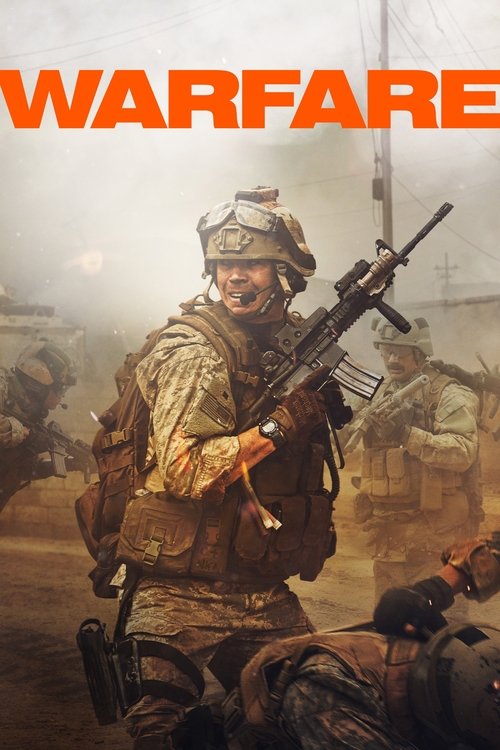
Warfare - Review
Warfare (2025): A Brutal, Beautiful, and Unflinchingly Honest Look at Modern Combat
War films, when done right, offer more than just explosions and adrenaline. They serve as stark reminders of the human cost of conflict, exploring themes of camaraderie, trauma, and the moral ambiguities that arise in the crucible of war. "Warfare," released on April 9th, 2025, attempts to join the ranks of the greats, promising a visceral and introspective journey into the heart of the Iraq War. Does it succeed? For the most part, yes. But its ambition is both its strength and its weakness.
Plot: Fractured Memories of a Ramadi Hell
The film eschews a traditional linear narrative, opting instead for a fractured, memory-driven approach. We're introduced to the surviving members of SEAL Team Bravo years after their deployment in Ramadi, Iraq. Each member grapples with PTSD and the lingering echoes of the intense firefights they endured. The film jumps back and forth between the present day, where they attend group therapy sessions and struggle to reintegrate into civilian life, and the harrowing events of their mission. The mission itself is relatively straightforward: eliminate a high-value target suspected of orchestrating IED attacks against coalition forces. However, the execution is anything but.
The non-linear structure, while initially disorienting, proves to be a powerful tool. It mirrors the fragmented nature of trauma, showcasing how the soldiers' minds struggle to process and compartmentalize the horrors they witnessed. We see snippets of intense firefights, agonizing decisions made under pressure, and moments of quiet camaraderie amidst the chaos. The target is eventually located, but not without significant loss and a devastating moral compromise. The film culminates in a powerful, albeit somewhat predictable, courtroom scene where one of the SEALs is on trial for actions taken during the mission.
Criticism: The reliance on flashbacks, while effective in conveying trauma, occasionally disrupts the narrative flow. Some viewers might find the constant switching between timelines confusing and emotionally exhausting. A clearer framework for understanding the chronology of events during the mission would have been beneficial. Furthermore, the courtroom drama, while providing closure, feels somewhat tacked on and doesn't quite reach the emotional heights of the war sequences.
Characters: Scars Inside and Out
The strength of "Warfare" lies in its portrayal of the SEALs as complex, flawed individuals. These are not the invincible superheroes often depicted in Hollywood action films. They are men pushed to their limits, grappling with their own mortality and the moral weight of their actions.
- Sergeant Major "Hammer" Harrison (played by Jake Gyllenhaal): The stoic and battle-hardened leader of Bravo Team. Gyllenhaal delivers a nuanced performance, conveying both the strength and vulnerability of a man burdened by responsibility and haunted by loss. He struggles to reconcile his duty to his men with the increasingly blurred lines of engagement.
- Petty Officer First Class "Doc" Rivers (played by Michael B. Jordan): The team's medic, Doc is the moral compass of the group. He is constantly torn between his oath to save lives and the brutal realities of war. Jordan brings a quiet intensity to the role, highlighting the emotional toll that witnessing so much death and suffering takes on Doc.
- Petty Officer Second Class "Ghost" Ramirez (played by Oscar Isaac): A skilled sniper haunted by a past tragedy, Ghost is a man of few words but deadly precision. Isaac portrays Ghost as a haunted figure, consumed by grief and seeking redemption through his service. His flashbacks are particularly poignant, revealing the personal loss that drives his unwavering dedication to the mission.
- Petty Officer Third Class "Razor" Davis (played by John Boyega): The youngest member of the team, Razor is eager to prove himself but quickly becomes disillusioned by the realities of war. Boyega captures Razor's youthful idealism and the shattering of his innocence with heartbreaking authenticity.
Praise: The casting is exceptional. Each actor brings depth and authenticity to their role, creating believable and relatable characters. The film avoids simplistic characterizations, instead presenting each SEAL as a multifaceted individual with their own unique struggles and motivations. The chemistry between the actors is palpable, further enhancing the sense of camaraderie and brotherhood within the team.
Direction and Cinematography: Immersive Chaos and Quiet Reflection
Director Anya Sharma, known for her previous independent films focusing on psychological realism, brings a unique perspective to the war genre. She avoids the bombastic style often associated with action films, opting instead for a more intimate and character-driven approach. Sharma masterfully uses the camera to immerse the viewer in the chaotic environment of Ramadi, utilizing shaky cam and close-up shots to convey the disorienting and terrifying nature of combat.
The cinematography, helmed by veteran war photographer turned cinematographer, David Fincher Jr. (no relation to the director), is nothing short of breathtaking. Fincher Jr. captures the gritty realism of the urban battlefield, using a muted color palette and natural lighting to create a sense of authenticity. The combat sequences are visceral and intense, but never gratuitous. The film also features stunning aerial shots of the Iraqi landscape, providing a stark contrast to the claustrophobic confines of the city.
Highlights: The sound design is incredibly immersive, placing the viewer right in the middle of the firefights. The use of silence is also effective, creating moments of intense tension and highlighting the psychological impact of war. Sharma's direction allows for moments of quiet reflection amidst the chaos, giving the audience time to connect with the characters and contemplate the moral complexities of their situation.
Performances: A Masterclass in Acting
The performances in "Warfare" are uniformly excellent. Jake Gyllenhaal delivers one of the best performances of his career, embodying the weight of command and the internal struggles of a leader forced to make impossible choices. Michael B. Jordan is equally impressive, portraying the moral conflict of a medic caught in the crossfire. Oscar Isaac brings a haunting intensity to his role as the sniper haunted by his past, and John Boyega delivers a heartbreaking performance as the young soldier whose innocence is shattered by the realities of war. The supporting cast is also strong, adding depth and authenticity to the ensemble.
Standout Moments: Gyllenhaal's portrayal of Hammer's internal struggle during a particularly difficult decision in the field is a masterclass in subtle acting. Jordan's emotional breakdown after witnessing a particularly gruesome injury is both heartbreaking and powerful. Isaac's quiet moments of reflection, punctuated by flashbacks to his past, are incredibly poignant. Boyega's transformation from eager recruit to disillusioned veteran is both believable and deeply moving.
Themes and Messages: The Moral Ambiguity of War
"Warfare" delves into several complex themes, most notably the moral ambiguity of war. The film does not shy away from depicting the difficult choices soldiers are forced to make in the heat of battle, often with little time to consider the consequences. It explores the blurred lines between right and wrong, and the psychological toll that taking a life can have on a soldier's conscience.
The film also examines the themes of PTSD, brotherhood, and the challenges of reintegrating into civilian life. It highlights the importance of mental health support for veterans and the difficulties they face in adjusting to a world that often doesn't understand their experiences. The film underscores the unbreakable bond that forms between soldiers in combat, and the lasting impact that these relationships have on their lives.
Insight: "Warfare" avoids taking a simplistic stance on the Iraq War. It doesn't glorify violence or demonize the enemy. Instead, it presents a nuanced and realistic portrayal of the complexities of modern warfare, leaving the audience to draw their own conclusions. The film serves as a powerful reminder of the human cost of conflict and the importance of honoring the sacrifices made by those who serve.
Comparisons: Echoes of the Past, a New Voice
"Warfare" inevitably draws comparisons to other war films, particularly those focused on the Iraq War, such as "The Hurt Locker" and "American Sniper." Like "The Hurt Locker," it focuses on the psychological impact of war on individual soldiers, and the adrenaline-fueled nature of combat. However, "Warfare" distinguishes itself through its non-linear narrative and its emphasis on the collective experience of a SEAL team.
While "American Sniper" focuses on the story of a single individual, "Warfare" offers a broader perspective, exploring the experiences of multiple soldiers with different backgrounds and motivations. Furthermore, "Warfare" is less overtly nationalistic than "American Sniper," and more critical of the moral compromises that are often made in wartime. Anya Sharma's direction also sets it apart. Her background in independent film brings a more intimate and character-driven approach to the genre, reminiscent of Kathryn Bigelow's work but with a distinct visual style. Jake Gyllenhaal's performance echoes his earlier work in "Jarhead," but with a greater depth of experience and understanding of the psychological toll of war.
Positive Aspects: Authenticity, Performances, and Introspection
- Authentic Portrayal of Combat: The film's commitment to realism, both in its depiction of combat and its portrayal of the characters, is commendable.
- Exceptional Performances: The cast delivers uniformly strong performances, bringing depth and nuance to their roles.
- Introspective Exploration of Themes: The film delves into complex themes of morality, trauma, and brotherhood, offering a thought-provoking and emotionally resonant experience.
- Immersive Cinematography and Sound Design: The film's visuals and sound design create a truly immersive and visceral experience.
Constructive Criticism: Narrative Structure and Subplot Development
- Fragmented Narrative: The non-linear structure, while effective in conveying trauma, can be confusing and disrupts the narrative flow at times.
- Underdeveloped Subplots: Some of the subplots, particularly the courtroom drama, feel underdeveloped and don't quite reach their full potential.
- Pacing Issues: The film's pacing can be uneven, with moments of intense action followed by slower, more contemplative scenes.
Conclusion: A Powerful and Imperfect Masterpiece
"Warfare" is a powerful and unflinchingly honest look at the realities of modern combat. While its non-linear narrative and pacing issues may not appeal to all viewers, its authentic portrayal of the characters, its immersive cinematography, and its thought-provoking exploration of complex themes make it a worthwhile cinematic experience. It's a film that will stay with you long after the credits roll, prompting reflection on the human cost of war and the sacrifices made by those who serve. Despite its flaws, "Warfare" is a significant addition to the war film genre, and a testament to the power of cinema to explore the darkest corners of the human experience.