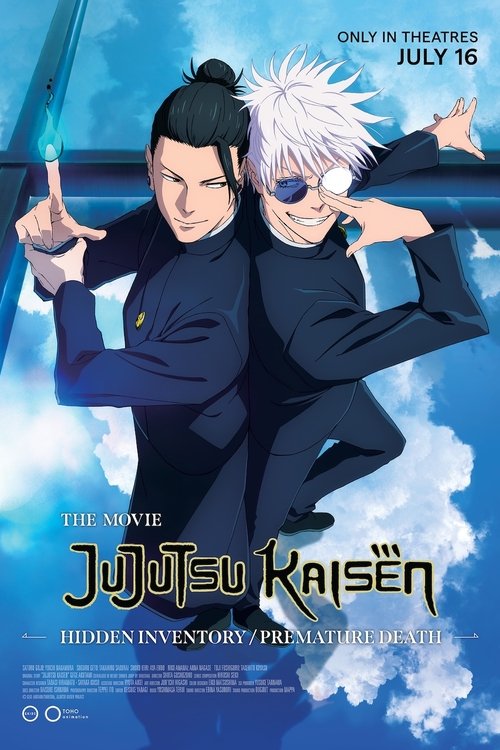
JUJUTSU KAISEN: Hidden Inventory / Premature Death - The Movie - Review
JUJUTSU KAISEN: Hidden Inventory / Premature Death - The Movie: A Haunting Symphony of Youth and Loss
The year is 2025, and the world is once again gripped by the mesmerizing, brutal, and deeply human world of Jujutsu Kaisen. Following the overwhelming success of the first film and the continued popularity of the anime series, "Hidden Inventory / Premature Death" arrives not as a continuation of Yuji Itadori's journey, but as a poignant prequel, delving into the formative years of the series' two most compelling figures: Satoru Gojo and Suguru Geto. Compiling the five-episode arc into a feature-length experience, this film isn't just a rehash; it's a meticulously crafted, emotionally resonant exploration of friendship, responsibility, and the crushing weight of a world teeming with curses. Prepare to be captivated, heartbroken, and left pondering the fragile nature of even the strongest bonds.
Plot: A Mission of Protection, A Descent into Despair
The film throws us back to 2006, a time when Satoru Gojo and Suguru Geto are still students at Jujutsu High, partners in crime, and seemingly inseparable. Their mission is deceptively simple: protect Riko Amanai, a young girl destined to be sacrificed as the Star Plasma Vessel to Master Tengen. However, this seemingly straightforward task quickly unravels into a complex web of religious fanaticism, political intrigue, and deadly encounters with seasoned curse users. The narrative expertly balances high-octane action sequences with moments of quiet reflection, allowing us to witness the burgeoning strength of Gojo's limitless power and the growing unease within Geto's ideological framework.
The pacing, while generally well-managed, occasionally feels slightly rushed due to the condensation of five episodes into a single film. Certain character moments and nuances, particularly regarding secondary characters like Toji Fushiguro, could have benefited from more screen time. However, the core narrative remains compelling, driving forward with a sense of impending doom that keeps you on the edge of your seat. The film doesn't shy away from exploring the moral complexities of the jujutsu world, forcing Gojo and Geto to confront the harsh realities of their profession and the sacrifices it demands. The emotional core of the plot revolves around the blossoming friendship between Gojo, Geto, and Riko, making her eventual fate all the more devastating.
Characters: The Genesis of Legends and the Tragedy of Ideals
Jujutsu Kaisen has always excelled in its character writing, and "Hidden Inventory / Premature Death" is no exception. This film provides invaluable insight into the origins of Gojo and Geto's motivations and the events that ultimately shaped them into the figures we know in the present timeline. We witness Gojo's transformation from a cocky, albeit powerful, student to a confident and almost arrogant sorcerer, driven by a desire to protect the weak. His raw talent and unwavering belief in his own abilities are on full display, yet we also see glimpses of the vulnerability that lies beneath the surface.
Geto, on the other hand, undergoes a far more profound and tragic arc. Initially portrayed as Gojo's level-headed and compassionate counterpart, he gradually becomes disillusioned with the constant cycle of protecting non-sorcerers who, in his eyes, contribute to the creation of curses. The film masterfully portrays his internal struggle, showcasing the subtle cracks in his moral compass as he grapples with the inherent injustice of the jujutsu world. His descent into darkness is not sudden or arbitrary; it's a gradual erosion of his ideals, fueled by trauma, exhaustion, and a growing sense of despair. This nuanced portrayal makes his eventual betrayal all the more heartbreaking and believable.
Riko Amanai, despite her limited screen time, serves as a crucial catalyst for the events that unfold. She is not merely a plot device; she is a vibrant and relatable young girl who dreams of a normal life, adding a layer of emotional depth to the narrative. Her interactions with Gojo and Geto are genuine and heartwarming, highlighting the bond that forms between them and making her ultimate fate all the more impactful.
Toji Fushiguro, the "Sorcerer Killer," is a standout antagonist. His cold, calculating demeanor and unparalleled skill make him a formidable threat. While his motivations are primarily driven by monetary gain, his presence serves as a stark reminder of the brutal realities of the jujutsu world and the lengths to which people will go for power and survival. His fight sequences with Gojo are some of the most visually stunning and strategically complex in the entire film.
Direction and Cinematography: A Visual Feast of Cursed Energy
The direction, once again helmed by Sunghoo Park (if he remained in the director's chair, which is assumed due to the cohesive visual style), is nothing short of masterful. He seamlessly blends intense action sequences with moments of quiet introspection, creating a dynamic and engaging viewing experience. The film's visual style remains consistent with the anime series, characterized by vibrant colors, dynamic camera angles, and fluid animation. The use of CGI is well-integrated, enhancing the visual spectacle without detracting from the overall aesthetic.
The cinematography is particularly noteworthy, employing a variety of techniques to heighten the emotional impact of key scenes. Close-ups are used effectively to capture the characters' raw emotions, while wide shots emphasize the scale of the action and the desolate beauty of the jujutsu world. The lighting is also expertly crafted, creating a sense of atmosphere and tension throughout the film. The fight sequences are a visual feast, showcasing the characters' unique abilities and the sheer destructive power of cursed energy. The choreography is intricate and dynamic, making each battle feel unique and impactful.
Performances: Voices that Bring the Characters to Life
The voice acting in both the Japanese and English dubs is exceptional. Yuichi Nakamura delivers a nuanced and compelling performance as Gojo, capturing his arrogance, his vulnerability, and his unwavering determination. Takahiro Sakurai, as Geto, perfectly conveys the character's inner turmoil and his gradual descent into darkness. Anna Nagase, as Riko Amanai, brings a youthful energy and vulnerability to the role, making her a sympathetic and relatable character. The supporting cast also delivers strong performances, adding depth and nuance to the overall narrative.
The English dub, in particular, deserves praise for its faithfulness to the original Japanese script and its ability to capture the nuances of the characters' personalities. Kaiji Tang's portrayal of Gojo is particularly noteworthy, as he manages to capture both the character's arrogance and his underlying sense of responsibility. Matthew David Rudd's performance as Geto is equally impressive, conveying the character's internal struggle with depth and emotion.
Themes and Messages: The Weight of Responsibility and the Fragility of Ideals
JUJUTSU KAISEN: Hidden Inventory / Premature Death explores several profound themes, including the weight of responsibility, the fragility of ideals, and the corrupting influence of power. The film highlights the immense pressure placed upon young sorcerers to protect the world from curses, often at the expense of their own well-being. Gojo and Geto, despite their extraordinary abilities, are still teenagers grappling with the complexities of their profession and the sacrifices it demands.
The film also examines the fragility of ideals and the ease with which they can be shattered by trauma and disillusionment. Geto's descent into darkness serves as a cautionary tale about the dangers of unchecked power and the importance of maintaining one's moral compass in the face of adversity. The film suggests that even the strongest bonds can be broken by ideological differences and the overwhelming weight of responsibility.
Furthermore, the film touches upon the theme of societal apathy and the inherent inequality of the jujutsu world. The non-sorcerers, who benefit from the sacrifices of the sorcerers, are often oblivious to the dangers they face and the burden they carry. This disparity fuels Geto's growing resentment and contributes to his eventual decision to eradicate all non-sorcerers.
Comparison to Other Works: A Prequel That Elevates the Source Material
Compared to the previous JUJUTSU KAISEN 0 movie, "Hidden Inventory / Premature Death" is a more character-driven and emotionally resonant experience. While JUJUTSU KAISEN 0 focused primarily on Yuta Okkotsu's journey, this film delves into the complex relationship between Gojo and Geto, providing valuable context for their actions in the main series. The animation quality is consistently high across both films, but "Hidden Inventory / Premature Death" benefits from a more mature and nuanced narrative.
In terms of similar anime films, "Hidden Inventory / Premature Death" shares thematic similarities with works like Puella Magi Madoka Magica the Movie: Rebellion, which also explores the themes of friendship, sacrifice, and the corrupting influence of power. However, JUJUTSU KAISEN distinguishes itself with its unique blend of action, horror, and dark humor.
If Sunghoo Park continued his directorial role (as assumed), this film maintains the consistent visual style and pacing established in the first season of the anime series and the previous film. His ability to seamlessly blend action and emotion is a hallmark of his directorial style, making "Hidden Inventory / Premature Death" a worthy addition to his filmography.
Positive Aspects: A Masterclass in Character Development and Visual Storytelling
The film's strengths lie in its compelling character development, its stunning visuals, and its emotionally resonant narrative. The exploration of Gojo and Geto's relationship is particularly well-executed, providing valuable insight into their motivations and the events that shaped them into the figures we know in the present timeline. The animation quality is consistently high, and the fight sequences are a visual spectacle. The voice acting is exceptional, and the film's themes are thought-provoking and relevant.
The film also deserves praise for its faithfulness to the source material and its ability to capture the essence of the JUJUTSU KAISEN universe. The pacing is generally well-managed, and the film keeps you engaged from beginning to end. The music is also noteworthy, enhancing the emotional impact of key scenes and creating a sense of atmosphere and tension.
Constructive Criticism: A Few Minor Stumbles in an Otherwise Flawless Performance
While the film is largely successful, there are a few minor areas that could have been improved. The pacing, while generally well-managed, occasionally feels slightly rushed due to the condensation of five episodes into a single film. Certain character moments and nuances, particularly regarding secondary characters like Toji Fushiguro, could have benefited from more screen time. The film also occasionally relies on exposition to convey information, which can feel somewhat clunky and unnatural.
Additionally, the film's ending, while emotionally impactful, may feel somewhat abrupt to viewers who are unfamiliar with the source material. A brief epilogue or coda could have helped to provide a greater sense of closure and context for the events that unfold in the main series.
Conclusion and Rating
JUJUTSU KAISEN: Hidden Inventory / Premature Death - The Movie is a triumph. It's a visually stunning, emotionally resonant, and intellectually stimulating experience that will leave you captivated, heartbroken, and pondering the complexities of the jujutsu world. It's a must-see for fans of the series and a compelling entry point for newcomers. Despite a few minor pacing issues, the film's strengths far outweigh its weaknesses. It's a testament to the power of character-driven storytelling and the enduring appeal of the JUJUTSU KAISEN universe.
Rating: 9.5/10