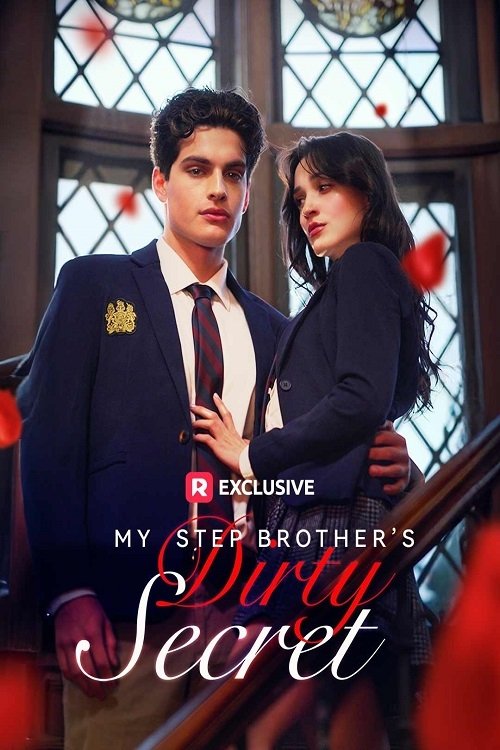
My Stepbrother's Dirty Secret - Review
My Stepbrother's Dirty Secret: A Review of the 2025 Guilty Pleasure
Forget Shakespeare, forget forbidden love in Verona. In 2025, forbidden love blossoms in the hallowed, albeit suspiciously modern, halls of St. Mary's High School with the release of "My Stepbrother's Dirty Secret." This isn't your grandmother's melodrama; this is a meticulously crafted (or perhaps strategically chaotic) concoction of teen angst, simmering sexual tension, and plot twists so predictable they're almost charming. But does it deliver the guilty pleasure promised by the title and trailer? Let's dive in.
Plot: A Familiar Recipe with a Spicy Twist?
The plot, as the title subtly hints, revolves around Alice (portrayed by the rising star, Anya Sharma), a seemingly ordinary teenager whose life is upended when her mother marries a ridiculously wealthy tech mogul. This sudden shift in fortune catapults Alice from her humble existence to a world of sprawling mansions, private schools, and, of course, the broodingly handsome James (played by newcomer Liam Hayes). James, as fate would have it (or, more accurately, as the screenwriters decreed), is the son of Alice's new stepfather, making him her… you guessed it, stepbrother!
The initial premise is hardly groundbreaking. We've seen variations of this "suddenly rich" and "forbidden romance" trope countless times. However, "My Stepbrother's Dirty Secret" attempts to inject some originality through its exploration of class disparity and the complexities of blended families. Alice, initially overwhelmed by her new surroundings, struggles to reconcile her past with her present. She clashes with the privileged students of St. Mary's, who view her with a mixture of curiosity and disdain. James, on the other hand, appears to be the quintessential rich kid, seemingly aloof and uninterested in Alice's arrival. But beneath his cool exterior lies a troubled soul, burdened by family expectations and a secret that threatens to unravel his carefully constructed facade.
The film progresses in a predictable yet undeniably engaging manner. Alice and James initially despise each other, engaging in witty banter and passive-aggressive power plays. However, as they spend more time together, forced by circumstance and proximity, their animosity slowly transforms into something… more. The "irresistible chemistry" promised in the synopsis begins to sizzle, manifested in longing glances, accidental touches, and the kind of charged silences that only exist in teen dramas. The "dirty secret" itself, while not exactly shocking, adds a layer of intrigue to the narrative. It involves a past transgression by James that could have serious repercussions for his family and his future. The revelation of this secret serves as a catalyst for Alice and James's relationship, forcing them to confront their feelings for each other and decide whether their connection is worth the potential consequences.
However, the plot suffers from some predictable pitfalls. The supporting characters, while present, often feel underdeveloped and serve primarily as plot devices. The motivations of certain characters, particularly Alice's new stepfather, feel somewhat contrived, and the resolution, while satisfying in a superficial way, lacks the emotional depth that the film attempts to cultivate. The "dirty secret," while providing a momentary jolt of excitement, ultimately feels like a convenient plot contrivance rather than a genuinely organic element of the story.
Characters: Archetypes with a Glimmer of Depth
The success of a teen drama often hinges on the relatability and complexity of its characters. "My Stepbrother's Dirty Secret" treads a fine line in this regard. Alice, as the protagonist, is presented as a strong-willed and independent young woman who refuses to be defined by her newfound wealth. Anya Sharma delivers a solid performance, capturing Alice's initial awkwardness and her gradual transformation into a confident and assertive individual. However, Alice occasionally falls into the trap of being overly righteous and judgmental, which can make her difficult to fully empathize with.
James, the brooding stepbrother, is the quintessential "bad boy" with a hidden heart of gold. Liam Hayes embodies this archetype with ease, exuding a captivating mix of vulnerability and arrogance. He manages to convey the internal conflict that plagues James, torn between his duty to his family and his growing feelings for Alice. While James's character arc is somewhat predictable, Hayes's performance adds a layer of nuance that elevates him beyond a mere stereotype.
The supporting characters, unfortunately, are less memorable. Alice's best friend, Chloe (played by Maya Patel), serves primarily as a confidante and source of comic relief. James's group of wealthy friends are portrayed as shallow and superficial, lacking any real depth or complexity. The parents, particularly Alice's mother and stepfather, are largely relegated to the background, their motivations and actions often serving to further the plot rather than develop their own individual stories.
Ultimately, the characters in "My Stepbrother's Dirty Secret" are a mixed bag. While Alice and James possess a certain degree of depth and relatability, the supporting characters often feel underdeveloped and stereotypical. This imbalance detracts from the overall emotional impact of the film and limits its ability to explore the complexities of human relationships.
Direction and Cinematography: Glossy Surfaces and Predictable Angles
The direction of "My Stepbrother's Dirty Secret," helmed by veteran TV director Sarah Miller, is competent but unremarkable. Miller effectively captures the visual aesthetic of a contemporary teen drama, utilizing glossy cinematography, fast-paced editing, and a soundtrack filled with trendy pop songs. However, the film lacks a distinctive visual style, relying heavily on familiar tropes and predictable camera angles. The direction prioritizes surface-level appeal over genuine artistic expression.
The cinematography, while technically proficient, is equally uninspired. The film is visually polished, with vibrant colors and crisp images. However, the camerawork rarely ventures beyond the conventional, relying on standard shot compositions and predictable framing. There are few moments of genuine visual creativity or innovation. The cinematography serves primarily to showcase the wealth and privilege of the characters, rather than to enhance the emotional impact of the story.
The film's pacing is generally well-maintained, with a good balance between dialogue-driven scenes and visually engaging montages. However, the editing occasionally feels rushed, particularly in the second act, where the plot begins to accelerate. This rushed pacing detracts from the development of the characters and the exploration of the themes. The film could have benefited from a more deliberate and nuanced approach to editing.
Overall, the direction and cinematography of "My Stepbrother's Dirty Secret" are competent but uninspired. The film relies heavily on familiar tropes and predictable techniques, lacking a distinctive visual style or a genuinely artistic vision. While the technical aspects are polished and professional, the film ultimately fails to elevate itself beyond the realm of generic teen drama.
Performances: A Star is Born, but the Ensemble Struggles
The performances in "My Stepbrother's Dirty Secret" are a mixed bag, with Anya Sharma and Liam Hayes carrying the weight of the film on their young shoulders. Sharma, as Alice, delivers a nuanced and compelling performance, showcasing her range and versatility. She effectively captures Alice's initial awkwardness and her gradual transformation into a confident and assertive individual. Sharma's performance is particularly strong in the emotional scenes, where she conveys Alice's vulnerability and her internal conflict with authenticity and conviction.
Hayes, as James, is a revelation. He embodies the brooding stepbrother archetype with ease, exuding a captivating mix of vulnerability and arrogance. Hayes's performance is particularly impressive given his relative inexperience. He manages to convey the internal conflict that plagues James, torn between his duty to his family and his growing feelings for Alice, with remarkable subtlety and depth. Hayes's performance suggests that he has the potential to become a major star.
The supporting cast, unfortunately, is less impressive. Maya Patel, as Alice's best friend, Chloe, delivers a serviceable performance, providing comic relief and support. However, her character is largely underdeveloped, and Patel is given little opportunity to showcase her acting abilities. The actors portraying James's wealthy friends deliver adequate performances, but their characters are so stereotypical and one-dimensional that it is difficult to fault the actors for their lack of depth.
The adult actors, particularly the actors portraying Alice's mother and stepfather, are largely forgettable. They deliver competent performances, but their characters are so poorly written and underdeveloped that they are unable to make a significant impact on the film. Overall, the performances in "My Stepbrother's Dirty Secret" are uneven, with Sharma and Hayes shining brightly amidst a sea of mediocrity.
Themes and Messages: Exploring Class, Family, and Forbidden Love
"My Stepbrother's Dirty Secret," beneath its glossy surface and predictable plot, attempts to explore several relevant themes. The film tackles the issue of class disparity, highlighting the challenges that Alice faces as she navigates the world of the wealthy elite. The film also examines the complexities of blended families, exploring the tensions and conflicts that can arise when two families are forced to merge. And, of course, the film delves into the age-old theme of forbidden love, exploring the allure and the dangers of a relationship that is deemed inappropriate or taboo.
The film's exploration of class disparity is somewhat superficial. While it acknowledges the challenges that Alice faces as she adjusts to her new surroundings, it ultimately fails to delve into the deeper systemic issues that contribute to social inequality. The film's portrayal of the wealthy students of St. Mary's is often stereotypical and one-dimensional, lacking the nuance and complexity that would make them truly believable. The film seems content to simply highlight the differences between the rich and the poor, without offering any meaningful insights into the root causes of these differences.
The film's exploration of blended families is more successful. It accurately portrays the tensions and conflicts that can arise when two families are forced to merge. The film highlights the challenges that Alice and James face as they navigate their new family dynamic, struggling to define their roles and relationships. The film also explores the impact of the parents' decisions on their children, showcasing the ways in which the parents' actions can either strengthen or weaken the family bond.
The film's exploration of forbidden love is, perhaps unsurprisingly, the most central theme. The film explores the allure of a relationship that is deemed inappropriate or taboo, highlighting the excitement and the danger that such a relationship can entail. The film also examines the moral implications of forbidden love, forcing the audience to question whether the characters' feelings for each other justify the potential consequences of their actions. Ultimately, the film suggests that love, in its purest form, transcends social conventions and moral boundaries. However, it also acknowledges the potential for heartbreak and devastation that can result from pursuing a forbidden relationship.
Comparisons: A Familiar Landscape with Minor Variations
"My Stepbrother's Dirty Secret" inevitably draws comparisons to other teen dramas that explore similar themes and storylines. Films like "Cruel Intentions," "Mean Girls," and "Clueless" all feature wealthy teenagers, forbidden romances, and complex social dynamics. However, "My Stepbrother's Dirty Secret" lacks the wit and satire of "Mean Girls" or the subversive edge of "Cruel Intentions." It is a more straightforward and earnest exploration of teen angst and forbidden love.
The film also bears some resemblance to previous works by director Sarah Miller. Miller, known for her work on popular teen television shows, brings a certain level of competence and professionalism to "My Stepbrother's Dirty Secret." However, the film lacks the distinctive visual style and thematic depth that would set it apart from Miller's other projects. It feels like a safe and predictable effort, lacking the ambition and innovation that would elevate it to a higher level.
In terms of the actors, Anya Sharma has been compared to a young Emma Stone, possessing a similar blend of intelligence, wit, and vulnerability. Liam Hayes, on the other hand, has been touted as the next Timothée Chalamet, with his brooding good looks and his ability to convey complex emotions with subtlety and nuance. Whether these comparisons ultimately prove to be accurate remains to be seen, but both Sharma and Hayes certainly possess the potential to become major stars.
Positive Aspects: A Guilty Pleasure Done Right (Mostly)
Despite its flaws, "My Stepbrother's Dirty Secret" possesses several redeeming qualities. The performances of Anya Sharma and Liam Hayes are undoubtedly the film's strongest assets. Both actors deliver nuanced and compelling performances, elevating the material beyond its inherent limitations. The film's pacing is generally well-maintained, and the soundtrack is filled with catchy pop songs that will appeal to a younger audience. The film also manages to generate a certain level of suspense and intrigue, particularly in the second act, as the "dirty secret" is gradually revealed.
The film's exploration of blended families, while not groundbreaking, is nonetheless a welcome addition to the teen drama genre. It accurately portrays the challenges and complexities of these types of families, offering a more realistic and nuanced perspective than many other films in the genre. The film also deserves credit for attempting to tackle the issue of class disparity, even if its exploration of this theme is somewhat superficial.
Ultimately, "My Stepbrother's Dirty Secret" succeeds as a guilty pleasure. It is a predictable but undeniably engaging teen drama that will appeal to audiences who enjoy this type of film. It is not a masterpiece of cinema, but it is a well-crafted and entertaining piece of escapism.
Constructive Criticism: Room for Improvement
While "My Stepbrother's Dirty Secret" has its merits, it also suffers from several significant flaws. The plot is predictable and relies heavily on familiar tropes. The supporting characters are underdeveloped and often feel like plot devices. The direction and cinematography are competent but uninspired. The film's exploration of class disparity is superficial and lacks depth. The "dirty secret" itself feels like a convenient plot contrivance rather than a genuinely organic element of the story.
The film could have benefited from a more nuanced and complex exploration of its themes. It could have delved deeper into the systemic issues that contribute to social inequality. It could have provided more insight into the motivations and actions of the adult characters. It could have offered a more original and innovative visual style.
The film also could have benefited from stronger writing. The dialogue is often clichéd and predictable. The plot is riddled with contrivances and inconsistencies. The characters lack depth and complexity. The film's writers could have spent more time developing the characters, refining the plot, and crafting more engaging and believable dialogue.
Conclusion and Rating
"My Stepbrother's Dirty Secret" is a perfectly adequate teen drama. It offers moments of genuine entertainment, primarily driven by the strong performances of its leads. However, it ultimately falls short of its potential due to its predictable plot, underdeveloped supporting characters, and uninspired direction. It's the cinematic equivalent of a beach read – enjoyable in the moment, but ultimately forgettable.
Final Rating: 6.5/10