The Metropolitan Opera: The Queen of Spades - Review
The Metropolitan Opera: The Queen of Spades (2025) - A Review
Tchaikovsky's The Queen of Spades, a chilling tale of obsession, love, and the corrupting power of fate, has long been a staple of the operatic repertoire. The Metropolitan Opera's latest revival, captured for the screen and released on May 23, 2025, promises a fresh perspective on this macabre masterpiece. With Sonya Yoncheva making her highly anticipated debut as Lisa, alongside Arsen Soghomonyan as the tormented Hermann, and under the baton of Keri-Lynn Wilson, this production aims to deliver a potent and unforgettable experience. But does it succeed in capturing the opera's inherent drama and emotional depth for a cinematic audience? Let's delve into the heart of this performance and see if it holds all the cards.
Plot Summary: A Descent into Madness
The Queen of Spades, based on Alexander Pushkin's short story, unfolds in the opulent yet morally decaying world of 18th-century St. Petersburg. Hermann, a young and ambitious officer, is consumed by a desperate desire to learn a secret winning card sequence known only to the aged Countess. His obsession is fueled by a chance encounter with Lisa, the Countess's granddaughter, who is betrothed to Prince Yeletsky. Torn between his burning ambition and his growing affection for Lisa, Hermann embarks on a perilous path, leading him to betray her trust, confront the spectral Countess, and ultimately succumb to madness and self-destruction.
The opera's narrative is a tightly woven tapestry of love, greed, and the supernatural. Hermann's relentless pursuit of the card secret drives the plot forward, while his relationship with Lisa provides a tragic counterpoint, highlighting the devastating consequences of his choices. The Countess, a figure shrouded in mystery and rumored to have made a pact with the devil, adds a layer of gothic horror to the proceedings. The inclusion of scenes depicting the lavish lifestyle of the Russian aristocracy, filled with gambling and social intrigue, further enriches the opera's atmosphere and historical context.
Characters: Driven by Desire and Destiny
The characters in The Queen of Spades are complex and deeply flawed, each driven by their own desires and haunted by their own destinies. Here's a closer look at the key players:
Hermann (Arsen Soghomonyan)
Hermann is the opera's tragic protagonist, a man consumed by ambition and a desperate need for wealth. Soghomonyan's portrayal is compelling, capturing Hermann's initial idealism and subsequent descent into madness with chilling accuracy. His powerful tenor voice conveys the character's inner turmoil and growing desperation, making him a truly captivating, if ultimately disturbing, figure. Soghomonyan's debut at the Met is a triumph, showcasing his vocal prowess and dramatic intensity. However, at times, his portrayal leaned a little too heavily on manic energy, potentially missing some of the nuanced vulnerability that could have further enriched the character.
Lisa (Sonya Yoncheva)
Yoncheva's highly anticipated debut as Lisa is a highlight of this production. She embodies Lisa's innocence, vulnerability, and ultimately, her tragic fate with remarkable grace. Her soprano voice is radiant and expressive, conveying Lisa's conflicting emotions – her love for Hermann, her loyalty to Prince Yeletsky, and her growing despair. Yoncheva's acting is equally impressive, capturing Lisa's internal struggles with subtle gestures and nuanced expressions. The depth of her emotion during the pivotal scene where she throws herself into the canal is truly heartbreaking, showcasing the character's complete and utter devastation.
The Countess (Violeta Urmana)
Urmana's portrayal of the Countess is suitably chilling and spectral. She embodies the Countess's age, bitterness, and sense of foreboding with chilling precision. Her voice, while not as powerful as in her earlier roles, still conveys the Countess's authority and the weight of her past. Urmana masterfully portrays the Countess as a relic of a bygone era, haunted by her past and bearing the burden of her secrets. Her presence on stage is commanding, and her performance is a vital component of the opera's overall atmosphere of suspense and dread.
Prince Yeletsky (Igor Golovatenko)
Golovatenko reprises his role as Prince Yeletsky, offering a moving portrayal of the noble and honorable, yet ultimately heartbroken, suitor. His baritone voice is rich and resonant, conveying Yeletsky's unwavering love for Lisa and his quiet dignity in the face of betrayal. Golovatenko brings a sense of humanity to the character, making him a sympathetic figure despite his aristocratic status. His aria, expressing his enduring love for Lisa, is a poignant moment in the opera, showcasing Golovatenko's vocal artistry and emotional depth.
Count Tomsky (Alexey Markov)
Markov's Count Tomsky is a charismatic and enigmatic figure, serving as a commentator on the unfolding drama. His baritone voice is strong and commanding, and he delivers Tomsky's stories and observations with a captivating blend of wit and cynicism. Markov's performance adds a layer of intrigue to the opera, highlighting the social context and the moral decay of the Russian aristocracy.
Direction and Staging: Atmospheric and Evocative
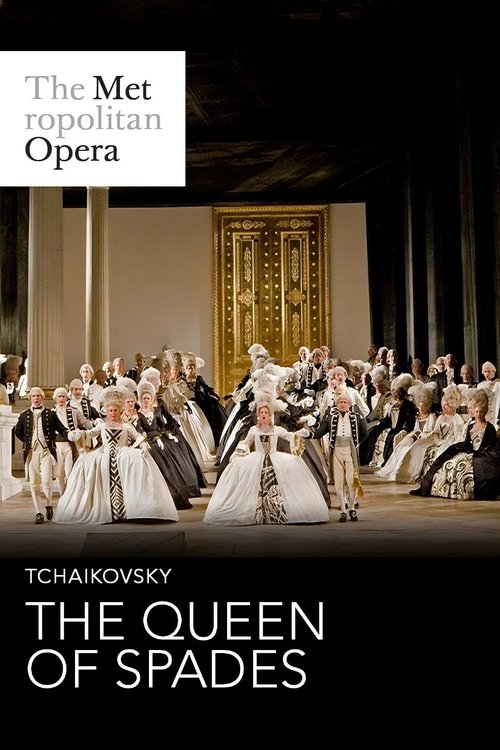
The direction of this Met production is largely successful in capturing the opera's dark and brooding atmosphere. The staging is visually striking, utilizing a combination of opulent sets and dramatic lighting to create a sense of foreboding and impending doom. The use of shadows and chiaroscuro effects is particularly effective in highlighting the opera's gothic elements and enhancing the emotional impact of key scenes. The ballroom scenes are lavish and vibrant, contrasting sharply with the more intimate and emotionally charged moments between Hermann and Lisa. The incorporation of dreamlike sequences and ghostly apparitions further enhances the opera's supernatural elements, adding to the overall sense of unease and psychological torment.
However, some aspects of the staging could have been improved. While the sets are undeniably impressive, at times they feel somewhat static, lacking the dynamic movement and visual storytelling that could have further enhanced the opera's dramatic impact. The choreography, particularly in the ballroom scenes, could have been more inventive and expressive, adding a greater sense of energy and vitality to the proceedings. Additionally, the use of certain visual metaphors felt somewhat heavy-handed, potentially detracting from the opera's subtle nuances and emotional complexity.
Cinematography: Capturing the Operatic Experience
The cinematography of this filmed opera production is generally well-executed, capturing the grandeur and drama of the Met's staging while also providing intimate close-ups of the singers' performances. The camera work effectively balances wide shots of the stage with close-ups that reveal the characters' emotions and inner struggles. The use of lighting is particularly effective, enhancing the opera's atmospheric quality and creating a sense of depth and dimension. The editing is generally smooth and seamless, allowing the viewer to follow the narrative flow without distraction. However, at times, the camera work feels somewhat conservative, lacking the creative flair and visual experimentation that could have further elevated the cinematic experience. Some shots felt too static, simply recording the action on stage without adding any significant visual interpretation. More dynamic camera movements and innovative angles could have further enhanced the opera's dramatic impact and created a more immersive viewing experience.
Musical Performance: A Sweeping Score
Keri-Lynn Wilson's conducting is a major strength of this production. She leads the Met Orchestra with precision and passion, bringing out the full emotional power of Tchaikovsky's sweeping score. The orchestra's performance is impeccable, capturing the opera's dramatic intensity and lyrical beauty with equal measure. Wilson's interpretation is sensitive to the nuances of the music, allowing the singers to shine while also maintaining a cohesive and dynamic overall sound. The chorus also delivers a strong performance, adding depth and texture to the opera's rich sonic landscape. The musical performance is a testament to the Met's artistic excellence and a major contributing factor to the production's overall success.
Themes and Messages: Obsession, Fate, and Social Decay
The Queen of Spades explores a number of complex and timeless themes, including the corrupting power of obsession, the inevitability of fate, and the moral decay of society. Hermann's relentless pursuit of the card secret serves as a cautionary tale about the dangers of unchecked ambition and the destructive consequences of greed. The opera also raises questions about the role of fate in shaping human destiny, suggesting that individuals may be powerless to escape their predetermined paths. The portrayal of the Russian aristocracy as decadent and morally bankrupt further underscores the opera's critique of social inequality and the corrupting influence of wealth and power.
The theme of love is also central to the opera's narrative. Hermann's relationship with Lisa is a tragic example of how love can be sacrificed in the pursuit of selfish desires. Lisa's ultimate suicide highlights the devastating consequences of betrayal and the destructive power of unrequited love. The opera suggests that true love is a rare and precious commodity, easily corrupted by greed, ambition, and the machinations of fate.
Comparison to Other Works
The Queen of Spades shares thematic similarities with other operas exploring the dark side of human nature, such as Verdi's Macbeth and Puccini's Tosca. Like Macbeth, Hermann is driven by ambition and ultimately succumbs to madness and self-destruction. Like Tosca, Lisa is a victim of circumstance, caught in a web of political intrigue and ultimately sacrificing herself for love. Tchaikovsky's opera also draws inspiration from the gothic literature of the 19th century, sharing similarities with works such as Edgar Allan Poe's short stories and Emily Brontë's Wuthering Heights in its exploration of themes of obsession, madness, and the supernatural.
Comparing this production to previous Met productions of The Queen of Spades reveals both strengths and weaknesses. While this production benefits from strong vocal performances and impressive staging, it may lack the innovative direction and visual flair of some earlier interpretations. However, the overall quality of the performance is high, and it offers a compelling and accessible introduction to this operatic masterpiece for both seasoned opera lovers and newcomers alike.
Positive Aspects
- Strong vocal performances, particularly from Sonya Yoncheva and Arsen Soghomonyan.
- Impressive staging and atmospheric lighting.
- Excellent conducting by Keri-Lynn Wilson and a superb performance by the Met Orchestra.
- Compelling exploration of complex themes such as obsession, fate, and social decay.
Constructive Criticism
- Some aspects of the staging could have been more dynamic and visually engaging.
- The cinematography could have been more creative and innovative.
- Certain visual metaphors felt somewhat heavy-handed.
- Hermann's portrayal could have benefited from more nuanced vulnerability.
Conclusion
The Metropolitan Opera's production of The Queen of Spades is a compelling and visually stunning adaptation of Tchaikovsky's macabre masterpiece. With strong vocal performances, impressive staging, and excellent musical direction, this production offers a captivating and emotionally resonant experience for both seasoned opera lovers and newcomers alike. While some aspects of the staging and cinematography could have been improved, the overall quality of the performance is high, making it a worthwhile addition to the Met's filmed opera repertoire. Sonya Yoncheva's debut as Lisa is a particular highlight, and Arsen Soghomonyan's portrayal of Hermann, while occasionally lacking nuance, is undeniably powerful. This production successfully captures the opera's dark and brooding atmosphere, exploring complex themes of obsession, fate, and social decay with depth and sensitivity. Ultimately, this is a performance that will linger in the memory long after the curtain falls.