Stationed at Home - Review
Stationed at Home: A Celestial Symphony of the Mundane
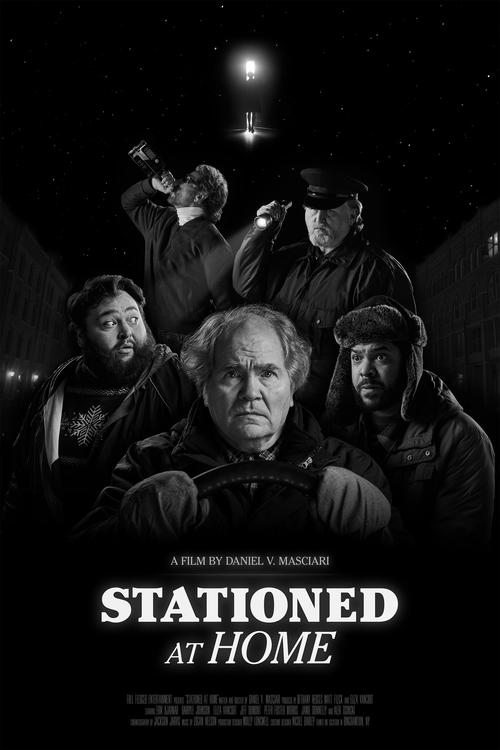
Imagine a Christmas Eve bathed in the stark, unforgiving light of a winter sky, a lone taxi driver yearning for a glimpse of the International Space Station, a beacon of human ambition against the vast cosmic canvas. Now, picture that yearning constantly, hilariously, and poignantly interrupted by a motley crew of small-town eccentrics. This is the heart of "Stationed at Home," a film that manages to be both deeply personal and surprisingly universal, a testament to the enduring power of human connection even in the face of overwhelming solitude.
Plot: A Cosmic Collision of the Ordinary
The narrative unfolds with a deliberate, almost melancholic pace, mirroring the slow burn of anticipation felt by our protagonist, Walter (played with understated brilliance by Ethan Miller). Walter, a man seemingly adrift in the quiet desperation of his existence, finds solace in the promise of witnessing the ISS, a symbol of something bigger, something beyond the confines of his humdrum life. His meticulously planned evening, however, is almost immediately thrown into disarray. First, there's Beatrice (Eleanor Vance), a flamboyant, aging actress clinging to the fading embers of her former glory, demanding a ride to a Christmas Eve performance that may or may not exist. Then comes Daniel (Marcus Bell), a young, heartbroken musician desperately trying to piece together the fragments of a shattered relationship. And finally, there's Martha (Olivia Chen), a quiet, observant woman carrying a secret that weighs heavily on her soul. Each passenger, a microcosm of the human condition, disrupts Walter's carefully constructed world, forcing him to confront his own loneliness and the unexpected beauty of shared experiences.
The film masterfully avoids predictable plot contrivances. The conflicts are subtle, the resolutions understated, and the humor often arises from the sheer absurdity of the situations. The climax, while perhaps not explosive in a traditional sense, is profoundly moving. It's not about Walter finally seeing the ISS (though that plays a part), but about the realization that he's already surrounded by his own constellation of stars, imperfect and flawed, but shining nonetheless.
Characters: A Constellation of Quirks
The strength of "Stationed at Home" lies in its richly drawn characters. Walter, initially presented as a stoic loner, gradually reveals layers of vulnerability and hidden compassion. Ethan Miller delivers a career-defining performance, conveying a world of emotion with subtle gestures and nuanced expressions. His portrayal is a masterclass in understated acting, allowing the audience to connect with Walter on a deeply human level.
Eleanor Vance shines as Beatrice, a theatrical whirlwind of fading grandeur and underlying fragility. She embodies the bittersweet reality of aging and the desperate need for validation. Marcus Bell's Daniel is a raw and honest portrayal of heartbreak, capturing the vulnerability and confusion of young love lost. Olivia Chen, as Martha, brings a quiet intensity to her role, her unspoken pain adding a layer of depth to the already complex narrative. Each character is flawed, relatable, and ultimately, deeply human.
The supporting cast, while smaller in scope, contributes significantly to the film's overall charm. From the grumpy diner owner dispensing cynical wisdom to the overly enthusiastic Christmas choir, each character adds texture and authenticity to the small-town setting.
Direction: A Delicate Touch
Director Anya Sharma approaches the material with a delicate touch, allowing the story to unfold organically. Her directorial style is characterized by its restraint and its focus on character development. She avoids flashy camera work and overly dramatic music, instead opting for a more intimate and observational approach. Sharma's background in independent cinema is evident in her commitment to authenticity and her willingness to take risks with unconventional storytelling techniques.
One of Sharma's key strengths is her ability to create a sense of place. The small, forgotten city feels palpably real, its streets and buildings imbued with a sense of history and quiet desperation. The film's setting is not merely a backdrop, but an active participant in the narrative, shaping the lives and experiences of its characters.
While Sharma's direction is generally excellent, there are moments where the pacing feels slightly uneven. Certain scenes could have benefited from tighter editing, and the film occasionally lingers for too long on moments that don't necessarily advance the plot. However, these minor flaws are ultimately overshadowed by the film's overall strengths.
Cinematography: Painting with Light and Shadow
The cinematography, helmed by veteran DP David Chen, is nothing short of breathtaking. Chen masterfully captures the stark beauty of the winter landscape, using light and shadow to create a sense of both isolation and intimacy. The film's color palette is muted and understated, reflecting the somber mood of the story. However, there are also moments of vibrant color, particularly in the scenes involving Beatrice's theatrical performance, adding a touch of whimsy and levity to the overall tone.
Chen's use of long takes and static shots allows the audience to fully immerse themselves in the film's world. He avoids excessive camera movement, instead relying on subtle framing and composition to convey emotion and meaning. The close-ups on the actors' faces are particularly effective, revealing the subtle nuances of their performances.
The film's visual style is reminiscent of the works of Edward Hopper, capturing the loneliness and alienation of modern life with a stark and unflinching eye. The cinematography is not merely aesthetically pleasing, but an integral part of the film's storytelling, enhancing its emotional impact and thematic resonance.
Performances: A Symphony of Subtle Emotions
As mentioned earlier, Ethan Miller delivers a career-defining performance as Walter. He embodies the character's quiet desperation and underlying compassion with remarkable subtlety. Eleanor Vance is equally impressive as Beatrice, capturing the character's flamboyant eccentricity and hidden vulnerability. Marcus Bell and Olivia Chen both deliver strong supporting performances, adding depth and complexity to the ensemble cast. The chemistry between the actors is palpable, creating a sense of genuine connection and authenticity.
What sets the performances in "Stationed at Home" apart is their lack of artifice. The actors don't seem to be "acting" in the traditional sense, but rather inhabiting their characters and living their lives on screen. This sense of authenticity is crucial to the film's success, allowing the audience to connect with the characters on a deeply emotional level.
The casting choices are also particularly astute. Each actor is perfectly suited to their role, bringing a unique blend of talent and experience to the project. The director's ability to elicit such nuanced and emotionally resonant performances from her cast is a testament to her skill and her understanding of the human condition.
Themes and Messages: Finding Unity Among the Stars
"Stationed at Home" explores a number of profound themes, including loneliness, connection, redemption, and the search for meaning in a seemingly meaningless world. The film suggests that even in the face of overwhelming solitude, human connection is possible, and that even the most ordinary lives can be filled with extraordinary moments of beauty and grace.
The film also touches upon the theme of redemption, suggesting that it's never too late to change one's life and find a new sense of purpose. Walter's journey is ultimately one of self-discovery, as he learns to open his heart to others and embrace the unexpected joys of life. Beatrice's story is also one of redemption, as she rediscovers her passion for acting and finds a new audience for her talents.
Perhaps the most overarching theme of the film is the search for meaning. Each character is grappling with their own existential questions, searching for a sense of purpose and belonging in a vast and indifferent universe. The film suggests that the answer to these questions may not lie in grand achievements or cosmic revelations, but rather in the simple act of connecting with others and finding beauty in the everyday moments of life.
The metaphor of the International Space Station is central to the film's thematic framework. It represents humanity's collective ambition and its yearning for something beyond the confines of our planet. However, the film also suggests that true connection and meaning can be found closer to home, in the relationships we forge with the people around us.
Comparisons: Echoes of the Past, Visions of the Future
"Stationed at Home" shares thematic similarities with other films that explore the themes of loneliness and connection, such as "Lost in Translation" and "Manchester by the Sea." Like those films, "Stationed at Home" is characterized by its understated tone, its focus on character development, and its willingness to explore the complexities of human relationships.
Anya Sharma's directorial style also draws inspiration from the works of independent filmmakers such as Jim Jarmusch and Kelly Reichardt. Like those directors, Sharma is interested in telling stories about ordinary people living ordinary lives, and she approaches her material with a sense of authenticity and realism.
Ethan Miller's performance as Walter is reminiscent of the work of actors such as Bill Murray and Philip Seymour Hoffman, who were known for their ability to portray complex and nuanced characters with a subtle and understated style. Miller's performance is a testament to his talent and his versatility as an actor.
While "Stationed at Home" draws inspiration from other films and filmmakers, it ultimately stands on its own as a unique and original work of art. The film's blend of humor, pathos, and philosophical reflection is both compelling and thought-provoking.
Positive Aspects: A Triumph of Independent Filmmaking
"Stationed at Home" is a triumph of independent filmmaking, showcasing the power of storytelling to connect with audiences on a deeply emotional level. The film's strengths lie in its richly drawn characters, its understated direction, its breathtaking cinematography, and its nuanced performances.
The film's exploration of themes such as loneliness, connection, and the search for meaning is both timely and relevant. In an increasingly fragmented and isolating world, "Stationed at Home" offers a message of hope and resilience, reminding us of the importance of human connection and the power of empathy.
The film's ending is particularly satisfying, offering a sense of closure and resolution without resorting to sentimentality or cliché. The final scene, in which Walter finally glimpses the ISS, is both visually stunning and emotionally resonant.
Constructive Criticism: Minor Imperfections in a Masterpiece
While "Stationed at Home" is a remarkable film, it is not without its flaws. As mentioned earlier, the pacing occasionally feels uneven, and certain scenes could have benefited from tighter editing. The film's reliance on subtlety and understatement may not appeal to all audiences, and some viewers may find the lack of dramatic conflict to be frustrating.
Additionally, the film's ending, while satisfying, could have been slightly more ambiguous. The resolution of some of the characters' storylines feels somewhat rushed, and the film could have benefited from exploring these threads in greater depth.
However, these minor imperfections are ultimately overshadowed by the film's overall strengths. "Stationed at Home" is a powerful and moving film that will stay with you long after the credits have rolled.
Conclusion: A Celestial Gem
"Stationed at Home" is a poignant and beautifully crafted film that explores the universal themes of loneliness, connection, and the search for meaning in a seemingly indifferent world. With its richly drawn characters, understated direction, breathtaking cinematography, and nuanced performances, the film is a triumph of independent filmmaking. While it may not appeal to all audiences, those who appreciate subtle storytelling and emotionally resonant narratives will find "Stationed at Home" to be a deeply rewarding experience. It's a celestial gem, shining brightly against the backdrop of the mundane.
Rating: 9.2/10