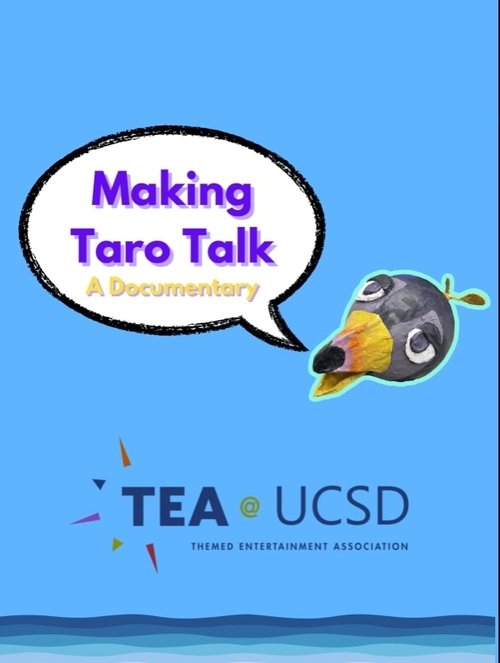
Making Taro Talk: A Documentary - Review
Making Taro Talk: A Documentary - A Review
In the ever-expanding universe of documentaries, where stories of global significance often dominate the spotlight, it's refreshing to find a film that dares to focus on the seemingly mundane yet profoundly human experience of a group of college students tackling an ambitious project. "Making Taro Talk: A Documentary," released on May 23, 2025, does just that. This isn't a tale of political intrigue or environmental crisis; it's the story of UC San Diego undergraduates wrestling with wires, code, and the daunting task of bringing an audio animatronic named Taro to life. But beneath the surface of robotics and deadlines, director Anya Sharma unearths a narrative rich with humor, heartbreak, and the universal struggles of collaboration, creativity, and the pursuit of a seemingly impossible goal. Prepare to be surprised by how deeply you connect with a bunch of students trying to make a robot talk.
Plot Analysis: A Rollercoaster of Wires and Woes
The documentary's plot is deceptively simple: follow a team of students as they attempt to build an audio animatronic for a class project. However, Sharma masterfully uses this straightforward premise to construct a compelling narrative arc. We're introduced to the team at the outset, brimming with enthusiasm and a shared vision of a talking Taro. The initial scenes are filled with the optimistic buzz of brainstorming sessions, the excitement of acquiring parts, and the almost comical naiveté of students who believe they have a handle on the complexities ahead.
As the film progresses, the reality of their undertaking begins to sink in. Budget constraints become a significant hurdle, forcing them to make compromises on materials and functionality. Time management proves to be an even greater challenge, as the students juggle their project with other academic commitments, part-time jobs, and the occasional social life. The initial camaraderie starts to fray as disagreements arise over design choices, coding strategies, and workload distribution. The documentary doesn't shy away from showcasing the less glamorous aspects of teamwork, including heated arguments, passive-aggressive comments, and the inevitable feeling of being overwhelmed.
The turning point in the narrative comes with a major setback – a critical component malfunctions, throwing the entire project into jeopardy. This moment serves as a catalyst for both despair and renewed determination. The students are forced to confront their limitations, reassess their priorities, and find innovative solutions to overcome the obstacle. It's during this crisis that the true character of each team member is revealed. Some rise to the occasion, displaying resilience and ingenuity, while others succumb to frustration and contemplate abandoning the project altogether.
The climax of the film arrives with the final presentation of Taro. The tension is palpable as the students nervously prepare for their demonstration. Will Taro speak? Will the animatronics function as intended? The outcome is, of course, best left unspoiled, but suffice it to say that the presentation is a mixture of triumph and imperfection, a fitting reflection of the entire journey.
Character Development: Beyond the Wires
While "Making Taro Talk" centers around a robotic creation, the true heart of the film lies in its portrayal of the students themselves. Sharma avoids stereotypical depictions, instead presenting each team member as a complex and multifaceted individual. We get to know their personalities, their motivations, their strengths, and their weaknesses.
There's Sarah, the ambitious and organized team leader, who initially appears to have everything under control but gradually reveals her own insecurities and vulnerabilities. David, the coding whiz, is a brilliant but socially awkward individual who struggles to communicate his ideas effectively. Maria, the artistic designer, brings a creative flair to the project but often clashes with the more technically-minded members of the team. And then there's Ben, the seemingly laid-back student who provides much-needed comic relief but also harbors a hidden talent for problem-solving.
The documentary excels at capturing the dynamic between these individuals. We witness their moments of collaboration and conflict, their expressions of joy and frustration, their triumphs and their failures. The characters are relatable and believable, making it easy for viewers to invest in their journey and root for their success. Even the "villain" of the story, the student who allegedly sabotages a portion of the project, is presented with nuance, hinting at underlying motivations and personal struggles.
Direction and Cinematography: An Intimate Perspective
Anya Sharma's direction is one of the film's greatest strengths. She adopts a fly-on-the-wall approach, allowing the students' story to unfold naturally without excessive narration or intervention. The camera work is unobtrusive, capturing candid moments and authentic reactions. Sharma's ability to establish trust with her subjects is evident in their willingness to be vulnerable and open on camera.
The cinematography is equally effective in conveying the atmosphere of the project. The cramped laboratory setting, filled with cluttered workbenches and tangled wires, is brought to life through close-up shots and dynamic camera angles. The film also utilizes time-lapse sequences to illustrate the passage of time and the gradual progress of the project. These visual elements contribute to a sense of immersion, making the viewer feel like they are right there alongside the students, experiencing the challenges and triumphs firsthand.
Sharma also uses the campus of UC San Diego effectively. The architecture and landscapes provide a visual contrast to the interior shots, reminding the viewer that these students have lives outside of the lab. Quick shots of Geisel Library and the surrounding coastline serve as reminders of the vibrant academic and social environment in which the project is taking place.
Performances: Authenticity Reigns Supreme
Since "Making Taro Talk" is a documentary, there are no traditional "performances" in the sense of actors playing roles. However, the students themselves deliver compelling and authentic performances simply by being themselves. Their genuine emotions, their raw reactions, and their unguarded interactions are what make the film so engaging.
Sharma's skill as a director is evident in her ability to elicit these authentic performances. She creates a comfortable and safe environment for the students, allowing them to be vulnerable and honest on camera. The result is a cast of characters that are both relatable and inspiring.
Themes and Messages: More Than Just a Talking Robot
"Making Taro Talk" is more than just a story about building an audio animatronic. It's a film that explores universal themes such as the power of collaboration, the importance of perseverance, and the value of learning from failure. The documentary also touches on issues of creativity, innovation, and the challenges of balancing academic pursuits with personal lives.
One of the central themes of the film is the importance of teamwork. The students quickly learn that they cannot accomplish their goal alone. They must rely on each other's skills, support each other through difficult times, and compromise on their individual preferences for the sake of the project. The film illustrates the power of collective effort and the potential for achieving extraordinary results when people work together towards a common goal.
Another key theme is the value of perseverance. The students face numerous setbacks throughout the project, but they refuse to give up. They learn to adapt to changing circumstances, find creative solutions to overcome obstacles, and never lose sight of their ultimate objective. The film is a testament to the power of resilience and the importance of staying committed to one's goals, even when faced with adversity.
Perhaps the most important message of the film is that failure is not the opposite of success; it's a stepping stone towards it. The students make mistakes, they encounter problems, and they experience moments of frustration and doubt. But they learn from their failures, they adapt their strategies, and they ultimately emerge stronger and more knowledgeable. The film encourages viewers to embrace failure as a learning opportunity and to view setbacks as temporary obstacles rather than insurmountable barriers.
Comparison to Other Films: A Niche Well-Executed
While "Making Taro Talk" is a unique film in its specific subject matter, it shares similarities with other documentaries that focus on creative processes and collaborative endeavors. Films like "Indie Game: The Movie" (2012), which follows independent video game developers, and "Jiro Dreams of Sushi" (2011), which profiles a dedicated sushi chef, explore the passion, dedication, and sacrifices required to achieve excellence in a particular field. "Making Taro Talk" distinguishes itself by focusing on the specific challenges faced by college students and by incorporating a healthy dose of humor into its narrative.
It could also be compared to documentaries like "Spellbound" (2002), which follows children competing in a spelling bee. While the subject matter is different, both films capture the intensity and pressure of competition and the emotional toll it can take on participants.
Unlike some documentaries that rely heavily on narration and exposition, "Making Taro Talk" allows the story to unfold organically through the actions and interactions of its subjects. This approach is reminiscent of cinéma vérité filmmaking, which emphasizes observation and minimal intervention. Sharma's decision to let the students speak for themselves contributes to the film's authenticity and emotional impact.
Positive Aspects: Heart and Humor
There's so much to love about "Making Taro Talk." Its greatest strength lies in its ability to connect with viewers on an emotional level. The students are relatable, their struggles are universal, and their triumphs are inspiring. The film is also genuinely funny, thanks to the students' witty banter and the inherent absurdity of their situation. The humor never feels forced or contrived; it arises naturally from the characters and their interactions.
The documentary is also technically well-crafted. The cinematography is visually appealing, the editing is seamless, and the soundtrack is appropriately uplifting. Sharma's direction is confident and assured, and she demonstrates a clear understanding of her subject matter.
The film's pacing is also excellent. It maintains a consistent level of energy throughout, keeping viewers engaged from beginning to end. The narrative is well-structured, with a clear beginning, middle, and end. The documentary also avoids unnecessary tangents or digressions, staying focused on the central story.
Constructive Criticism: A Few Minor Tweaks
While "Making Taro Talk" is a highly enjoyable and well-made documentary, there are a few minor areas where it could be improved. One potential criticism is that the film could have explored the students' personal lives in greater depth. While we get a sense of their personalities and motivations, we don't learn much about their backgrounds, their families, or their aspirations beyond the project. Exploring these aspects could have added another layer of depth to the characters and made them even more relatable.
Another potential criticism is that the film could have delved deeper into the technical aspects of the animatronic design. While the documentary provides a general overview of the project, it doesn't go into great detail about the specific challenges involved in coding the software, building the hardware, or integrating the various components. A more technical explanation could have appealed to viewers with a background in engineering or robotics.
Finally, the film could have benefited from a more nuanced exploration of the "betrayal" subplot. While the documentary hints at a student sabotaging the project, it doesn't fully investigate the motivations behind this act or the consequences for the individuals involved. A more thorough examination of this conflict could have added a layer of complexity to the narrative.
Conclusion and Rating
"Making Taro Talk: A Documentary" is a heartwarming, humorous, and ultimately inspiring film that celebrates the power of collaboration, the importance of perseverance, and the value of learning from failure. Anya Sharma has crafted a compelling narrative that is both entertaining and thought-provoking. The students are relatable, their struggles are universal, and their triumphs are genuinely moving. Despite a few minor shortcomings, this is a documentary that will stay with you long after the credits roll. It's a testament to the power of human ingenuity and the enduring appeal of a good story.
Rating: 9/10