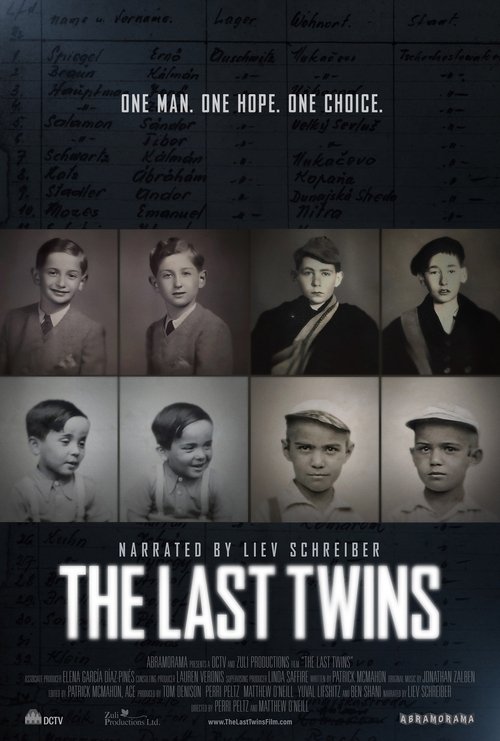
The Last Twins - Review
The Last Twins: A Riveting Chronicle of Courage and Compassion in the Face of Unimaginable Evil
The Holocaust, a period etched in history with the indelible stain of unimaginable cruelty, continues to inspire filmmakers to explore its multifaceted horrors and, more importantly, the extraordinary acts of courage and resilience that emerged from the darkness. "The Last Twins," released on June 6th, 2025, rises to this challenge with a powerful and deeply moving documentary that shines a light on the unsung heroism of Erno “Zvi” Spiegel, a man who risked his life to protect young twins targeted for Dr. Josef Mengele's horrific experiments at Auschwitz. This is not just another Holocaust documentary; it's a testament to the enduring power of the human spirit, a story of defiance, sacrifice, and the profound impact one individual can have even in the face of unimaginable evil. Prepare to be moved, challenged, and ultimately inspired by this essential piece of cinematic storytelling.
Plot and Narrative Structure
Unlike many Holocaust documentaries that focus on the broader historical context, "The Last Twins" adopts a more intimate and focused approach. The narrative centers almost exclusively on Erno “Zvi” Spiegel and the young twins under his care. The film meticulously reconstructs Spiegel's story, starting with his arrival at Auschwitz and his subsequent assignment to work with Mengele's "research" subjects. Through a combination of archival footage, expert interviews, and, most poignantly, first-hand testimonies from surviving twins, the film paints a vivid picture of the daily horrors within the camp and the constant threat of extermination.
The film's strength lies in its ability to personalize the tragedy. We learn about the individual twins, their hopes, their fears, and the bonds they forged with Spiegel. The narrative skillfully weaves together these personal stories with the broader historical context, creating a powerful and emotionally resonant experience. The tension is palpable throughout, as we witness Spiegel's constant struggle to protect the twins from Mengele's sadistic experiments and the ever-present danger of discovery. The film doesn't shy away from depicting the brutality of Auschwitz, but it also emphasizes the small acts of kindness and compassion that helped the twins survive. The filmmakers made a conscious decision to avoid gratuitous depictions of violence, choosing instead to focus on the psychological and emotional impact of the Holocaust on its victims. This restraint ultimately makes the film even more powerful and affecting.
While the film primarily follows a chronological structure, it occasionally employs flashbacks to provide context and deepen our understanding of the twins' lives before the war. These glimpses into their pre-war existence serve as a stark reminder of what they lost and what Spiegel was fighting to preserve. The narrative also incorporates historical analyses from leading Holocaust scholars, providing valuable insights into Mengele's motivations and the broader context of the Nazi's eugenics program.
Characters and Performances
The heart and soul of "The Last Twins" are undoubtedly the individuals whose stories it tells. Erno “Zvi” Spiegel, the central figure, emerges as a complex and deeply compelling character. While we don't see him portrayed by an actor (the film relies entirely on archival footage and historical accounts), his presence is palpable throughout. The surviving twins, who bravely share their stories, are the true stars of the film. Their testimonies are raw, honest, and incredibly moving. They speak with a mixture of pain, resilience, and gratitude for Spiegel's unwavering dedication to their well-being.
The film masterfully avoids portraying Spiegel as a flawless hero. We see his moments of doubt, his fears, and the immense pressure he faced. This nuanced portrayal makes him all the more relatable and inspiring. Similarly, the twins are not presented as passive victims. They demonstrate remarkable strength and resilience in the face of unimaginable adversity. The film highlights their acts of mutual support and the bonds they forged with one another, showcasing the power of human connection in the darkest of times. The voice actors who read excerpts from Spiegel's letters and diaries deliver their lines with a quiet dignity and emotional depth, adding another layer of intimacy to the narrative.
While Dr. Josef Mengele is a looming presence throughout the film, he is not given undue attention. The filmmakers wisely chose to focus on Spiegel's actions and the twins' experiences, rather than dwelling on Mengele's depravity. This decision reinforces the film's central message: that even in the face of unspeakable evil, acts of courage and compassion can make a profound difference.
Direction and Cinematography
Director Sarah Klein demonstrates a masterful understanding of documentary filmmaking. She skillfully balances archival footage, expert interviews, and personal testimonies to create a cohesive and compelling narrative. Her direction is sensitive and respectful, allowing the subjects to speak for themselves without imposing a heavy-handed agenda. Klein's choice to focus on the human stories behind the historical events elevates the film beyond a mere recitation of facts, transforming it into a deeply emotional and thought-provoking experience.
The cinematography is understated but effective. The film primarily utilizes archival footage from Auschwitz and other concentration camps, which provides a stark and visceral glimpse into the horrors of the Holocaust. The filmmakers have also incorporated modern-day interviews with the surviving twins, shot in a simple and intimate style. The use of natural lighting and close-up shots allows the audience to connect with the subjects on a personal level. The film also features animated sequences to illustrate certain events described by the twins, adding visual interest and helping to bridge gaps in the historical record. These animations are tastefully done and never detract from the overall impact of the film.
The editing is particularly strong, seamlessly weaving together the various elements of the film to create a cohesive and engaging narrative. The pacing is deliberate, allowing the audience time to absorb the emotional weight of the stories being told. The film's score is equally effective, enhancing the emotional impact of the scenes without being overly sentimental or manipulative.
Themes and Messages
"The Last Twins" explores several profound themes, most notably the power of individual courage and the importance of human connection in the face of adversity. Erno “Zvi” Spiegel's story serves as a powerful reminder that even in the darkest of times, one person can make a difference. His unwavering commitment to protecting the twins demonstrates the extraordinary capacity for compassion and selflessness that exists within the human spirit. The film also highlights the resilience of the human spirit, showcasing the twins' ability to survive and even thrive despite the unimaginable horrors they endured. Their stories are a testament to the enduring power of hope and the importance of remembering the past.
The film also implicitly raises questions about the nature of good and evil, the responsibility of individuals in the face of injustice, and the importance of standing up for what is right. By focusing on Spiegel's actions, the film offers a counter-narrative to the overwhelming evil of the Holocaust, reminding us that even in the darkest of times, acts of kindness and courage can make a profound difference. The film implicitly challenges viewers to consider what they would do in a similar situation and to reflect on their own capacity for compassion and courage.
Another important theme is the enduring trauma of the Holocaust and the importance of preserving the memories of those who perished. The film serves as a powerful reminder of the dangers of prejudice, hatred, and indifference. By sharing the stories of the twins and Spiegel, the filmmakers hope to ensure that the lessons of the Holocaust are never forgotten.
Comparison to Other Films
"The Last Twins" stands apart from other Holocaust documentaries in its focus on the specific story of Erno “Zvi” Spiegel and the twins he protected. While films like "Schindler's List" and "The Pianist" tell fictionalized stories of individuals who risked their lives to save Jews during the Holocaust, "The Last Twins" offers a real-life account of unsung heroism. Compared to broader historical documentaries like "Shoah" or "Night and Fog," "The Last Twins" provides a more intimate and personal perspective on the Holocaust, focusing on the human stories behind the historical events.
The film shares similarities with "The Boys from Brazil," a fictional thriller that also deals with Dr. Josef Mengele's experiments on twins. However, "The Last Twins" offers a more grounded and realistic portrayal of Mengele's activities, based on historical evidence and first-hand accounts. Compared to some more sensationalized depictions of the Holocaust, "The Last Twins" adopts a more restrained and respectful approach, focusing on the emotional impact of the events on its victims.
The film also resonates with other documentaries that explore themes of resilience and survival in the face of adversity, such as "Life is Beautiful" (though fictional) and "Paper Clips." However, "The Last Twins" is unique in its focus on the specific experiences of twins during the Holocaust and the extraordinary efforts of one man to protect them.
Positive Aspects
The film's greatest strength lies in its powerful and moving storytelling. The testimonies of the surviving twins are incredibly compelling, and the film does an excellent job of humanizing the victims of the Holocaust. The focus on Erno “Zvi” Spiegel's heroism provides a much-needed counter-narrative to the overwhelming evil of the Holocaust. The film is also well-researched and historically accurate, providing valuable insights into Mengele's experiments and the broader context of the Nazi's eugenics program. The direction, cinematography, and editing are all top-notch, creating a cohesive and engaging viewing experience.
The film's restraint in depicting the horrors of Auschwitz is also commendable. By focusing on the psychological and emotional impact of the events, the filmmakers avoid gratuitous violence and create a more powerful and affecting experience. The film's message of hope and resilience is particularly timely and relevant in today's world.
Constructive Criticism
While "The Last Twins" is a powerful and moving film, it is not without its flaws. One potential criticism is that the film could have provided more context about Spiegel's life before the war. While we learn about his actions at Auschwitz, we know relatively little about his background or motivations. This omission makes it slightly more difficult to fully understand his character. Another potential criticism is that the film could have explored the long-term impact of the Holocaust on the surviving twins in more detail. While we hear about their gratitude for Spiegel's actions, we don't learn as much about the challenges they faced in rebuilding their lives after the war.
While the film's restraint in depicting violence is generally a positive aspect, some viewers may find it too sanitized. The filmmakers could have included more graphic details about Mengele's experiments without resorting to gratuitous violence. This could have further underscored the horrors of the Holocaust and the importance of remembering the past. The reliance on archival footage, while historically accurate, can sometimes feel visually repetitive. The animated sequences, while well-executed, could have been used more sparingly.
Conclusion
"The Last Twins" is a powerful and deeply moving documentary that shines a light on the unsung heroism of Erno “Zvi” Spiegel and the resilience of the young twins he protected at Auschwitz. The film is a testament to the enduring power of the human spirit and a reminder that even in the darkest of times, acts of courage and compassion can make a profound difference. While the film has some minor flaws, its strengths far outweigh its weaknesses. "The Last Twins" is an essential piece of cinematic storytelling that deserves to be seen by a wide audience. It is a film that will stay with you long after the credits roll, prompting reflection on the nature of good and evil, the importance of remembering the past, and the enduring power of hope.
Rating: 9/10